
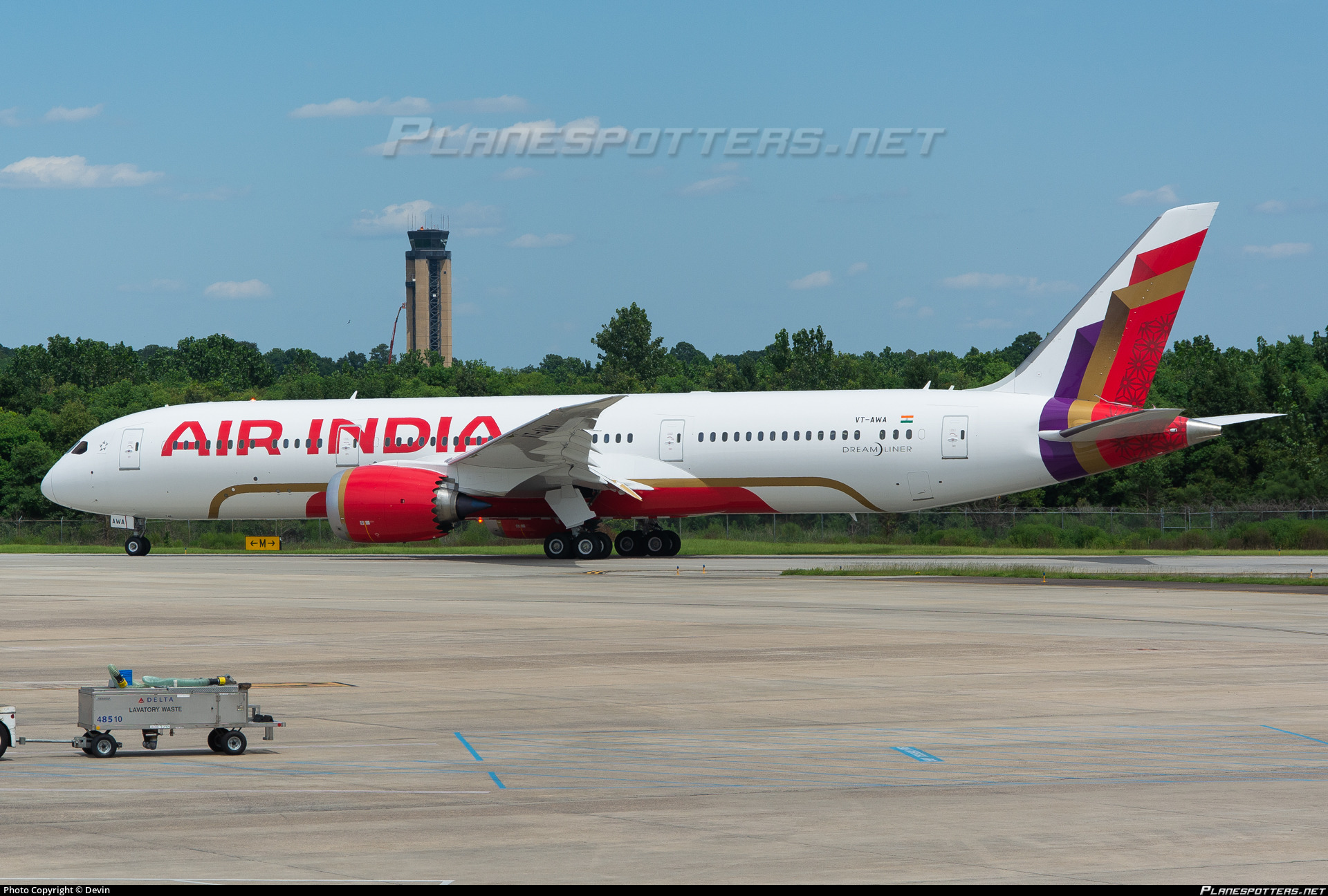
On January 14, 2026, an Air India Boeing 787-9 Dreamliner operating flight AI2380 from Delhi to Singapore was forced to return to its departure airport following an Auxiliary Power Unit (APU) fire warning shortly after reaching cruising altitude.
The aircraft, registered VT-TSE, was carrying approximately 190 passengers when the crew received the alert and initiated a precautionary return to Indira Gandhi International Airport.
Timeline of Events Near Delhi…
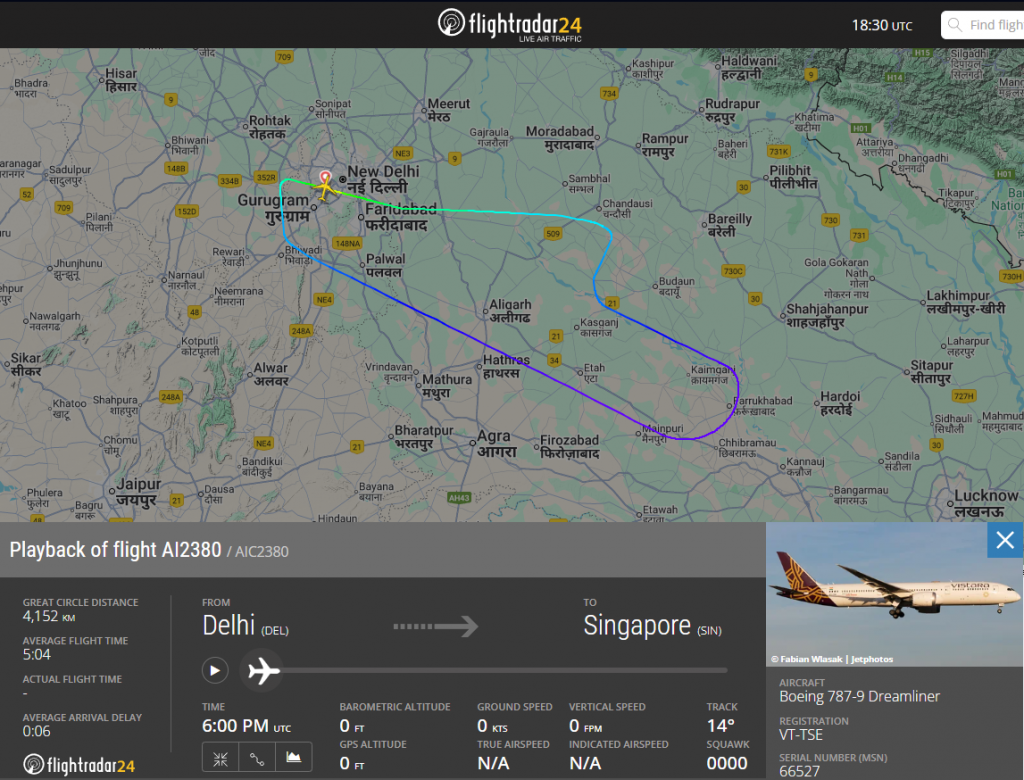
The aircraft departed Delhi at 18:22 local time, slightly behind its scheduled departure of 17:30.
After climbing to FL330 (33,000 feet), the flight crew received an APU fire indication.
Although the APU is typically shut down during cruise, any fire-related alert warrants immediate attention.
The crew opted for a precautionary diversion and safely landed back in Delhi on runway 28 approximately 45 minutes after reaching cruising altitude.
Aircraft Details
VT-TSE is a Boeing 787-9 Dreamliner originally delivered to Vistara on August 14, 2020. It was later transferred to Air India on November 12, 2024, retaining its original cabin configuration of C30W21Y248 and powered by two GEnx-1B engines.
Built at Boeing’s Everett facility, the aircraft had completed its first flight on March 22, 2020, making it 5.8 years old at the time of the incident.
The aircraft was active and had recently operated long-haul services between Delhi, London, Frankfurt, and Singapore.
Airline Response and Passenger Impact Following Incident in Delhi…
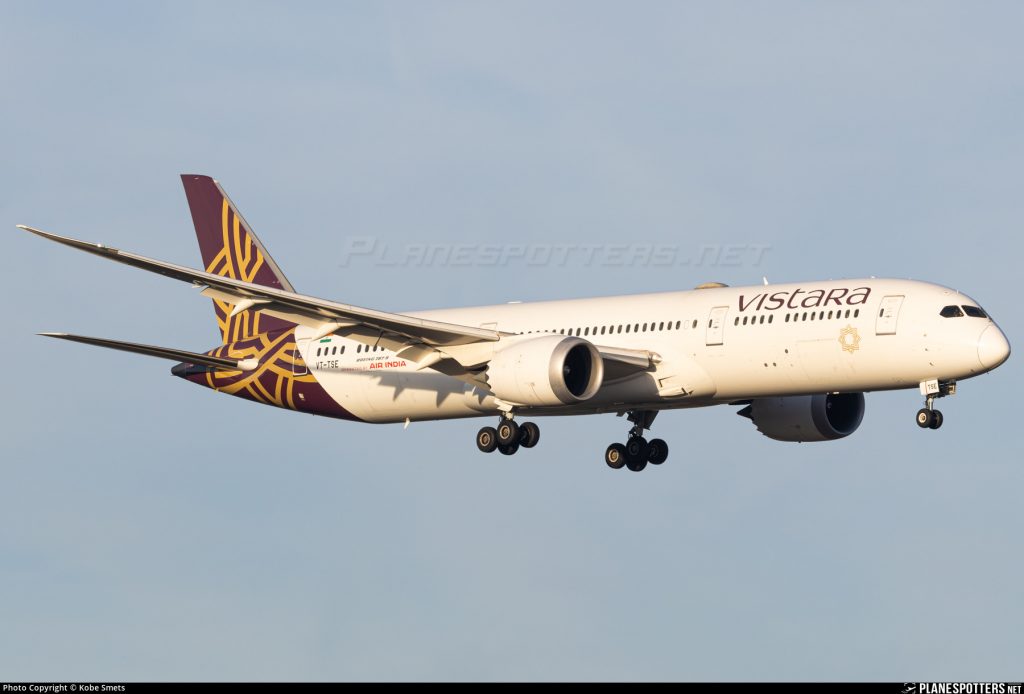
Air India confirmed that the crew’s decision to return was precautionary, citing a suspected technical issue.
A replacement aircraft, VT-TSD, was dispatched to complete the journey to Singapore, resulting in a delay of approximately five hours for the affected passengers.
No injuries were reported, and the airline’s swift response ensured minimal disruption to onward travel plans.
Following the incident, VT-TSE remained grounded for approximately 39 hours before returning to service.
Flight data from Flightradar24 shows the aircraft resumed operations on January 16, flying between Delhi and London, and later continuing its regular international rotations.
Safety and Operational Context
While APU fire warnings are rare, they are treated with utmost seriousness due to the potential risk of onboard fire.
The APU, located in the tail section, provides electrical power and air conditioning when the engines are not running.
Although it is typically inactive during cruise, any indication of malfunction can signal deeper electrical or sensor issues.
The crew’s decision to return aligns with standard safety protocols and reflects the airline’s commitment to passenger safety.
The January 14 incident involving VT-TSE underscores the importance of vigilance and procedural adherence in modern aviation.
Overall, Air India’s prompt action, combined with the aircraft’s safe return and rapid restoration to service, highlights the robustness of safety systems aboard the Boeing 787-9 and the professionalism of its flight crews.
Continue to follow The Aviation Hub for more analysis and insight!