Runway Excursion and Cliff Fall: Inside the StarSky F50 Accident at Mogadishu
 By The Aviation Hub
4 min read
By The Aviation Hub
4 min read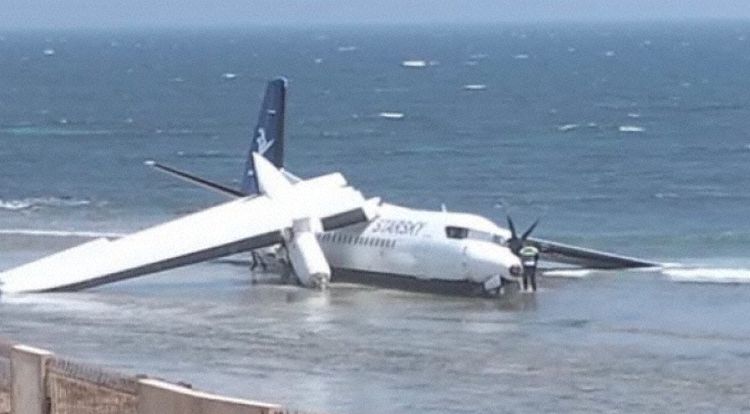
The aviation community was jolted on 10 February 2026 when a StarSky Aviation Fokker 50 suffered a dramatic runway excursion and cliff fall at Mogadishu Aden Adde International Airport.
Remarkably, all 55 occupants survived—a rare outcome in an accident that left the aircraft destroyed and lying on the shoreline.
A Routine Departure That Quickly Unravelled at Mogadishu…
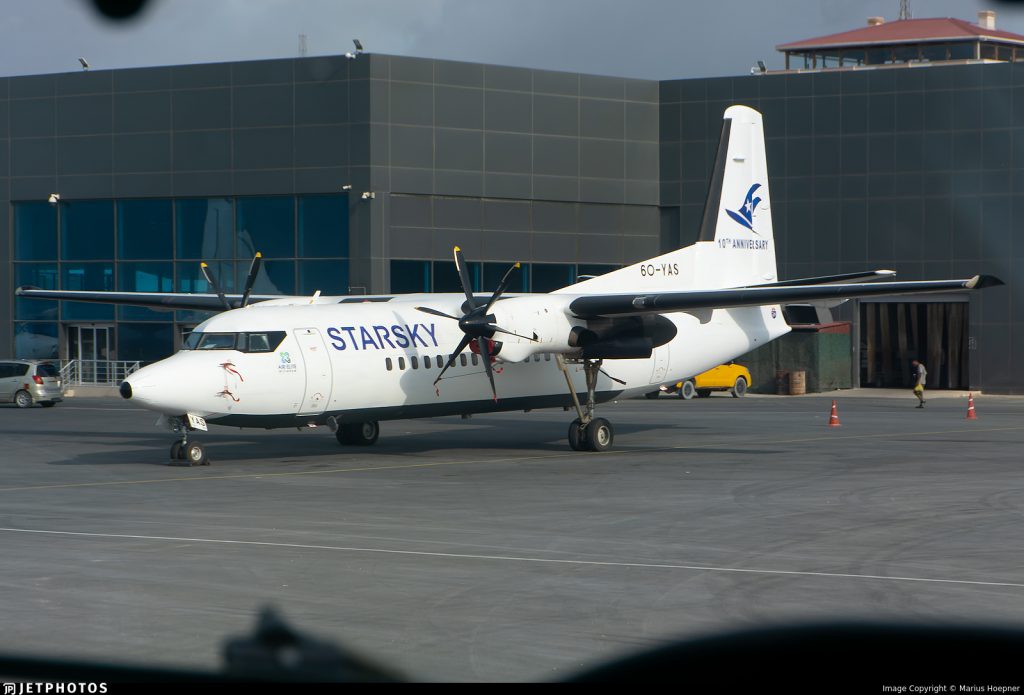
The aircraft, registered 6O‑YAS and operating a scheduled passenger service from Mogadishu to Galkayo, departed normally before the crew reported a technical malfunction shortly after takeoff.
According to Somalia’s Civil Aviation Authority, the crew elected to return immediately to Mogadishu, initiating an emergency landing back on Runway 23.
Preliminary reports from multiple regional outlets noted that the aircraft appeared to experience difficulties stabilising on approach, though the landing itself was initially survivable.
It was during the landing roll that the situation deteriorated rapidly.
Loss of Control and a Fall to the Mogadishu Shoreline
After touchdown, the crew reportedly lost directional control of the aircraft.
The Fokker 50 veered off the runway, overran the paved surface, and plunged down a short cliff at the end of the runway—an area where the airport’s elevation drops sharply toward the beach.
The aircraft came to rest at sea level, its fuselage largely intact but its structure heavily compromised.
Images shared by local journalists and aviation observers showed the turboprop lying on its belly in the sand, its nose section crumpled and its wings visibly damaged.
Despite the severity of the excursion, all passengers and crew were able to evacuate safely.
Survival Against the Odds
The survival of all 55 occupants has been widely described as “extraordinary,” given the combination of an emergency return, runway excursion, and cliff fall.
Aviation Safety Network’s preliminary classification lists the aircraft as “destroyed,” underscoring the magnitude of the structural damage.
Local media reports emphasised the rapid response of airport emergency services, who reached the aircraft within minutes.
Passengers were assisted away from the wreckage, with no fatalities or serious injuries reported.
Technical Malfunction Under Investigation
Somalia’s CAA confirmed that the aircraft returned due to a “technical malfunction,” though no further details have yet been released.
Investigators will examine the nature of the malfunction, the aircraft’s handling characteristics during the emergency approach, and the crew’s ability to maintain directional control during the landing roll.
The Fokker 50, manufactured in 1990 and powered by Pratt & Whitney Canada PW125B engines, has a long operational history in East Africa.
While the type is known for its ruggedness and suitability for challenging environments, the accident raises questions about maintenance oversight, operational pressures, and the ageing turboprop fleets serving the region.
Mogadishu Airport Geography and Contributing Factors
Aden Adde International Airport’s geography is likely to feature prominently in the investigation.
Runway 23 terminates close to the coastline, with only a short distance between the runway end and the drop to the beach below.
Aviation observers have long noted that any runway excursion in this direction carries elevated risk due to the abrupt terrain change.
Weather conditions at the time have not been cited as a factor, and early reporting suggests the aircraft’s technical issues and subsequent loss of control were the primary contributors.
A Rare Outcome and a Critical Inquiry Ahead
While the accident resulted in the total loss of the aircraft, the absence of fatalities stands out as a significant outcome—one that aviation professionals and passengers alike do not take for granted.
The investigation now underway will seek to determine the root cause of the malfunction, assess the crew’s decision-making and handling, and evaluate whether airport infrastructure or operational procedures played a role.
For StarSky Aviation, the incident represents a major operational setback and a test of crisis management.
For Somalia’s aviation authorities, it is an opportunity to reinforce safety oversight and ensure that lessons from this near‑catastrophic event are fully absorbed.
As the inquiry progresses, the Mogadishu accident will remain a focal point for regional aviation safety discussions—an incident where everything went wrong, yet everyone survived.
Continue to follow The Aviation Hub for more analysis and insight!
Advertise with us Your brand, in front of an aviation audience Home page and in-article placements, sold directly, one advertiser per slot. From £250 a year. See the rates