What The NTSB Report Tells Us About The Potomac River Mid-Air Crash
 By The Aviation Hub
8 min read
By The Aviation Hub
8 min read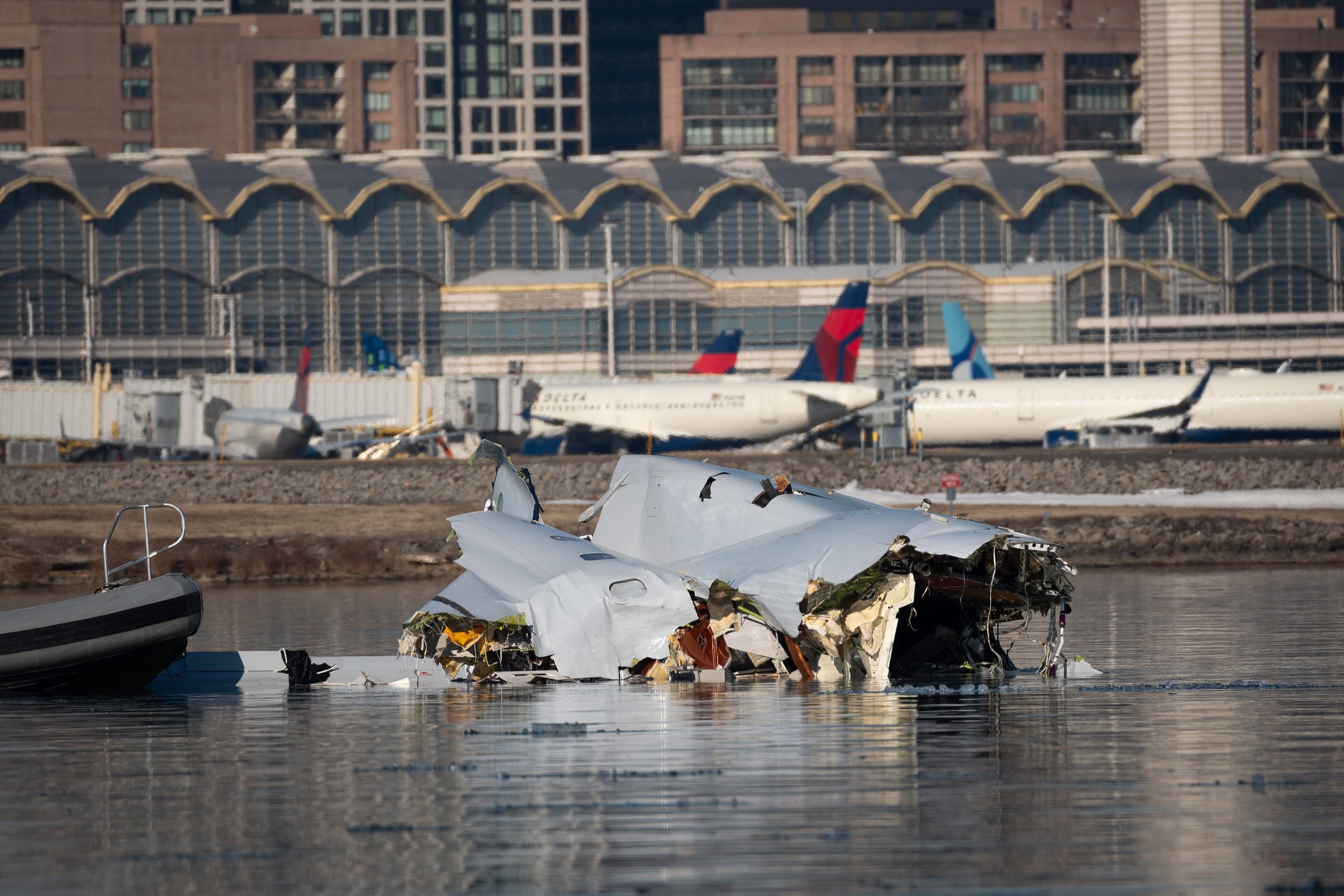
On the night of January 29, 2025 over the Potomac River, a Sikorsky UH-60L Black Hawk operated by the US Army as PAT25 collided with a PSA Airlines CRJ700 operating as Flight 5342 on short final to runway 33 at Ronald Reagan Washington National Airport.
The impact, just half a mile southeast of the airport over the Potomac River, claimed 67 lives and destroyed both aircraft.
The National Transportation Safety Board investigation does not point to a single catastrophic error.
Instead, it describes a layered breakdown: flawed airspace design, overreliance on visual separation, high controller workload, degraded communication, technological gaps, and systemic safety management shortcomings across multiple organisations.
This was not simply a failure in the final seconds before impact. It was the culmination of years of unresolved risk in one of the most complex pieces of airspace in the United States.
The Design Flaw: Helicopter Route 4 and the Runway 33 Approach Over The Potomac…
At the core of the accident lies a structural issue: the placement of Helicopter Route 4 in close proximity to the runway 33 final approach path at Reagan National.
The NTSB found that the Federal Aviation Administration positioned Route 4 such that it ran dangerously close to aircraft on visual approaches to runway 33, without procedural mitigations to guarantee separation.
Crucially, the FAA Air Traffic Organization failed to regularly review and reassess the route despite data showing repeated close encounters between helicopters and fixed-wing aircraft.
Risk indicators were present in multiple systems, including safety reporting channels and proximity data analysis. Controllers had raised concerns.
Yet no meaningful structural change occurred before tragedy struck.
In essence, the system normalised a geometry that required precision, vigilance and flawless execution every single time — a brittle safety model in a high-density terminal environment.
An Overreliance on “See and Avoid”
The report is particularly critical of the heavy dependence on pilot-applied visual separation in the Reagan terminal area.
Visual separation is a legitimate and widely used tool. However, at DCA it had evolved from an operational aid into the primary method of deconflicting mixed helicopter and fixed-wing traffic.
This shift occurred without sufficient consideration of the limitations of human vision, especially at night.
Both crews were operating in visual meteorological conditions, but darkness over Washington, DC presents a challenging backdrop.
City lighting, multiple converging traffic streams and limited relative motion reduce target conspicuity.
The helicopter crew, using night vision goggles, faced additional perceptual constraints.
The CRJ crew, meanwhile, were conducting a demanding circling manoeuvre to runway 33.
The NTSB determined that the helicopter crew reported “traffic in sight” without positively identifying the correct aircraft.
Their expectation — reinforced by incomplete information — shaped their scan and degraded their judgement.
This was a classic human factors trap: confirmation bias in a high-workload environment.
The see-and-avoid concept failed not because pilots were negligent, but because the environment demanded more than the human visual system could reliably deliver.
Controller Workload and Position Combining
At the time of the collision, the DCA tower controller was working combined local control and helicopter control positions.
Traffic volume was elevated, and the airport arrival rate was placing strain on operations.
The NTSB found that high workload degraded controller situation awareness. Duties were misprioritised.
Traffic advisories were incomplete. Critically, no safety alert was issued to either crew, even as their flight paths converged.
A conflict alert activated approximately 26 seconds before impact. However, it did not result in an effective intervention.
The report also highlights a blocked transmission.
As the controller instructed PAT25 to pass behind the CRJ, one of the helicopter pilots keyed the microphone, unintentionally blocking the most critical portion of the instruction. The crew did not hear the directive to pass behind.
Separate frequencies for helicopter and fixed-wing traffic further complicated awareness.
The investigation identified systemic risks associated with radio management practices in mixed operations environments.
The lesson is sobering: workload compression erodes safety margins quietly, until a single missed cue proves fatal.
Altitude Deviations and Altimeter Tolerances
Another contributory factor was the helicopter’s altitude.
The Army crew believed they were at or below the published maximum altitude for Route 4.
However, the NTSB determined that the helicopter was actually above the route’s ceiling due to allowable error tolerances in barometric altimeters — tolerances the Army had not adequately emphasised in training.
This altitude exceedance reduced vertical separation from arriving aircraft and eliminated what little buffer remained.
It was not gross non-compliance. It was a small deviation in a system that depended on narrow margins.
Technology: A System That Did Not Warn Loudly Enough
Both aircraft were equipped in accordance with regulations. Yet neither received alerts sufficient to prevent the collision.
The CRJ700 was fitted with TCAS.
However, because it was below the altitude threshold at which resolution advisories are issued, the crew received only a traffic advisory. No climb or descent command was generated.
The helicopter lacked integrated collision avoidance technology. Although it had a transponder capable of ADS-B Out, improper installation settings prevented ADS-B transmission.
Even if ADS-B Out had been functioning, the CRJ was not equipped with ADS-B In, limiting the practical benefit.
The NTSB’s simulations showed that if the CRJ had been equipped with ACAS Xa — the next-generation airborne collision avoidance system — it would have received earlier and more informative alerts.
Moreover, modifications to ACAS alerting thresholds could have reduced midair collision risk by more than 90 percent in this scenario.
Similarly, equipping rotorcraft with ACAS Xr could significantly improve protection in dense terminal airspace.
The technology to mitigate such risks exists. The regulatory framework and fleet equipage standards have lagged behind.
Traffic Volume and Unsustainable Arrival Rates Over The Potomac…
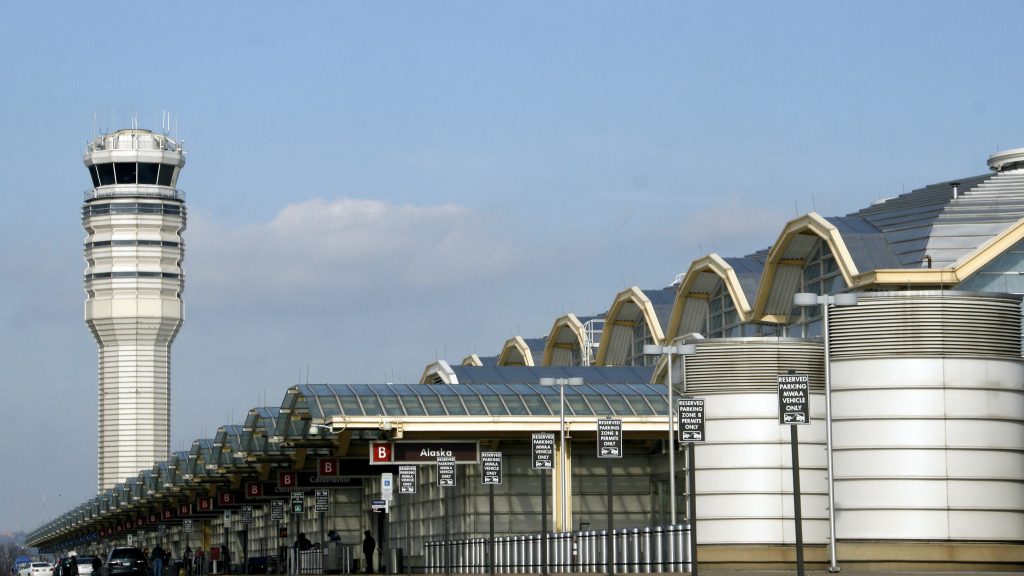
Beyond the immediate operational factors, the NTSB points to systemic stress at Reagan National.
Increasing traffic volume, evolving fleet mix and airline scheduling practices have strained tower resources.
The airport arrival rate was described as unsustainable relative to operational complexity.
Offloading to runway 33 added further challenges, particularly when helicopter routes intersected approach corridors.
DCA is a constrained airport in a politically sensitive airspace environment. Efficiency pressures are constant.
Yet the investigation makes clear that capacity planning and safety margins were misaligned.
When arrival rates push the system to its limits, even routine complexities become hazards.
Safety Management and Data Fragmentation
One of the most striking elements of the report is its criticism of safety management processes.
The FAA had an established Safety Management System, yet it failed to act decisively on available risk data.
The Army’s SMS was not fully implemented in its aviation operations and did not effectively capture recurring altitude exceedances or midair collision hazards.
Data existed. Analysis occurred. But integration and proactive mitigation were insufficient.
The NTSB also highlighted fragmented data sharing among the FAA, the Army and industry stakeholders.
Close proximity events, traffic advisory activations and near midair collisions were not systematically synthesised into actionable change.
Safety culture is not merely policy — it is the willingness to act before an accident forces action.
The Recommendations: A Blueprint for Reform
The NTSB issued 33 recommendations to the FAA, eight to the Army, and additional directives to other agencies and technical bodies.
Among the most urgent actions were prohibiting helicopter operations on the most problematic segment of Route 4 when runways 15 and 33 are active, and designating an alternative route.
Broader reforms include:
- Modernising airborne collision avoidance technology and accelerating ACAS X implementation.
- Mandating ADS-B In with audible alerting in airspace where ADS-B Out is required.
- Enhancing conflict alert systems and controller training on visual separation.
- Requiring structured risk assessment tools for supervisory personnel.
- Evaluating and adjusting airport arrival rates to reflect operational complexity.
- Improving radio communication reliability and alerting for blocked transmissions.
- Requiring rotorcraft operating in Class B airspace to be equipped with ACAS Xr.
- Strengthening safety data sharing and establishing standard proximity indexes.
This is not incremental change. It is a call for systemic recalibration.
What This Means for Air Traffic Management Over The Potomac…
Looking forward, the implications for Reagan National are profound.
First, helicopter route design around DCA will almost certainly undergo permanent restructuring.
The previous geometry proved incompatible with safe high-density fixed-wing operations.
Second, arrival rate management will face renewed scrutiny. Efficiency targets must be balanced against operational complexity.
Time-based flow management and more conservative arrival rates over the Potomac River may become central to daily operations.
Third, controller staffing and position combining practices will likely tighten. Real-time risk assessment tools could become mandatory during periods of elevated workload.
Fourth, technology will take on a larger role. As ACAS X variants mature, DCA may serve as a testbed for enhanced low-altitude alerting in dense mixed-traffic environments.
Finally, the airport may become a case study in integrated safety data analytics.
Proximity monitoring, predictive risk modelling and cross-agency data sharing could redefine how terminal airspace hazards are identified and mitigated.
Reagan National operates at the intersection of political, military and civilian aviation.
Its complexity is unlikely to diminish. But complexity need not equate to vulnerability — provided the system evolves.
A Turning Point for Mixed-Use Terminal Airspace Over The Potomac…
The Potomac collision is a stark reminder that midair risk has not vanished in the era of advanced avionics and satellite surveillance.
The tragedy was not caused by a single reckless act.
It emerged from a system that accepted narrow margins, trusted human vision beyond its limits, and deferred structural fixes despite accumulating evidence.
The findings challenge regulators, operators and military authorities alike.
They underscore the need to design airspace and procedures that assume human limitations rather than deny them.
If the recommendations are fully implemented, Reagan National may become safer than it has ever been.
If they are not, the vulnerabilities identified in AIR-26-02 will remain embedded not only in Washington’s skies, but in complex terminal environments worldwide.
The accident over the Potomac was catastrophic. Whether it becomes transformative depends entirely on what happens next.
Continue to follow The Aviation Hub for more analysis and insight!