
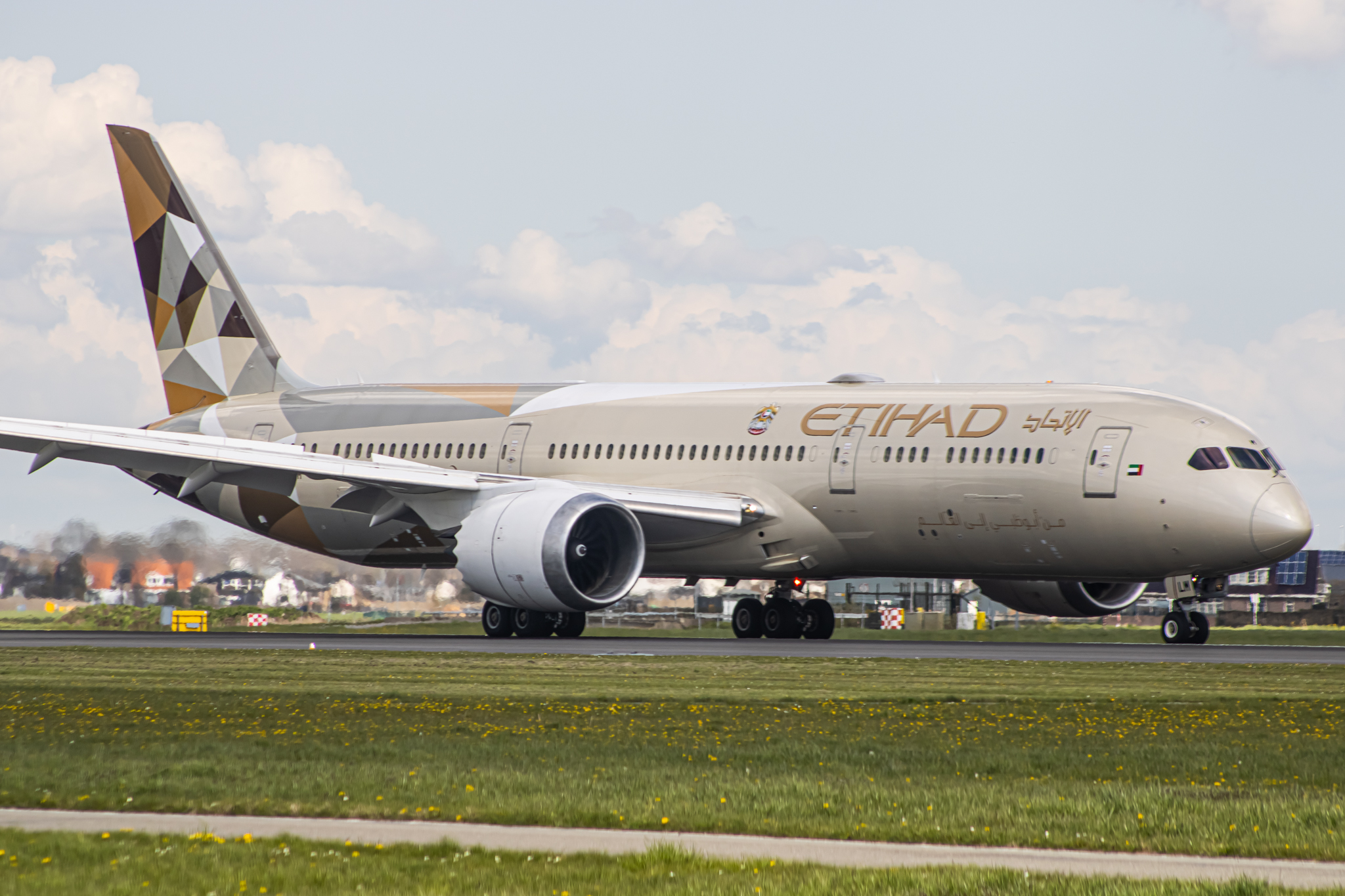
Abu Dhabi based Etihad Airways ended 2025 with unprecedented financial momentum, reporting a record AED 2.6 billion (USD 698 million) profit for the year—its highest in the airline’s two‑decade history.
The result marks a defining moment for the Abu Dhabi‑based carrier, which has spent the past several years reshaping its network, fleet, and cost structure under a disciplined transformation strategy.
The performance underscores Etihad’s emergence as one of the most efficiently run full‑service airlines in the Middle East, with profitability now firmly embedded rather than episodic.
For an airline once associated with heavy investment cycles and ambitious global expansion, the latest results signal a new era: leaner, sharper, and strategically focused.
A Year Defined by Network Discipline in Abu Dhabi and Commercial Strength
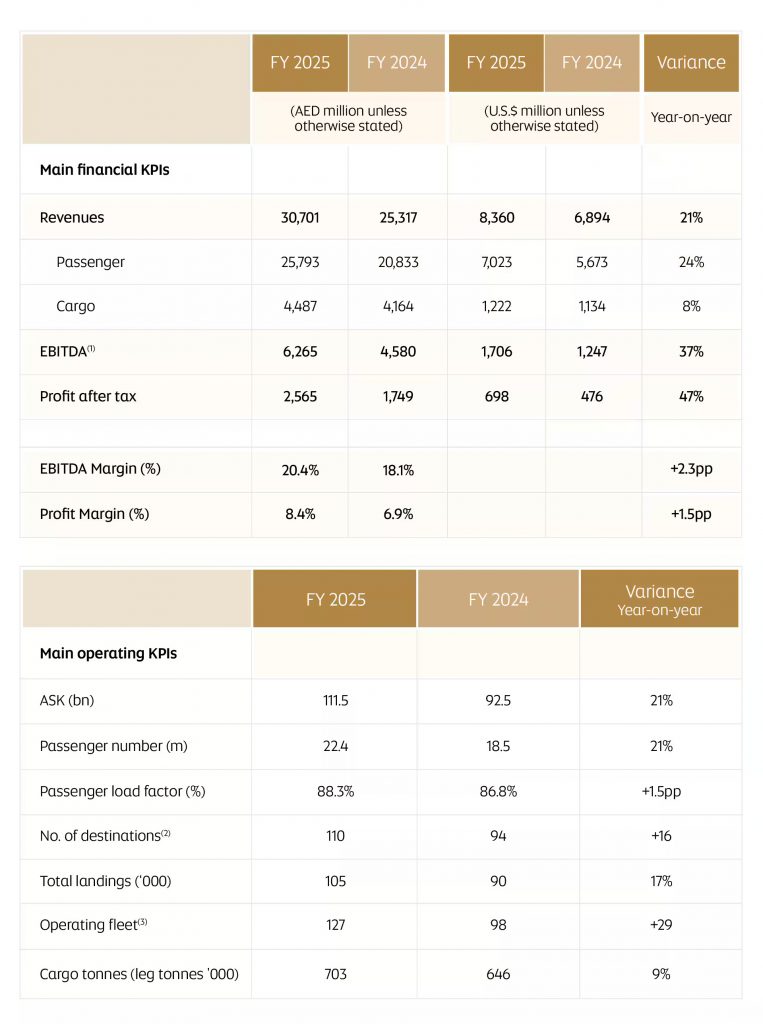
Etihad’s record profit was driven by a combination of strong passenger demand, improved yields, and a network strategy that prioritised sustainable growth over scale for its own sake.
The airline has spent the past several years recalibrating its route map, concentrating on high‑performing markets and strengthening Abu Dhabi’s position as a connecting hub.
Long‑haul demand remained robust throughout 2025, particularly across North Asia, Europe, and key markets in the Indian subcontinent.
Etihad’s focus on schedule reliability and premium‑cabin consistency helped the airline capture a larger share of high‑yield travellers, while its growing partnership ecosystem—including deepened ties with Air France‑KLM and expanded codeshares across Asia—boosted connectivity without the cost burden of rapid fleet expansion.
Cargo also played a meaningful role.
Although global freight markets softened compared with the pandemic‑era peak, Etihad Cargo maintained strong performance through targeted capacity deployment and a focus on pharmaceuticals, perishables, and e‑commerce.
Fleet Modernisation Continues to Pay Dividends
A central pillar of Etihad’s turnaround has been its disciplined approach to fleet planning.
The airline has steadily transitioned toward a simplified, fuel‑efficient fleet built around the Boeing 787 Dreamliner and Airbus A350 families.
These aircraft have delivered double‑digit fuel‑burn improvements compared with the previous generation, directly supporting both profitability and sustainability goals.
The introduction of additional A350‑1000s in 2024 allowed Etihad to upgauge key long‑haul routes while maintaining a premium‑heavy cabin configuration aligned with market demand.
Meanwhile, the 787‑9 and 787‑10 continued to serve as the backbone of the network, offering flexibility across medium‑ and long‑haul markets.
Etihad’s fleet strategy is now one of the most conservative in the region—deliberately so.
Rather than chasing rapid expansion, the airline has prioritised aircraft that deliver the highest return on deployed capacity.
This approach has reduced operational complexity, improved reliability, and strengthened unit economics across the network.
Abu Dhabi Aviation Ecosystem Strengthens the Airline’s Position
Etihad’s record performance is also closely tied to Abu Dhabi’s broader aviation and tourism strategy.
The opening of Terminal A at Abu Dhabi International Airport has transformed the passenger experience, providing the airline with a modern, scalable hub designed around efficient transfers and premium service.
The terminal’s expanded capacity, advanced baggage systems, and streamlined security processes have supported Etihad’s operational performance during a period of rising passenger numbers.
The new facility also enhances Abu Dhabi’s appeal as a global transit point, complementing the emirate’s growing tourism sector and long‑term economic diversification plans.
Etihad’s alignment with Abu Dhabi’s strategic vision has been a consistent theme throughout its transformation.
The airline is no longer pursuing global dominance; instead, it is building a sustainable, commercially resilient model that supports the emirate’s connectivity and economic ambitions.
Leadership Focused on Sustainable Profitability
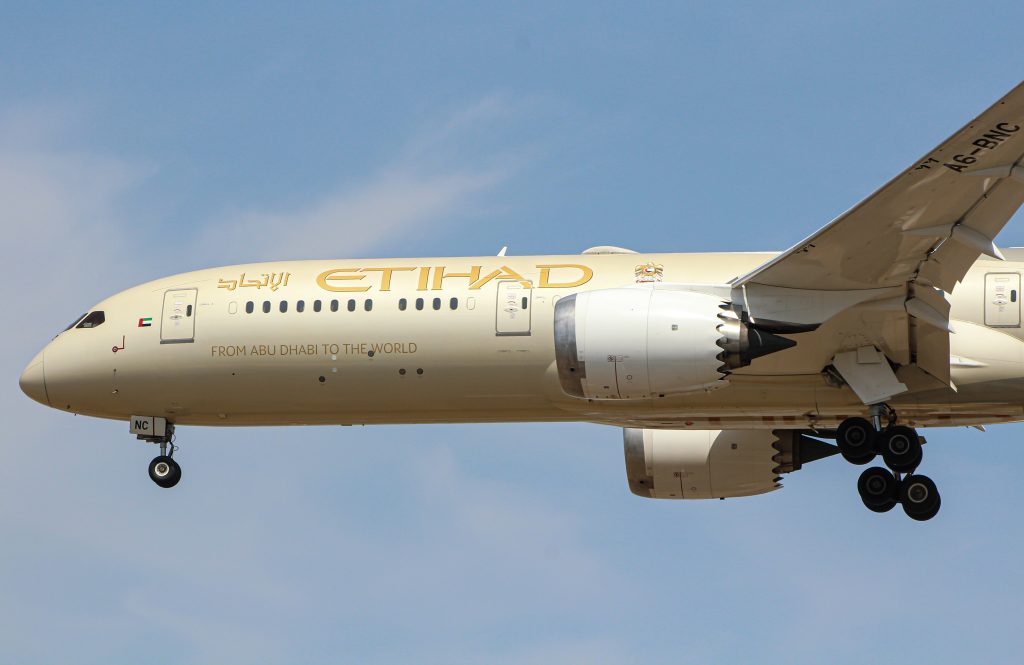
Etihad’s leadership has repeatedly emphasised that profitability is now a non‑negotiable metric.
The airline’s transformation programme—initiated several years ago—has reshaped everything from procurement and maintenance to network planning and digital operations.
Cost discipline has been a defining feature.
Etihad has streamlined its supplier base, renegotiated major contracts, and invested heavily in digital tools that improve forecasting, crew planning, and fuel efficiency.
These initiatives have delivered structural savings that continue to compound year after year.
At the same time, the airline has invested in product enhancements that reinforce its premium positioning.
The refreshed Business Class cabin, upgraded lounges, and improved onboard service standards have helped Etihad differentiate itself in an increasingly competitive Gulf market.
The result is an airline that has found the balance between cost efficiency and product quality—something that has eluded many full‑service carriers in the post‑pandemic era.
Sustainability Remains a Core Strategic Priority
Etihad has long positioned itself as a leader in sustainable aviation, and 2025 was no exception.
The airline continued to expand its Sustainable Aviation Fuel (SAF) partnerships, conducted additional eco‑flight test missions, and leveraged advanced flight‑planning tools to reduce emissions across its network.
The airline’s Greenliner and Sustainable50 programmes—built around the 787 and A350 fleets—remain central to its environmental strategy.
These initiatives have allowed Etihad to trial new technologies, collaborate with manufacturers, and share data that supports industry‑wide decarbonisation efforts.
While the global availability of SAF remains limited, Etihad’s proactive approach positions it well for future regulatory requirements and customer expectations, particularly among corporate travellers with emissions‑reduction commitments.
Overall Outlook for 2025: Growth in Abu Dhabi, but on Etihad’s Terms
With a record profit now on the books, Etihad enters 2026 from a position of strength.
The airline is expected to continue expanding its network, but in a measured, strategically aligned manner.
New destinations in Asia and Europe are likely, supported by incremental fleet growth and deeper partnerships.
The competitive landscape in the Gulf remains intense, with Emirates, Qatar Airways, and Saudia all pursuing ambitious growth strategies.
Yet Etihad’s differentiated model—smaller, more agile, and laser‑focused on profitability—gives it a unique position in the region.
If the airline maintains its current trajectory, 2026 could mark the beginning of a new chapter: one where Etihad is not only profitable, but consistently among the most financially resilient carriers in the global full‑service segment.
Continue to follow The Aviation Hub for more analysis and insight!
Advertise with us Your brand, in front of an aviation audience Home page and in-article placements, sold directly, one advertiser per slot. From £250 a year. See the rates