Lufthansa Cargo Sees Significant Growth in 2026
 By The Aviation Hub
4 min read
Updated March 30, 2026
By The Aviation Hub
4 min read
Updated March 30, 2026 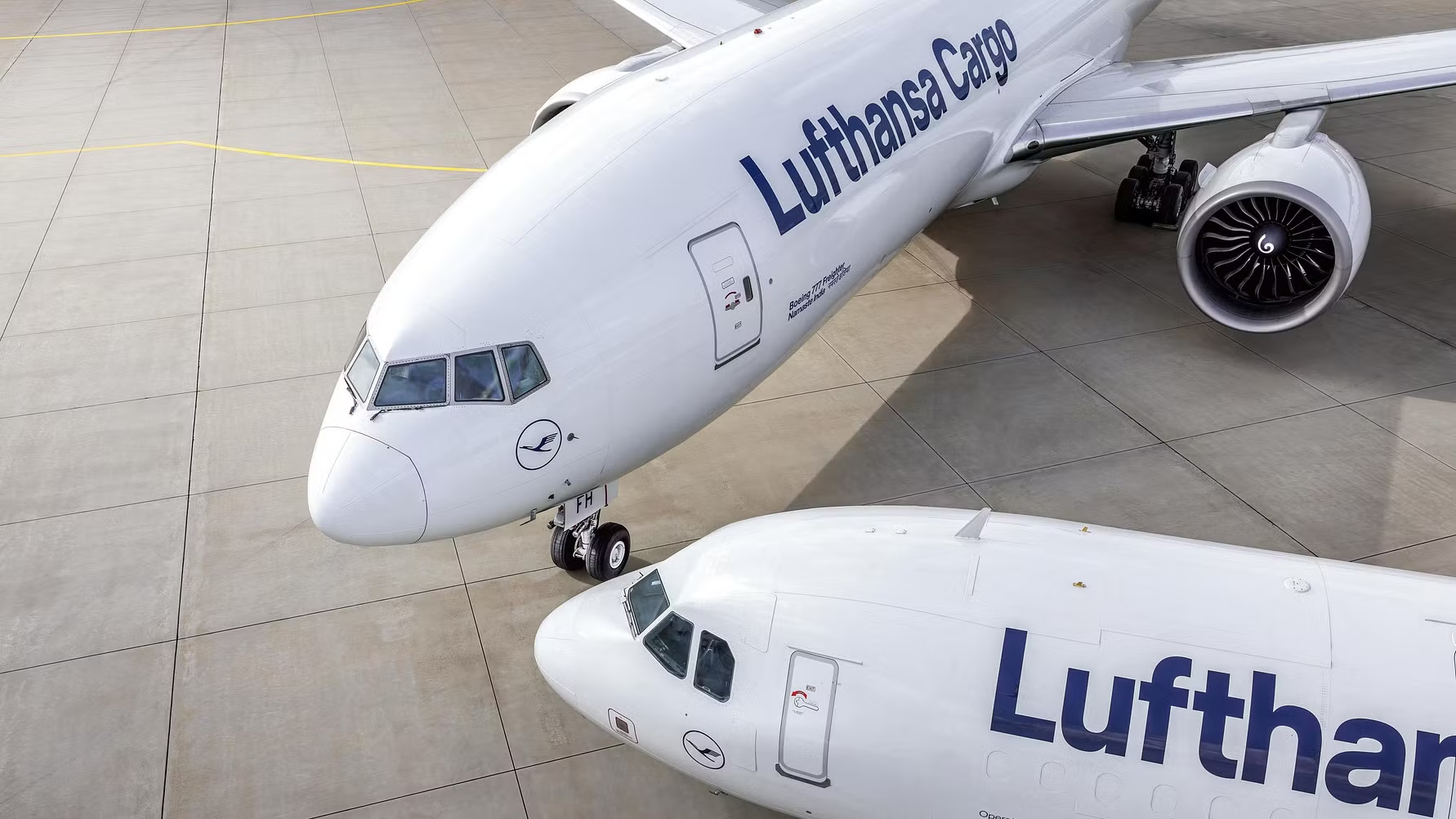
Lufthansa Cargo has set the tone for the year ahead with the launch of its 2026 summer schedule, reinforcing its position as one of Europe’s most strategically connected and operationally flexible freight carriers.
The new programme, effective since 29 March, underscores the company’s commitment to agility, global reach, and the continued strengthening of supply chain resilience.
As the press release notes, the airline “continues to focus on flexible and reliable transport solutions for its customers,” a theme that runs through every layer of the updated network.
Freighter Fleet Drives Global Reach
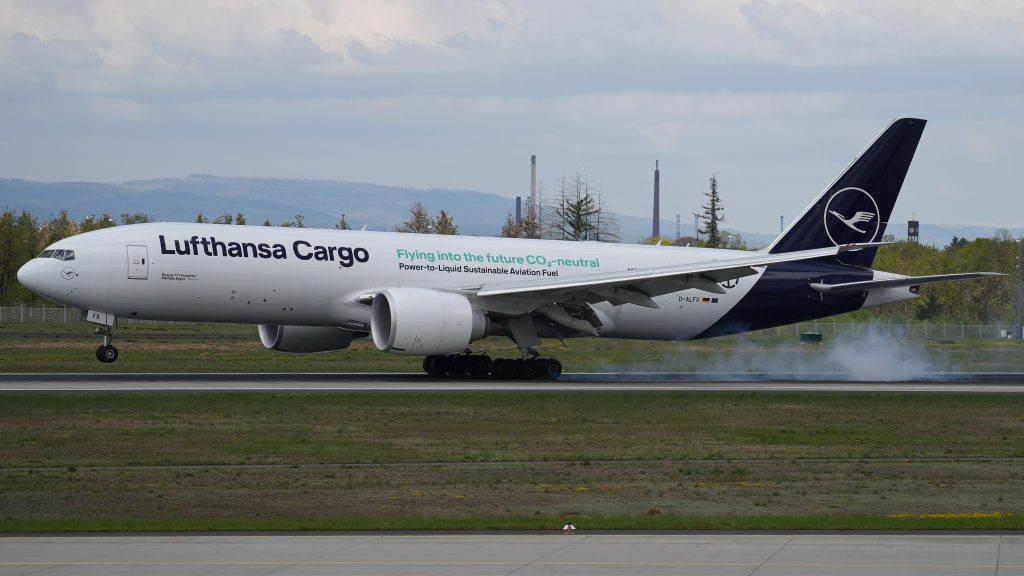
At the core of the summer schedule is Lufthansa Cargo’s long‑haul freighter fleet of 18 Boeing 777Fs, which remains the backbone of its global operations.
Across the coming months, the carrier will operate 87 weekly freighter flights to as many as 35 destinations worldwide.
The Asian market continues to dominate demand patterns, reflected in up to 48 weekly connections to 17 destinations across the region.
One of the most notable developments is the strengthening of the transpacific link between Southeast Asia, China, and the United States.
The rotation from Ho Chi Minh City via Shanghai to Los Angeles will increase to two weekly frequencies, reinforcing Lufthansa Cargo’s unique position as “the only carrier that can offer its customers main deck capacity on the route from Vietnam to China.”
This capability gives the airline a competitive edge in one of the world’s most dynamic manufacturing corridors.
India also returns to prominence in the network. Delhi will rejoin the freighter schedule in May with a weekly service, contributing to a total of six weekly connections to the Indian market.
Meanwhile, the Americas remain a critical pillar, with 33 weekly flights linking Frankfurt to 11 destinations in North America and four in South America.
Toronto will see an additional frequency, further strengthening transatlantic capacity.
Lufthansa Cargo European Network Expands to Six Hubs
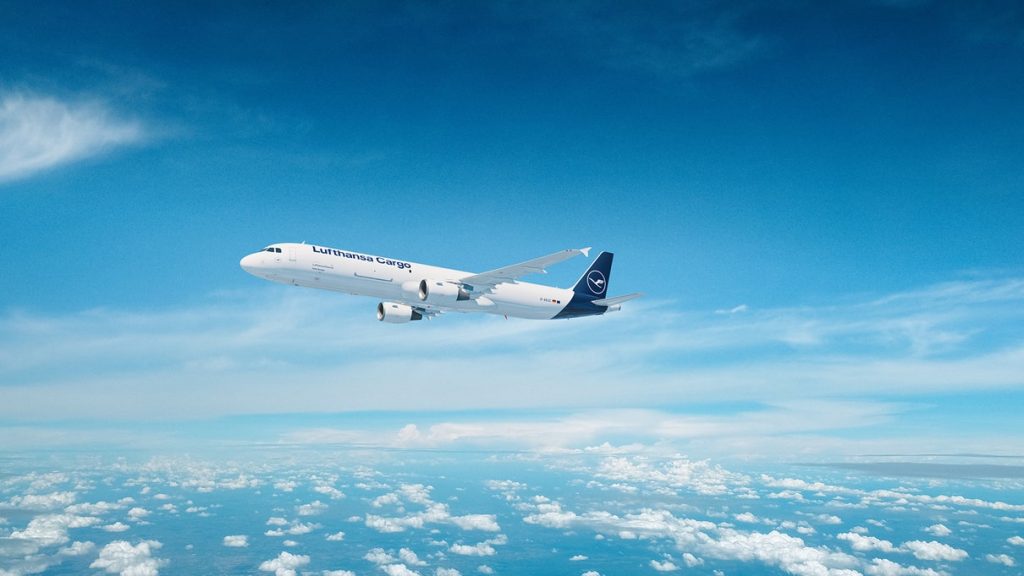
Lufthansa Cargo’s short‑ and medium‑haul operations continue to grow in strategic importance.
The four Airbus A321F freighters now serve Rome and Algiers weekly, contributing to 33 intra‑European and Africa‑bound connections.
These services feed into the airline’s major hubs in Frankfurt and Munich, enabling rapid cargo flows across the continent.
A major structural shift is the expansion to six European cargo hubs: Frankfurt, Munich, Vienna, Brussels, Rome, and soon Zurich.
This evolution is driven by deeper cooperation with SWISS WorldCargo, unlocking commercial and operational synergies that will allow customers of both carriers to access “one of the most comprehensive networks in the industry.”
The harmonisation of products and services across the Lufthansa Group’s cargo brands marks a significant step toward a more unified and efficient European freight ecosystem.
Belly Capacity Strengthens Group‑Wide Offering
Beyond its freighter operations, Lufthansa Cargo continues to leverage the extensive belly capacity of the Lufthansa Group’s passenger airlines.
The addition of Lufthansa City Airlines to the belly portfolio enhances responsiveness to shifting demand and supports more flexible routing options through Frankfurt and Munich.
Several long‑haul passenger routes will see increased frequencies this summer, further boosting cargo capacity.
From Frankfurt, Lufthansa will expand services to St. Louis, Cape Town, Rio de Janeiro, Raleigh‑Durham, and Nairobi, while Washington will be served twice daily.
Minneapolis returns with three weekly flights from April. Munich maintains its links to São Paulo and Johannesburg with three weekly services.
Across the wider group, network growth continues. ITA Airways reinstates two daily flights to London Heathrow, Brussels Airlines adds Kilimanjaro and increases Freetown frequencies, Discover Airlines launches year‑round Seychelles service and expands Las Vegas flights, and Austrian Airlines resumes daily Los Angeles and Tokyo‑Narita operations.
SunExpress also strengthens its presence in Germany and the UK with additional frequencies.
Strategic Positioning for Global Growth at Lufthansa Cargo
Lufthansa Cargo CEO Ashwin Bhat emphasised the strategic significance of the expanded network, stating that the soon‑to‑be six hubs “enable one of the densest networks in our industry on the continent.”
He highlighted the combined strength of the freighter fleet and the group’s belly capacity as key enablers of flexibility, reliability, and faster shipment flows.
The airline’s role as the home freight carrier in Germany, Switzerland, Italy, Belgium, and Austria positions it strongly for continued growth in the global air cargo market.
The 2026 summer schedule reflects Lufthansa Cargo’s broader strategy: build a network capable of adapting to global volatility while capturing emerging opportunities across continents.
With access to up to 7,500 weekly belly flights to more than 350 destinations across the Lufthansa Group, the carrier is reinforcing its mission of “Enabling Global Business” through scale, connectivity, and operational resilience.
As global supply chains continue to evolve, Lufthansa Cargo’s expanded footprint and strengthened partnerships place it in a commanding position to support industries that rely on speed, reliability, and global reach.
The summer schedule is not just a timetable update, it is a statement of intent from one of the world’s most influential cargo carriers.
Continue to follow The Aviation Hub for more analysis and insight!
Advertise with us Your brand, in front of an aviation audience Home page and in-article placements, sold directly, one advertiser per slot. From £250 a year. See the rates