2 Days On From The United Airlines 767 Truck Collision in Newark: What We Know So Far
 By The Aviation Hub
4 min read
By The Aviation Hub
4 min read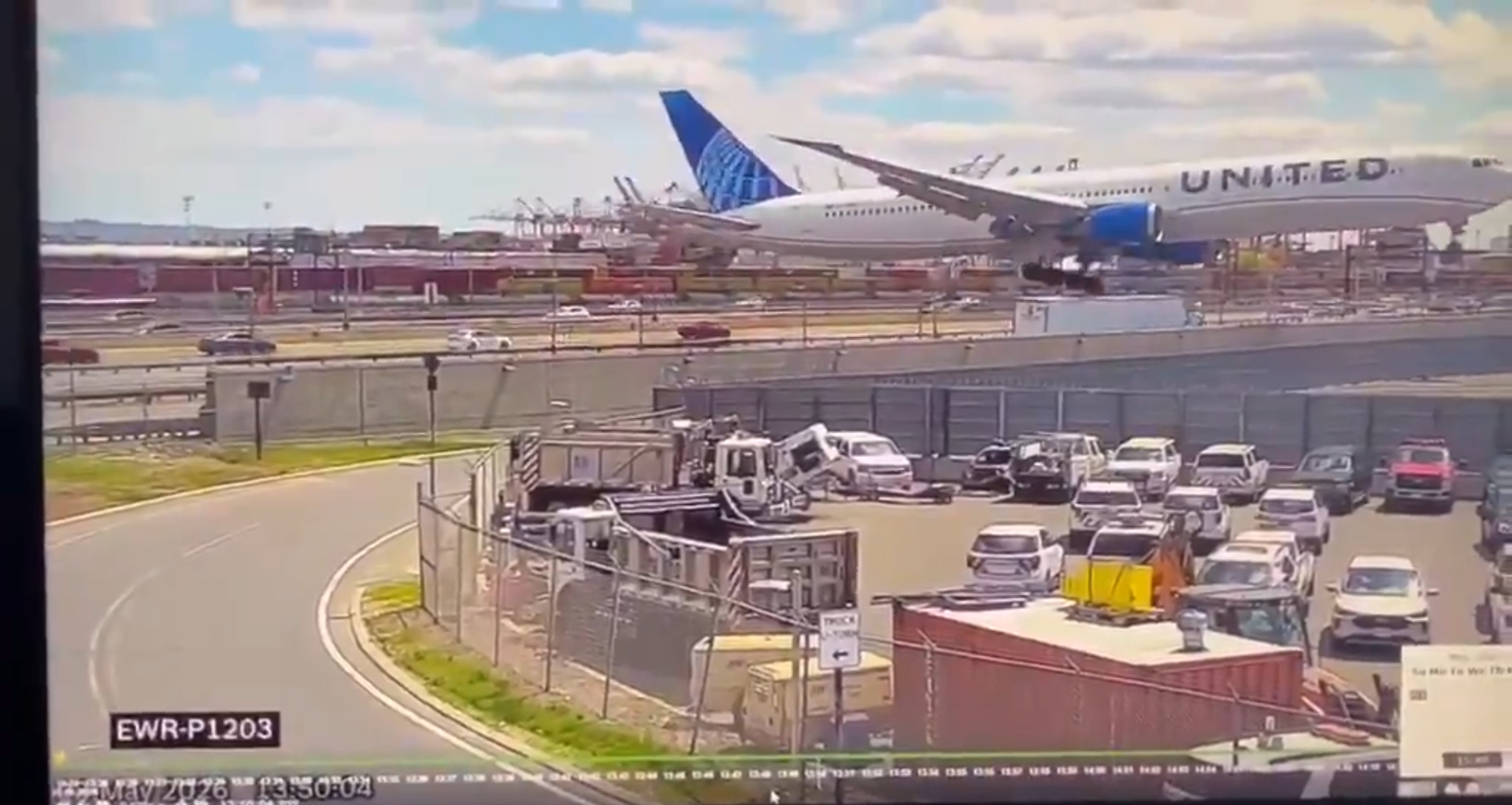
Two days on from the United Airlines 767 truck collision at Newark International Airport, here is what we know so far.
On Sunday, May 3, 2026, United Airlines flight UA169, a Boeing 767-400ER registered N77066, arrived from Venice, Italy, to Newark Liberty International Airport under gusty conditions.
The aircraft, carrying 218 passengers and 13 crew, was performing a circling visual approach to runway 29 when it struck a light pole and the trailer of a bakery delivery truck on the New Jersey Turnpike, approximately 220 meters before the runway threshold.
Despite the impact, the aircraft landed safely and taxied to the apron without further incident.
The crew later reported feeling a jolt just before touchdown and discovered a hole in the fuselage.
No injuries were reported among passengers or crew, though the truck driver sustained minor injuries.
Both the aircraft and the truck suffered substantial damage.
Weather and Approach Conditions From The United Airlines Accident in Newark
Meteorological data from Newark (KEWR) at the time of the incident indicated strong, gusty winds from 300–320 degrees, reaching up to 36 knots.
Visibility remained good at 10 miles, but the crosswind component was significant for runway 29.
The Boeing 767’s approach path required a tight visual maneuver, and the gusting conditions likely contributed to the aircraft’s low trajectory over the highway.
Aircraft Details
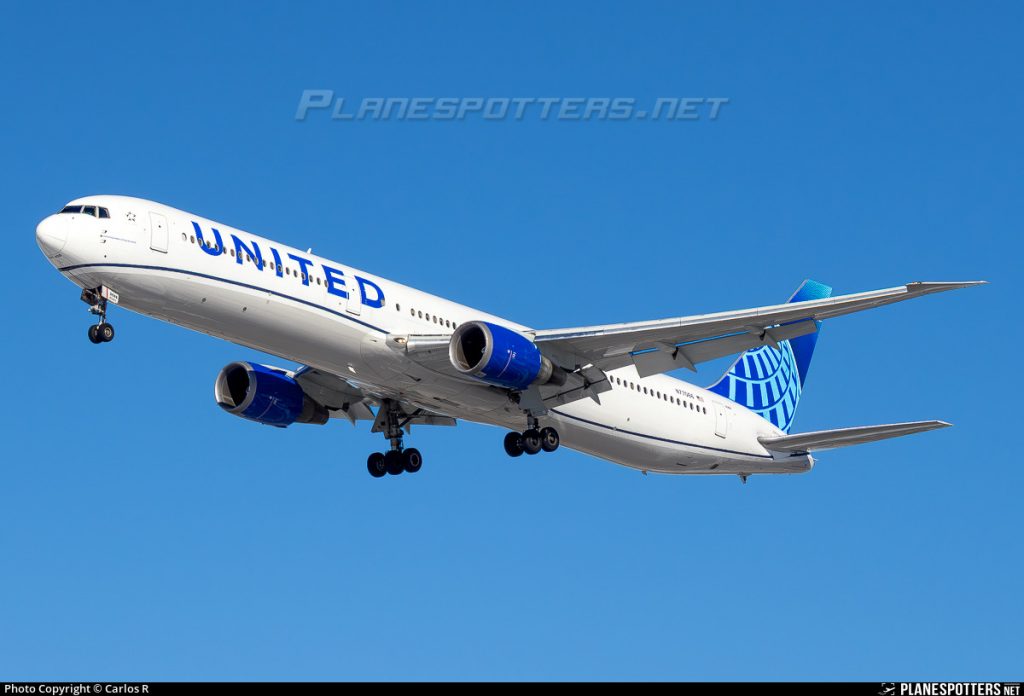
The aircraft involved, N77066, is a 23.9-year-old Boeing 767-424ER built at Boeing’s Everett facility and delivered to Continental Airlines in May 2002.
It joined United Airlines in October 2010 following the merger and has undergone several cabin reconfigurations, most recently in May 2023.
According to fleet records, the aircraft had been parked at Newark following the collision pending inspection and repair.
Official Responses Following United Airlines Newark Accident
The Federal Aviation Administration (FAA) confirmed the event, stating: “Aircraft struck a pole on the New Jersey Turnpike, Newark, NJ,” and noted one minor injury on the ground.
The National Transportation Safety Board (NTSB) classified the occurrence as an accident due to the extent of damage sustained by the aircraft.
An investigator arrived in Newark on Monday to interview the flight crew and collect evidence.
United Airlines issued a statement acknowledging that flight 169 “came into contact with a light pole” during its final approach.
The airline emphasized that the aircraft landed safely and that no passengers or crew were injured. “Our maintenance team is evaluating damage to the aircraft,” a spokesperson said.
“We will conduct a rigorous flight safety investigation into the incident, and our crew has been removed from service as part of the process.”
The Investigation
The NTSB has directed United Airlines to secure and provide both the cockpit voice recorder and flight data recorder to support the investigation.
A preliminary report is expected within 30 days.
Investigators will examine flight path data, crew decision-making, and environmental factors, including wind shear and approach geometry.
The FAA and Port Authority of New York and New Jersey are also assisting in the inquiry, focusing on airfield approach safety and potential obstructions near runway 29.
The proximity of the New Jersey Turnpike to the runway threshold has long been a consideration in Newark’s approach procedures, though incidents of this nature are rare.
Context and Industry Reaction
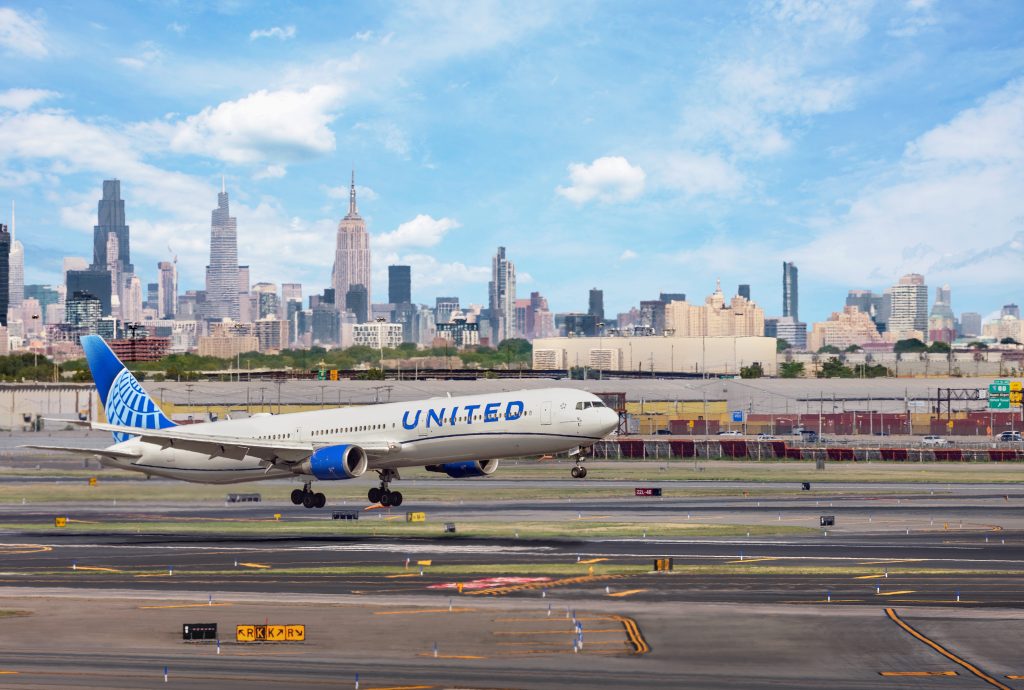
Aviation analysts have noted that while Newark’s runway 29 is routinely used for visual approaches, its alignment over the busy highway presents unique challenges, particularly in strong crosswinds.
The Boeing 767’s large wingspan and low approach profile can make clearance margins tight under gusty conditions.
The incident has prompted renewed discussion about approach safety at airports with nearby infrastructure.
“This is a reminder of how complex visual approaches can be when environmental conditions change rapidly,” said one industry expert quoted by The Independent.
“Even experienced crews can face unexpected variables when wind gusts and terrain combine.”
What Happens Next Following The Scenes in Newark
The damaged aircraft remains parked at Newark pending structural assessment. United Airlines has temporarily withdrawn the flight crew from active duty while the investigation proceeds.
The NTSB’s preliminary findings will determine whether procedural changes or additional training recommendations are warranted.
For passengers, the event underscores the resilience of modern aircraft and the professionalism of flight crews.
Despite the collision, the Boeing 767 maintained control and landed safely, a testament to robust design and disciplined cockpit management.
As of May 5, 2026, the NTSB continues its investigation, with updates expected later this month.
The aviation community will be watching closely for insights into how a routine approach turned into a rare and serious ground contact event.
Continue to follow The Aviation Hub for more analysis and insight!