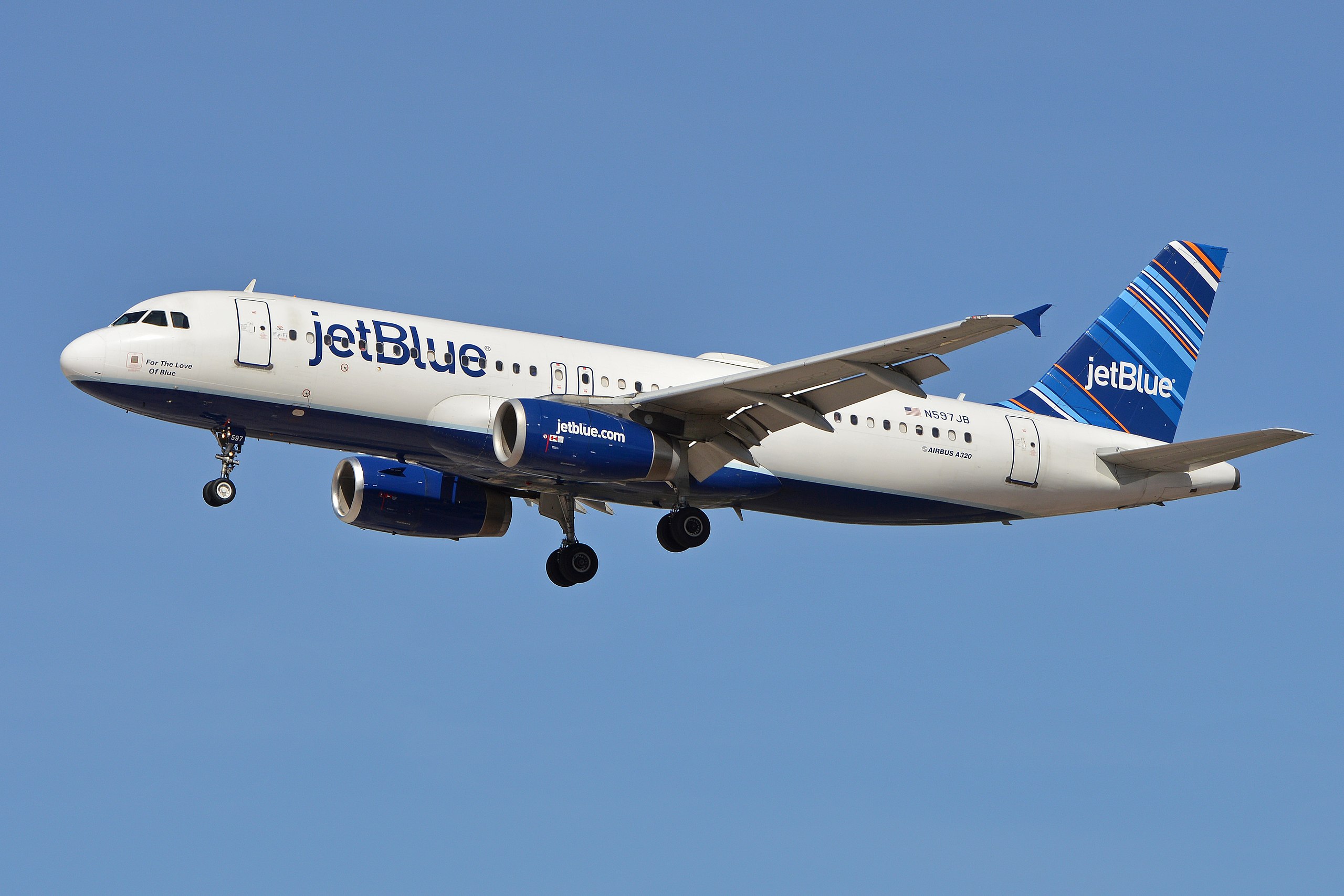
It has been reported that a JetBlue aircraft nearly suffered a mid-air collision with an “invisible” US military aircraft near Curacao.
Information has been released pertinent to the incident at hand, which has caused some concern due to the geography of where this took place.
Without further ado, let’s get into the incident…
JetBlue Flight B61112 Curacao-New York…
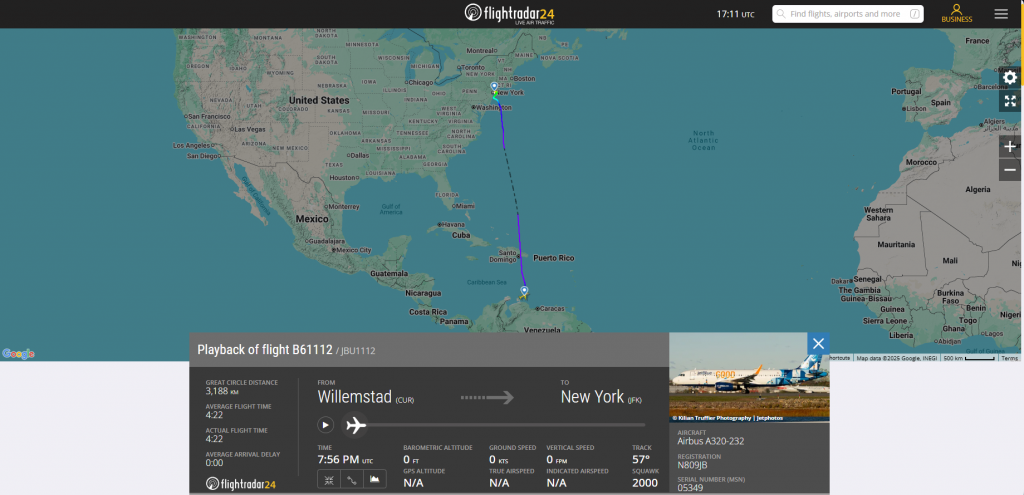
JetBlue flight B61112, which suffered the near mid-air collision, is a routine scheduled flight between Curacao and New York JFK.
Furthermore, the aircraft involved in the incident was N809JB.
As per data from Planespotters.net, N809JB is a 13.2 year old Airbus A320 that was delivered to the airline back in November 2012.
Of the A320 variant, JetBlue has 129 of them in their fleet.
Within the 129 aircraft in the fleet, 123 are in active service, with six currently parked, offering an average fleet age of 20.3 years.
JetBlue flight B61112, which suffered the near mid-air collision, departed Curacao at 1635 local time on December 12, and proceeded up to New York JFK.
As per The Aviation Herald, it is understood that the incident happened when the aircraft was nearing it’s cruising altitude.
When climbing through 33,300 feet, the crew noticed an aircraft in their sights that wasn’t on their traffic radar.
As a result of this, the crew called Air Traffic Control in Curacao Airspace to report this, with ATC also stating it wasn’t on their radar either.
It turned out that the aircraft that wasn’t transmitting was a United States Air Force tanker.
This resulted in the JetBlue flight having to stop their climb, and veer around the aircraft, that was a couple of miles in front of them at the time of the sighting.
The pilots onboard then stated that they would report the occurrence, which they did do to the FAA, not too long after landing into New York JFK at 2000 local time later that evening.
US Military Activity On The Rise: Origin is Near Venezuela…
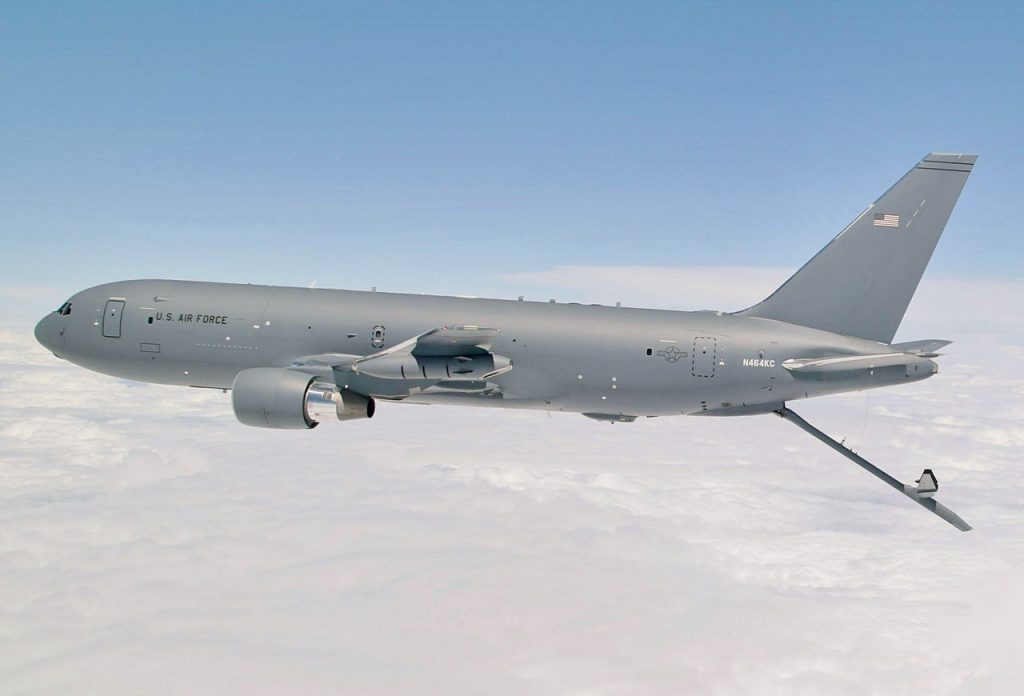
The increase in US Military aircraft has been profound in recent weeks, due to the continued tensions between the country and Venezuela, which is near Curacao, where this incident involving the JetBlue flight occurred.
Politically, this has been quite tense, due to the words of their president.
When Donald Trump declared that the airspace “above and surrounding Venezuela” should be considered “closed in its entirety,” the comment sent immediate shockwaves through the aviation industry.
The statement, issued publicly and without accompanying regulatory detail, landed at a moment of rising geopolitical tension and increasing U.S. military activity near Venezuelan territory.
Airlines, pilots, regulators, and policymakers were left scrambling to interpret what—if anything—this meant in practical terms.
The response from Caracas was swift and furious.
Venezuelan authorities condemned the statement as a hostile act, framing it as an assault on sovereignty and an unlawful attempt at unilateral control of another nation’s airspace.
The broader aviation ecosystem now faces deep uncertainty: possible no-fly zones, sudden route changes, escalating political conflict, and an unpredictable operating environment.
This moment is more than a political exchange.
It is a convergence of aviation safety, geopolitics, and decades-long tensions between Washington and Caracas—now manifesting in the skies. Which you can read more about by clicking here.
Continue to follow The Aviation Hub for more analysis and insight.
Advertise with us Your brand, in front of an aviation audience Home page and in-article placements, sold directly, one advertiser per slot. From £250 a year. See the rates