

It has been quite the 2025 for manufacturing duopolies Boeing & Airbus. Who was the winner this year?
In commercial aviation, there are two numbers that matter more than any others: orders and deliveries.
Orders measure confidence in the future—airlines committing billions of dollars to aircraft they may not see for years.
Deliveries, by contrast, reflect industrial reality: airplanes built, handed over, and paid for.
In 2025, those two scoreboards told different stories for the industry’s dominant manufacturers, Airbus and Boeing.
Through the end of November 2025, Airbus led clearly in deliveries, while Boeing surged ahead in net orders.
Rather than a contradiction, this divergence offers a revealing snapshot of where each company stands strategically, operationally, and commercially.
What follows is a comprehensive analysis of what the 2025 numbers mean—and why they matter well beyond a single calendar year.
The 2025 Numbers at a Glance…
Before interpreting trends, it’s worth grounding the discussion in the raw figures available as of late November 2025:
- Deliveries: 657 aircraft
- Gross orders: 797 aircraft
- Net orders (after cancellations): 700 aircraft
- Deliveries: 537 aircraft
- Gross orders: 1,000 aircraft
- Net orders (after cancellations and conversions): 908 aircraft
December figures were not yet published at the time of writing, so these totals reflect eleven months of activity. Even so, the directional story is already clear.
Deliveries: Airbus’ Execution Advantage Holds—for Now…
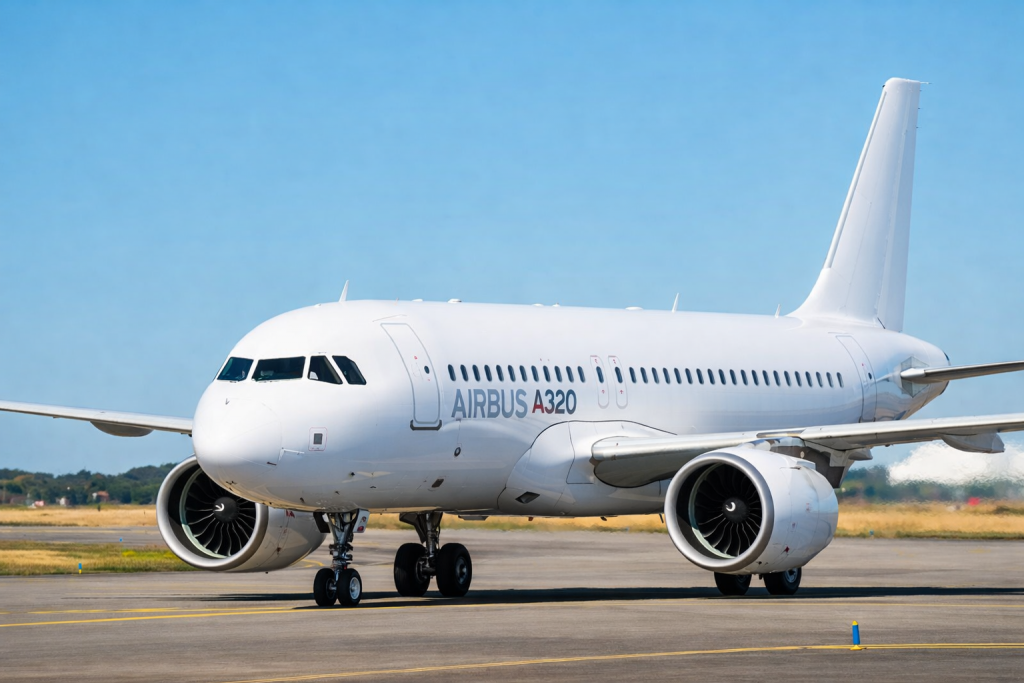
Deliveries are the most tangible proof of industrial performance. They determine revenue recognition, cash flow, and ultimately financial credibility.
On this front, Airbus maintained a substantial lead in 2025, delivering roughly 120 more aircraft than Boeing through November.
This advantage reflects several structural realities. Airbus has, since the early 2020s, operated from a relatively stable production base—especially in the high-volume A320neo family.
While not immune to disruption, Airbus has been able to sustain higher output levels while Boeing continued working through manufacturing, quality-control, and regulatory challenges stemming from earlier crises.
However, 2025 also showed that Airbus’s delivery leadership is not guaranteed.
Late in the year, the company revised its full-year delivery expectations downward to around 790 aircraft, citing supply-chain issues related to fuselage components for the A320 family.
November deliveries slowed compared with prior months, highlighting how vulnerable high-rate narrowbody production can be when even a single supplier falters.
The takeaway is nuanced: Airbus remains the delivery leader, but its margin for error is thinner than headline numbers might suggest.
Orders: Boeing Commercial Momentum Returns…
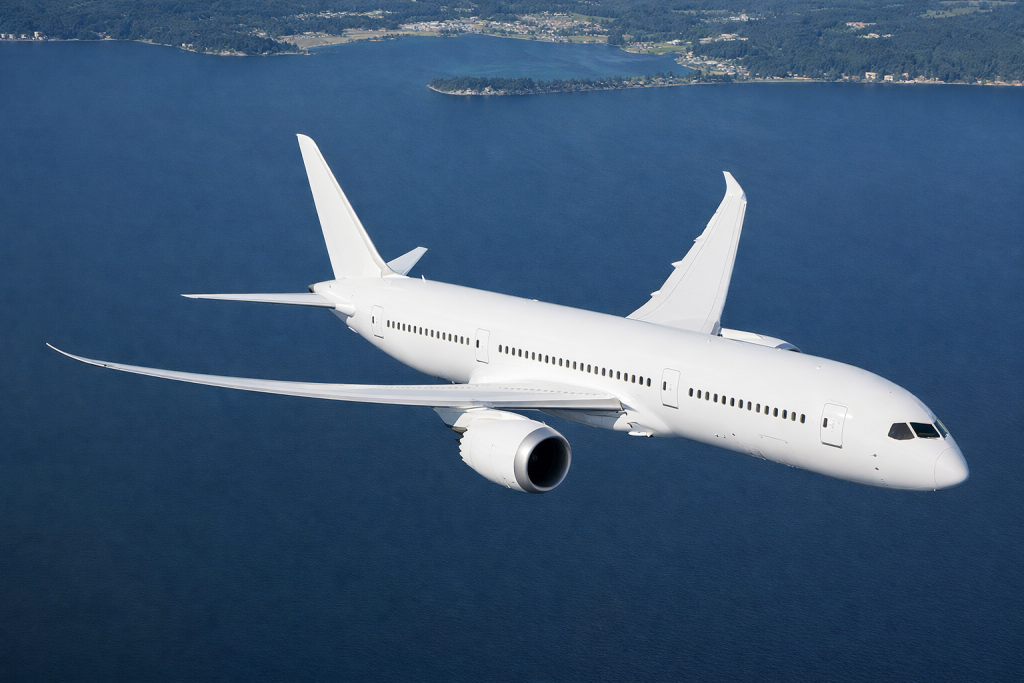
If deliveries define the present, orders define the future—and here Boeing clearly outperformed in 2025.
With 908 net orders through November, Boeing exceeded Airbus by more than 200 aircraft.
This is not merely a numerical victory; it represents a meaningful shift in customer sentiment.
After several years in which Boeing’s order intake was dampened by program disruptions and uncertainty, airlines and lessors demonstrated renewed willingness to place large commitments.
Notably, much of Boeing’s order strength in 2025 was driven by widebody aircraft, including the 787 and the 777/777X families.
Widebody orders tend to arrive in large blocks rather than steady monthly increments, and they often reflect long-term strategic planning by airlines—fleet renewal, network expansion, and the rebuilding of intercontinental capacity.
Boeing’s success in this segment suggests that many customers now believe its widebody programs are stabilizing and that future deliveries will materialize as promised.
Narrowbodies vs. Widebodies: Two Very Different Risk Profiles…
The differing order and delivery outcomes in 2025 are closely tied to aircraft mix.
Airbus’s commercial dominance remains rooted in the narrowbody segment.
The A320neo family delivers scale, efficiency, and recurring demand—but also exposes Airbus to concentrated risk.
When production rates are extremely high, small disruptions cascade quickly into missed delivery targets, as seen late in 2025.
Boeing’s 2025 order book, by contrast, leaned more heavily toward widebodies. These aircraft carry higher unit prices and strategic importance, but they also involve more complex manufacturing and longer lead times.
While widebody success boosts backlog value and long-term revenue potential, it does not immediately translate into delivery volume or cash flow.
Thus, Airbus’s strength is operational throughput, while Boeing’s 2025 strength was commercial persuasion.
Backlogs: Demand Is Not the Constraint for Boeing & Airbus…
Both manufacturers ended 2025 with historically large backlogs, effectively locking in production for many years:
- Airbus backlog (as of late Q3 2025): ~8,665 aircraft
- Boeing backlog (as of November 2025): ~6,019 aircraft
These figures underscore a crucial point: neither company lacks demand. Airlines want airplanes, and they want them in large numbers.
The real bottleneck is execution—the ability to convert backlog into delivered aircraft at predictable rates.
In this context, orders still matter not because manufacturers need them to survive, but because they signal confidence at the margin.
Airlines placing new orders today are betting on which manufacturer will be most reliable tomorrow.
Financial Implications: Cash Now vs. Confidence Later…
From a financial perspective, Airbus’s delivery lead translates into stronger near-term cash generation, while Boeing’s order momentum improves its long-term revenue outlook. Neither advantage fully substitutes for the other.
For Airbus, the challenge is protecting delivery performance while ramping production further in the years ahead.
For Boeing, the challenge is ensuring that today’s orders do not outpace tomorrow’s industrial and regulatory capacity.
Investors, suppliers, and customers are watching both closely—and judging them not on promises, but on consistency.
Boeing vs. Airbus in 2025: A Transitional Year?
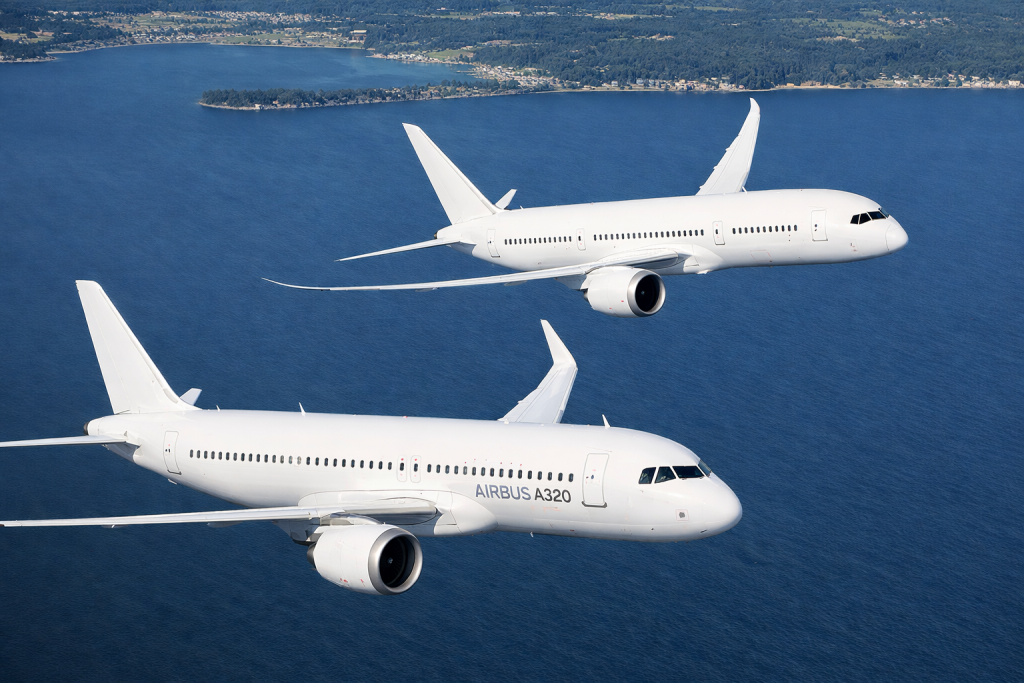
Rather than producing a clear winner, 2025 delivered a split verdict in the Airbus–Boeing rivalry.
Airbus reaffirmed its position as the industry’s most reliable delivery engine, even while revealing new vulnerabilities.
Boeing reasserted itself as a compelling commercial contender, particularly in widebodies, even as it continued to trail in physical output.
The deeper lesson is that the competitive battle has evolved. Selling airplanes is no longer the hard part.
Building them—on time, at scale, and to exacting standards—is.
In that sense, 2025 may be remembered less for who “won” and more for how clearly it exposed the next phase of competition in commercial aviation.
Continue to follow The Aviation Hub for more analysis and insight!
Advertise with us Your brand, in front of an aviation audience Home page and in-article placements, sold directly, one advertiser per slot. From £250 a year. See the rates