
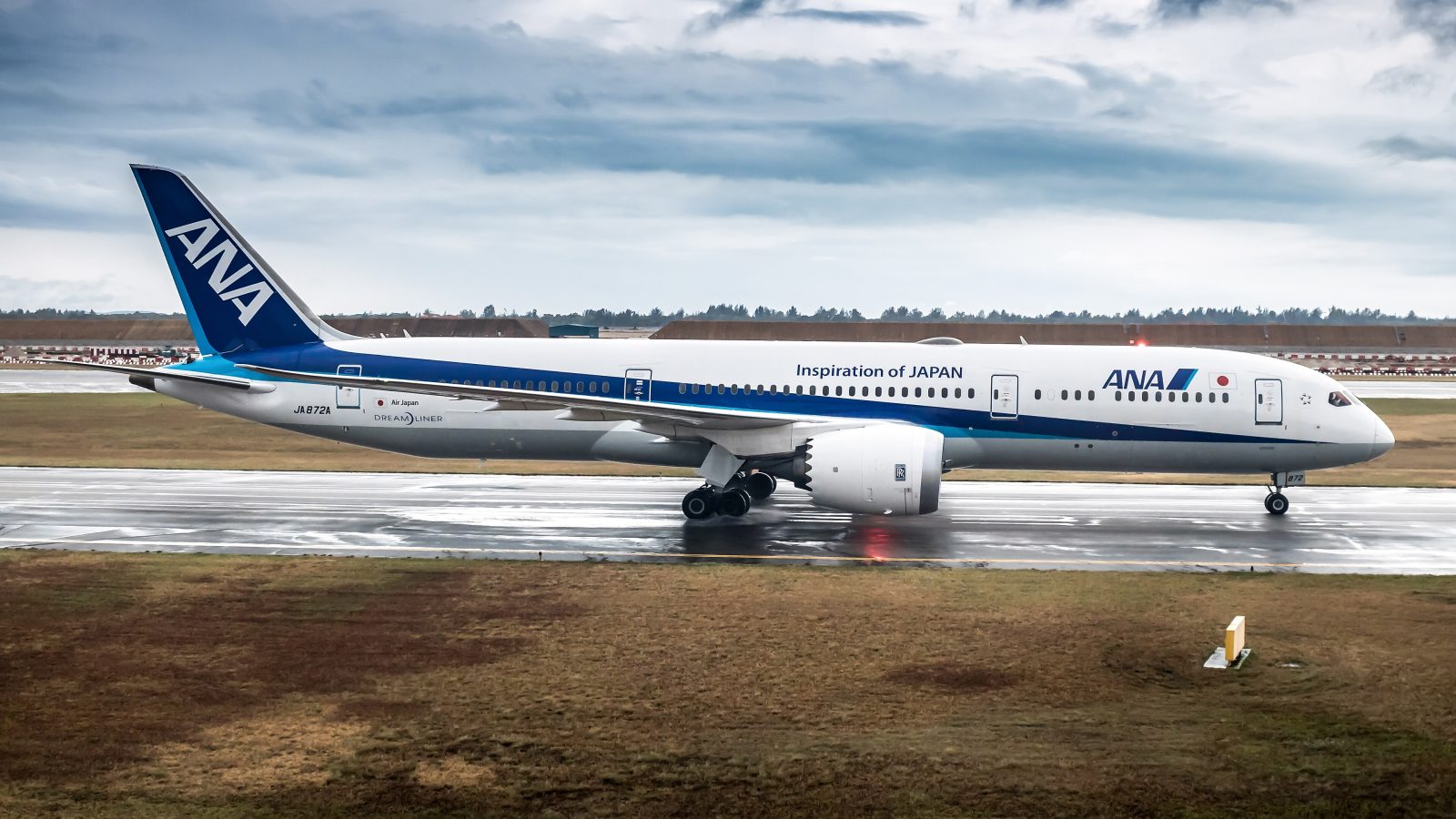
The National Transportation Safety Board has released its final report into a tail strike involving an All Nippon Airways Boeing 787-9 during a low visibility landing at George Bush Intercontinental Airport in Houston, closing the investigation with a probable cause that centres on a single, split second switch selection at the moment of touchdown.
The NTSB has determined that the accident was caused by the captain’s inadvertent activation of the takeoff/go around switch at touchdown, which produced an increase in pitch attitude that was not corrected before the lower fuselage struck the runway.
The aircraft sustained substantial damage.
None of the 209 people on board were injured.
What Happened on Approach to Runway 26L at Houston…
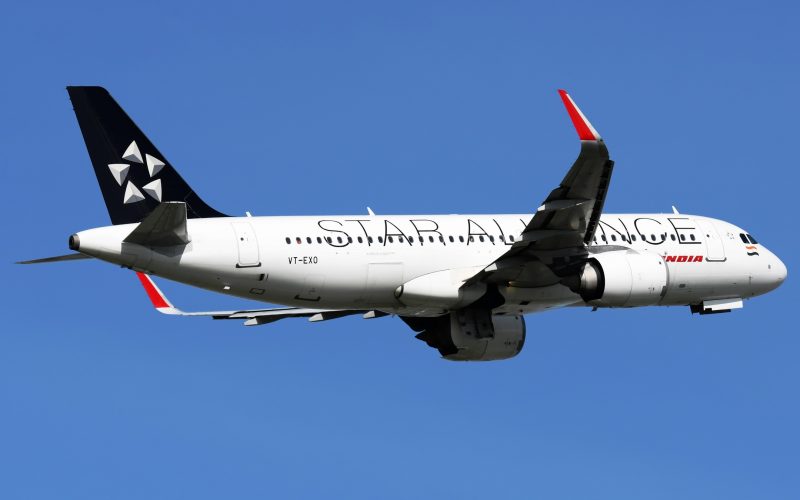
The aircraft involved in the Houston accident was JA873A, a Boeing 787-9 with serial number 34530, delivered in 2015 and powered by two Rolls Royce Trent 1000 engines.
It was operating ANA flight NH114, the carrier’s scheduled service from Tokyo Haneda to Houston, having departed Haneda at 11:10 local time on 27 February 2026.
Conditions on arrival into Houston were poor.
The airport was reporting instrument meteorological conditions, with a thin overcast ceiling at just 200 feet and fog restricting visibility on the surface.
Temperature and dewpoint were both recorded at 17 degrees Celsius, a spread of zero that left the airport effectively sitting inside cloud.
Wind was light, out of the north at four knots, and the runway itself was dry.
Facing that ceiling, the crew flew an ILS approach to runway 26L at Houston and elected to fly an autoland, letting the aircraft’s automation handle the touchdown rather than attempting a manual landing in near zero visibility, standard procedure for a 787 crew in those conditions.
The NTSB’s Probable Cause Of The Houston Accident…
According to the final report, the aircraft made a normal main gear touchdown on runway 26L at Houston.
As the pilot flying reached for the thrust reversers immediately after landing, the captain inadvertently activated the takeoff/go around switch, a control mounted on the thrust levers and designed to command an immediate climb away from the runway.
That inadvertent selection triggered an unexpected pitch increase, with the aircraft’s nose rising to approximately 7.8 degrees at precisely the moment it should have been settling toward the runway centreline.
The 787’s tailstrike protection system, designed to limit pitch during the landing flare and rollout, did activate, but the NTSB found it lacked sufficient authority to arrest the movement in time.
The aft fuselage made contact with the Houston runway surface before the crew could intervene.
The report attributes part of the outcome to the flight crew’s delayed recognition of the pitch increase, which the NTSB found prevented timely corrective action.
Once the deviation was identified, the pilot in command disconnected the autopilot and applied nose down input, and the aircraft completed the landing roll under manual control without further incident.
No evacuation was carried out.
The finding places this accident within a recognised category of tail strike events in which a pilot’s hand, moving toward the reverser levers during the landing roll, brushes or presses the adjacent TOGA switch.
Because the switch is designed to be activated instantly and without hesitation during a genuine go around, guarding against accidental contact during the reverser sequence is an enduring design and training challenge across large transport aircraft, not one unique to the 787.
The Extent of the Damage
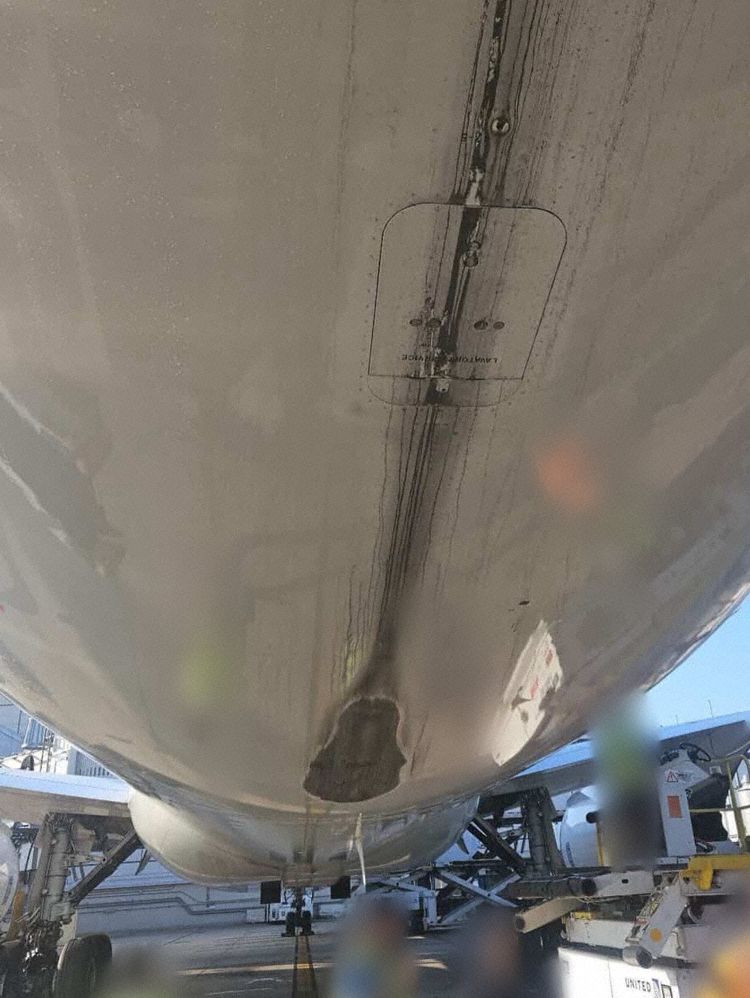
A post flight survey found damage that was far from cosmetic.
Investigators documented abrasion to the aircraft’s outer mould line skin along a stretch of fuselage between stations 1642 and 1714.
Three full depth cracks were identified on the same section, the largest measuring roughly two point three inches by point one five inches at its widest point, with two further cracks extending thirty five and thirty one inches respectively along adjacent stringer cavities.
The rear VHF antenna was bent and cracked through its exterior casing, and the lower surface of the tail strike sensor itself was ground away by contact with the runway, an indication of how firmly the fuselage met the pavement.
The damage was assessed as substantial under NTSB classification criteria, though the aircraft did not catch fire and no structural failure occurred that threatened continued safe operation of the aircraft once the crew regained control.
No mechanical malfunction or component failure was identified as a contributing factor of the accident in Houston.
Crew and Occupants
The flight was crewed by an experienced team.
The captain, aged 56 and serving as pilot flying, held an Airline Transport Pilot certificate and had logged 16413 total flight hours, including 2969 on the 787 and 8142 as pilot in command overall.
The first officer, aged 34, had accumulated 3929 total hours with 2575 on type.
A third, augmenting pilot was also carried for the long haul sector, logging 10337 total flight hours and holding a type rating on the aircraft, standard crewing practice for an ANA Pacific crossing of this duration.
None of the 209 passengers and crew aboard sustained any injury, and the decision not to evacuate reflects the fact that, despite the structural damage, the aircraft remained controllable throughout and the event was contained entirely to the landing roll.
What This Means Going Forward
With the final report now published and a probable cause formally assigned, attention will turn to what, if anything, changes as a result.
Inadvertent TOGA activation during the reverser sequence is a known human factors risk across the wide body fleet, and this accident is likely to feed into ongoing discussions around switch guarding, thrust lever ergonomics, and the authority limits of tailstrike protection logic on the 787 specifically.
For ANA, the case will likely inform crew training on hand placement and switch discipline during the critical seconds between touchdown and reverser deployment, a phase of flight that, as this accident demonstrates, still leaves remarkably little margin when a single switch is activated a moment too soon.
Continue to follow The Aviation Hub for more analysis and insight!