Thai Airways Takes Delivery of Its First Airbus A321neo as Provisional Route Plans Emerge
 By The Aviation Hub
6 min read
By The Aviation Hub
6 min read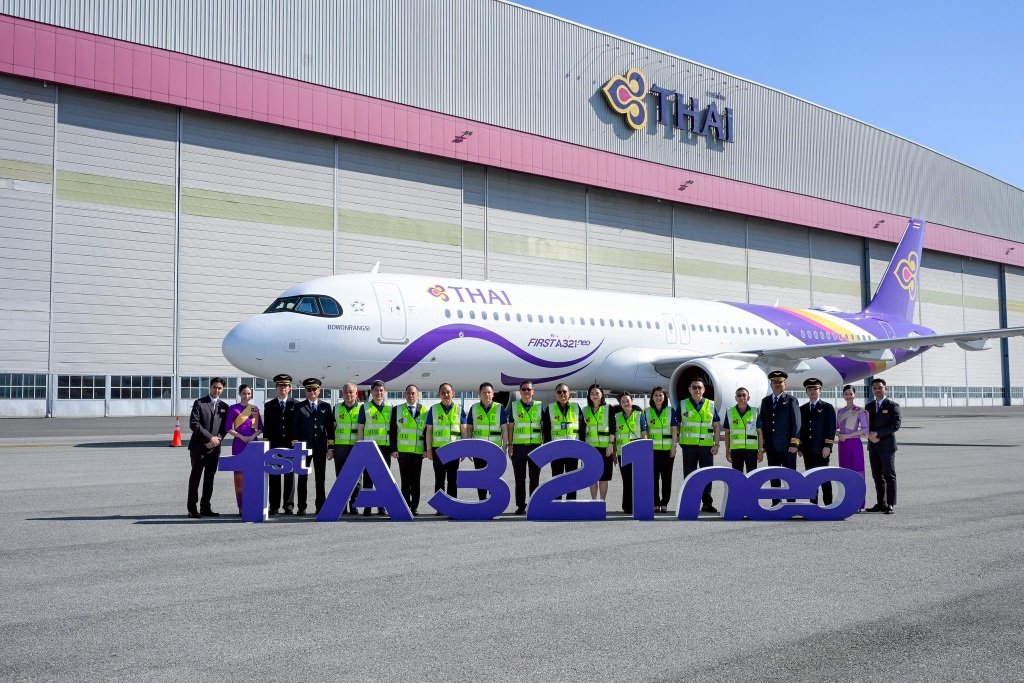
Thai Airways has entered a new chapter in its fleet modernisation strategy with the delivery of its first Airbus A321neo—an aircraft that will play a central role in reshaping the carrier’s short‑ and medium‑haul network over the coming years.
The jet, leased from AerCap, marks the beginning of a 10‑aircraft commitment that will see additional A321neos arrive through 2028.
Alongside the delivery, provisional operational plans have now surfaced, outlining the routes expected to host the type’s inaugural commercial services.
The arrival of the first aircraft, registered HS‑TOA, is more than a symbolic milestone.
It represents a strategic pivot for Thai Airways as it rebuilds its narrowbody capabilities following years of restructuring, fleet retirements, and shifting market dynamics.
With demand across Asia rebounding and regional competition intensifying, the A321neo is set to become a cornerstone of the airline’s growth strategy.
A Modern Narrowbody for a Modernised Thai Airways Network
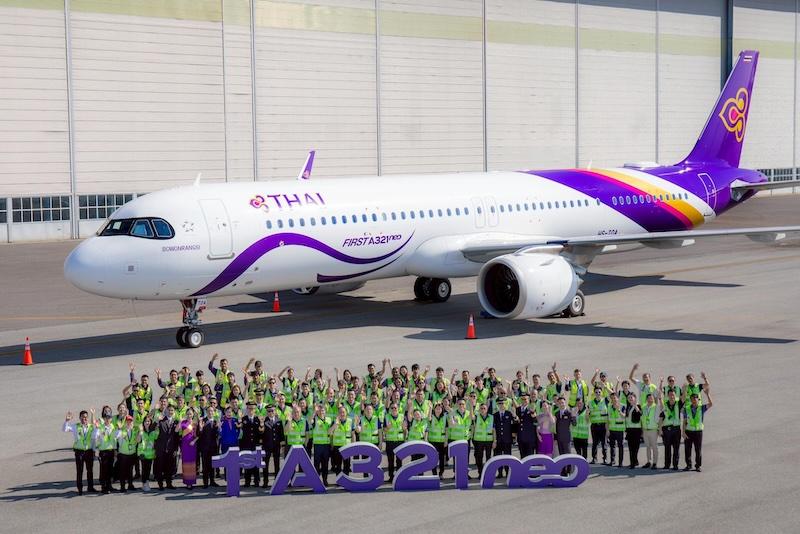
AerCap confirmed the handover of the first A321neo in late December, highlighting the aircraft’s role in supporting Thai Airways’ long‑term fleet renewal and sustainability goals.
The lessor emphasised its decades‑long partnership with the airline, dating back to the mid‑1990s, and noted that the new aircraft type will enhance operational efficiency and reduce emissions—key priorities for the Thai flag carrier as it continues its post‑restructuring transformation.
Commenting on the delivery was Chai Eamsiri, who said the following:
“The arrival of THAI’s first Airbus A321neo marks a significant milestone in our efforts to modernize and enhance the efficiency of our fleet.”
“The first ten aircraft entering into service will be operated under lease agreements with AerCap.”
“This partnership supports THAI’s fleet modernization and helps strengthen our fleet and global competitiveness.”
“Equipped with advanced, energy-efficient, and environmentally responsible technologies, the A321neo delivers meaningful reductions in fuel consumption and carbon emissions.”
“These improvements underscore THAI’s unwavering commitment to sustainability and responsible operations, while delivering greater value and reliability to our passengers.”
The A321neo delivered to Thai Airways is configured in a two‑class layout, featuring 16 business‑class seats and 159 economy seats, for a total of 175 passengers.
This configuration positions the aircraft as a versatile workhorse capable of serving dense regional routes while offering a competitive premium product.
The aircraft’s arrival also aligns with Thai Airways’ broader fleet strategy, which includes the introduction of additional widebody types and the gradual expansion of its regional footprint.
The A321neo, with its improved fuel burn and extended range, is expected to unlock new route opportunities while strengthening existing markets.
Provisional First Routes Revealed by Thai Airways
According to provisional scheduling data published by AeroRoutes, Thai Airways plans to debut the A321neo on a mix of domestic and regional routes beginning in January 2026.
These early deployments are designed to integrate the aircraft smoothly into the network while supporting high‑demand markets during the peak travel season.
The first confirmed routes include:
Bangkok Suvarnabhumi – Delhi
Effective 22 January 2026
Flights TG331/332 are set to become the A321neo’s first international rotation, marking a significant upgrade for the India–Thailand market. Delhi is one of Thai Airways’ most important regional destinations, and the introduction of the A321neo is expected to enhance schedule flexibility and improve operating economics on the route.
Bangkok Suvarnabhumi – Phuket
22 January – 28 March 2026
Flights TG221/222 will temporarily operate with the A321neo during the aircraft’s initial familiarisation period. This short‑haul domestic deployment allows Thai Airways to optimise crew training and operational readiness while serving one of the country’s busiest leisure corridors.
Bangkok Suvarnabhumi – Singapore
Effective 22 January – 28 March 2026
Flights TG413/414 will see the A321neo also introduced on a high-frequency flight to a popular Asian hotspot. Operating on a daily basis also is quite reflective of the popular links between the Thai airport and Singapore.
Bangkok Suvarnabhumi – Hong Kong
Effective 16 February 2026
Flights TG602/603 will see the A321neo introduced on a high‑frequency regional trunk route. Hong Kong remains a key market for Thai Airways, and the A321neo’s improved efficiency is expected to support competitive scheduling and capacity management.
Bangkok Suvarnabhumi – Vientiane
Effective 16 February 2026
Flights TG570/571 and TG574/575 will bring the A321neo to the Laos market, reinforcing Thai Airways’ regional connectivity strategy. The aircraft’s size and range make it well‑suited for short‑haul Southeast Asian routes where demand is steady but variable across seasons.
These provisional plans may evolve as additional aircraft join the fleet, but they offer a clear indication of Thai Airways’ intent:
To deploy the A321neo on strategically important routes that balance operational efficiency with market demand.
A Strategic Asset for Thai Airways’ Future
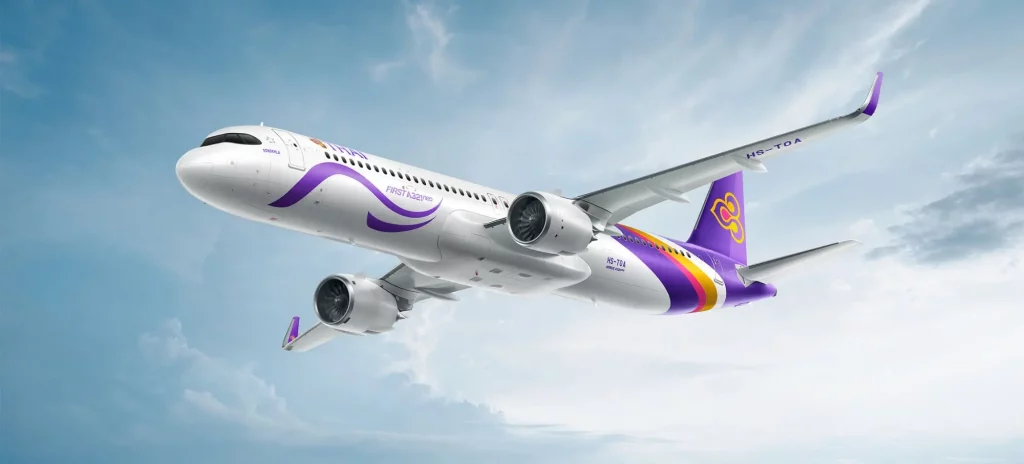
The introduction of the A321neo is a significant step in Thai Airways’ long‑term recovery and growth trajectory.
After emerging from restructuring, the airline has focused on rebuilding its fleet with modern, fuel‑efficient aircraft that can support both profitability and sustainability targets.
The A321neo fits squarely within this vision.
The A321neo offers up to 20% lower fuel burn compared to previous‑generation narrowbodies, along with reduced noise and emissions.
These improvements will help Thai Airways lower operating costs and meet increasingly stringent environmental standards across the region.
With a range that allows it to serve both short‑haul domestic routes and longer regional sectors, the A321neo gives Thai Airways the flexibility to adjust capacity and frequencies in response to market trends.
This is particularly valuable in Asia, where demand patterns can shift rapidly due to economic, political, or seasonal factors.
While Thai Airways has not yet publicly unveiled the full cabin interior, the two‑class configuration and modern inflight systems are expected to deliver a competitive passenger experience.
The aircraft’s arrival also signals a renewed focus on product consistency across the fleet—an area where the airline has historically faced challenges due to its diverse mix of aircraft types.
Looking Ahead
With nine additional A321neos scheduled for delivery through 2028, Thai Airways is poised to significantly expand its narrowbody operations.
The aircraft will likely become a backbone of the airline’s regional network, supporting growth in key markets such as India, China, Indochina, and Southeast Asia.
The provisional route plans for early 2026 offer a glimpse into how Thai Airways intends to deploy the type, but the full impact of the A321neo will unfold over the coming years as more aircraft join the fleet and the airline refines its network strategy.
For now, the arrival of HS‑TOA marks a promising start—a symbol of renewal for Thailand’s national carrier and a tangible step toward a more efficient, competitive, and future‑ready fleet.
Continue to follow The Aviation Hub for more analysis and insight!
Advertise with us Your brand, in front of an aviation audience Home page and in-article placements, sold directly, one advertiser per slot. From £250 a year. See the rates