Cathay Pacific at 80: A Retro Repaint and the Story of an Airline That Helped Shape Modern Asian Aviation
 By The Aviation Hub
7 min read
By The Aviation Hub
7 min read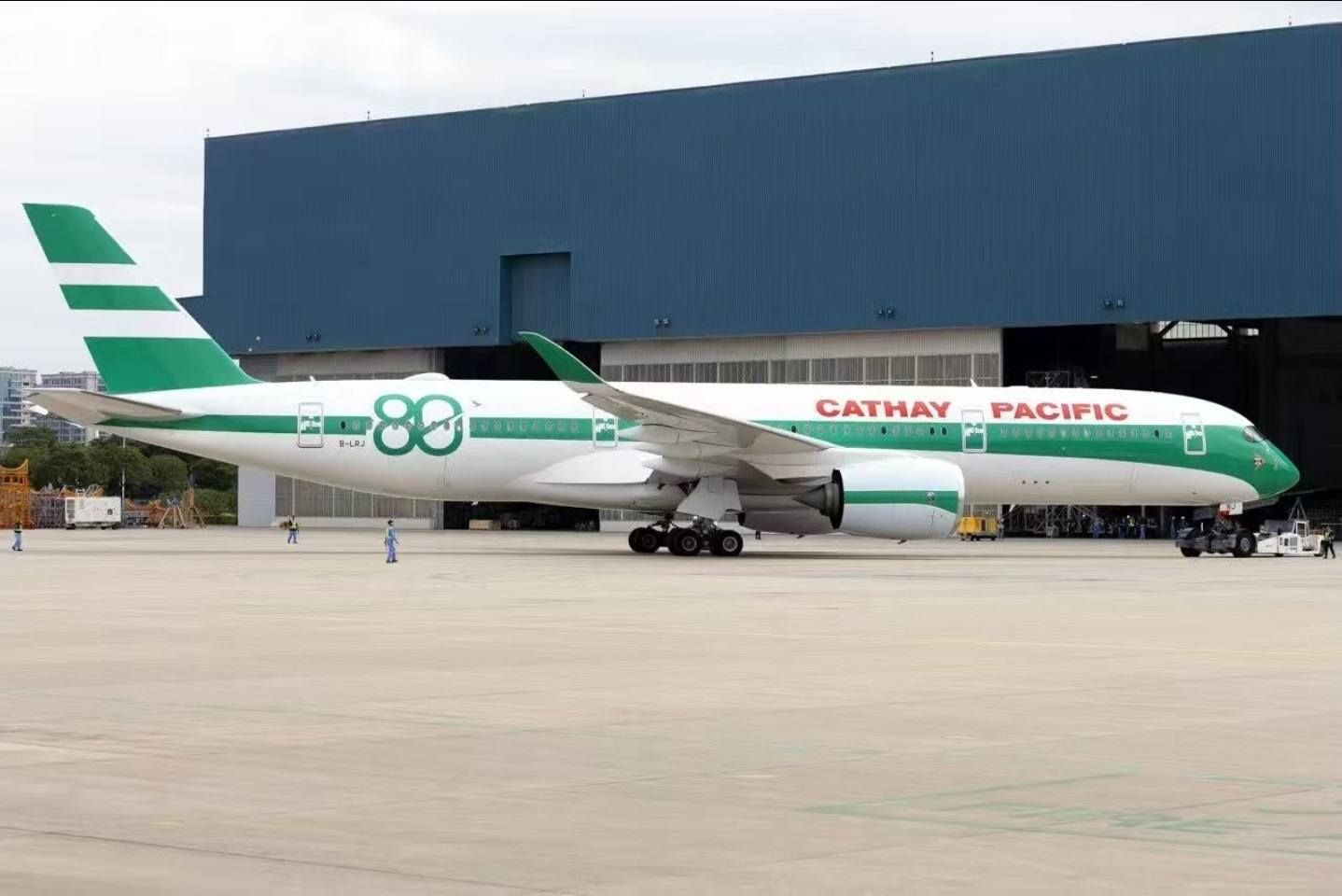
When Cathay Pacific turns 80 in September 2026, the milestone will be marked not with a marketing slogan or a commemorative logo alone, but with something far more tangible — a return to the colours that defined the airline’s rise.
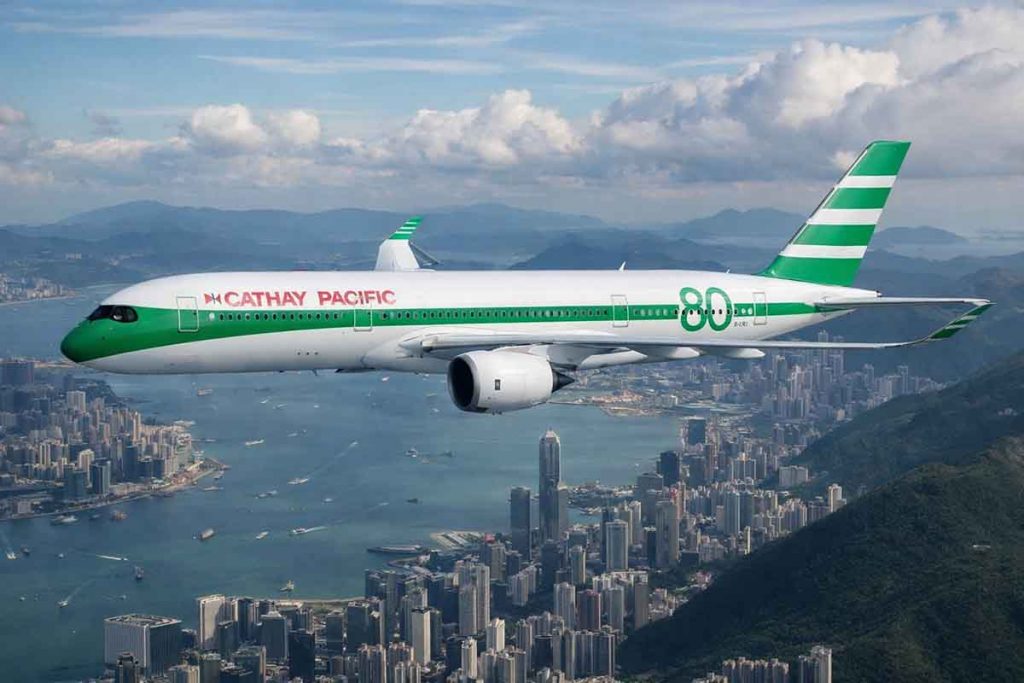
In late 2025, an Airbus A350 was spotted in Xiamen wearing a refreshed version of Cathay Pacific’s classic 1971 green‑striped livery, the first of three aircraft set to receive retro paint as part of the anniversary celebrations.
For an airline whose identity is deeply intertwined with Hong Kong’s own transformation into a global crossroads, the decision to revive a heritage livery is more than a nostalgic flourish.
It is a statement of continuity, resilience, and pride — a reminder that Cathay Pacific’s story is inseparable from the story of modern Asian aviation.
As the A350 prepares to re-join the fleet in its retro colours, The Aviation Hub looks back at the airline’s origins, its defining eras, and the legacy it carries into its ninth decade.
A Modern Aircraft Wearing a Classic Look
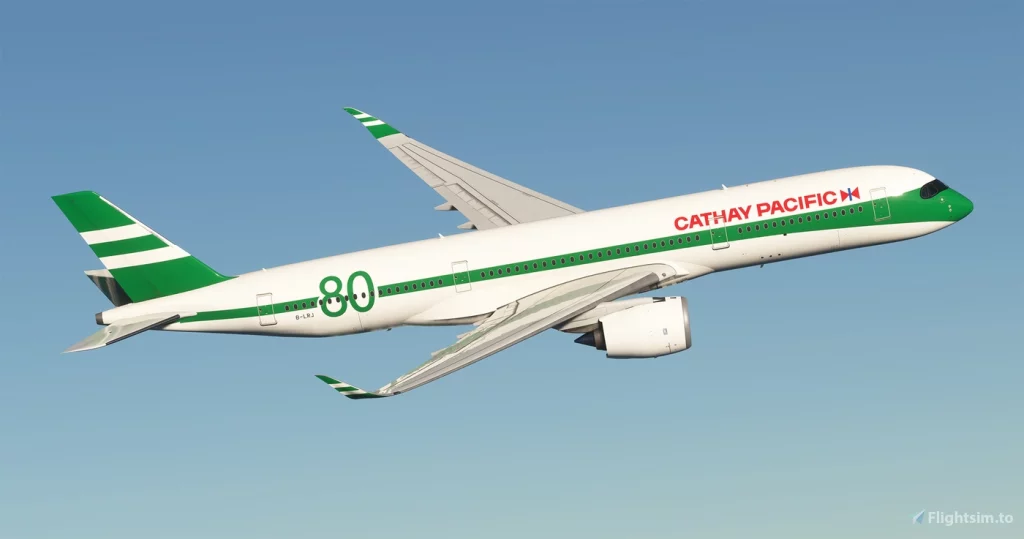
The first hint of Cathay Pacific’s anniversary plans emerged when aviation photographers captured an Airbus A350 in a Xiamen maintenance hangar wearing a livery not seen in decades.
According to AviationA2Z, the aircraft is the first of three to receive retro colours: an A350, a Boeing 777‑300, and a Boeing 747 freighter.
The design is a faithful reinterpretation of the 1971 scheme:
- A deep green cheatline running the length of the fuselage
- A matching green tail with twin white stripes
- A commemorative “80” emblem near the rear fuselage
The effect is striking. The A350 — a composite‑fuselage, ultra‑efficient long‑haul aircraft — suddenly looks like a time capsule from the Kai Tak era, when Cathay Pacific’s Boeing 707s and 747s wore the same green stripes as they threaded between Kowloon apartment blocks on approach.
The retro repaint is not merely decorative.
It is symbolic. It connects the airline’s past to its future, placing one of its most advanced aircraft in the colours that defined its rise.
Founding Years: A Post‑War Gamble That Paid Off
Cathay Pacific’s story begins on 24 September 1946, when two former wartime pilots — Australian Sydney de Kantzow and American Roy Farrell — registered a new airline in Hong Kong.
Both men had flown “The Hump,” the treacherous air route over the Himalayas, and both saw opportunity in the post‑war demand for regional air transport.
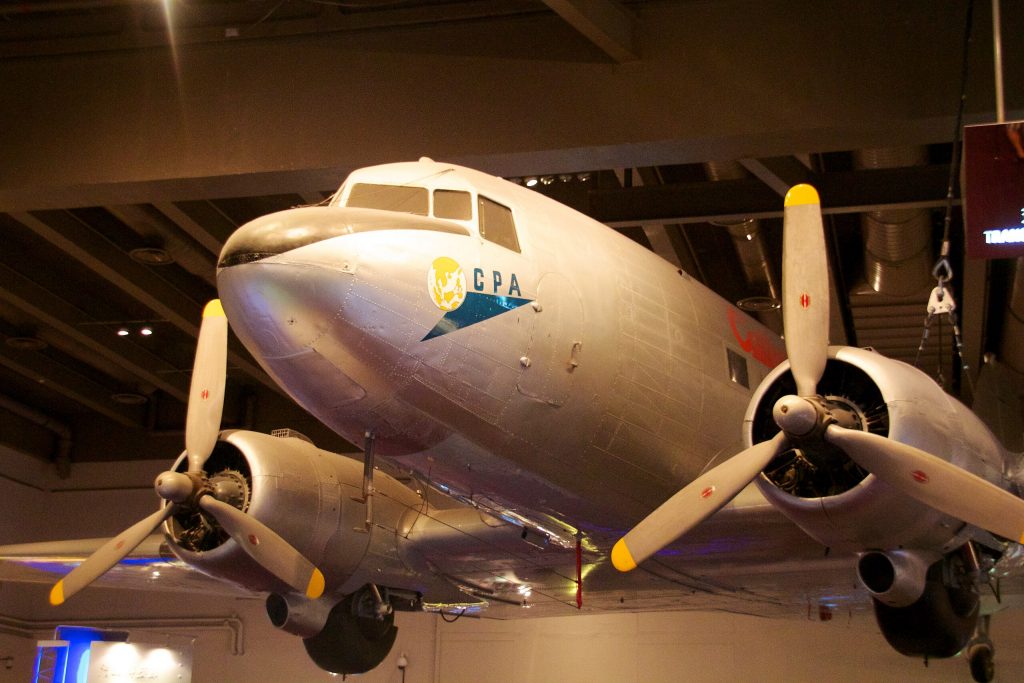
Their first aircraft was a Douglas DC‑3 named Betsy, purchased in New York and flown across the Pacific to begin operations.
Early flights carried freight and passengers between Hong Kong, Manila, Singapore, Shanghai, and Sydney.
By 1947, the fleet had grown to five DC‑3s and two Catalina seaplanes.
The airline’s early years were marked by improvisation and entrepreneurial grit. Aircraft were occasionally detained by authorities in Shanghai, prompting the founders to consolidate operations in Hong Kong — a decision that would shape the airline’s identity for decades.
In 1948, the Swire Group acquired a major stake in the airline, beginning a partnership that remains central to Cathay Pacific’s corporate structure.
The Jet Age and the Birth of a Visual Identity
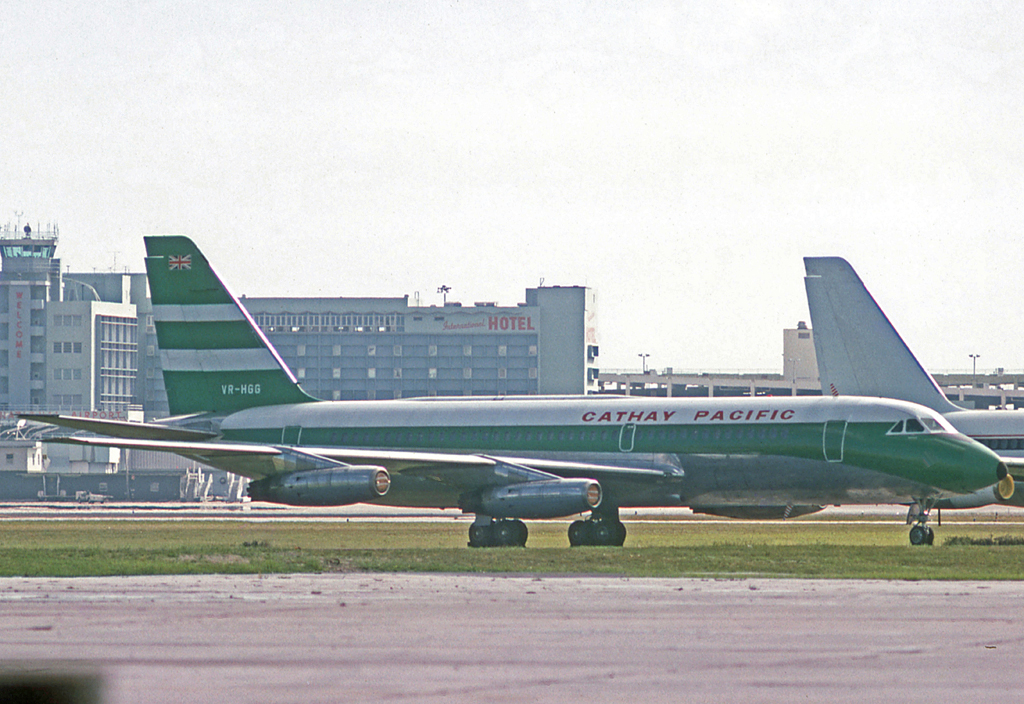
The 1960s and 70s were transformative. Cathay Pacific entered the jet age in 1964 with the Convair 880, enabling faster, longer‑range services and positioning the airline for international expansion.
But it was 1971 that marked a turning point in the airline’s visual identity.
That year, Cathay Pacific introduced the green‑striped livery now being revived for the 80th anniversary.
The design — bold, modern, and unmistakably distinctive — became synonymous with the airline’s rise during the Kai Tak era.
The 1970s and 80s saw rapid growth:
- The airline acquired its first Boeing 747 in 1979, beginning a long association with the type.
- In 1980, Cathay Pacific launched flights to London, marking its entry into long‑haul markets.
- Hong Kong’s booming economy fuelled demand for international travel, and Cathay Pacific became the city’s de facto global ambassador.
The green‑striped livery became iconic not only because of its design, but because of the aircraft that wore it.
Cathay Pacific’s 747s, banking low over Kowloon’s rooftops on approach to Kai Tak’s Runway 13, became some of the most photographed aircraft in the world.
The retro repaint of the A350 taps directly into that collective memory.
Rebranding and Reinvention: The Brushwing Era
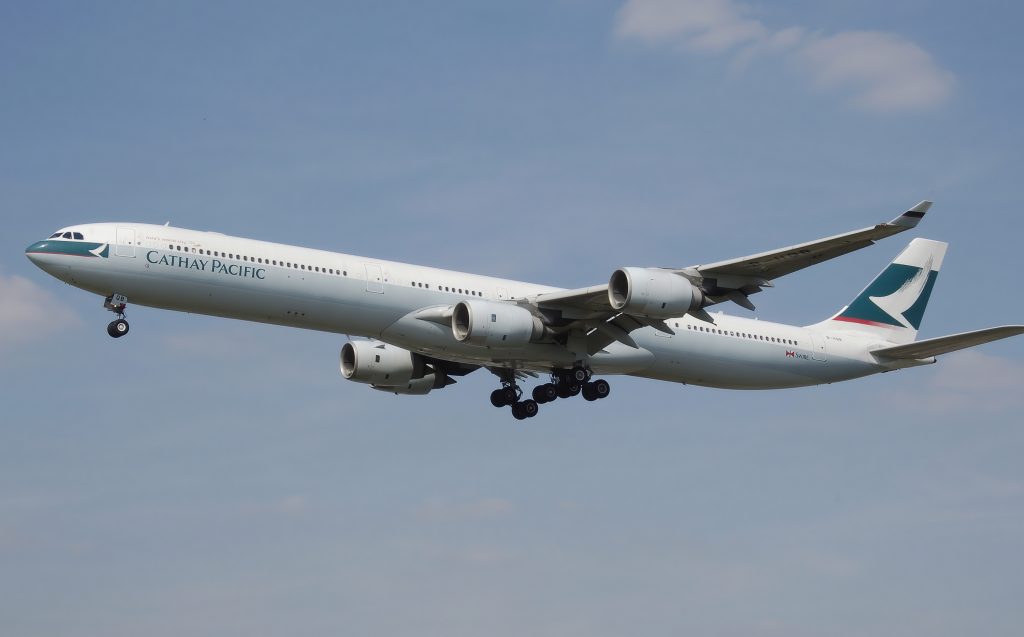
By the early 1990s, Cathay Pacific had outgrown its regional roots and was positioning itself as a global premium carrier.
In 1994, the airline introduced a new corporate identity featuring the now‑famous brushwing logo, created by Landor Associates.
The design replaced the green stripes with a more contemporary palette and a stylised tail emblem symbolising movement and elegance.
This era also saw major strategic developments:
- In 1994, Cathay Pacific acquired a majority stake in Air Hong Kong.
- In 1998, the airline became a founding member of the oneworld alliance, cementing its position among the world’s leading carriers.
- That same year, Cathay Pacific operated the world’s first nonstop transpolar flight from New York to Hong Kong, coinciding with the move from Kai Tak to the new Chek Lap Kok airport.
The brushwing identity was refreshed again in 2015, evolving into the minimalist design used today.
Challenges, Competition, and Transformation for Cathay Pacific
The 2010s were a turbulent decade for Cathay Pacific. Increased competition from mainland Chinese carriers, volatile fuel prices, and shifting market dynamics placed pressure on yields.
The airline launched a major transformation programme in 2017 to streamline operations and improve financial performance.
Several significant events shaped the decade:
- In 2016, Cathay Pacific retired its last passenger Boeing 747, ending a 37‑year era of 747 operations.
- In 2018, the airline suffered a data breach affecting 9.4 million passengers, later resulting in a fine from the UK’s Information Commissioner’s Office.
- In 2019, Cathay Pacific acquired HK Express, marking its entry into the low‑cost market.
- In 2020, the COVID‑19 pandemic triggered the most severe crisis in the airline’s history, leading to the closure of Cathay Dragon and unprecedented operational disruption.
Despite these challenges, Cathay Pacific maintained its reputation as a premium global carrier, consistently earning Skytrax 5‑star ratings and retaining a loyal customer base.
Recovery and Renewal in the 2020s
As global travel rebounded in the mid‑2020s, Cathay Pacific began rebuilding its network and restoring capacity.
By 2024, the airline operated a fleet of around 180 aircraft and served more than 190 destinations through its own network and partnerships.
In November 2025, the airline announced plans to buy back Qatar Airways’ 9.9% stake, signalling renewed confidence in its long‑term stability and independence.
The retro repaint project arrives at a symbolic moment. After years of disruption, Cathay Pacific is entering its 80th year with optimism, growth, and a renewed sense of identity.
Cathay Pacific at 80: Why the Retro Livery Matters
The decision to revive the 1971 livery is more than an aesthetic choice.
It reflects three deeper themes in Cathay Pacific’s story.
The green‑striped livery is inseparable from the Kai Tak era — a period when Hong Kong’s aviation identity was forged and Cathay Pacific emerged as a global player.
Painting an A350 in this scheme connects the city’s aviation past with its future.
Cathay Pacific has undergone enormous change — ownership shifts, rebranding, fleet renewal, and global expansion.
Yet its core identity as Hong Kong’s flag carrier remains intact.
After years of disruption, the airline is entering its 80th year with optimism.
The retro livery is a reminder that Cathay Pacific has weathered crises before and emerged stronger.
Cathay Pacific at 80: A Legacy Still in Motion
From a single DC‑3 named Betsy to a fleet of next‑generation long‑haul aircraft, Cathay Pacific’s journey mirrors the evolution of global aviation itself.
The airline has navigated wars, economic shocks, pandemics, and intense competition — yet it remains one of the world’s most recognisable and respected carriers.
The repainted Airbus A350 is more than a commemorative gesture.
It is a flying chapter of history, a reminder of the airline’s roots, and a celebration of the people, aircraft, and moments that shaped its first eight decades.
As Cathay Pacific enters its 80th year, the retro livery serves as a promise: that the spirit of innovation, resilience, and ambition that defined its past will continue to guide its future.
Continue to follow The Aviation Hub for more analysis and insight!