A Decade of Transformation: How the Airbus A220 Redefined The Success of airBaltic
 By The Aviation Hub
5 min read
By The Aviation Hub
5 min read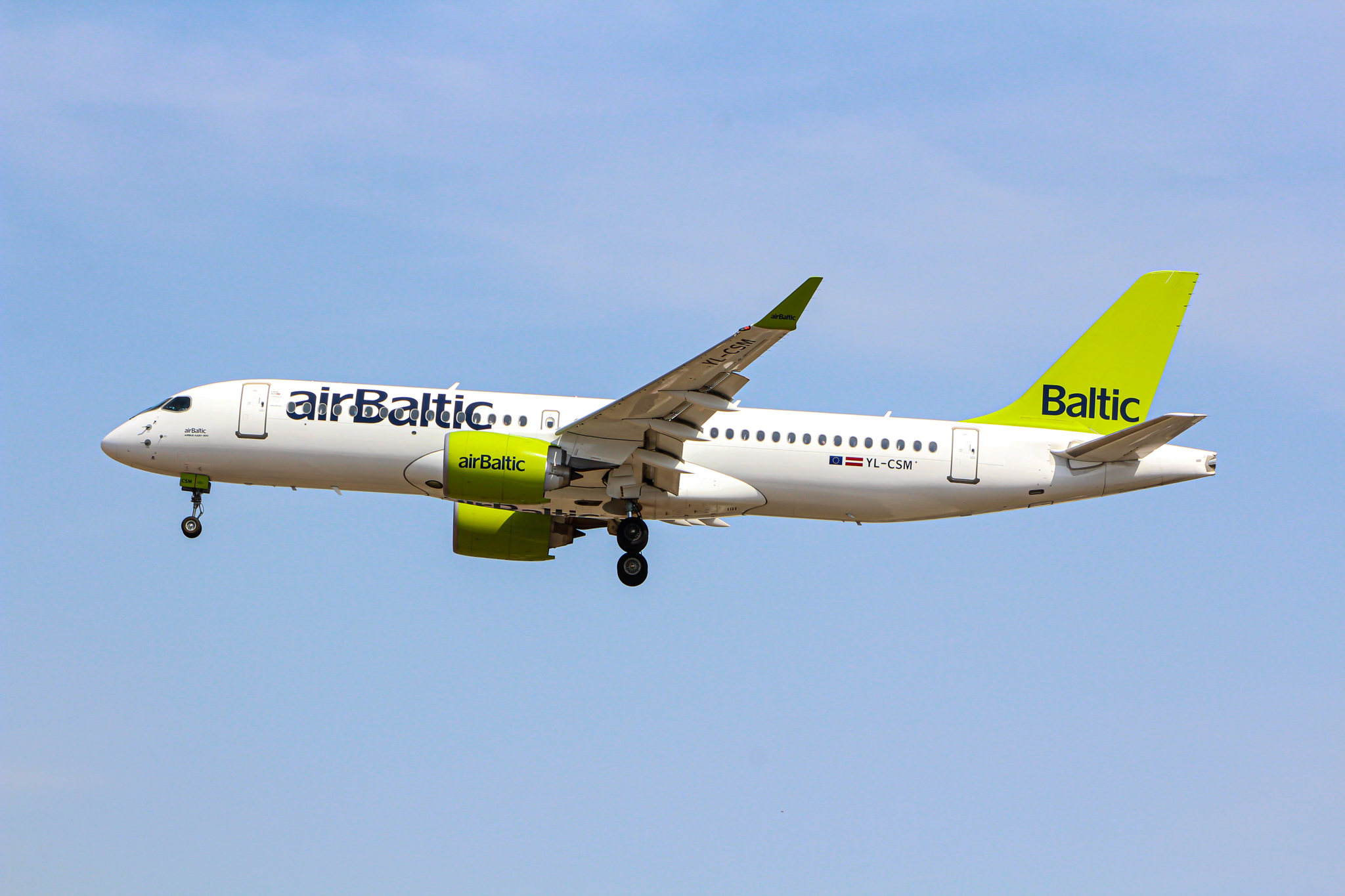
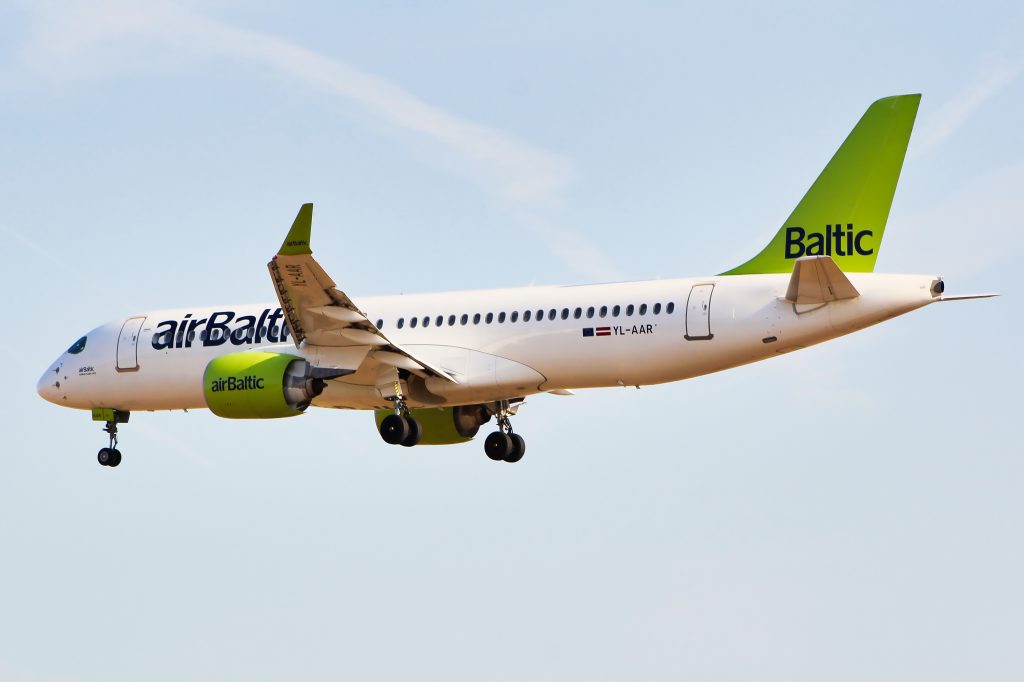
Nearly a decade after welcoming its first Airbus A220, airBaltic has been transformed—revitalised by an aircraft that reshaped its finances, network, and future.
When airBaltic accepted delivery of its first Airbus A220‑300 on November 28, 2016, few could have predicted just how profoundly the aircraft would reshape the airline’s trajectory.
Ten years later, as the carrier welcomes its 52nd A220 on January 2, 2026, the Latvian airline stands as the world’s largest A220 operator and one of the most compelling case studies of how a single fleet decision can redefine an airline’s financial performance, brand identity, and competitive positioning.
The A220 did not simply replace older aircraft. It became the backbone of a new business model—one that enabled airBaltic to expand its network, grow its ACMI‑out business, improve yields, and navigate industry shocks with resilience.
The financial data from 2017 through 2025 shows a clear pattern: as A220 operations intensified, revenue strengthened, margins improved, and the airline’s operational efficiency reached new heights.
Early Years: Stabilisation and the Foundation for Growth
The 2017 financial statements—airBaltic’s last full year before the A220 began scaling across the fleet—show a company in recovery mode.
Total operating revenue reached EUR 347.7 million, with a modest profit of EUR 4.6 million.
The airline was still operating a mixed fleet, including Boeing 737s and Bombardier Q400s, and its cost structure reflected the inefficiencies of maintaining multiple aircraft types.
The arrival of the A220 marked the beginning of a strategic shift.
The aircraft’s fuel efficiency, lower maintenance costs, and superior passenger experience aligned perfectly with airBaltic’s ambition to modernise and simplify its operations.
As deliveries accelerated from 2017 onward, the airline began retiring older aircraft and transitioning toward a single-type fleet.
This shift was not merely operational—it was transformational.
The A220 allowed airBaltic to reimagine its network, open longer thin routes, and improve profitability on existing ones.
By 2019, the airline was already reporting record passenger numbers and revenue growth, driven in part by the A220’s performance advantages.
The A220 Through Crisis: A Lifeline During the Pandemic for airBaltic
When the COVID‑19 pandemic struck, airBaltic’s fleet strategy became one of its greatest assets.
While many European carriers struggled with oversized aircraft and high fixed costs, airBaltic leaned on the A220’s flexibility.
The aircraft’s economics allowed the airline to restart operations earlier and more efficiently than many competitors.
The A220’s ability to operate profitably at lower load factors, combined with its range and fuel burn advantages, enabled airBaltic to rebuild its network gradually and sustainably.
This period also marked the beginning of the airline’s aggressive expansion into ACMI‑out operations—an area where the A220’s reliability and cost profile made it highly attractive to partner airlines.
The Growth Phase: Revenue Expansion and Strengthening Margins
The financial statements for the first nine months of 2025 illustrate just how far airBaltic has come since the early A220 years.
Operating revenue reached EUR 594.3 million for the period, up from EUR 575.3 million in 2024.
Passenger revenue increased to EUR 445.5 million, and ACMI lease revenue rose to EUR 128.5 million—a 9.5% year‑on‑year increase.
Most importantly, the airline achieved an Adjusted EBITDAR of EUR 128.6 million for the nine‑month period.
While this was lower than the EUR 158.1 million recorded in 2024 due to engine‑related disruptions, it still represented a strong margin of 21.6%.
The A220 played a central role in this performance.
Its efficiency allowed airBaltic to maintain competitive CASK levels even during periods of capacity constraint.
In Q3 2025, despite seven aircraft grounded due to Pratt & Whitney engine issues, the airline still achieved an Adjusted EBITDAR of EUR 77.7 million—the strongest quarter of the year.
The aircraft’s economics also supported yield improvements.
In Q3 2025, passenger yield increased by 9% year‑on‑year, while RASK rose by 4.5%.
These gains were achieved even as passenger numbers declined, demonstrating the airline’s ability to optimise revenue through pricing and network adjustments—something made possible by the A220’s cost structure.
ACMI-Out: A New Revenue Engine Powered by the A220
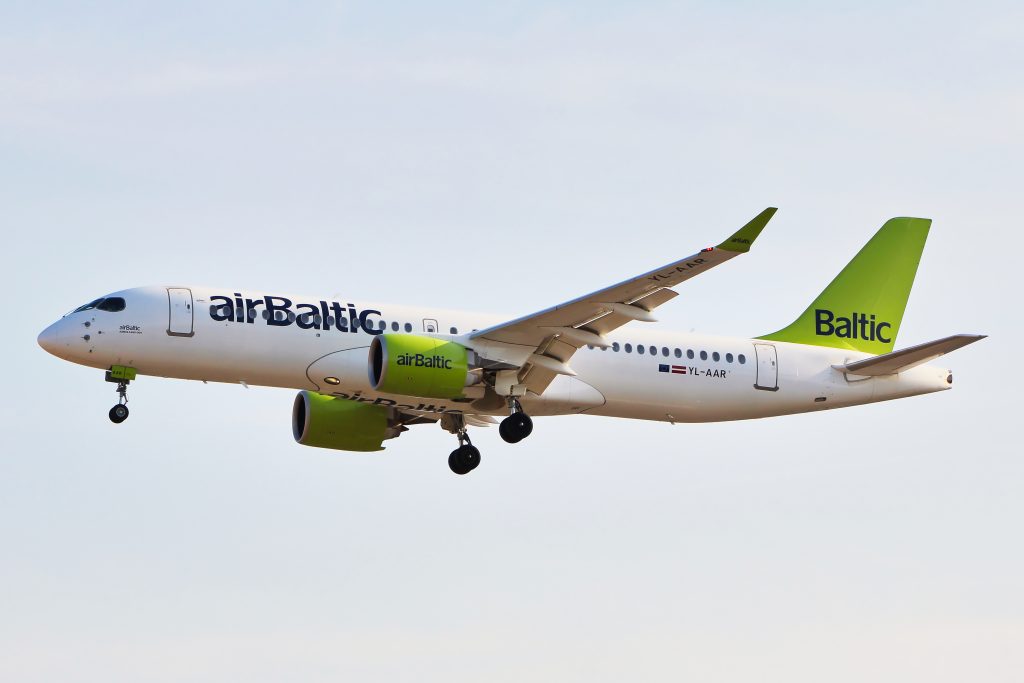
One of the most significant developments of the past decade has been airBaltic’s emergence as a major ACMI‑out provider.
In 2025, ACMI‑out operations accounted for 21.7% of total airline revenue, up from 20.4% in 2024.
The A220’s reliability, fuel efficiency, and passenger appeal made it highly desirable for partner airlines, including Lufthansa Group carriers.
By Q3 2025, airBaltic was operating up to 19 aircraft on ACMI‑out contracts.
Block hours for ACMI‑out operations increased by 14% year‑on‑year in the first nine months of 2025, and the airline expects to deploy at least 25 aircraft on ACMI‑out basis in summer 2026.
This diversification has been crucial in balancing the seasonality of airBaltic’s core network.
The A220’s versatility—able to serve both short‑haul and medium‑haul routes efficiently—has made it the ideal aircraft for this dual‑market strategy.
Why the Airbus A220 Was the Perfect Fit for airBaltic
The A220’s contribution to airBaltic’s success is rooted in several key factors.
First, its fuel efficiency—up to 25% better than the aircraft it replaced—directly reduced operating costs and improved margins.
Second, its range and performance allowed airBaltic to open new routes from Riga, Tallinn, and Vilnius that were previously unviable.
Third, its cabin comfort and modern design elevated the airline’s brand and passenger satisfaction, reflected in consistently high Net Promoter Scores.
Operationally, the move to a single-type fleet simplified training, maintenance, and scheduling.
This standardisation reduced complexity and created a more resilient operation, particularly during periods of disruption.
Financially, the A220 enabled airBaltic to grow revenue, expand its ACMI business, and improve profitability.
The 2025 results—highlighting EUR 594 million in revenue and EUR 128 million in Adjusted EBITDAR—demonstrate the long-term payoff of the investment.
A Decade Defined by a Single Aircraft
As airBaltic enters 2026 with 52 Airbus A220‑300s in its fleet, the aircraft stands as the defining element of the airline’s modern identity.
Over the past decade, the A220 has enabled growth, supported financial stability, and positioned airBaltic as a leader in both network operations and ACMI‑out services.
The decision made in 2016 to bet the airline’s future on a new-generation aircraft has proven to be one of the most successful strategic moves in European aviation.
The A220 did not just modernise airBaltic—it transformed it into one of the continent’s most dynamic and innovative carriers.
Continue to follow The Aviation Hub for more analysis and insight!