Venezuela Crisis: Two TUI Boeing 787s U-Turn to London & Birmingham
 By The Aviation Hub
4 min read
By The Aviation Hub
4 min read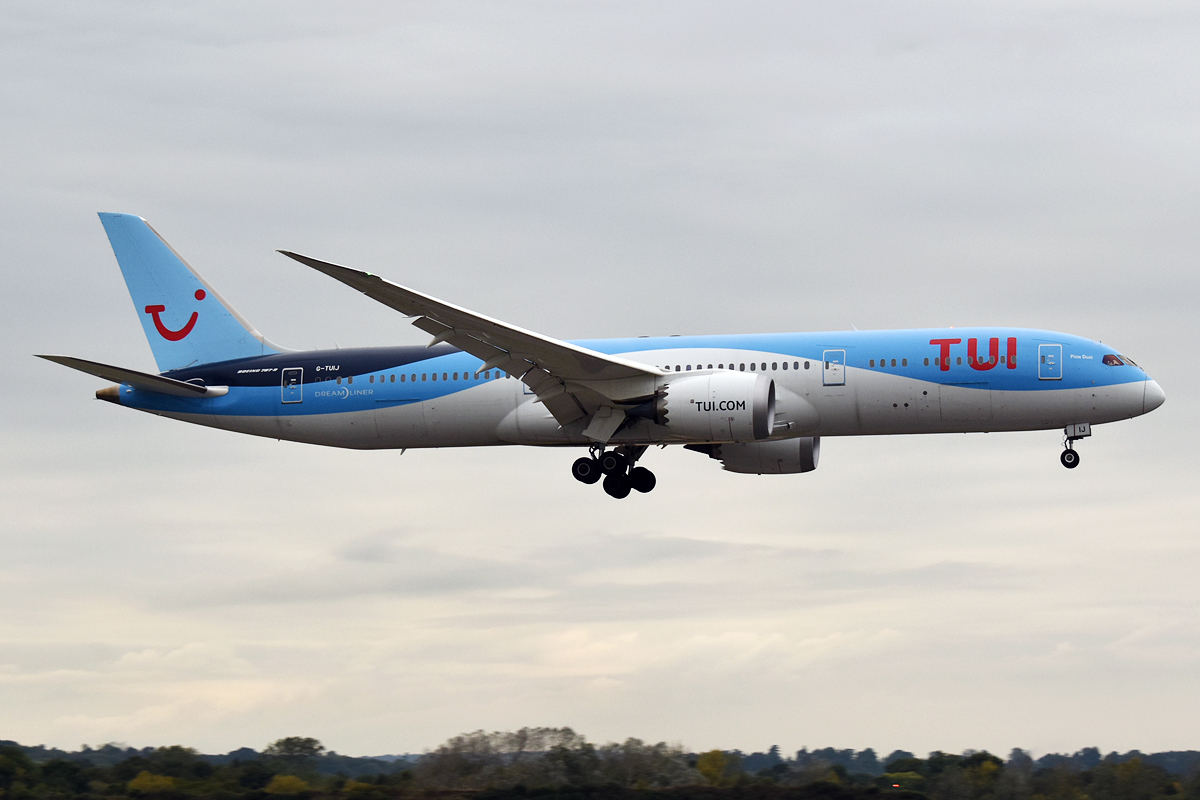
Two TUI Airways long‑haul services bound for Bridgetown were forced to make abrupt U‑turns today after a sudden wave of airspace restrictions rippled across the southern Caribbean in the wake of U.S. military strikes on Venezuela.
The closures—implemented within hours of explosions reported in Caracas—triggered widespread disruption across the region’s air corridors, leaving airlines scrambling to reroute or cancel flights.
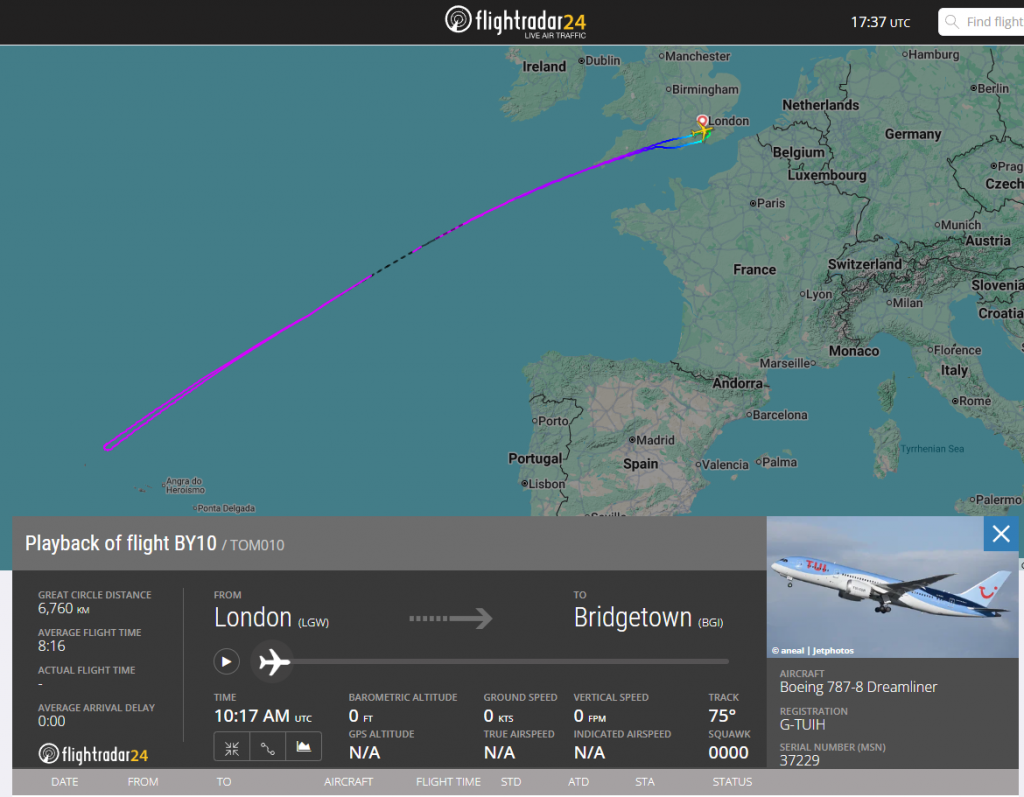
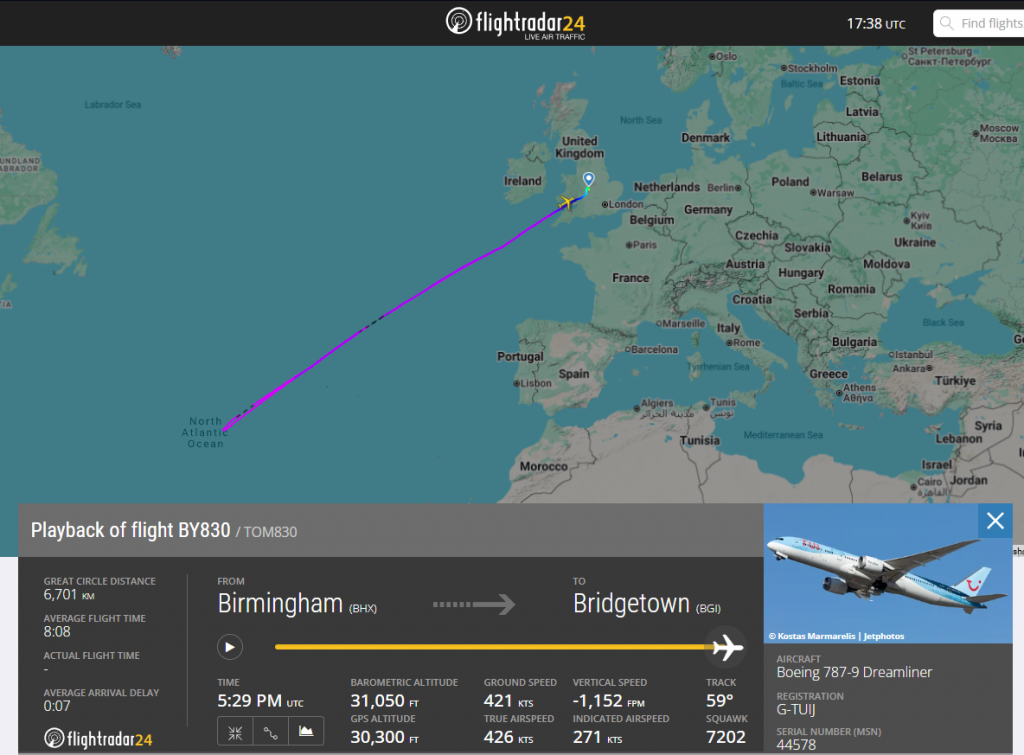
TUI flight TOM830 from Birmingham and TOM010 from London Gatwick had already crossed the Atlantic when operators were informed that Venezuelan and adjacent airspace could no longer be used.
Both aircraft subsequently reversed course and returned to their respective departure airports, according to live flight tracking data.
Their diversions came amid a rapidly escalating operational picture. Grantley Adams International Airport in Barbados confirmed that multiple flights were cancelled or delayed due to the restrictions, which followed U.S. strikes on Venezuelan military sites.
The FAA issued a NOTAM barring U.S. aircraft from Venezuelan airspace and warning that parts of Curaçao’s FIR were also off‑limits.
Although the FAA directive applies specifically to U.S. operators, the knock‑on effects have been immediate and global, as airlines reassess routings that typically skirt or cross Venezuelan territory.
A Region in Turmoil
The disruption stems from a dramatic escalation in Venezuela’s long‑running political crisis.
Reports of explosions near Caracas and U.S. military activity prompted the FAA to prohibit U.S.‑registered aircraft from entering Venezuelan airspace from 06:00 UTC on 3 January.
The Hill reported that the U.S. operation included the capture of Venezuelan leader Nicolás Maduro, triggering further instability and a wave of cancellations across the Caribbean.
Airlines serving Barbados, Curaçao, Aruba, and Puerto Rico were among the first to feel the impact.
KLM cancelled multiple Caribbean services, including flights to and from Curaçao and Aruba, as Dutch authorities urged citizens in Venezuela to contact family and remain alert.
JetBlue, Delta, and other U.S. carriers also cancelled flights across the region.
For UK and European airlines, the challenge is more nuanced. While they are not bound by FAA restrictions, the sudden closure of Venezuelan and adjacent FIRs removes a major corridor used by transatlantic flights to northern South America and the Eastern Caribbean.
Rerouting around Venezuelan airspace can add significant distance, fuel burn, and operational complexity—particularly for westbound flights already battling headwinds.
TUI’s Dilemma: Safety, Fuel, and Operational Certainty Amid Venezuela Crisis
For TUI’s two Barbados‑bound flights, the timing of the NOTAMs left little room for alternative planning.
Both TOM830 and TOM010 had progressed deep into the Atlantic when the airspace situation changed.
Continuing to Bridgetown would have required a landing at an alternate airport already experiencing congestion and uncertainty.
Returning to the UK ensured operational control and passenger safety—though at the cost of significant disruption for hundreds of travellers.
The situation mirrors the broader challenges outlined in your recent Aviation Hub analysis on how U.S. missile strikes in Caracas could reshape commercial aviation.
As we have noted, Venezuela’s FIR is a “geographical choke point” for north–south and east–west flows across the Caribbean basin.
When that airspace becomes unavailable, airlines face longer routings, higher fuel costs, and reduced schedule reliability.
Similarly, our coverage of KLM’s cancellations highlighted how even airlines with no direct service to Venezuela are exposed to the ripple effects of regional instability.
Today’s events underscore that reality with unusual clarity.
Venezuela Crisis: A Wider Shock to Caribbean Connectivity
The Caribbean’s aviation network is uniquely vulnerable to geopolitical shocks. Islands depend heavily on long‑haul connectivity, and many routes rely on narrow corridors between South American FIRs.
When one of those corridors closes, the entire region feels the impact.
Today’s events triggered:
- Dozens of cancellations across the Caribbean
- Passengers stranded at airports including Puerto Rico’s Rafael Hernández International Airport
- Heightened travel advisories from European governments
For Barbados specifically, the timing is particularly disruptive.
Early January is peak tourist season, with high load factors and limited spare capacity across airlines.
What Happens Next?
Airlines will now be assessing whether the Venezuelan airspace restrictions are temporary or part of a longer‑term geopolitical shift.
If the latter, carriers may need to redesign routings to the southern Caribbean and northern South America—potentially adding 30–90 minutes to flight times.
For TUI, the immediate priority will be reaccommodating passengers from today’s aborted flights and determining whether tomorrow’s services can operate via alternative routings.
But the broader question is whether this marks the beginning of a sustained period of instability in Caribbean air navigation—a scenario that would reshape airline scheduling, fuel planning, and even fleet deployment.
For now, the sudden U‑turns of TOM830 and TOM010 stand as a stark reminder of how quickly geopolitical events can reverberate through global aviation.
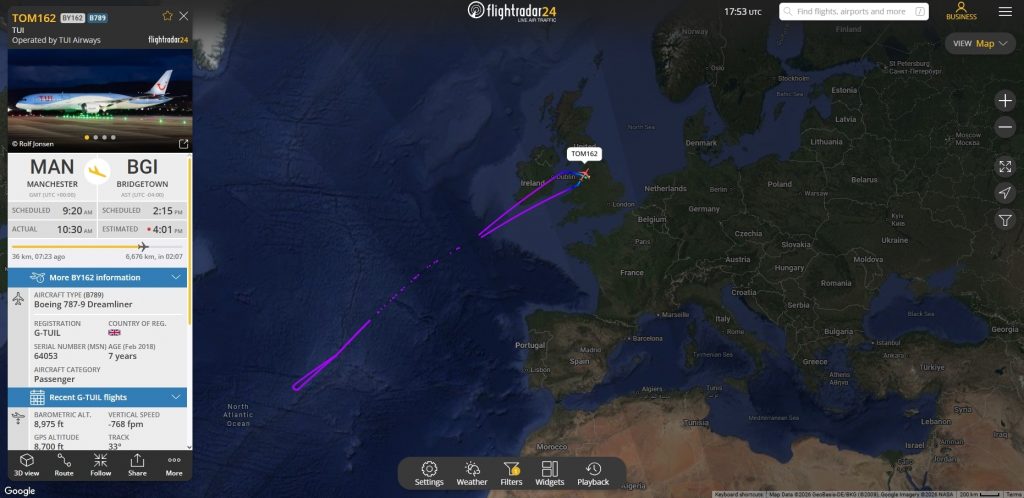
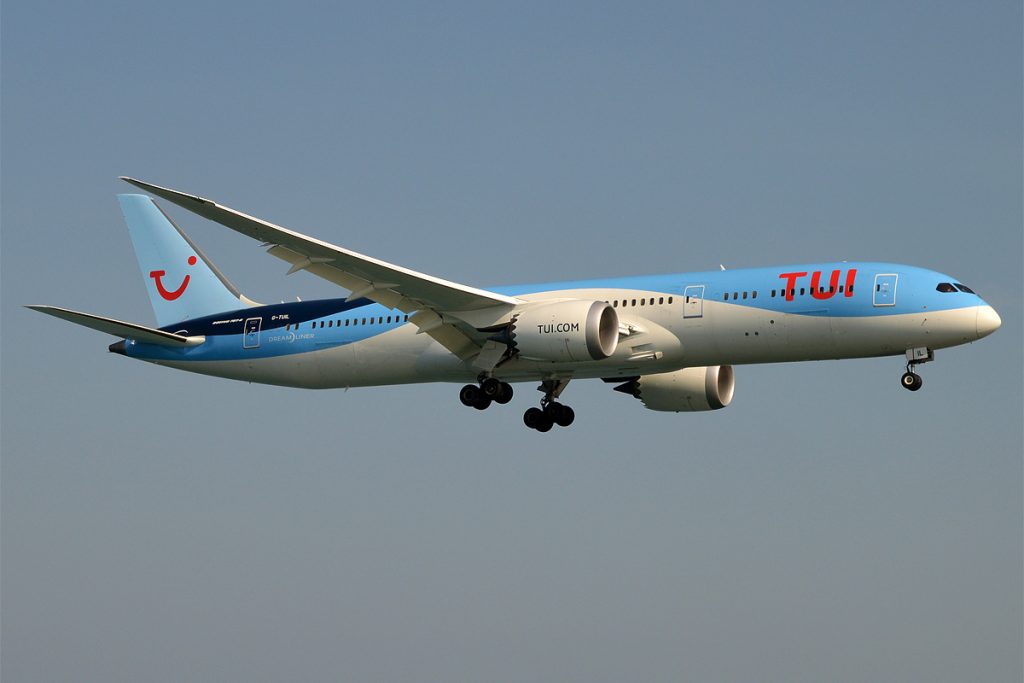
UPDATE #1 @ 1754 UK time – It turns out a third TUI Boeing 787 also turned around over the Atlantic.
TOM162 from Manchester has also done the same as well.
Continue to follow The Aviation Hub for more analysis and insight!