
Earlier today (January 4), Lufthansa flight LH1668 from Munich to Cluj-Napoca declared an emergency.
Information is limited surrounding the incident at hand.
Below is what we know on this so far.
Lufthansa Flight LH1668 – Munich to Cluj-Napoca…
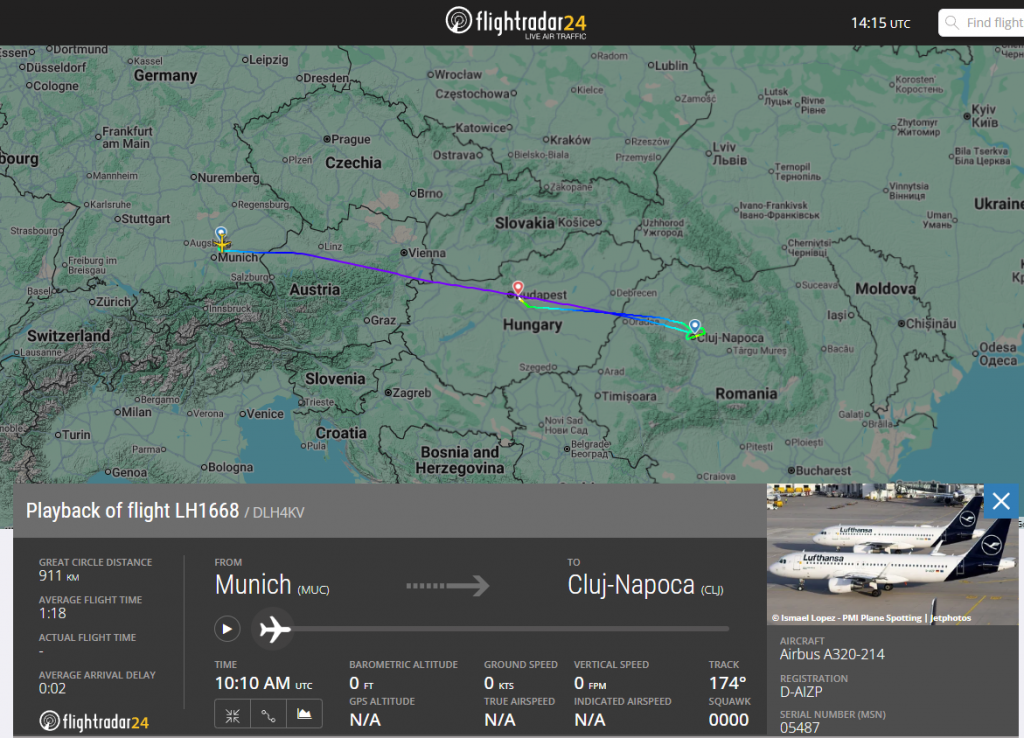
Lufthansa flight LH1668, which declared the emergency, is a routine scheduled flight between Munich and Cluj-Napoca in Romania.
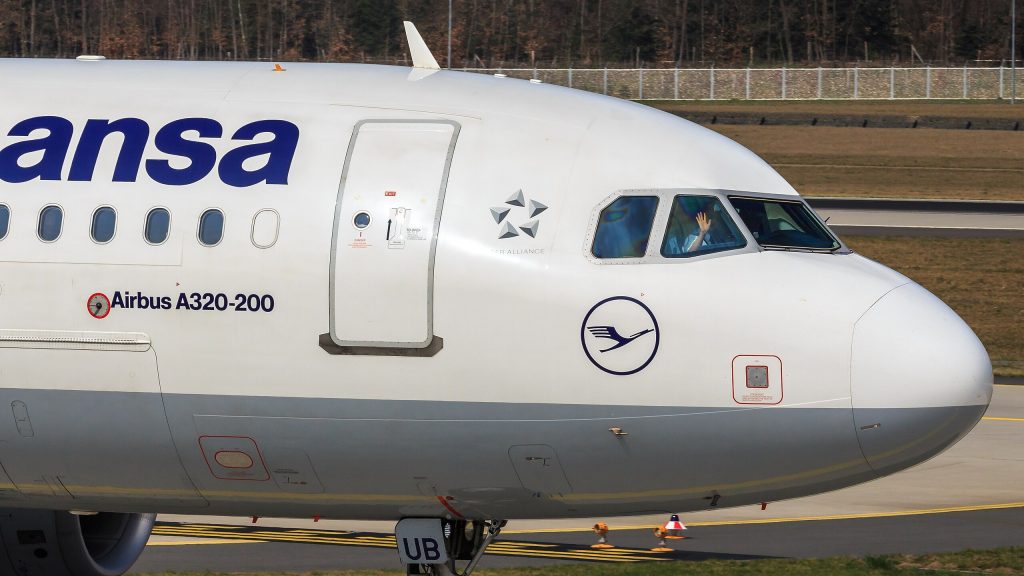
Furthermore, the aircraft involved in the incident was D-AIZP.
As per data from Planespotters.net, D-AIZP is a 12.9 year old Airbus A320ceo that was delivered to the German carrier back in February 2013.
Of the A320ceo variant, Lufthansa has 46 of them in their vast fleet.
Moreover, of the 46, 41 are in active service, and five are parked, with an average fleet age of 13.1 years.
As well as the A320ceo, the German carrier has the following other aircraft in their mainline fleet:
- 35 Airbus A319s.
- 30 Airbus A320neos.
- 70 Airbus A321 Family aircraft.
- 7 Airbus A330s.
- 19 Airbus A340s.
- 31 Airbus A350s.
- 8 Airbus A380s.
- 27 Boeing 747 Family aircraft.
- 12 Boeing 787 Dreamliners.
- 23 Bombardier CRJ-900s.
In total, Lufthansa has 308 aircraft in their mainline fleet, of which 263 are in active service and 45 are parked, with an average fleet age of 14.5 years.
Lufthansa flight LH1668, which declared the emergency, departed from Munich at 1121 local time on January 4 and proceeded towards Cluj-Napoca.
Everything seemed normal in the flight until the arrival phase into the Romanian airport.
The crew looked to have one attempt at landing into Cluj-Napoca, before climbing out and heading westwards.
Not too long after the choice to fly away from the Romanian airport, the aircraft declared an emergency and diverted to Budapest.
The aircraft did land there safely without further incident.
Reason for the Emergency Unclear…
At the moment, it is unclear what the reason for the emergency onboard Lufthansa flight LH1668 Munich-Cluj Napoca was for.
What we do know is that it was serious enough to cause a general emergency declaration.
When an aircraft squawks 7700, it’s transmitting aviation’s universal general emergency code via its transponder.
This alerts all air traffic control units that the crew is dealing with an abnormal situation requiring priority handling.
Despite how dramatic it appears on flight‑tracking apps, 7700 covers a wide spectrum of issues, many of which are precautionary rather than life‑threatening.
The code may be triggered by anything from minor electrical faults to more serious technical problems, medical emergencies, or environmental issues such as smoke or pressurisation concerns.
Aviation sources note that pilots may enter 7700 themselves or be instructed to do so by ATC, depending on the scenario.
Once activated, controllers clear surrounding airspace, offer vectors, and prepare emergency services as needed.
In most cases, the aircraft lands safely after a controlled, well‑managed response.
As soon as we have more information pertinent to the emergency onboard Lufthansa flight LH1668 Munich-Cluj Napoca, then we will update you accordingly.
Continue to follow The Aviation Hub for more analysis and insight!
Advertise with us Your brand, in front of an aviation audience Home page and in-article placements, sold directly, one advertiser per slot. From £250 a year. See the rates