Qatar Airways, Starlink, and the New Era of In‑Flight Connectivity
 By The Aviation Hub
5 min read
By The Aviation Hub
5 min read
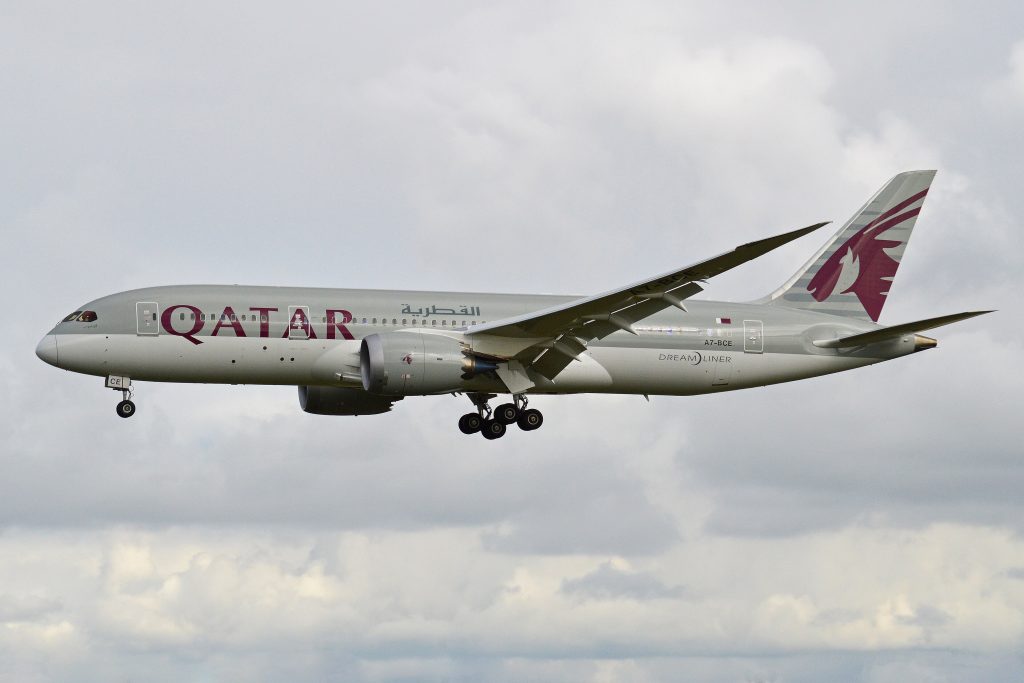
Qatar Airways has taken a decisive lead in the in‑flight connectivity race, becoming the first airline in the world to operate a Starlink‑equipped Boeing 787‑8 while simultaneously completing its Airbus A350 Starlink installation programme.
The announcement marks one of the most ambitious and rapid LEO‑satellite rollouts undertaken by any carrier to date, positioning Qatar Airways at the forefront of next‑generation cabin connectivity.
The airline confirmed that three Boeing 787‑8s have now been fitted with SpaceX’s Starlink system, following a newly developed Boeing‑designed aerodynamic radome that enables the Dreamliner to house Starlink’s electronically steerable antennas.
Alongside this, the carrier has completed its A350 installation programme in just eight months — the fastest Starlink deployment on the type anywhere in the world.
With nearly 120 widebody aircraft now equipped, Qatar Airways has effectively created the largest Starlink‑enabled long‑haul fleet in operation.
Starlink: A Strategic Connectivity Play
For Qatar Airways, the move is more than a technical achievement.
It is a strategic investment in digital capability at a time when passenger expectations around connectivity are accelerating.
The airline’s Starlink‑equipped aircraft now offer high‑speed, low‑latency internet that rivals ground‑based broadband.
Qatar Airways is positioning this as a core part of its premium long‑haul proposition, with the carrier offering complimentary access to all passengers — a significant differentiator in a market where many airlines still charge for basic connectivity.
The rollout also aligns with Qatar Airways’ broader product strategy: pairing high‑spec cabin hardware with a digitally enhanced passenger experience.
With competitors such as Emirates, Singapore Airlines, and United Airlines also moving toward LEO‑based connectivity, Qatar Airways’ early adoption gives it a clear head start.
Why Starlink Matters: The LEO Advantage
Starlink represents a fundamental shift in how airlines deliver in‑flight connectivity. Traditional GEO satellite systems orbit at around 35,786 km, resulting in high latency, limited bandwidth, and inconsistent performance during peak usage.
Starlink’s low‑Earth‑orbit constellation — operating at roughly 550 km — offers several advantages that are particularly relevant to long‑haul carriers:
High-speed, low-latency performance
Download speeds can exceed 200 Mbps, with latency low enough to support video calls, cloud applications, and real‑time collaboration tools.
This is a step change from legacy systems that often struggle to support even moderate streaming.
Capacity for full‑cabin usage
Starlink’s bandwidth allows every passenger on a widebody aircraft to connect simultaneously without the dramatic performance drop typical of older systems.
Global coverage, including polar regions
This is critical for Qatar Airways’ network, which spans six continents and includes ultra‑long‑haul routes where connectivity has historically been patchy.
Faster, simpler installations
Electronically steerable antennas reduce mechanical complexity and enable rapid retrofit cycles — a key factor in Qatar Airways’ record‑breaking A350 rollout.
Potentially lower operating costs
While commercial terms remain confidential, LEO systems are widely expected to offer more favourable economics, supporting the industry trend toward free Wi‑Fi.
Passenger Experience on Qatar Airways: A New Baseline for Long‑Haul Travel
The introduction of Starlink across Qatar Airways’ widebody fleet will materially reshape the passenger experience, particularly on long‑haul and ultra‑long‑haul sectors.
Free, high-speed Wi‑Fi becomes the expectation
Qatar Airways’ decision to offer complimentary access sets a new benchmark. As more airlines adopt LEO connectivity, free high‑speed Wi‑Fi is likely to become a standard feature rather than a premium add‑on.
A fully connected cabin environment
Passengers can now:
- Stream live sports and entertainment
- Join video meetings
- Access cloud‑based work platforms
- Use VPNs without interruption
- Engage in online gaming
This effectively turns the aircraft cabin into an extension of the home or office.
Enhanced digital services and IFE integration
High‑bandwidth connectivity enables airlines to rethink their digital ecosystem:
- Real‑time content updates
- Cloud gaming partnerships
- Personalised retail and advertising
- Live destination and travel information
The cabin becomes a dynamic, data‑driven environment rather than a closed system.
Operational benefits behind the scenes
Starlink also supports airline operations, including:
- Real‑time aircraft health monitoring
- Predictive maintenance
- Enhanced cockpit communications
- Live weather and route optimisation
These capabilities can reduce delays, improve safety margins, and enhance operational efficiency.
Industry Implications: A New Competitive Frontier
Qatar Airways’ rollout is likely to accelerate LEO adoption across the global airline industry.
Several carriers — including United Airlines, airBaltic, and Hawaiian Airlines — have already announced Starlink partnerships, while others are evaluating alternatives such as OneWeb and Amazon’s Project Kuiper.
As LEO connectivity becomes more widespread, airlines will increasingly compete on digital capability as much as on cabin hardware or service.
For passengers, the days of slow, unreliable, and expensive onboard Wi‑Fi are rapidly fading.
The next phase of development will be shaped by:
- Expansion of the Starlink constellation
- Improved antenna technology enabling installations on narrowbodies
- Hybrid LEO/5G air‑to‑ground solutions
- Growth of smart cabin systems powered by real‑time data
In the long term, LEO connectivity could underpin autonomous systems, advanced crew tools, and fully connected airline operations.
Qatar Airways Positioning: A Clear Lead in Digital Aviation
By becoming the first airline to bring Starlink to the Boeing 787 and the fastest to complete an A350 installation programme, Qatar Airways has established itself as a leader in next‑generation connectivity.
The move reinforces the airline’s reputation for product innovation and positions it strongly as digital capability becomes a defining factor in long‑haul competition.
For passengers, the impact will be immediate and tangible.
For the industry, Qatar Airways’ rollout sets a new benchmark — and a new expectation — for what in‑flight connectivity should deliver.
Continue to follow The Aviation Hub for more analysis and insight!