Emirates A380 Diverts to Accra After Cargo Hold Smoke Alert on Flight EK261
 By The Aviation Hub
3 min read
By The Aviation Hub
3 min read
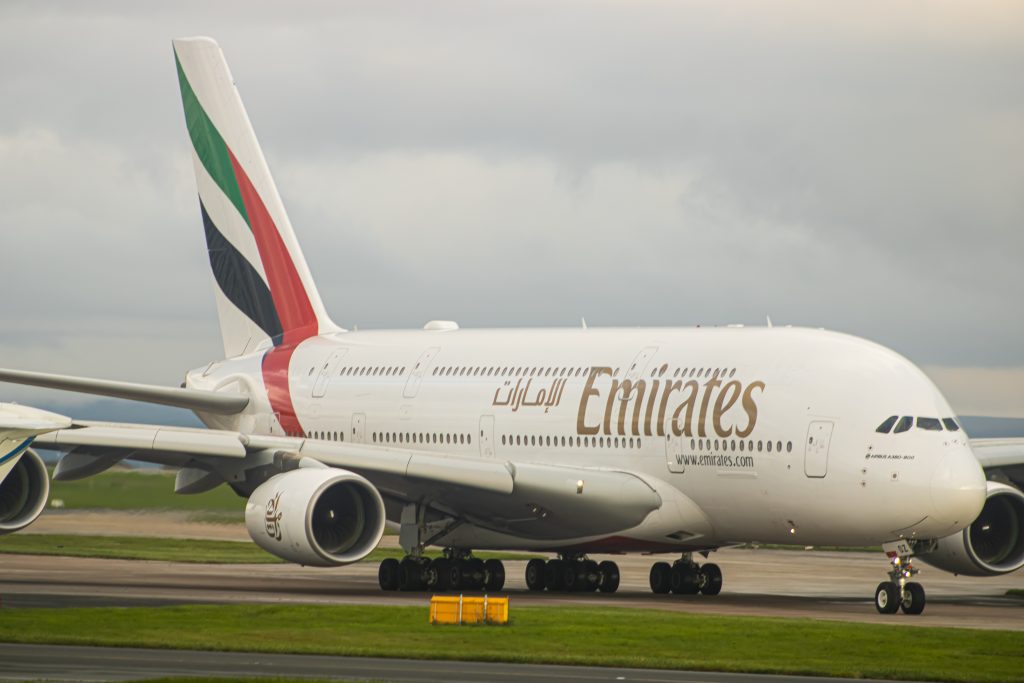
An Emirates Airbus A380 operating flight EK261 from Dubai to São Paulo made an unscheduled diversion to Accra on 9 January 2026 after the crew received an indication of possible smoke in the aircraft’s cargo hold, according to multiple aviation sources and local media reports.
The incident marked only the third time an A380—the world’s largest passenger airliner—has landed at Kotoka International Airport (KIA), and only the second involving Emirates.
Incident Onboard Emirates EK261 Dubai-Sao Paulo…
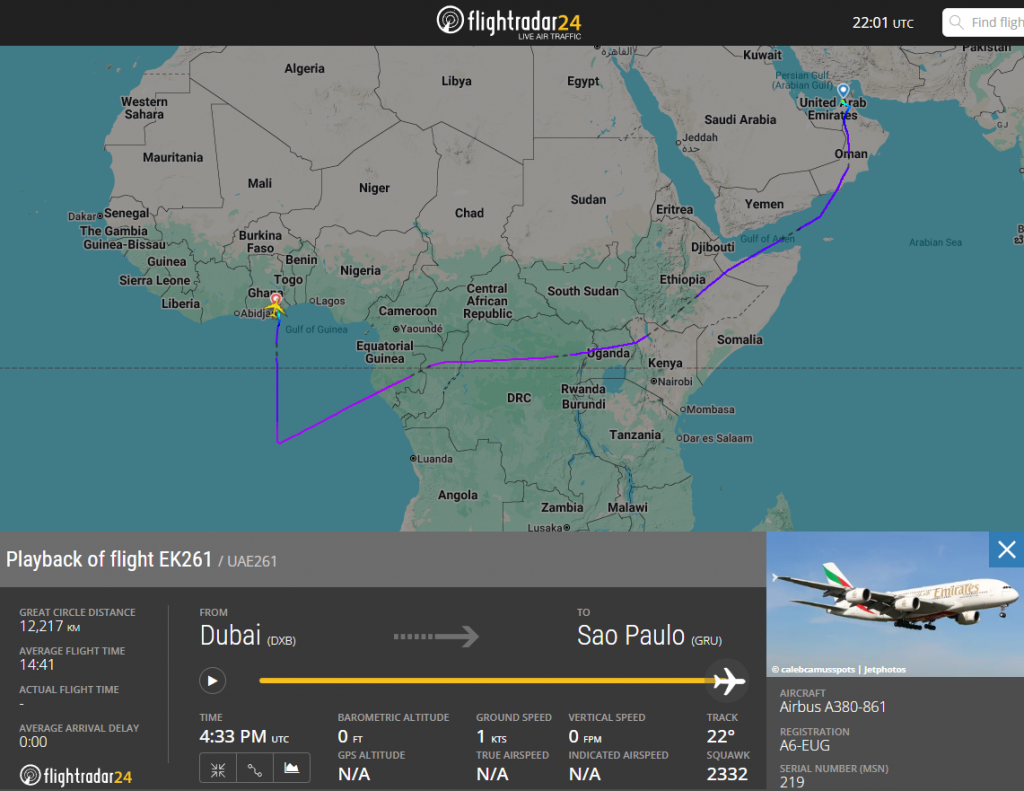
The aircraft, reportedly registered A6‑EUG according to regional aviation reporting, departed Dubai as scheduled for its long‑haul sector across Africa and the South Atlantic.
While cruising southbound after crossing the African continent, the crew received intermittent smoke warnings from the forward cargo compartment.
Although such alerts can occasionally be triggered by faulty sensors, standard operating procedures require immediate assessment and, when necessary, diversion to the nearest suitable airport.
With the aircraft already over the Gulf of Guinea and Accra lying within range, the crew elected to divert to KIA, where emergency services were placed on standby.
The A380 landed safely, and passengers disembarked while fire crews and ground personnel conducted inspections of the cargo hold.
Early reports indicate that the smoke indication was intermittent rather than continuous, a factor that often points to a sensor or system anomaly rather than an active fire.
No Statement Issued Following Cargo Hold Smoke Alert on the Emirates A380…
Emirates has not yet issued a detailed public statement on the nature of the alert onboard EK261 Dubai-Sao Paulo or the expected timeline for the aircraft’s onward journey.
The diversion created a rare moment of aviation interest in Accra. Kotoka International Airport is not certified for regular A380 operations, and the aircraft’s arrival drew attention from local aviation enthusiasts and airport staff.
The last time an Emirates A380 landed in Accra was in October 2018, during a one‑off commercial visit.
According to additional reporting from AeroIN in Brazil, the crew’s decision to divert was influenced not only by the smoke indication but also by the operational reality that the aircraft had already passed the African coastline and was preparing to cross the South Atlantic—an area with limited diversion options for an aircraft of its size. Returning to Africa was the safest course of action.
Once on the ground, the aircraft reportedly faced logistical challenges.
As highlighted in aviation commentary circulating online, Accra does not routinely handle A380 maintenance, meaning specialist engineering support may need to be flown in before the aircraft can be cleared for departure.
Passengers were expected to be accommodated while Emirates coordinated onward travel arrangements.
Despite the disruption on EK261, the incident underscores the effectiveness of modern aircraft safety systems and the conservative decision‑making protocols followed by flight crews.
Smoke warnings—whether genuine or false—are treated with the highest level of caution, particularly on long‑haul flights operating far from diversion airports.
Continue to follow The Aviation Hub for more analysis and insight!
Advertise with us Your brand, in front of an aviation audience Home page and in-article placements, sold directly, one advertiser per slot. From £250 a year. See the rates