Air Canada Boeing 787 Ottawa-London Suffers Cracked Windshield
 By The Aviation Hub
4 min read
By The Aviation Hub
4 min read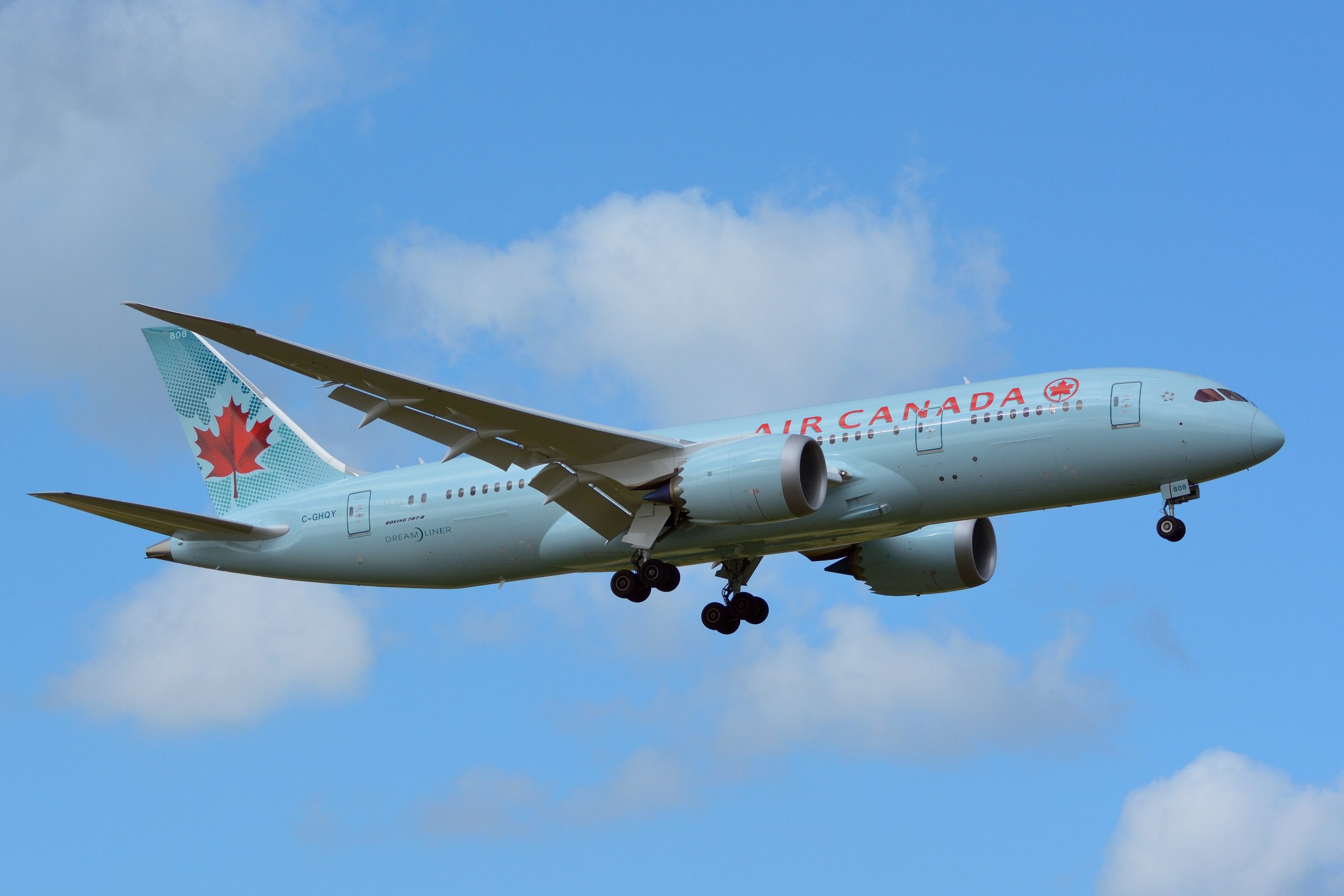
An Air Canada Boeing 787‑8 operating flight AC888 from Ottawa to London Heathrow landed safely on 1 January 2026 after the crew declared a PAN PAN due to a shattered outer windshield pane on the first officer’s side.
The incident, reported by The Aviation Herald, occurred as the aircraft—registered C‑GHQY—was nearing the end of its overnight transatlantic crossing.
The Flight: AC888 from Ottawa to London
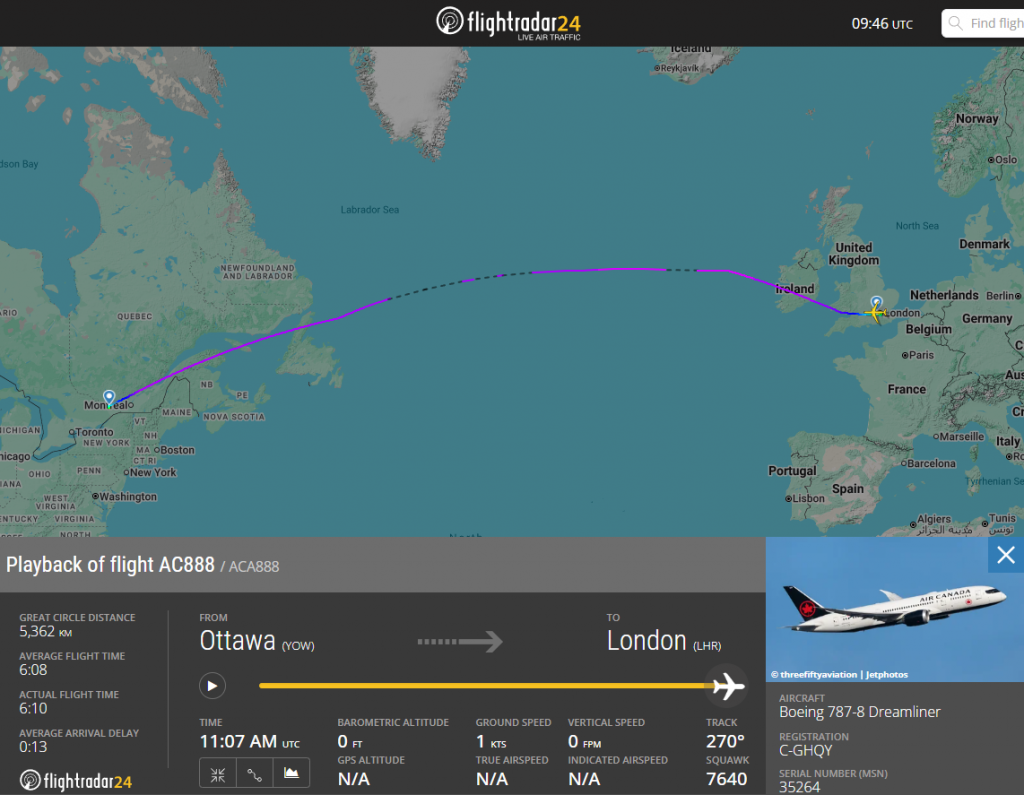
Flight AC888 departed Ottawa (CYOW) on 31 December 2025, bound for London Heathrow (EGLL).
According to Flightradar24 data, the aircraft took off at 03:24 UTC and proceeded eastbound across the North Atlantic, following a standard routing for overnight Canadian departures into Europe.
The flight progressed normally for most of the journey, with no reported pressurisation issues or deviations until the crew contacted London air traffic control.
As the aircraft approached UK airspace, the crew declared PAN PAN, signalling an urgent but not immediately life‑threatening situation.
The reason: the outer pane of the first officer’s windshield had shattered.
Despite the failure, the crew maintained control of the aircraft, continued toward Heathrow, and executed a safe landing on runway 27R at 09:19 UTC.
The return service to Ottawa was subsequently cancelled, and the aircraft remained on the ground at Heathrow until 3 January while maintenance teams replaced the damaged windshield.
The Aircraft Operating the Ottawa-London Flight: Air Canada’s Boeing 787‑8 C‑GHQY
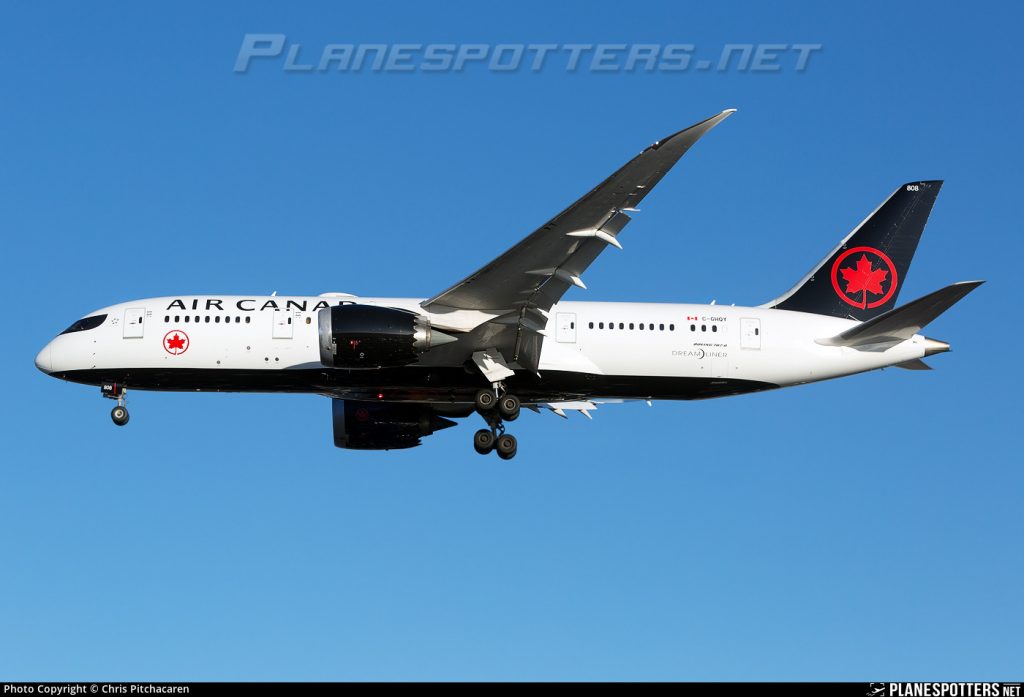
The aircraft involved, C‑GHQY, is one of Air Canada’s Boeing 787‑8 Dreamliners.
The 787‑8 is the smallest variant in Boeing’s Dreamliner family, known for its composite fuselage, fuel efficiency, and long‑range capability.
Air Canada uses the type extensively on transatlantic and transpacific routes, including services to London, Toronto, Calgary, and seasonal leisure destinations.
Flightradar24’s recent activity logs show C‑GHQY operating a mix of long‑haul flights in the days surrounding the incident, including services between London, Toronto, Calgary, and Ottawa.
The aircraft returned to service on 3 January, indicating that the damage was limited to the windshield assembly and did not affect deeper structural components.
As per data from Planespotters.net, C-GHQY is a 11 year old Boeing 787 Dreamliner that was delivered to the airline back in February 2015.
The type features a two‑crew cockpit, advanced avionics, and a multi‑layer windshield system designed to withstand extreme temperatures, pressure differentials, and bird‑strike‑level impacts.
Why a Cracked Cockpit Windshield Matters
Commercial aircraft windshields are engineered with multiple layers—typically an outer pane, a middle structural layer, and an inner pressure‑retaining pane.
In the case of AC888, only the outer pane shattered, which is why the crew could continue the flight without depressurisation or loss of structural integrity.
However, a cracked windshield is far from trivial. Several risks make such an event potentially hazardous:
1. Thermal and Pressure Stress
At cruise altitude, temperatures can drop below −50°C. A compromised pane may not withstand further thermal cycling or aerodynamic loads, especially during descent through icing conditions—something the crew specifically noted to ATC.
2. Electrical Heating Element Failure
Windshields on modern jets are electrically heated to prevent icing and fogging. A shattered outer pane can disrupt the heating system, potentially causing uneven heating or further cracking.
3. Visibility Concerns
While the inner pane remains intact, a shattered outer layer can distort visibility, particularly during approach and landing when precision is critical.
4. Escalation Risk
Although rare, there have been cases where cracks propagate inward. Declaring PAN PAN ensures priority handling and minimises exposure to additional stressors.
A Professional Crew Response
The crew’s decision to continue to Heathrow rather than divert earlier was consistent with standard procedures for an outer‑pane failure.
With no pressurisation issues and stable aircraft performance, the safest option was to proceed to a major airport with full maintenance capability.
The safe landing and quick return to service underscore both the robustness of the 787’s design and the professionalism of Air Canada’s flight crew.
Continue to follow The Aviation Hub for more analysis and insight!