Allegiant x Sun Country Merger: A Deep Analysis of the New U.S. Leisure Airline Powerhouse
 By The Aviation Hub
5 min read
By The Aviation Hub
5 min read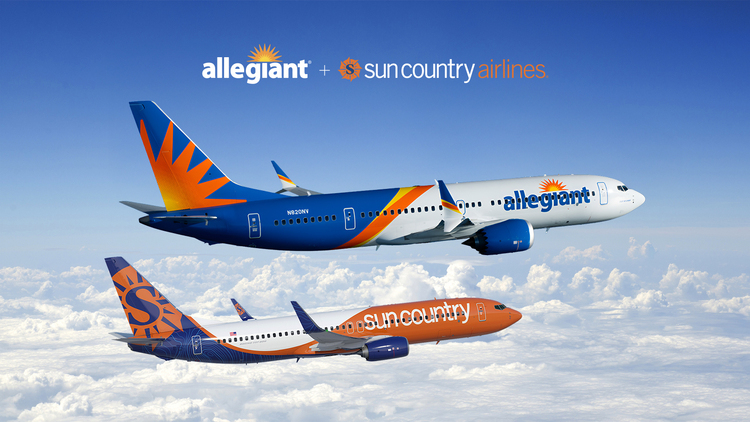
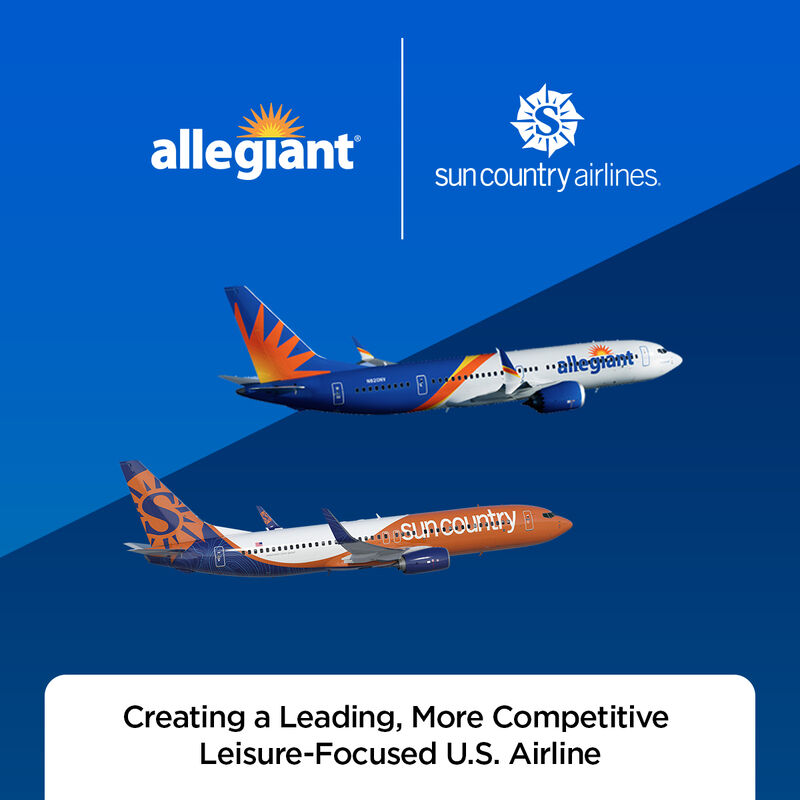
The U.S. airline landscape is preparing for another structural shift as Allegiant and Sun Country move to combine in a transaction valued at roughly $1.5 billion.
The deal, which blends cash and stock, would create a leisure‑focused carrier with nearly 175 destinations, more than 650 routes, and a fleet approaching 200 aircraft.
For a sector defined by consolidation cycles and shifting demand patterns, this merger stands out not for its scale, but for its strategic clarity.
Unlike previous U.S. airline tie‑ups that hinged on network rationalisation or corporate travel synergies, Allegiant and Sun Country are building a proposition squarely aimed at the leisure market — a segment that has proven both resilient and structurally changed since the pandemic.
The combined airline will be larger, more diversified, and better positioned to compete with ULCC rivals while maintaining a distinct operating philosophy.
Allegiant x Sun Country: A Merger Built on Complementarity, Not Consolidation
The most striking feature of this deal is what it isn’t: a traditional consolidation play. Allegiant and Sun Country overlap on virtually no routes, a rarity in U.S. aviation.
That alone sets the merger apart from the failed JetBlue–Spirit attempt, which was weighed down by dozens of overlapping markets and a regulatory environment increasingly sceptical of reduced competition.
Here, the opposite is true. The networks fit together with almost surgical precision.
- Allegiant brings a vast domestic footprint built on underserved secondary and tertiary markets.
- Sun Country adds international reach into Mexico, Central America, Canada, and the Caribbean — destinations Allegiant has never served.
- Seasonality and demand curves align rather than collide.
- Fleet commonality emerges naturally as both carriers operate Boeing 737 variants.
The result is a combined network that expands choice rather than compresses it, particularly for travellers in smaller U.S. cities who often face limited nonstop options.
A Leisure Airline With a Broader Strategic Toolkit
The combined airline will carry around 22 million passengers annually, but scale is only part of the story.
What differentiates this merger is the diversification of revenue streams — a rarity in the ULCC space.
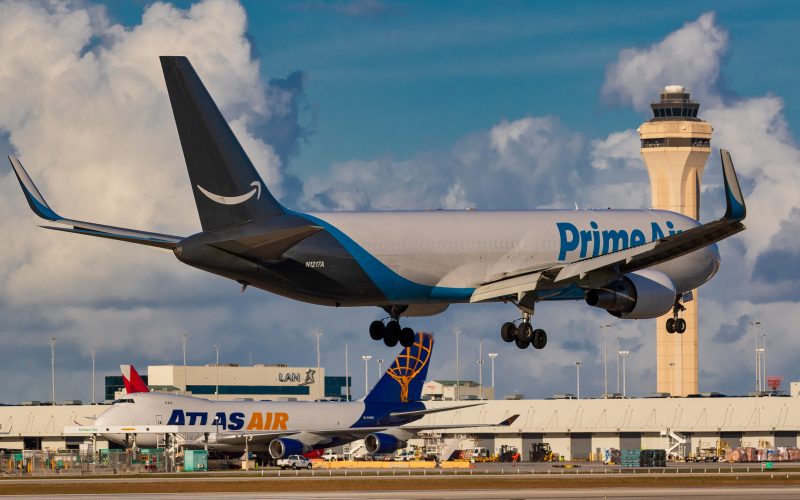
Sun Country’s charter and cargo operations remain a strategic asset
Its long‑term charter partnerships and Amazon cargo flying provide a counterweight to the volatility of discretionary leisure demand. Allegiant, historically reliant on point‑to‑point leisure traffic, gains a stabilising revenue pillar that smooths seasonality and strengthens financial resilience.
Allegiant’s domestic depth meets Sun Country’s international breadth
For Allegiant customers, the merger unlocks access to 18 international destinations. For Sun Country, it opens a pipeline into dozens of U.S. communities that lack direct service to major leisure markets.
Fleet alignment simplifies integration
Allegiant’s transition to next‑generation 737s and Sun Country’s existing 737‑800 fleet create a unified Boeing narrowbody operation — a structural advantage in training, maintenance, and scheduling.
Competitive Implications: A New Force in the Leisure Segment
The U.S. leisure market has long been dominated by Frontier, Spirit, and Southwest, each with distinct models.
The Allegiant–Sun Country combination introduces a new competitive profile:
- More flexible than Southwest
- More diversified than Frontier
- Less Florida‑dependent than Spirit
- More geographically balanced than any ULCC
The combined carrier won’t match the scale of the big three ULCCs, but it doesn’t need to.
Its strength lies in a differentiated network strategy: serving markets others overlook, flying when demand justifies it, and avoiding the frequency‑driven cost structures of legacy carriers.
This is a leisure airline built for efficiency, not ubiquity.
Regulatory Outlook: A Rare Case With a Clear Path
In an era where U.S. regulators have taken a harder line on airline consolidation, this merger is unusually well‑positioned.
Why regulators may view it favourably
- Minimal route overlap means no meaningful reduction in consumer choice.
- Expansion into underserved markets aligns with DOT priorities.
- Diversified revenue streams reduce pressure to raise fares.
- No major hub concentration avoids the slot and gate concerns seen in previous mergers.
The key regulatory questions will likely focus on labour integration, long‑term service commitments to smaller cities, and the potential for pricing power in niche leisure markets. But compared with recent merger attempts, this deal presents far fewer antitrust red flags.
Risks: Integration, Economics, and Execution
No airline merger is without challenges, and this one carries several:
Integration complexity
Even with similar models, merging systems, workgroups, and operational cultures is a multi‑year process that can erode early synergy gains if mishandled.
Economic sensitivity
Leisure demand is discretionary. A downturn could pressure yields and test the resilience of the combined network.
Fleet transition costs
Allegiant’s move to next‑generation 737s requires capital investment and operational adaptation.
Regulatory unpredictability
Even a clean merger can face delays or unexpected scrutiny in the current environment.
Allegiant x Sun Country Merger: A Strategic Bet on the Future of U.S. Leisure Travel
The Allegiant–Sun Country merger is one of the most strategically coherent combinations the U.S. market has seen in years.
It creates a carrier with:
- A broader and more balanced network
- A diversified revenue base
- A unified fleet strategy
- A clear competitive identity
- And minimal regulatory friction
If executed with discipline, the combined airline could redefine what a modern U.S. leisure carrier looks like — not just bigger, but smarter, more resilient, and more attuned to the evolving patterns of discretionary travel.
For an industry still reshaping itself after a decade of disruption, this merger signals a new phase: one where scale matters, but strategy matters more.
Continue to follow The Aviation Hub for more analysis and insight!