Greece’s aviation system was thrown into turmoil on Sunday after a major technical failure in the radio frequency infrastructure serving the Athens Flight Information Region (FIR) forced widespread delays, cancellations, and the temporary grounding of aircraft across the country.
The disruption, described by authorities as “a technical issue of unprecedented scale,” rippled through the nation’s airports and caused significant operational challenges for airlines, air traffic controllers, and thousands of passengers.
The issue emerged early in the morning, when the Hellenic Civil Aviation Authority (HCAA) detected a malfunction affecting the radio frequencies used to manage traffic within the Athens FIR — one of Europe’s busiest airspace corridors.
The failure immediately reduced the system’s ability to safely handle aircraft movements, prompting authorities to halt or severely restrict departures and arrivals while engineers worked to diagnose the fault.
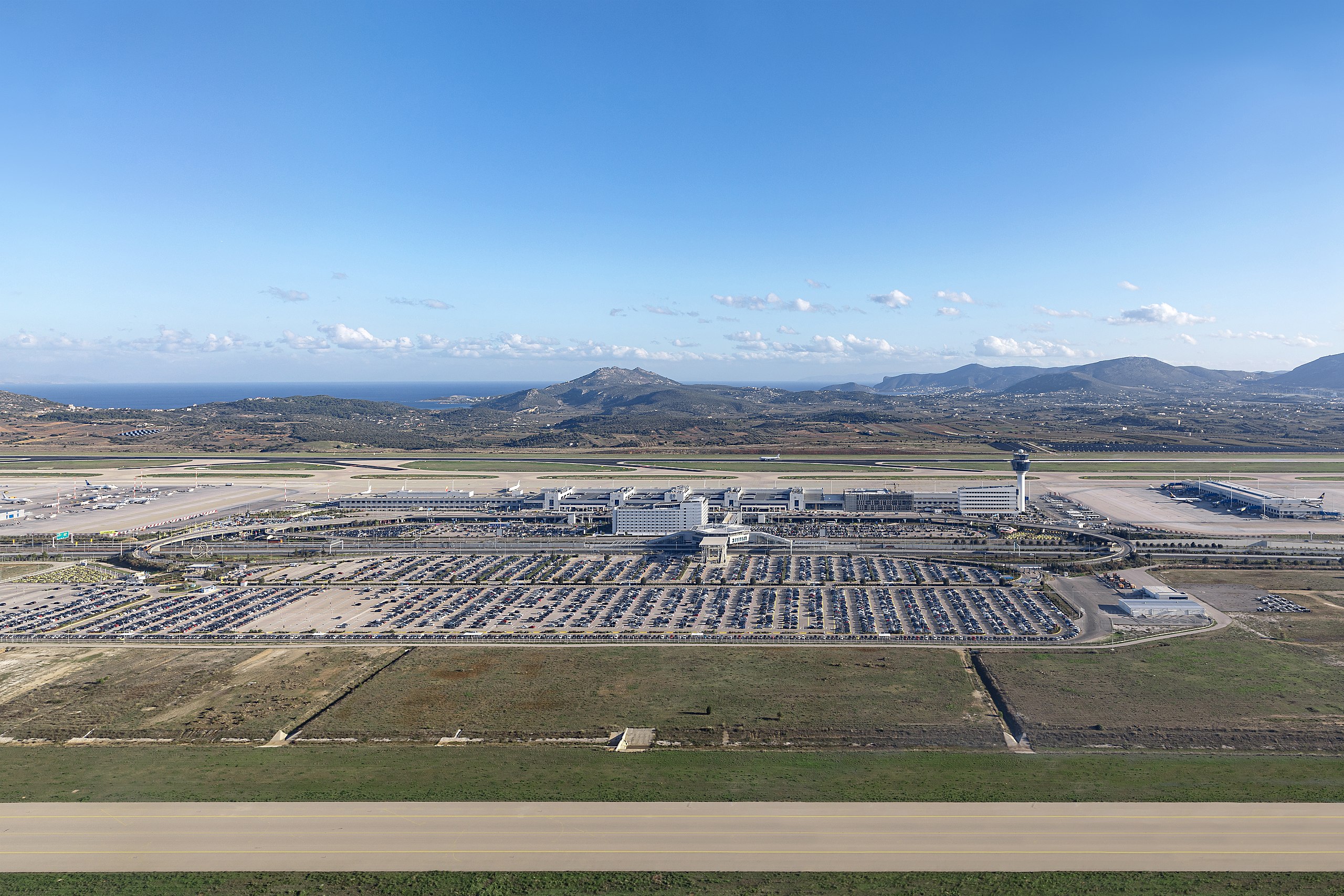
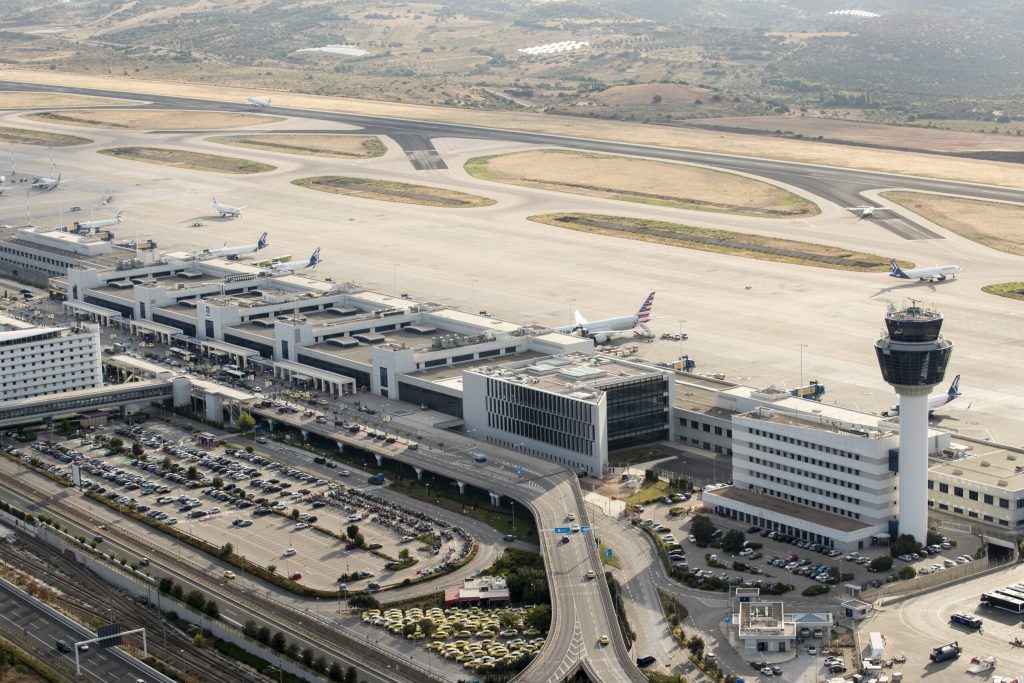
By midday, the impact was being felt nationwide. Athens International Airport (AIA), the country’s primary aviation hub, reported mounting delays as aircraft remained on the ground awaiting clearance.
Similar issues were recorded at Thessaloniki’s “Macedonia” Airport, where both departures and arrivals were disrupted and at least one flight — a service to Stuttgart — was cancelled.
Gradual Restoration Begins in Athens FIR…
After several hours of uncertainty, the first signs of recovery began to emerge.
According to information released by AIA, the HCAA initiated a phased resumption of operations, beginning with a limited number of departures.
The restart was described as cautious and dependent on “the capabilities of the Air Traffic system,” with authorities emphasising that efforts toward full restoration were ongoing.
A subsequent update from the HCAA at 12:50 local time confirmed that up to 35 departures and arrivals were being handled across Greek airports.
Overflights — aircraft transiting Greek airspace without landing — were also being partially processed in three sectors of the Athens FIR, signalling that the system was slowly regaining functionality.
The HCAA stressed that the underlying issue remained under investigation.
“The issue concerns the radio frequencies serving the Athens FIR and is being addressed in coordination with external bodies and EUROCONTROL,” the authority said, noting that an updated NOTAM had been issued to inform operators of the evolving situation.
Airlines Warn of Ongoing Disruption
With capacity sharply reduced, airlines were forced to adjust their schedules, delay flights, and in some cases cancel services altogether.
Both Aegean Airlines and Sky Express issued public statements acknowledging the severity of the disruption and warning passengers to expect continued operational challenges.
Aegean stated:
“The technical problem that has arisen since the morning hours in the radio frequency systems of the Hellenic Civil Aviation Authority continues, causing a significant reduction in capacity in Greek airspace, resulting in delays and/or cancellations of flights to and from Greek airports.”
“AEGEAN passengers will receive updates on the status of their flight at the contact details they have provided in their booking.”
Sky Express issued a similar message, emphasising its efforts to minimise inconvenience:
“Due to a malfunction in the Greek airspace control systems, delays and changes to our flight schedule may occur.”
“On our part, we are taking all necessary measures to limit your waiting time. Thank you for your understanding.”
The airlines’ statements underscored the scale of the disruption and the operational strain placed on carriers attempting to manage aircraft, crews, and passengers amid rapidly changing conditions.
A System Under Pressure
The Athens FIR is a critical component of European air traffic management, handling not only domestic flights but also a substantial volume of international traffic connecting Europe, the Middle East, and Asia.
Any degradation in its capabilities has immediate and far‑reaching consequences.
Sunday’s incident exposed the vulnerability of the system to technical failures, particularly those affecting radio communication — the backbone of air traffic control.
While the HCAA has not yet disclosed the root cause, officials have confirmed that the malfunction affected multiple frequency channels, severely limiting controllers’ ability to maintain safe separation between aircraft.
Aviation analysts note that such failures, while rare, can have cascading effects. Reduced capacity forces airports to slow or halt operations, aircraft already airborne may need to divert or hold, and airlines face complex logistical challenges as schedules unravel.
For passengers, the result is often long delays, missed connections, and uncertainty.
Passenger Impact and Operational Backlog
Across Greece, terminals filled with stranded travellers as airlines scrambled to rebook passengers and manage queues.
At Athens International Airport, the country’s busiest, the backlog grew quickly as morning flights were delayed or cancelled.
With departures prioritised during the initial phase of restoration, some inbound services remained on hold for extended periods.
Thessaloniki, Heraklion, Rhodes, and other regional airports also reported delays, though the severity varied depending on local traffic levels and the timing of scheduled flights.
Industry sources indicated that even after the technical issue is fully resolved, the operational impact could persist for several hours — or even into the following day — as airlines reposition aircraft and crews, and as air traffic controllers work through accumulated congestion.
Coordination With EUROCONTROL
The involvement of EUROCONTROL, Europe’s air navigation coordination body, highlights the seriousness of the incident.
When a major FIR experiences a sudden reduction in capacity, neighbouring regions must adjust traffic flows to prevent overloads and ensure safety.
According to the HCAA, coordination with EUROCONTROL was ongoing throughout the day to manage overflights and reroute traffic where necessary.
This helped prevent further congestion and ensured that aircraft transiting Greek airspace could continue to operate, albeit with restrictions.
Looking Ahead: What Next for Athens FIR?
While the technical problem is now on a path of gradual restoration, questions remain about how such a large‑scale failure occurred and what measures will be taken to prevent a recurrence.
The HCAA has confirmed that the issue is still under investigation, and further updates are expected as engineers analyse the malfunction.
For Greece’s aviation sector — already navigating seasonal pressures, fluctuating demand, and the complexities of European airspace — Sunday’s disruption serves as a stark reminder of the fragility of critical infrastructure.
As operations continue to stabilise, airlines and passengers alike will be hoping for a swift and comprehensive resolution.
Continue to follow The Aviation Hub for more analysis and insight!