
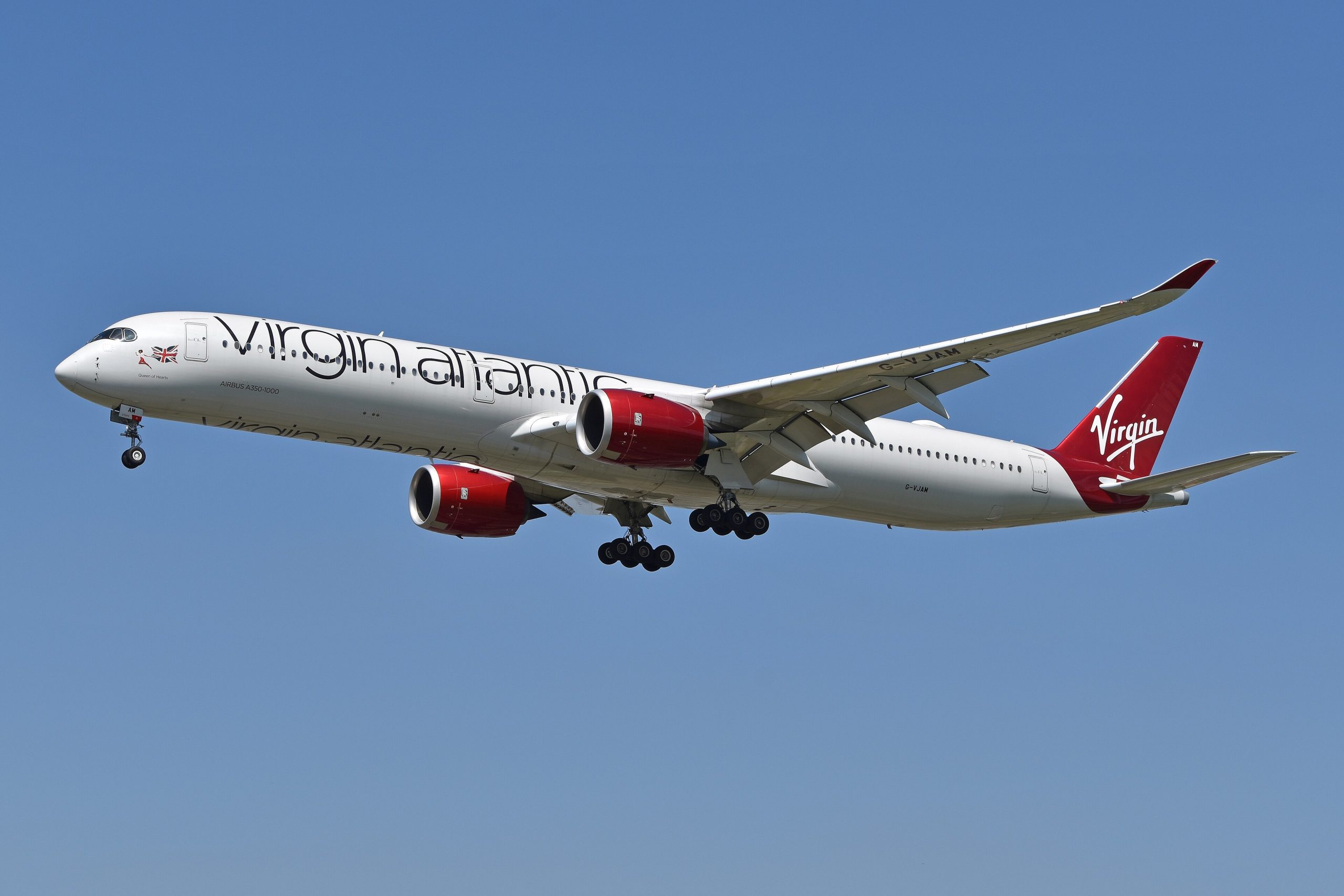
Virgin Atlantic’s relationship with Manchester Airport has always been more than a simple operational footprint.
For three decades, the airline has cultivated a northern identity rooted in leisure demand, regional loyalty, and a belief that long‑haul connectivity should not be confined to London.
The airline’s latest announcement—significant capacity increases to Orlando and the deployment of the Airbus A350‑1000 in winter 2026—cements that philosophy.
The press release marking the airline’s 30th anniversary at Manchester sets the tone clearly. As Dave Geer, Virgin Atlantic’s Chief Commercial Officer, states:
“Manchester has been our home in the North for thirty years and we’re in it for the long haul.”
That line is more than a celebratory soundbite; it is a strategic declaration at a moment when the competitive landscape at Manchester is undergoing a profound shift.
Virgin Atlantic’s decision to boost Manchester–Orlando capacity by 12% in peak Summer 2026, followed by a 17% increase in Winter 2026 through the upgauging to the A350‑1000, is a calculated move.
Orlando has long been the backbone of the airline’s northern network, and strengthening this route reinforces both commercial demand and brand identity.
The A350‑1000, with its higher seat count and improved efficiency, signals confidence in sustained demand and a willingness to invest premium assets into the region.
Stephen Turner, Chief Commercial Officer at Manchester Airport, captures the significance from the airport’s perspective:
“We are proud to connect the people of the North with the world – and our partnership with Virgin Atlantic plays a key role in doing that.”
His emphasis on partnership underscores how Virgin Atlantic has become integral to Manchester’s long‑haul proposition.
The Aer Lingus Exit: A Vacuum Waiting to Be Filled
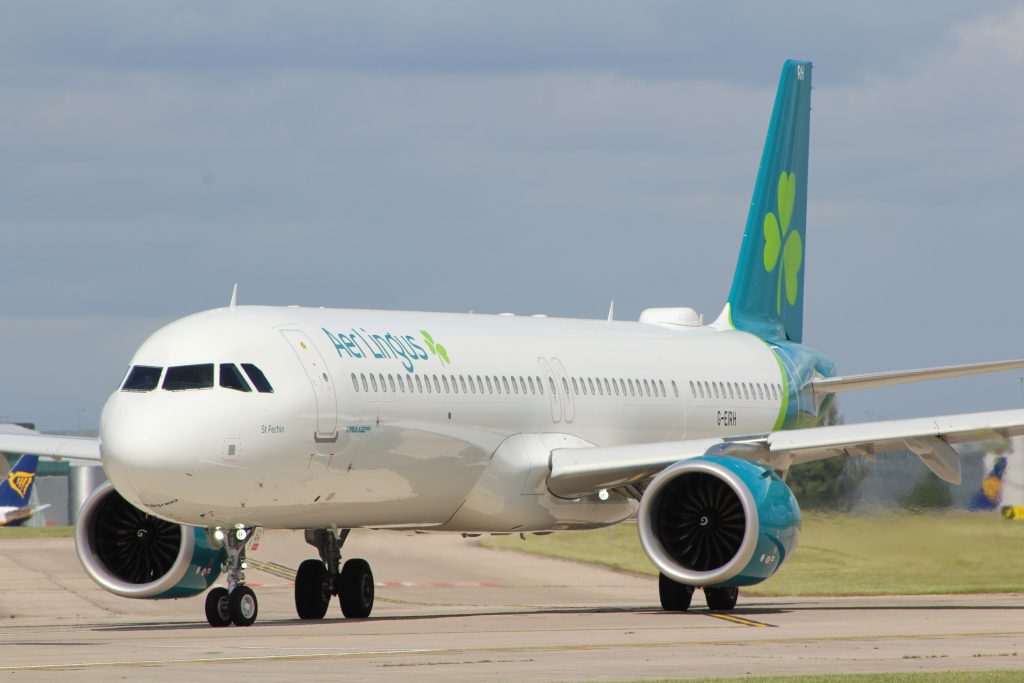
Virgin Atlantic’s expansion cannot be viewed in isolation.
The departure of Aer Lingus from Manchester Airport marks the end of a short‑lived but ambitious attempt by the Irish carrier to establish a secondary long‑haul base outside Dublin.
Launched in 2021, Aer Lingus’ Manchester operation was built on the opportunity created by the collapse of Thomas Cook, with direct services to Barbados, Orlando, and New York JFK.
However, as reported by Aviation A2Z, the base struggled to match the performance of Aer Lingus’ Dublin long‑haul operation.
Financial pressure, operational challenges, and a prolonged dispute with cabin crew ultimately led to the airline’s decision to close the base permanently.
New York JFK services ended in February 2026, with all remaining long‑haul flights ceasing by March 31.
The withdrawal leaves a notable gap. Aer Lingus had deployed two Airbus A330s and built a workforce of around 200 staff in Manchester.
Its exit not only removes direct competition on key leisure routes but also disrupts travel plans for thousands of passengers—some of whom were initially told to reroute via Dublin before a portion were rebooked onto Virgin Atlantic services.
For Virgin Atlantic, this vacuum presents both opportunity and responsibility.
The airline has already indicated interest in recruiting pilots affected by the Aer Lingus closure, though no commitment has been made regarding cabin crew.
More importantly, the exit allows Virgin Atlantic to consolidate its position as Manchester’s primary transatlantic operator without the fragmentation of demand that existed when Aer Lingus was active.
Strengthening the Network: A Strategic Realignment
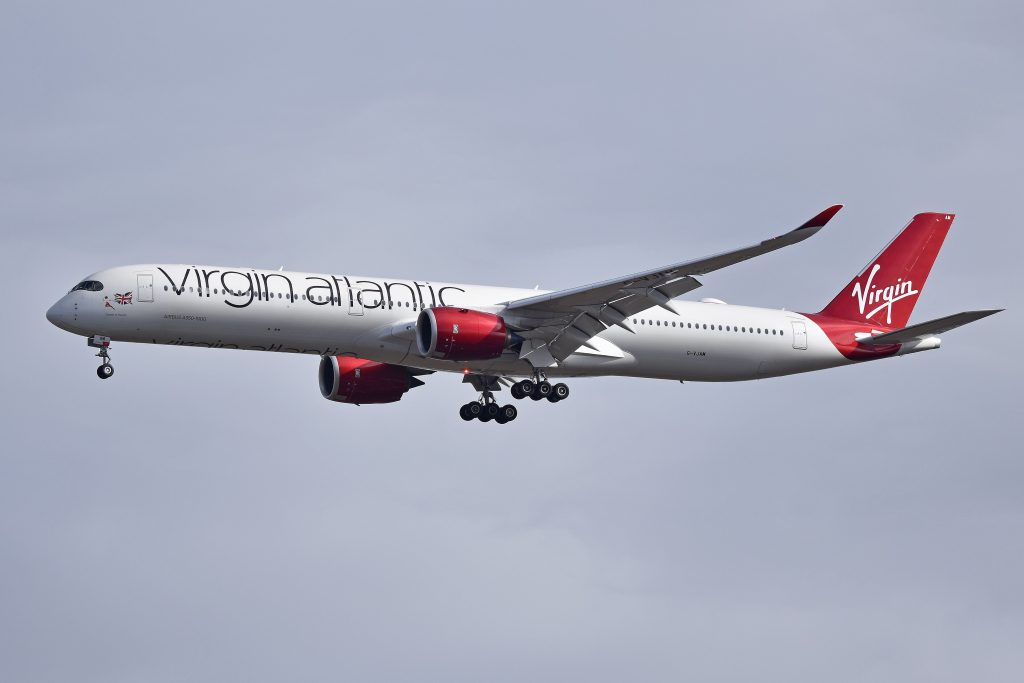
Virgin Atlantic’s Manchester network has evolved significantly since its inaugural Orlando service in 1996.
Today, the airline operates to Orlando, New York, Atlanta, Las Vegas, and a seasonal Barbados service.
The inclusion of Las Vegas—Manchester’s only direct link to the US West Coast—demonstrates the airline’s willingness to offer unique long‑haul connectivity from the region.
The latest capacity increases are part of a broader strategy to reinforce Manchester as a core pillar of Virgin Atlantic’s UK network.
The airline has signalled that further capacity growth is expected for Summer 2027, though specific routes have not yet been announced.
Given the gap left by Aer Lingus, opportunities exist for Virgin Atlantic to strengthen its position on leisure‑heavy Caribbean routes or expand its US footprint.
Partnerships also play a crucial role.
Virgin Atlantic’s joint venture with Delta Air Lines, alongside its membership in SkyTeam and partnerships with IndiGo, enhances connectivity beyond the airline’s own network.
For northern travellers, this means one‑stop access to a wide range of US and global destinations without the need to travel via Heathrow.
The Role of Manchester in the UK’s Long‑Haul Ecosystem
Manchester Airport has long positioned itself as the UK’s leading international gateway outside London.
Its catchment area spans the North West, Yorkshire, North Wales, and the Midlands—regions with strong outbound leisure demand and growing business connectivity needs.
Virgin Atlantic’s commitment aligns with Manchester’s ambition to offer a credible alternative to London for long‑haul travel.
The airport’s leadership recognises the importance of this partnership. As Turner notes:
“There’s nothing quite like the excitement you feel in the terminal before a flight to Orlando so it’s great that Virgin Atlantic is reaffirming its commitment to its home in the North.”
His comments reflect both the emotional resonance of leisure travel and the strategic value of maintaining robust transatlantic links.
With Aer Lingus gone, Manchester’s long‑haul ecosystem becomes more streamlined.
Virgin Atlantic, TUI, and a handful of Middle Eastern and Asian carriers now form the backbone of the airport’s intercontinental offering.
Virgin Atlantic’s strengthened presence ensures that the North retains direct access to key US destinations—an essential component of regional economic growth.
A Calculated Bet on Regional Demand at Manchester…
Virgin Atlantic’s expansion at Manchester is not merely opportunistic; it is grounded in long‑term demand trends.
The North of England has consistently demonstrated strong appetite for US leisure travel, particularly to Florida.
The airline’s decision to upgauge to the A350‑1000 reflects confidence in sustained demand, improved operational efficiency, and the ability to offer a premium product that differentiates it from competitors.
Moreover, the airline’s messaging emphasises permanence.
Geer’s assertion that “Manchester matters to us, and we’ll continue to invest in the region as demand grows” signals a strategic commitment that extends beyond short‑term capacity shifts.
A Defining Moment for Virgin Atlantic at Manchester Airport…
Virgin Atlantic’s strengthened presence at Manchester Airport represents a pivotal moment in the airline’s northern story.
The combination of increased capacity, premium aircraft deployment, and the withdrawal of Aer Lingus has created a landscape in which Virgin Atlantic can consolidate its role as the region’s leading long‑haul carrier.
The airline’s 30‑year legacy at Manchester provides a strong foundation, but its latest moves demonstrate a forward‑looking strategy that aligns with regional demand, airport ambitions, and the evolving competitive environment.
As Manchester continues to grow as a global gateway, Virgin Atlantic’s renewed commitment ensures that the North remains firmly connected to the world—and that the airline’s northern identity remains central to its future.
Continue to follow The Aviation Hub for more analysis and insight!