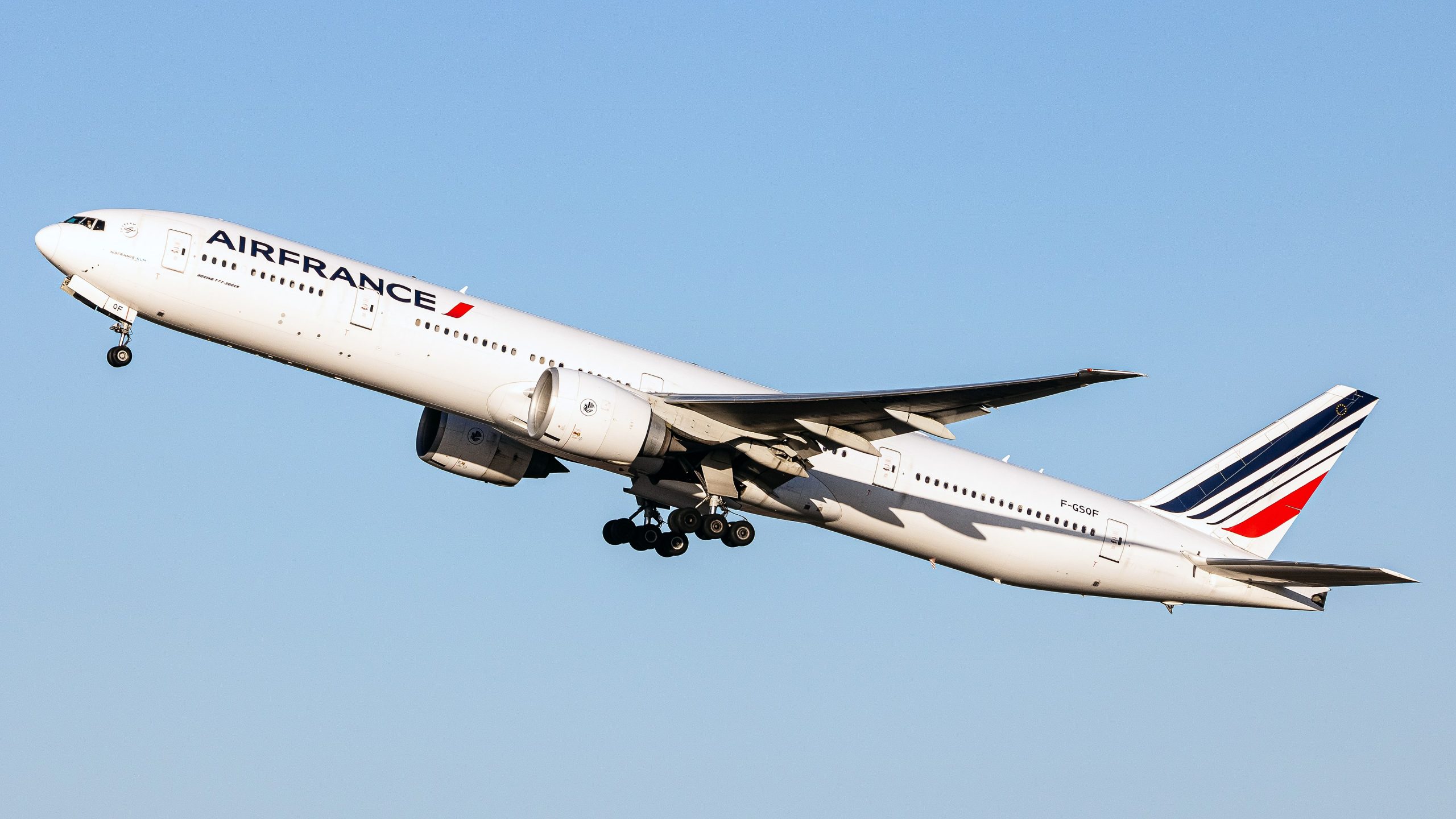
An Air France Boeing 777-300ER operating flight AF895 from Fort de France to Paris Charles de Gaulle returned to Martinique on 21 February 2026 following an engine surge shortly after takeoff.
The aircraft involved, registered F-GSQO, is a nineteen year old Boeing 777 300ER delivered to Air France in June 2006 and currently configured with fourteen seats in business, twenty eight in premium economy, and four hundred and thirty in economy.
The aircraft is powered by two General Electric engines and remains an active member of the long haul fleet.
Incident Shortly After Departure From Martinique…
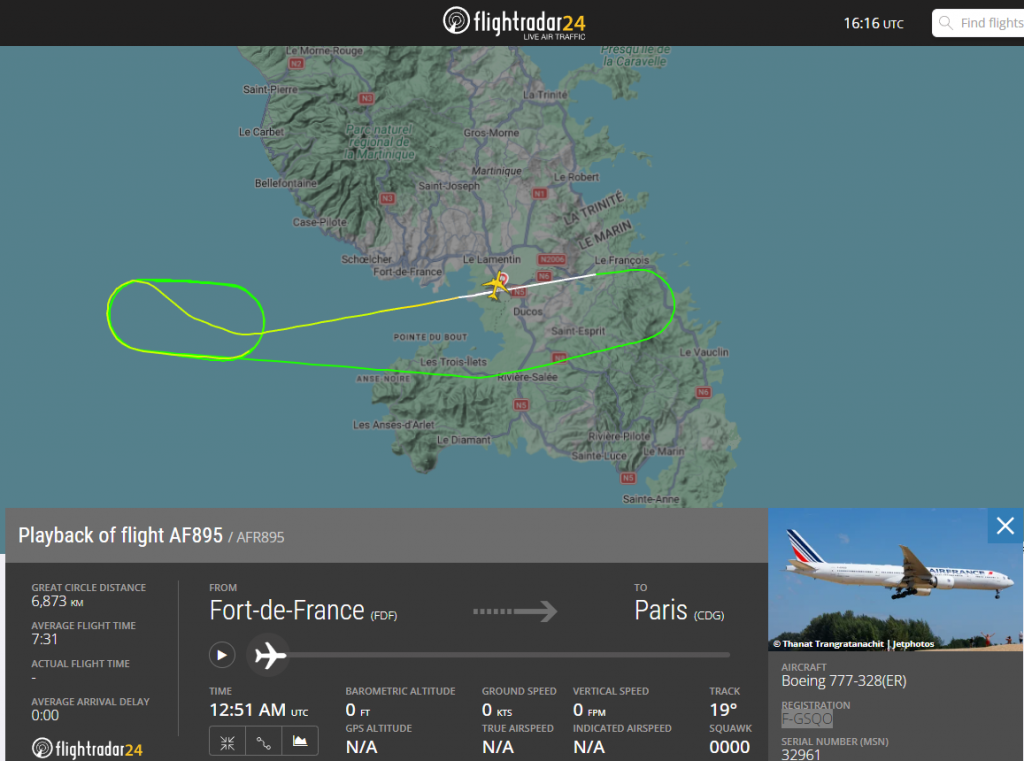
AF895 departed Fort de France in the evening for its overnight service to Paris.
Not long into the climb, the crew reported an abnormal event in the right engine.
A source later indicated that flames were visible from the affected engine, a common visual signature of a surge.
The captain subsequently described the event as a disruption of airflow that led to irregular combustion within the engine.
Although dramatic in appearance, an engine surge is a known and well understood phenomenon that differs significantly from a major engine failure.
The crew followed manufacturer procedures and Air France safety protocols, electing to discontinue the climb and return to Martinique.
Flight tracking data shows the aircraft levelling off, entering a holding pattern, and then positioning for an approach back into Fort de France.
The landing took place at approximately 21:30 local time and was reported as normal.
Crew Response and Airline Statement Following Emergency Landing in Martinique…
Air France confirmed that the crew acted in accordance with established procedures and emphasised that flight crews receive regular simulator training to manage engine surges safely.
The airline reiterated that safety remains its highest priority and apologised to passengers for the disruption.
Those on board were assisted on arrival, and a replacement aircraft was scheduled to operate the continuation of the service to Paris.
The captain’s explanation underscored the distinction between a surge and a more serious engine malfunction.
A surge occurs when airflow through the engine becomes unstable, causing a momentary loss of compression and a brief interruption in smooth combustion.
While the resulting noise and flames can appear alarming, the event is typically contained and manageable, particularly on twin engine long haul aircraft designed with significant redundancy.
About The Air France Boeing 777 Involved…
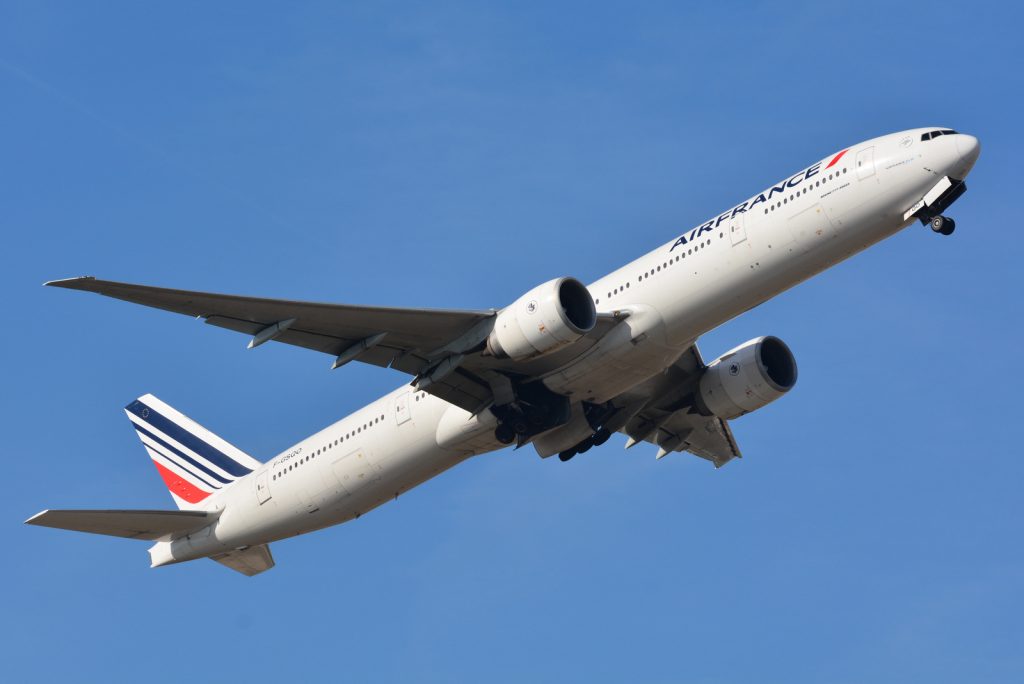
F-GSQO, named Vézelay, was built at Everett and carries manufacturer serial number 32961.
The aircraft has served exclusively with Air France since delivery and underwent a cabin reconfiguration in 2020.
The 777-300ER remains the backbone of the airline’s long haul operations, and the airframe involved in this incident is expected to undergo detailed inspections before returning to service.
The return of AF895 to Fort de France highlights the importance of crew training, procedural discipline, and the inherent resilience of modern long haul aircraft.
While visually striking, the engine surge was handled in a controlled and professional manner, ensuring the safe return of passengers and crew.
Continue to follow The Aviation Hub for more analysis and insight!