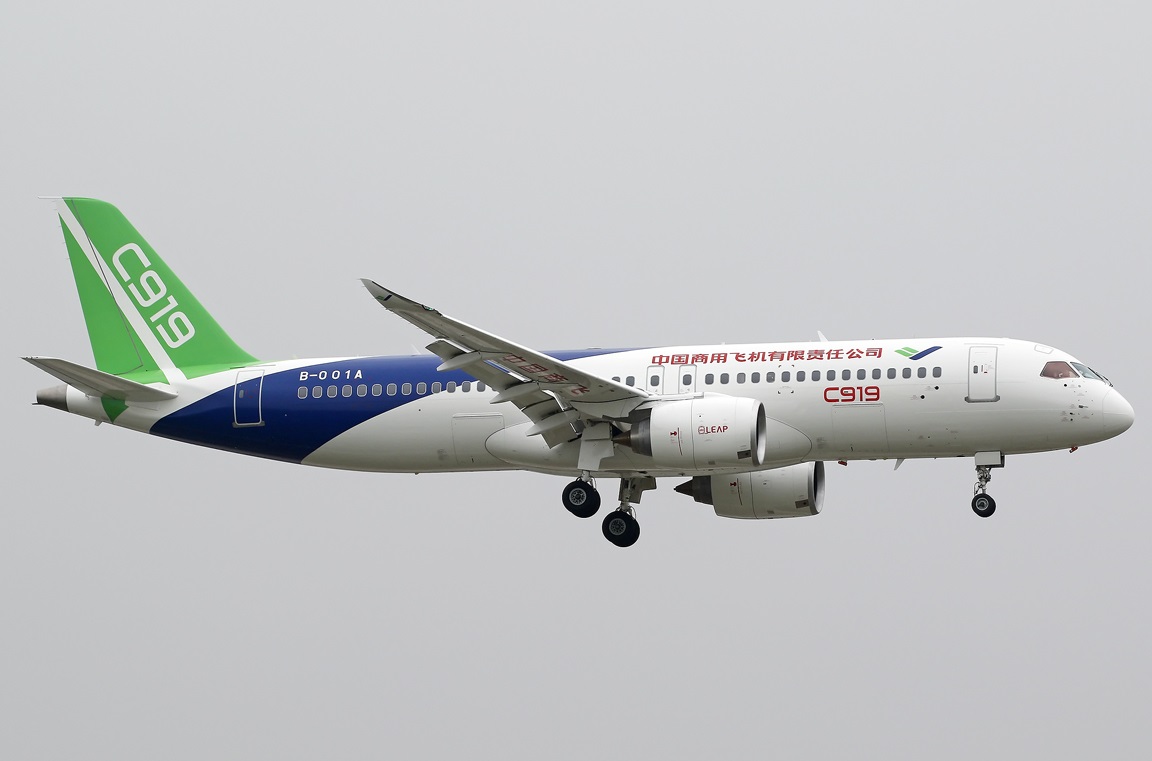
The COMAC C919 is edging toward European certification just as Airbus and Boeing face record backlogs, raising a real question: is Europe finally open to a third OEM?
For decades, Europe has been the most fortified stronghold of the Airbus–Boeing duopoly.
Airlines across the continent have built their fleets almost exclusively around the A320 and 737 families, with little appetite for experimentation and even less tolerance for operational risk.
Yet the market is now under a level of strain not seen in modern commercial aviation.
Airbus’ backlog has surged to 8,754 aircraft, while Boeing’s stands at 6,130 — historic highs that leave airlines facing delivery slots stretching well into the next decade.
This imbalance is reshaping the competitive landscape.
For the first time, the question of whether a third major manufacturer could gain a foothold in Europe is no longer hypothetical.
COMAC, China’s state‑backed airframer, believes the moment has arrived. And with the C919 now undergoing EASA certification test flights, the company is positioning itself for a long, strategic push into Western markets.
Whether it succeeds will depend on far more than certification. But the conditions that once made Europe impenetrable are beginning to shift.
Boeing & Airbus: A Duopoly Under Strain?
Airbus’ backlog of 8,754 aircraft tells the story of a manufacturer struggling to keep pace with demand.
The A320neo family remains the backbone of European fleets, yet supply‑chain bottlenecks — from engine shortages to cabin‑equipment delays — continue to limit production.
Even with Airbus delivering nearly 800 aircraft last year, the order book continues to grow faster than the company can build.
For airlines, the consequence is simple: new narrowbody slots are often unavailable until the early 2030s, leaving carriers with little flexibility to accelerate fleet renewal or expand capacity.
Boeing’s situation is different but no less constraining.
The company’s 6,130‑aircraft backlog reflects both strong demand and a cautious production ramp‑up following years of regulatory scrutiny.
The 737 MAX is selling well, but output remains capped by supply‑chain fragility and the company’s deliberate approach to stabilising its manufacturing system.
European carriers looking for near‑term MAX deliveries are finding few opportunities.
The result is a structural shortage of narrowbody aircraft — the very segment where COMAC hopes to compete.
COMAC’s Bid for Legitimacy
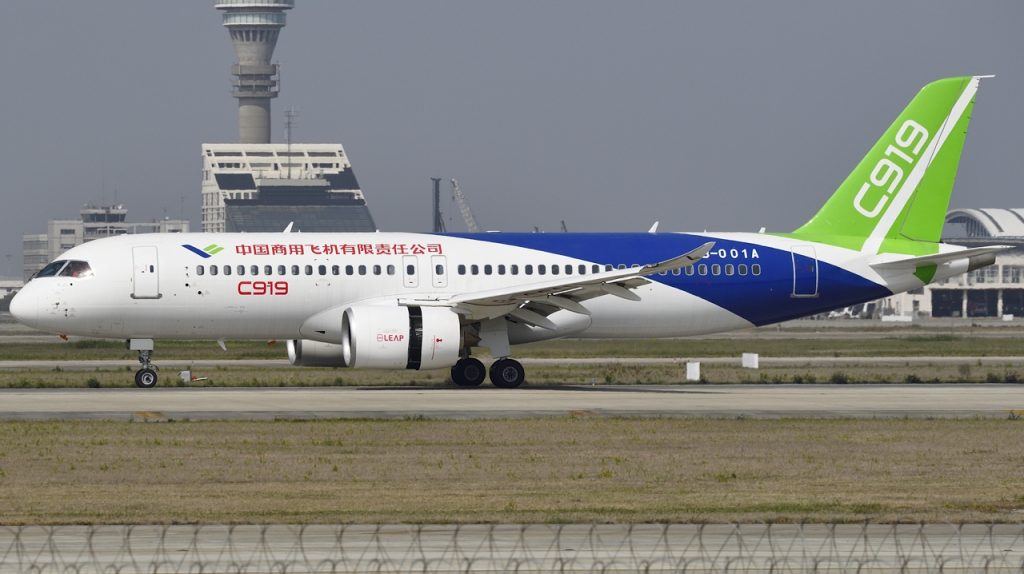
The C919’s ongoing EASA test flights represent a pivotal moment for COMAC.
For years, the aircraft existed largely within China’s domestic market, supported by state‑owned airlines and shielded from international scrutiny.
EASA’s involvement changes that dynamic.
European regulators have now flown the aircraft in Shanghai as part of the certification process, signalling a willingness to evaluate the C919 on its technical merits rather than its geopolitical origins.
The aircraft itself is designed to be familiar.
With CFM LEAP‑1C engines, a conventional cockpit philosophy and performance metrics comparable to the A320neo and 737 MAX 8, the C919 is engineered to minimise the barriers to adoption.
COMAC’s most compelling advantage, however, is price.
Industry analysts expect the C919 to be significantly cheaper than its Western rivals — a factor that could appeal to cost‑sensitive carriers and leasing companies.
Yet the biggest constraint is not demand, but supply. COMAC’s current production capacity is a fraction of Airbus’ and Boeing’s.
Even optimistic projections suggest the company will only reach 150–200 aircraft per year by the end of the decade. Europe may want more aircraft than COMAC can realistically deliver.
Where Europe’s Door Might Be Ajar
The most immediate opportunity for COMAC lies with airlines that need aircraft sooner rather than later.
With Airbus and Boeing effectively sold out for most of the next decade, carriers seeking near‑term lift have few options.
Leisure operators, ACMI providers and second‑tier low‑cost carriers — the kinds of airlines that prioritise availability and acquisition cost over brand conservatism — could become early adopters.
There is also a geopolitical dimension.
Some European governments may welcome a third OEM as a way to diversify supply chains and reduce dependence on the duopoly.
Countries with strong trade ties to China or strategic industrial partnerships may be more open to evaluating the C919, particularly if the aircraft offers favourable financing or industrial offsets.
Leasing companies represent another potential entry point.
Lessors were instrumental in globalising Airbus in the 1980s and 1990s, and they could play a similar role for COMAC — provided the manufacturer can offer credible guarantees on residual values, maintenance support and long‑term reliability.
The Obstacles Ahead for COMAC Against Airbus & Boeing
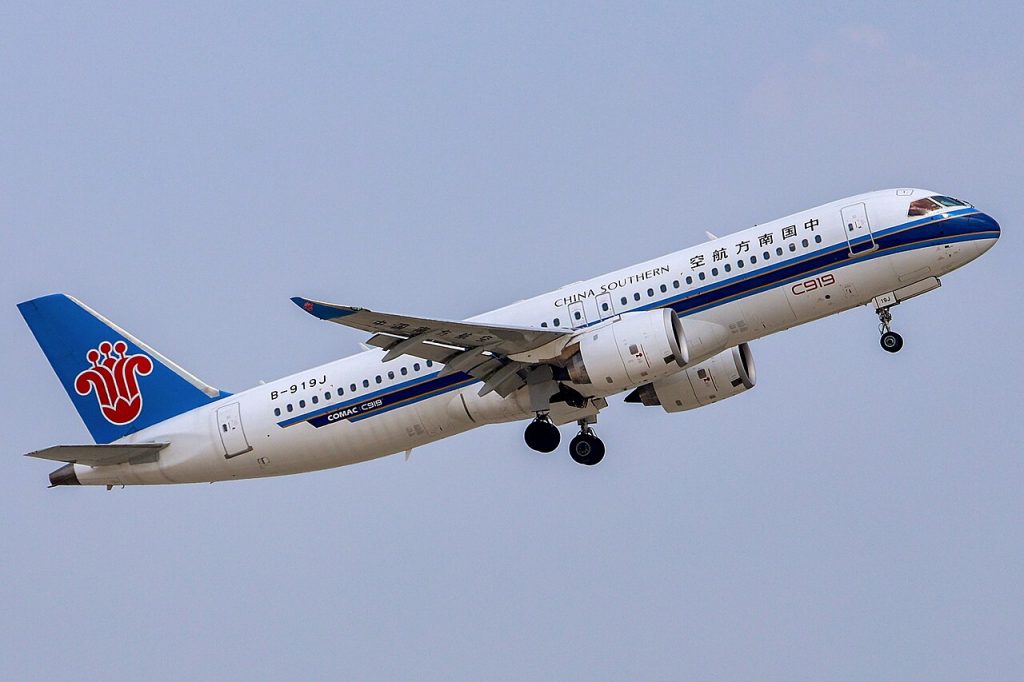
Certification is only the first hurdle.
To succeed in Europe, COMAC must build an entire ecosystem around the C919.
That means establishing a robust parts‑distribution network, ensuring high dispatch reliability, providing comprehensive training infrastructure and demonstrating that the aircraft can operate seamlessly within Europe’s dense, high‑utilisation airline environment.
Geopolitics may prove an even greater challenge.
Europe’s relationship with China is increasingly complex, and aviation is a strategic industry.
Even with EASA certification, some carriers may hesitate to introduce a Chinese‑built aircraft into their fleets due to concerns about political risk, sanctions exposure or long‑term supply‑chain dependence.
Passenger perception is another factor.
Airbus and Boeing benefit from decades of operational data and brand familiarity. COMAC does not.
Convincing European travellers to board an unfamiliar aircraft type — particularly in the early years — will require a sustained effort to build trust.
And then there is the issue of scale.
Europe’s largest carriers operate hundreds of narrowbodies across multiple bases.
Until COMAC can produce aircraft at volumes comparable to Airbus and Boeing, it will struggle to win orders from the continent’s biggest players.
A Long Game for COMAC, Not a Quick Win
In the near term, COMAC’s European ambitions will likely translate into symbolic but meaningful wins: small orders, niche operators, government‑aligned carriers and perhaps a handful of leasing placements.
These early footholds will matter, not because they shift market share, but because they establish credibility.
The real test will come in the early 2030s.
If COMAC can scale production, build a European support network and demonstrate strong operational performance, it could begin to capture a modest share of new narrowbody orders.
A 5–10% market presence is not unrealistic over a decade‑long horizon.
The long‑term question is whether Europe could eventually support a tri‑opoly.
That depends on factors far beyond COMAC’s control: geopolitical stability, regulatory reciprocity and the ability of Airbus and Boeing to resolve their production bottlenecks.
But for the first time, the possibility exists.
A Narrow Opening, But an Opening Nonetheless
Airbus and Boeing’s combined backlog of nearly 15,000 aircraft has created a once‑in‑a‑generation supply shortage.
For the first time in decades, European airlines are constrained not by demand, but by the availability of aircraft.
This structural pressure has cracked open a door that was once firmly shut.
COMAC now has a chance — not a sweeping opportunity, but a narrow, strategic one.
Success will require patience, industrial maturity and a willingness to build trust airline by airline, regulator by regulator.
The C919’s EASA test flights mark the beginning of that journey.
Whether Europe ultimately embraces a third major manufacturer will depend on what COMAC does next.
Continue to follow The Aviation Hub for more analysis and insight!