
The commercial aviation sector in Russia is entering one of its most turbulent periods since the collapse of the Soviet Union.
With Western sanctions cutting off access to aircraft, spare parts, and maintenance support, Russian airlines are now preparing to reactivate long‑retired jets—some more than two decades old—to keep pace with rising passenger demand.
According to reporting from Kyiv Post, carriers plan to return a mix of Soviet‑era and early‑generation Western aircraft to service between 2026 and 2027, marking a dramatic shift in fleet strategy driven by necessity rather than choice.
A Fleet Revival Born of Crisis in Russia…
The restoration program includes 12 aircraft: nine Tupolev Tu‑204/214s, one An‑148 regional jet, and two Ilyushin Il‑96 widebodies.
Work began in 2022, shortly after sanctions took hold, and 10 of the aircraft have already been restored to airworthy condition.
These jets—many of which had been sitting idle for years—are being brought back into service to fill a widening capacity gap as Russia’s access to modern Airbus and Boeing aircraft continues to shrink.
The Tu‑204 and Tu‑214, once envisioned as Russia’s answer to the Boeing 757, never achieved widespread commercial success.
The Il‑96, a four‑engine widebody reminiscent of the Airbus A340, was largely retired from passenger service due to high operating costs.
Yet in today’s constrained environment, these older designs are becoming essential lifelines.
Foreign Aircraft Return—Through the Back Door
Alongside the revival of domestic models, Russian airlines are also reactivating older Western jets.
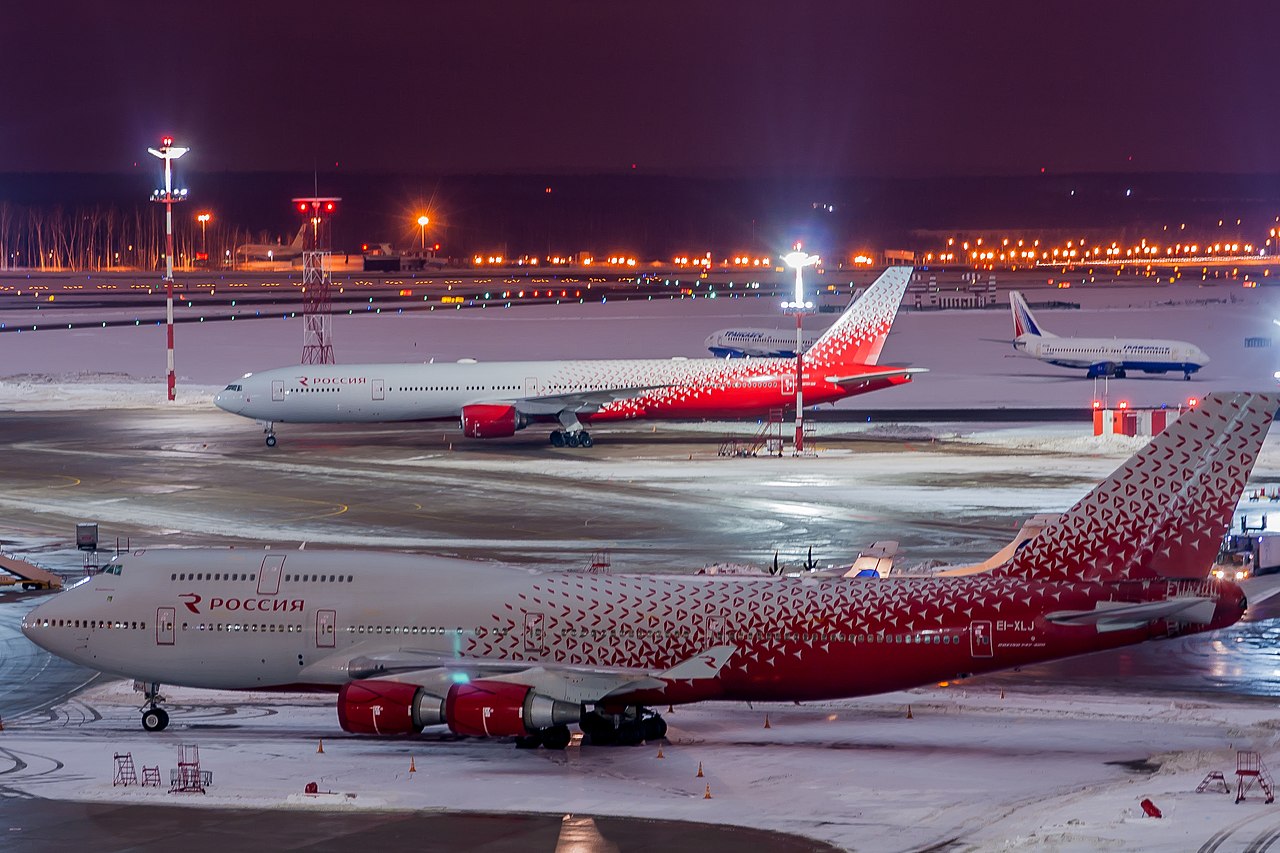
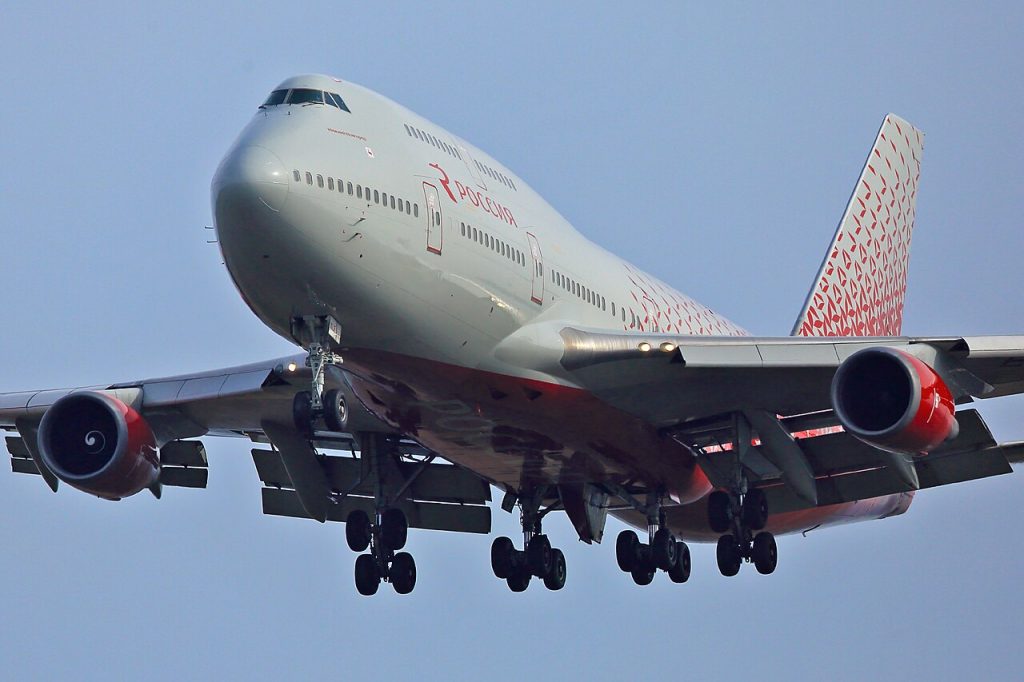
Rossiya Airlines, a subsidiary of Aeroflot, is expanding its fleet of Boeing 747‑400s—aircraft inherited from the now‑defunct Transaero.
Two are already flying, a third 24‑year‑old jet was restored in late 2025, and a fourth is expected to return by 2027.
Some of this refurbishment work may occur in “friendly” countries such as Iran, which has decades of experience keeping aging aircraft operational under sanctions.
This cooperation underscores how Russia is increasingly relying on a parallel aviation ecosystem outside Western regulatory oversight.
Deep Funding Cuts Add Pressure in Russia…
Compounding the crisis is a sharp reduction in government support. Moscow plans to slash federal spending on aircraft and helicopter production by 1.6 times in 2026—from 139.6 billion rubles ($1.7 billion) to 85.7 billion rubles ($1 billion).
Subsidies for airlines to renew their domestic fleets will be eliminated entirely next year, down from 1.3 billion rubles ($16 million) in 2025.
Funding for aircraft maintenance will also fall dramatically, from 6.1 billion rubles ($75 million) to 3.6 billion rubles ($44 million).
The only bright spot is the MC‑21, Russia’s flagship medium‑haul jet program, which will see a 25% increase in subsidies.
But the MC‑21 remains years away from large‑scale production, and its supply chain has been heavily disrupted by sanctions.
Cannibalization and Shadow Supply Chains
Western sanctions imposed after Russia’s 2022 invasion of Ukraine have severed access to foreign‑built aircraft and spare parts.
As a result, airlines have increasingly turned to “cannibalization”—stripping parts from grounded aircraft to keep others flying.
Shadow import channels, often routed through intermediary countries, have also emerged as a critical lifeline.
Rosaviatsia chief Dmitry Yadrov has warned that more than 100 foreign aircraft could be grounded in the coming years due to parts shortages.
By 2030, as many as 109 foreign‑built jets may be forced into retirement.
As of October 2025, Russian airlines were operating 1,088 of their 1,135 aircraft, with 67% of the fleet still composed of foreign models.
The looming retirement wave threatens to shrink available capacity just as domestic air travel continues to rebound.
Demand Keeps Rising—But Supply Can’t Keep Up
Despite the mounting challenges, passenger demand in Russia has remained resilient.
Domestic travel surged during the pandemic and has continued to grow as international options narrowed.
Experts told The Moscow Times that reviving mothballed aircraft is now essential to meeting this demand and preventing a severe contraction in the aviation market.
But the strategy carries risks.
Older aircraft require more maintenance, consume more fuel, and lack the efficiency and safety enhancements of modern jets.
Operating them at scale could strain Russia’s already limited maintenance infrastructure.
A Parallel Aviation System Emerges
Russia’s aviation sector is increasingly diverging from global norms.
With Western manufacturers unwilling or unable to support Russian operators, the country is building a parallel ecosystem—one reliant on domestic production, refurbished legacy aircraft, and partnerships with sanctioned or politically aligned states.
This shift may keep Russia’s airlines flying in the short term, but it raises long‑term questions about safety, sustainability, and competitiveness.
The reactivation of aging jets is a stopgap measure, not a strategic solution.
The Road Ahead for Russia…
The next few years will test the resilience of Russia’s aviation industry.
Without access to modern aircraft or reliable spare‑parts pipelines, carriers face a future defined by improvisation and diminishing resources.
The revival of Tu‑204s, Il‑96s, and Boeing 747s may temporarily ease capacity pressures, but it underscores a deeper reality:
Russia’s aviation sector is being forced into reverse, relying on aircraft designs from the past to navigate an uncertain future.
Continue to follow The Aviation Hub for more analysis and insight!