
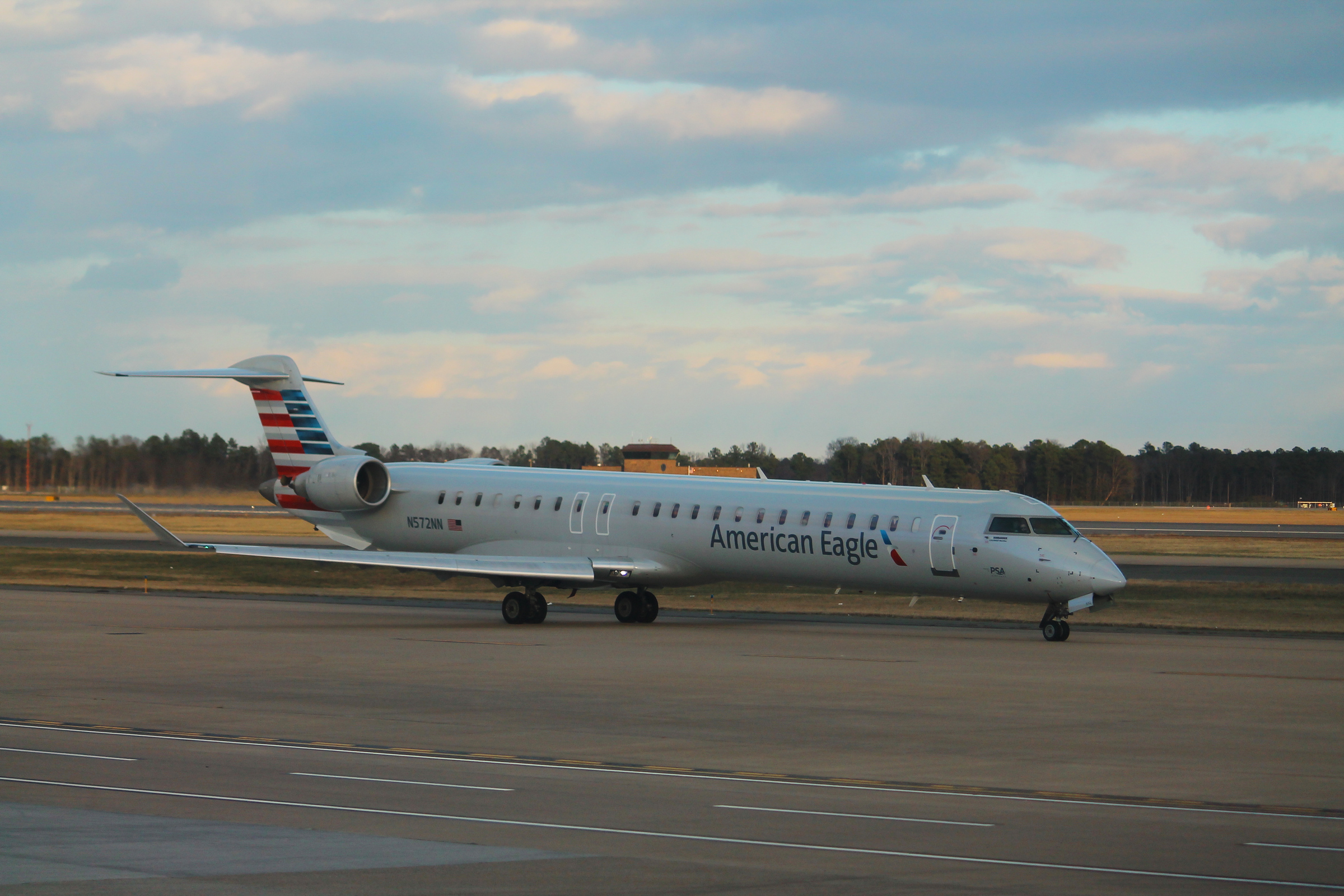
An American Eagle service operating for American Airlines was evacuated at Pensacola after landing when haze was reported inside the cabin.
The event, documented by The Aviation Herald, involved a Bombardier CRJ900 registered N569NN, a regional jet operated by PSA Airlines on behalf of American Eagle.
According to the report, the aircraft had just completed its arrival when crew members and passengers noticed a visible haze, prompting an immediate response from the flight deck and cabin crew.
The aircraft was brought to a stop and an evacuation was initiated to ensure the safety of everyone on board.
The airline later described the situation as a maintenance issue, though no further technical details were released at the time.
The rapid decision to evacuate reflects standard industry practice when smoke or haze is detected, as such conditions can indicate anything from benign environmental factors to more serious mechanical or electrical faults.
The crew’s actions ensured that passengers were able to exit the aircraft quickly and safely.
Sequence of Events on American Airlines Flight Evacuated at Pensacola Airport
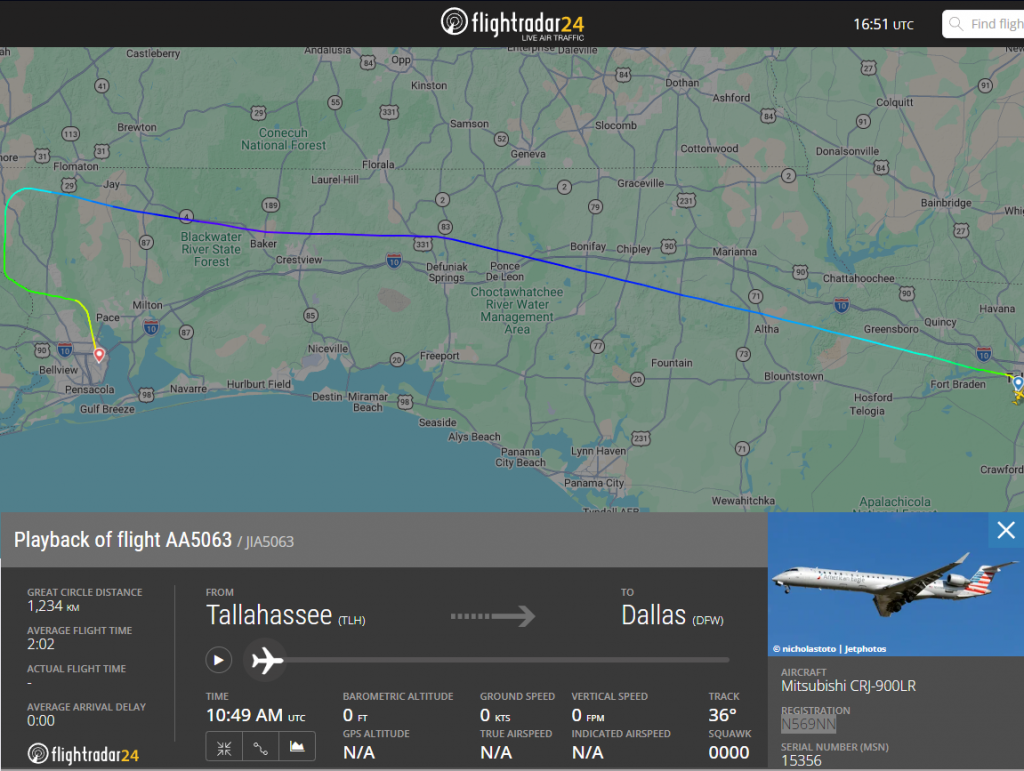
The flight had originated from Tallahassee to Dallas and diverted to Pensacola due to smoke in the cockpit initially.
Shortly after touchdown, the haze became apparent within the cabin.
The pilots elected to stop the aircraft on the taxiway rather than continue to the gate, a precautionary measure that allows emergency services easier access and avoids exposing passengers to additional risk.
Cabin crew initiated the evacuation, and passengers disembarked onto the airfield. Emergency responders met the aircraft and conducted initial assessments.
No injuries were reported, and passengers were transported to the terminal after the situation was stabilised.
The aircraft was later inspected to determine the source of the haze, though the airline did not immediately disclose the findings.
Aircraft Background and Operational Context
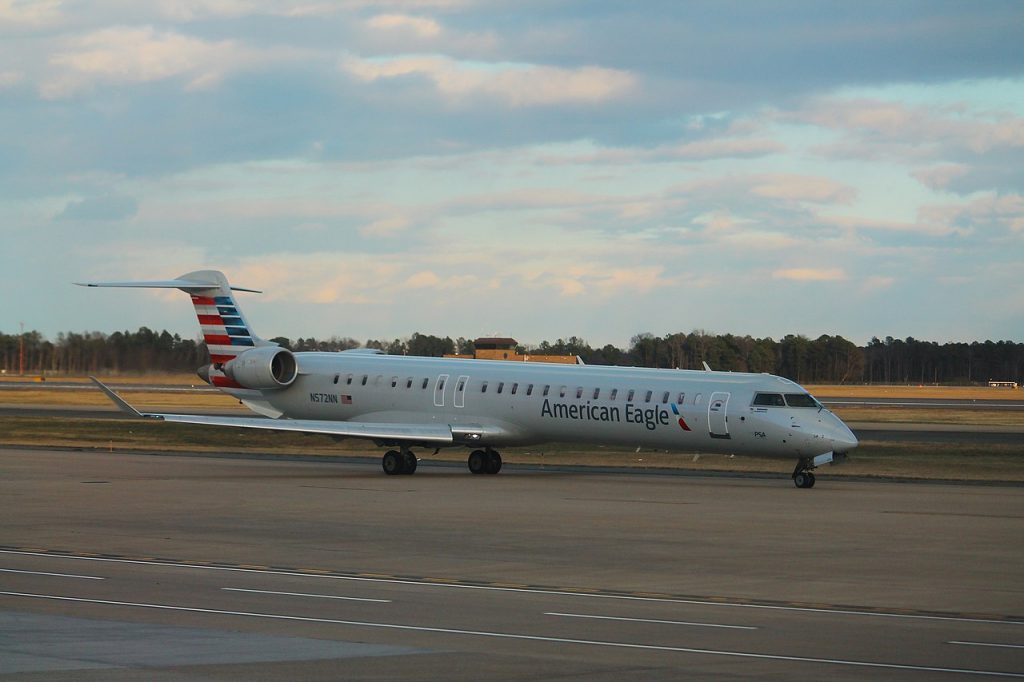
The aircraft involved, N569NN, is an eleven‑year‑old Bombardier CRJ900 built at Bombardier’s Montreal Mirabel facility.
It first flew under the test registration C‑GZXH before being delivered to PSA Airlines in March 2015.
The jet has remained in active service throughout its career, operating exclusively for American Eagle.
It is configured with a two‑class layout featuring twelve first class seats and sixty‑four economy seats, powered by two General Electric CF34 engines.
The airframe’s operational history shows consistent utilisation across American Eagle’s regional network, including frequent rotations through Charlotte, one of PSA’s primary hubs.
Flight tracking data confirms that N569NN regularly operates short‑haul services across the south-eastern United States, including previous operations into Pensacola.
The aircraft’s recent activity shows normal flight patterns with no irregularities reported prior to the incident.
Industry and Safety Considerations
Haze or smoke events in regional jets are uncommon but not unprecedented.
They can stem from a range of causes including oil residue in bleed air systems, electrical component faults, or environmental contaminants.
In most cases, the presence of haze does not indicate an immediate fire risk, but aviation safety protocols require crews to treat any such occurrence as potentially hazardous until proven otherwise.
The decision to evacuate is influenced by several factors including the density of the haze, the presence of odours, crew observations, and the aircraft’s position on the airfield.
In this case, the crew’s prompt response aligned with established safety procedures and ensured that passengers were removed from the aircraft without delay.
Aftermath and Operational Impact Following Pensacola Airport Incident…
American Airlines arranged onward travel for passengers and coordinated with airport authorities during the investigation.
The aircraft remained grounded pending inspection, a standard measure following any smoke or haze event.
While the airline did not specify the root cause, the classification of the issue as a maintenance matter suggests that the problem was contained and not indicative of a broader fleet concern.
Events of this nature underscore the importance of rigorous crew training and the layered safety systems built into modern regional operations.
For passengers, the incident was disruptive but ultimately handled with professionalism and caution, reflecting the industry’s commitment to safety above all else.
Continue to follow The Aviation Hub for more analysis and insight!