
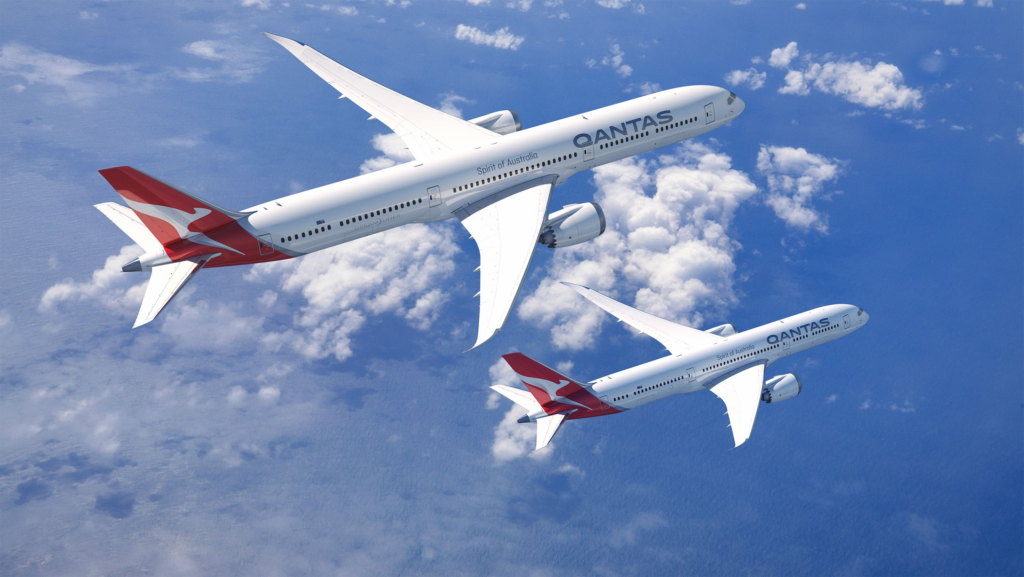
The Boeing 787 vs. Airbus A350 battle is a fierce one, but which one should airlines buy?
Widebody strategy has become one of the most defining decisions an airline can make. Long‑haul fleets shape network possibilities, cost structures, and the passenger experience for decades.
At the centre of that decision today are two aircraft that represent the pinnacle of modern twin‑engine design: the Boeing 787 Dreamliner and the Airbus A350.
Both promise efficiency, range, and comfort, but they approach the long‑haul mission with different philosophies.
Understanding those differences is essential for any airline weighing its next move.
The Boeing 787 Dreamliner
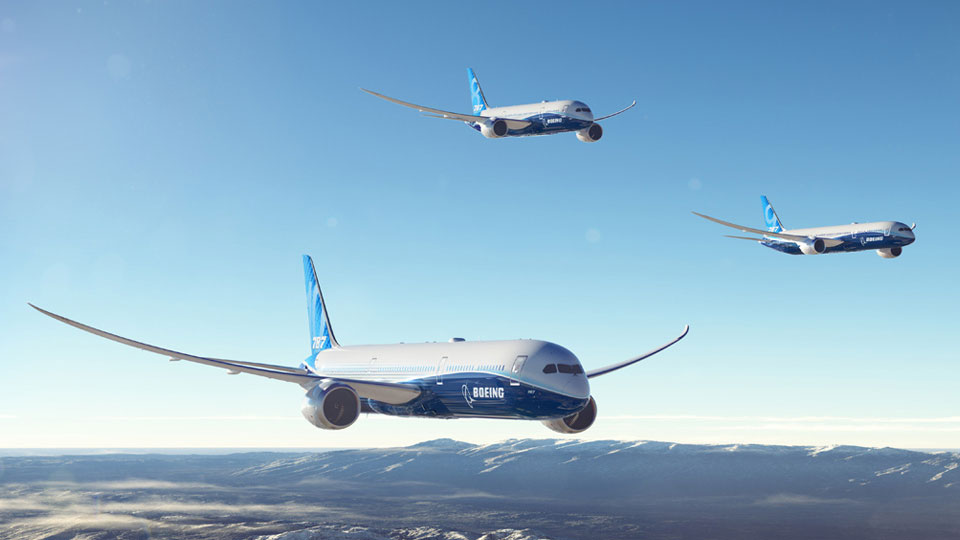
A Platform Built for Network Flexibility…
Boeing designed the 787 Dreamliner to unlock new nonstop routes and give airlines the ability to expand networks with lower risk.
More than 1 billion passengers have flown on the type, and the global fleet has opened over 523 new nonstop routes — a testament to the aircraft’s role as a market‑maker rather than just a fleet replacement tool.
The family consists of three variants: the 787‑8, 787‑9, and 787‑10. All share a common wingspan of 60 metres and are powered by either the GEnx‑1B or Rolls‑Royce Trent 1000 engines.
Seating ranges from 248 passengers on the 787‑8 to 336 on the 787‑10, with ranges between 6,330 and 7,565 nautical miles depending on the model.
The Dreamliner’s design philosophy centres on efficiency and versatility. Its composite structure reduces weight, while its aerodynamic profile and new‑generation engines deliver strong fuel performance.
The result is an aircraft that allows airlines to operate thinner long‑haul routes profitably — a capability that has reshaped global connectivity.
Passenger Experience and Operational Appeal
The 787 introduced a new standard of cabin comfort when it entered service.
Higher humidity, lower cabin altitude, and large windows have become hallmarks of the Dreamliner experience.
While Airbus has since matched or exceeded some of these features, the 787 remains a strong passenger favourite.
Operationally, the aircraft’s commonality across its three variants gives airlines flexibility in matching capacity to demand.
The 787‑10, for example, offers high‑density capability for trunk routes, while the 787‑8 excels on long, thin markets where larger aircraft would be uneconomical.
The Airbus A350
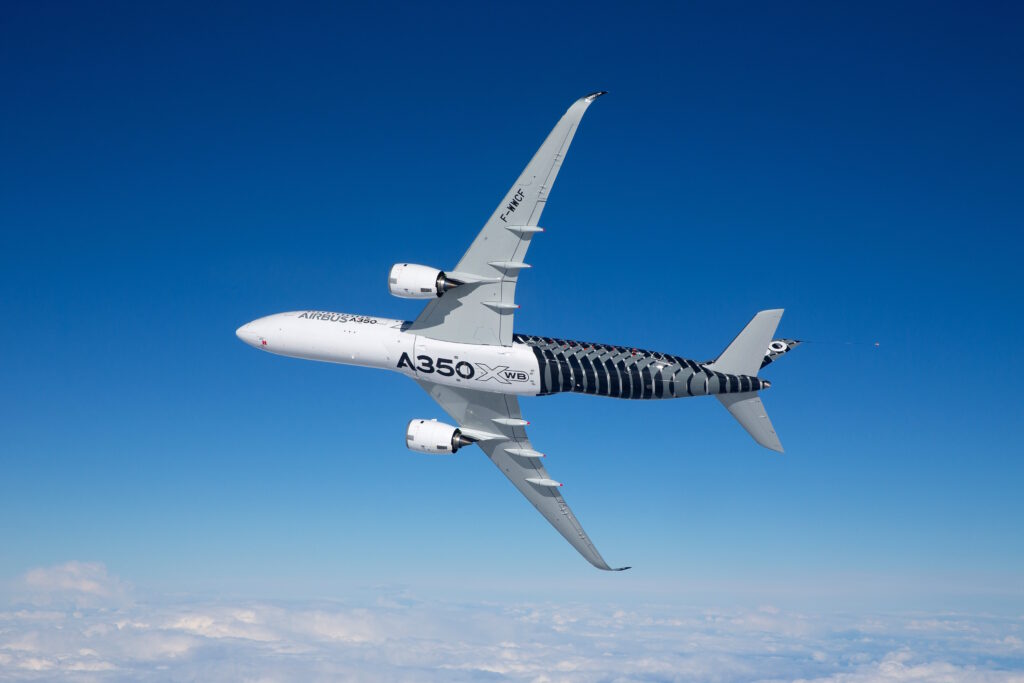
A Clean‑Sheet Vision for Long‑Haul Efficiency
Where the 787 was designed to open new markets, the Airbus A350 was engineered to redefine the long‑haul experience from the ground up.
More than 70% of its airframe is made from advanced materials, including 53% carbon‑fibre reinforced polymer, supported by aluminium‑lithium alloys for strength and fatigue resistance.
The A350 family includes the A350‑900, A350‑1000, and the A350F freighter.
The -900 typically seats 300–350 passengers with a range of 8,500 nautical miles, while the -1000 stretches capacity to 350–410 passengers and extends range to 9,100 nautical miles.
This clean‑sheet approach gives the A350 a step‑change in fuel burn and emissions, with Airbus claiming a 25% reduction compared to previous‑generation aircraft.
Its high‑aspect‑ratio wings, morphing surfaces, and supercritical profiles deliver aerodynamic performance that is among the best in commercial aviation.
Cabin Experience and Technological Edge
The A350’s Airspace cabin is one of its strongest selling points.
It is the quietest twin‑aisle cabin in the skies, with wider seats, high ceilings, and advanced lighting designed to reduce jet lag.
HEPA‑filtered air is refreshed every two to three minutes, and the aircraft maintains a lower cabin altitude to reduce fatigue.
From the cockpit, the A350 introduces touchscreen displays, advanced avionics, and a common type rating across the family.
Predictive maintenance systems and integrated modular avionics enhance reliability and reduce operational disruption.
The A350 also leads in sustainability credentials.
It is certified for up to a 50% blend of Sustainable Aviation Fuel and meets the latest ICAO CO₂ standards.
Comparative Analysis Between The Boeing 787 & Airbus A350…

Range and Performance
The A350 clearly outperforms the 787 in raw range.
The A350‑900 reaches 8,500 nm and the A350‑1000 extends to 9,100 nm, compared with the 787‑9’s 7,565 nm and the 787‑10’s 6,330 nm.
For airlines operating ultra‑long‑haul missions — such as Singapore–New York or Perth–London — the A350 is the natural choice.
However, the 787’s range is more than sufficient for the majority of long‑haul markets, and its lighter structure gives it an advantage on mid‑ to long‑range routes where extreme range is unnecessary.
Capacity and Network Fit
The 787 family spans a narrower capacity band than the A350.
The 787‑8 is ideal for thinner routes, while the 787‑9 has become a global workhorse.
The 787‑10 offers high capacity but is range‑limited compared to the A350‑1000.
The A350 family, by contrast, is built for airlines that need higher capacity and maximum flexibility on long‑haul and ultra‑long‑haul missions.
Its two‑variant structure simplifies fleet planning but offers less granularity than the 787 family.
Efficiency and Operating Economics
Both aircraft deliver strong fuel efficiency thanks to composite structures and new‑generation engines.
Airbus claims a 25% reduction in fuel burn and emissions compared to previous‑generation aircraft, while Boeing emphasises the Dreamliner’s ability to open new routes profitably.
In practice, the economics depend heavily on mission profile.
The 787 tends to excel on medium‑density long‑haul routes where its lighter weight and smaller size reduce trip costs.
The A350 shines on high‑density or ultra‑long‑haul routes where its aerodynamic and structural advantages compound over distance.
Passenger Experience
Both aircraft offer excellent passenger comfort, but the A350 edges ahead in cabin quietness, seat width, and overall spaciousness.
The 787’s windows and humidity systems remain standout features, but the A350’s Airspace cabin sets a new benchmark for long‑haul travel.
Verdict: Boeing 787 or the Airbus A350?
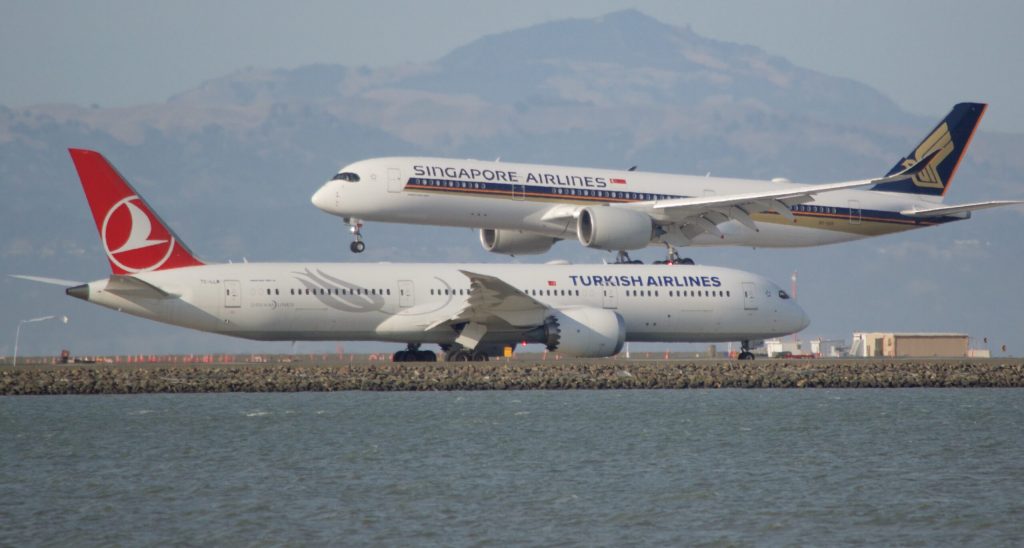
The answer depends on the airline’s network strategy — but if forced to choose one aircraft as the more future‑proof, versatile, and strategically advantageous platform, the Airbus A350 takes the crown.
The A350 offers greater range, higher capacity, superior cabin comfort, and a clean‑sheet aerodynamic design that positions it strongly for the next generation of long‑haul travel.
Its sustainability credentials and operational flexibility make it a compelling choice for airlines planning for a net‑zero future.
That said, the Boeing 787 remains unmatched in one area: its ability to profitably open new long‑haul routes with lower risk.
For airlines focused on network expansion into thinner markets, the Dreamliner is still the most effective tool available.
But for airlines seeking a flagship long‑haul aircraft with maximum capability, efficiency, and passenger appeal, the A350 stands out as the aircraft that best defines the future of widebody travel.
Continue to follow The Aviation Hub for more analysis and insight!