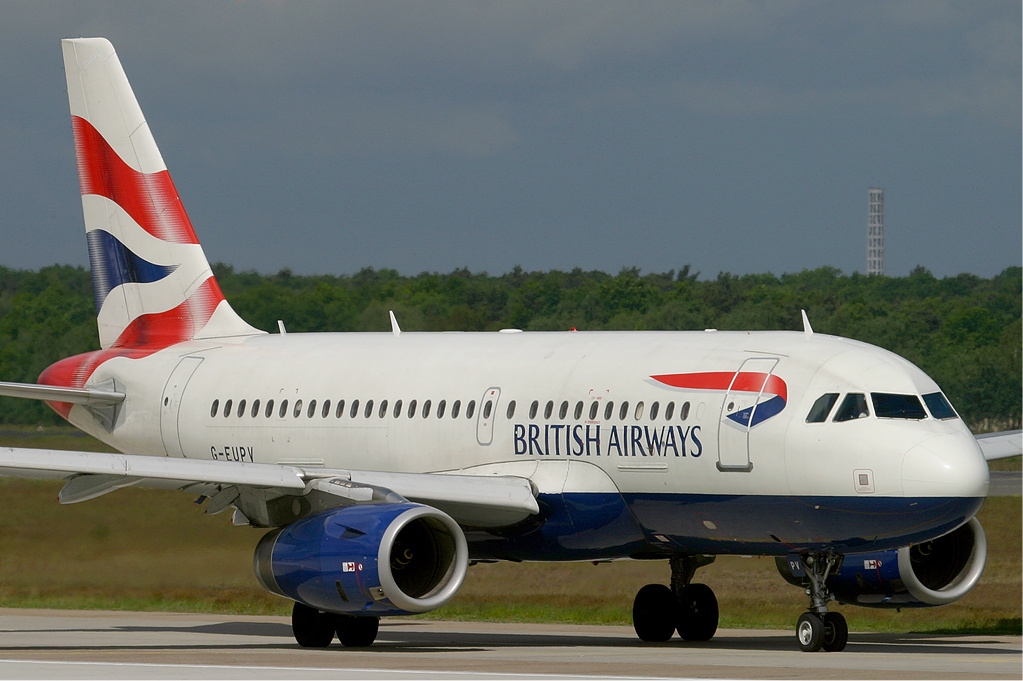
A routine afternoon departure from Glasgow to London turned into a high‑visibility aviation incident today, after British Airways flight BA1481 declared an emergency shortly after take‑off.
The Airbus A319 operating the service, registered G‑DBCE, had departed Glasgow Airport at approximately 14:12 before the crew issued a 7700 transponder code, the universal signal for a general in‑flight emergency.
A Sudden Halt in the Climb on the British Airways Flight…
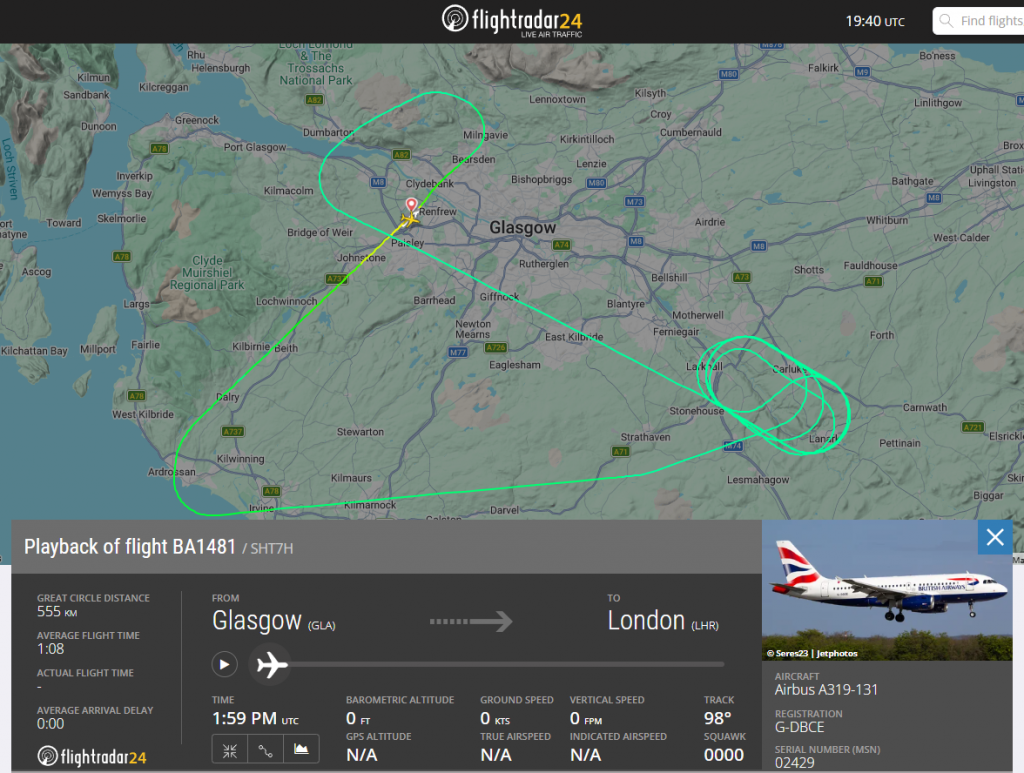
According to early reports, the aircraft stopped its climb at around 8,000 feet roughly ten minutes after departure.
Flight tracking data shows BA1481 entering a holding pattern above Lanarkshire, where it circled for around half an hour as the crew worked through the situation with air traffic control.
The nature of the emergency remains unconfirmed.
A 7700 declaration can cover a wide spectrum of issues—from technical malfunctions to medical events—and British Airways has so far described the cause only as a “technical issue.”
Safe Return to Glasgow
After holding to troubleshoot the problem, the crew elected to return to Glasgow Airport, where the aircraft landed safely.
British Airways confirmed the safe landing and apologised to passengers for the disruption, adding that teams were working to re‑accommodate travellers on later services.
The flight quickly became one of the most tracked in the world on Flightradar24, a common occurrence when an aircraft squawks 7700 over populated areas.
The Aircraft: G‑DBCE
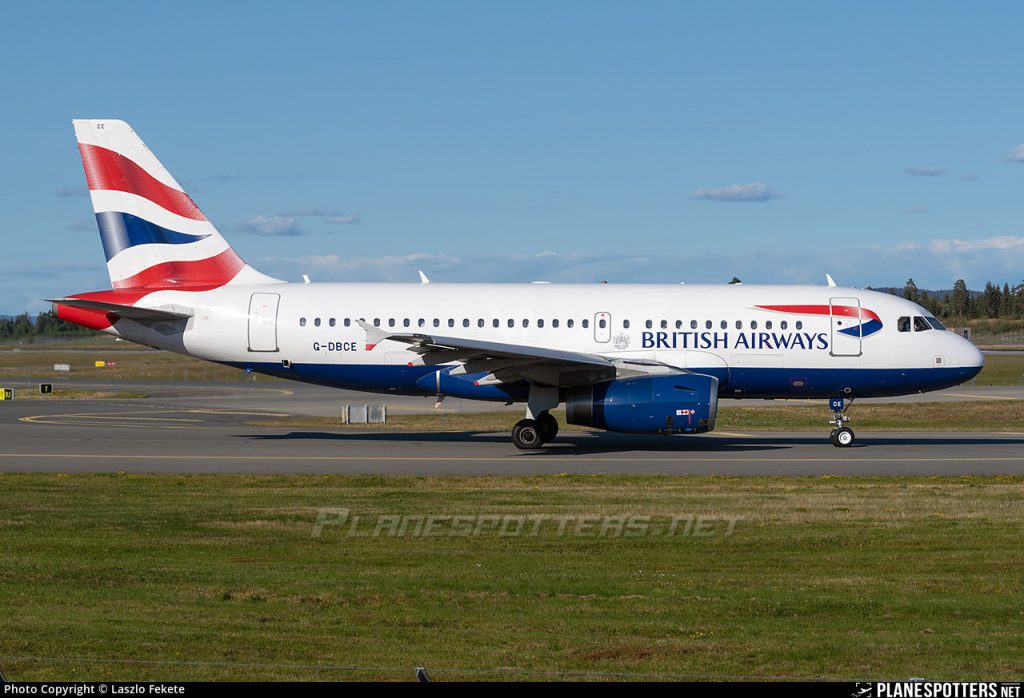
The airframe involved, Airbus A319‑100 MSN 2429, is a 20.9‑year‑old aircraft delivered new to bmi British Midland in 2005 before joining the British Airways fleet in 2012.
It has spent much of its career on domestic and European services and is powered by a pair of IAE engines.
The aircraft has experienced several storage periods in recent years—at Glasgow, Heathrow, Gatwick, and Madrid—reflecting the shifting utilisation patterns of BA’s short‑haul fleet.
At the time of today’s incident, G‑DBCE was listed as parked, with its most recent operational updates recorded in late January 2026.
Its long service history and multiple leasing arrangements make it a well‑travelled and well‑documented member of the BA A319 fleet.
Operational Context of The Glasgow Emergency…
BA1481 is a staple of the Glasgow–Heathrow corridor, typically operated by a mix of A319, A320, and A321neo aircraft.
The service normally runs at around 1 hour 20 minutes, with punctuality generally strong across the route.
Today’s disruption stands out not for its severity—no injuries or damage have been reported—but for the rarity of a full emergency declaration on such a short domestic sector.
Emergency returns, while uncommon, are a normal part of airline safety culture.
Crews are trained to act decisively at the first sign of an abnormal situation, and returning to the departure airport is often the safest and most controlled option.
What Happens Next
British Airways engineers will now carry out a detailed inspection of G‑DBCE to determine the cause of the technical issue.
Depending on the findings, the aircraft may remain out of service for further checks.
For passengers, the incident will likely be remembered as an unexpected interruption to a routine journey.
For the industry, it serves as another reminder of the professionalism and preparedness that underpin modern commercial aviation—where swift action, clear communication, and robust procedures ensure that even emergency declarations end safely on the ground.
Continue to follow The Aviation Hub for more analysis and insight!