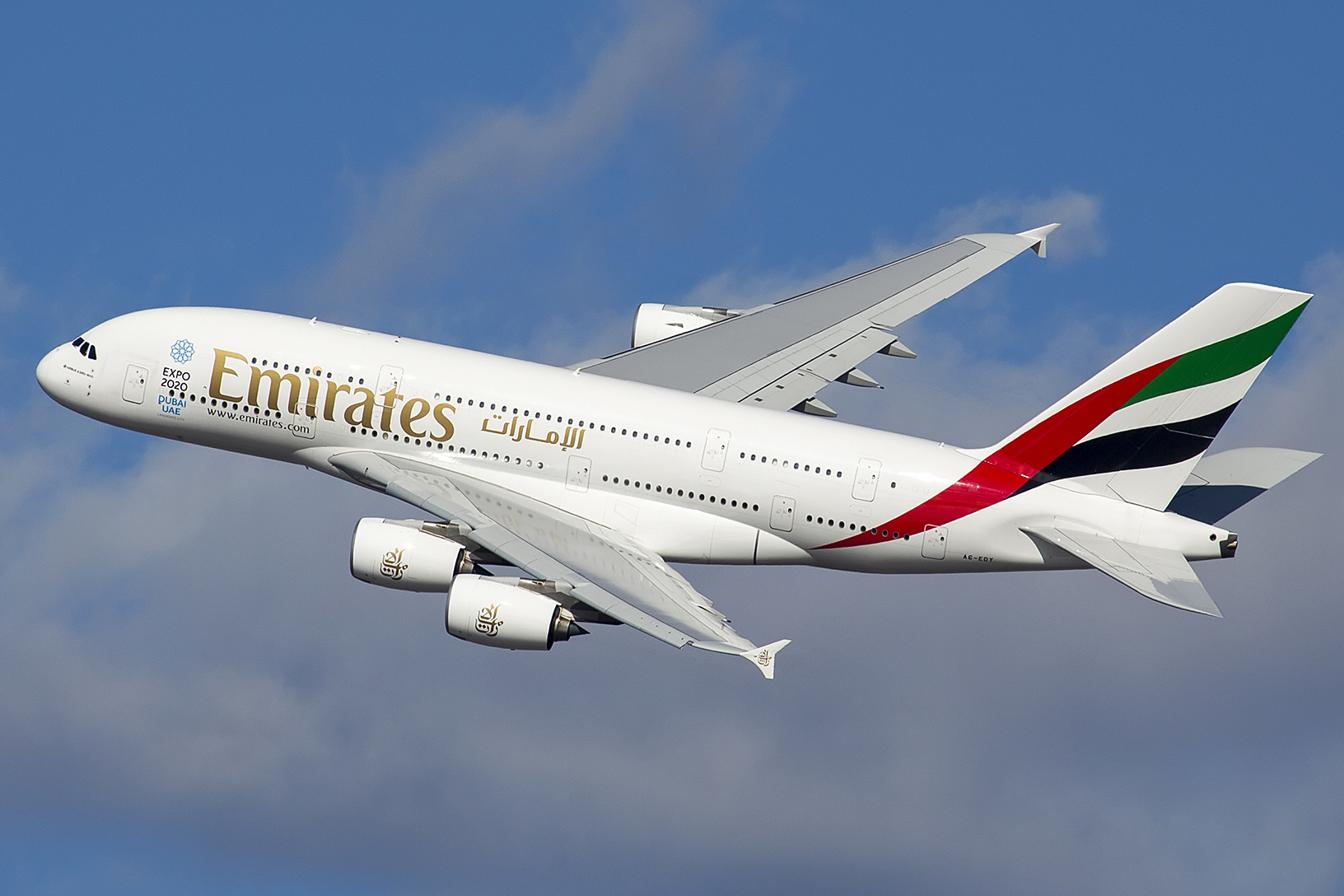
An Emirates A380 operating flight EK2 from London Heathrow to Dubai was forced to return to the airport on Wednesday afternoon after the crew reported a landing gear door malfunction shortly after departure.
The incident prompted nearly two hours of airborne holding as the aircraft burned fuel to reach a safe landing weight before making a controlled return to Heathrow.
Technical Issue Shortly After Takeoff on the Emirates A380…
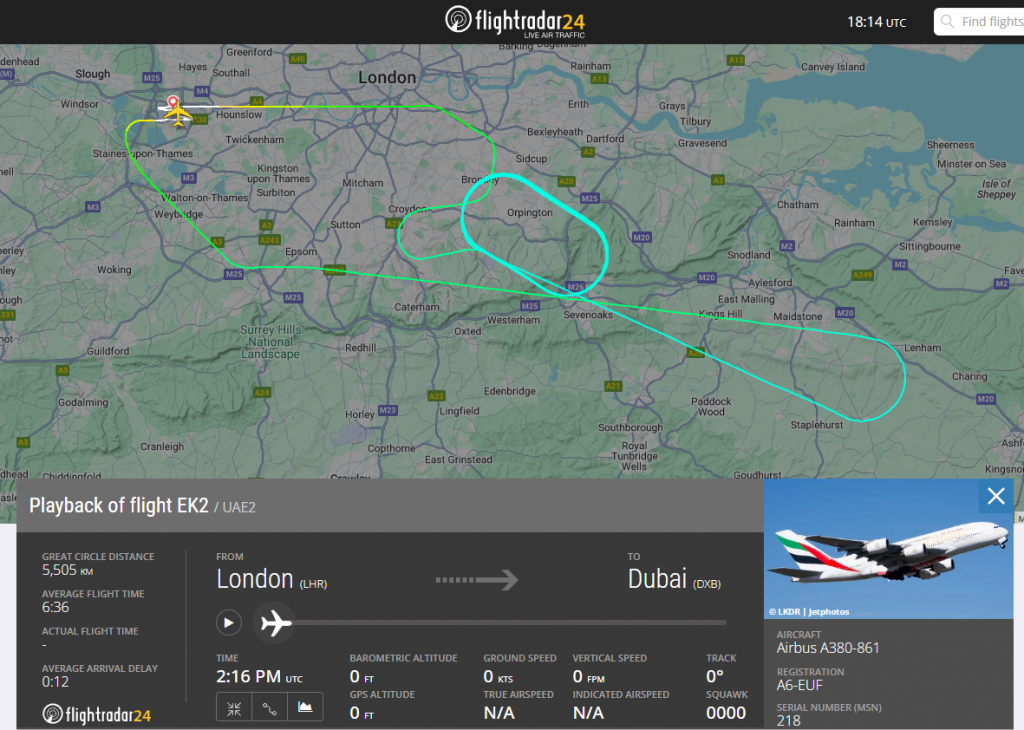
The aircraft involved, an Airbus A380 registered A6‑EUF, departed Heathrow’s runway 27L at 14:32 local time.
Moments after becoming airborne, the flight crew notified air traffic control of an issue with one of the landing gear doors.
While the gear itself had retracted, the door had not fully closed — a fault that can create aerodynamic drag, increase fuel burn, and in some cases pose a risk of further mechanical complications.
Given the aircraft’s heavy fuel load for the scheduled seven‑hour flight to Dubai, the A380 was well above its Maximum Landing Weight (MLW).
Landing in that condition can place excessive stress on the airframe and braking systems, making it unsafe to return immediately.
Holding Pattern and Fuel Burn Near Heathrow…
To manage the situation safely, the crew entered a holding pattern southeast of London at approximately 10,000 feet.
For around 90 minutes, the aircraft flew repeated loops while burning off fuel to reduce its weight.
This is a standard procedure for long‑haul aircraft experiencing technical issues shortly after departure.
Although the A380 is equipped with a fuel‑jettison system, airlines typically prefer to burn fuel rather than dump it unless circumstances require a faster descent.
When jettisoning is necessary, it is usually carried out over the sea to minimise environmental impact.
In this case, the crew opted for a controlled fuel‑burning hold over land, indicating that the situation, while abnormal, was stable and manageable.
Safe Return to Heathrow for the Emirates A380…
Once the aircraft had reached a safe landing weight, EK2 was cleared to return to Heathrow.
The A380 made its approach to runway 27R, touching down smoothly at 16:28 — almost exactly two hours after its initial departure.
Emergency services were positioned along the runway as a precaution, but the landing proceeded without further incident.
Passengers remained on board while the aircraft was inspected and ground teams coordinated onward travel arrangements.
Emirates confirmed that a replacement aircraft would operate a new departure to Dubai at 17:45 from Terminal 3, ensuring minimal disruption to travellers.
Investigation Underway
Emirates engineers are expected to conduct a detailed inspection of A6‑EUF to determine the cause of the landing gear door malfunction.
Such issues, while uncommon, are not unprecedented on large widebody aircraft.
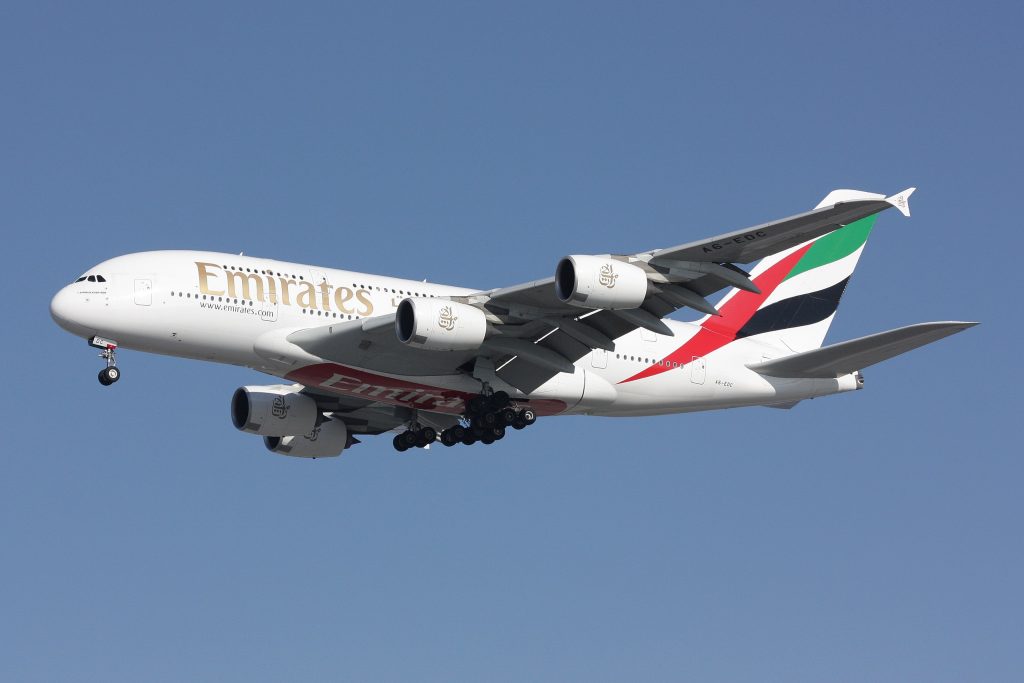
The A380’s landing gear system is among the most complex in commercial aviation, featuring 22 wheels and multiple hydraulic assemblies.
The incident highlights the effectiveness of established safety protocols, with the crew following standard procedures to manage the fault, reduce risk, and ensure a safe return.
Passengers experienced delays but were never in immediate danger, underscoring the resilience built into modern long‑haul operations.
Continue to follow The Aviation Hub for more analysis and insight!