
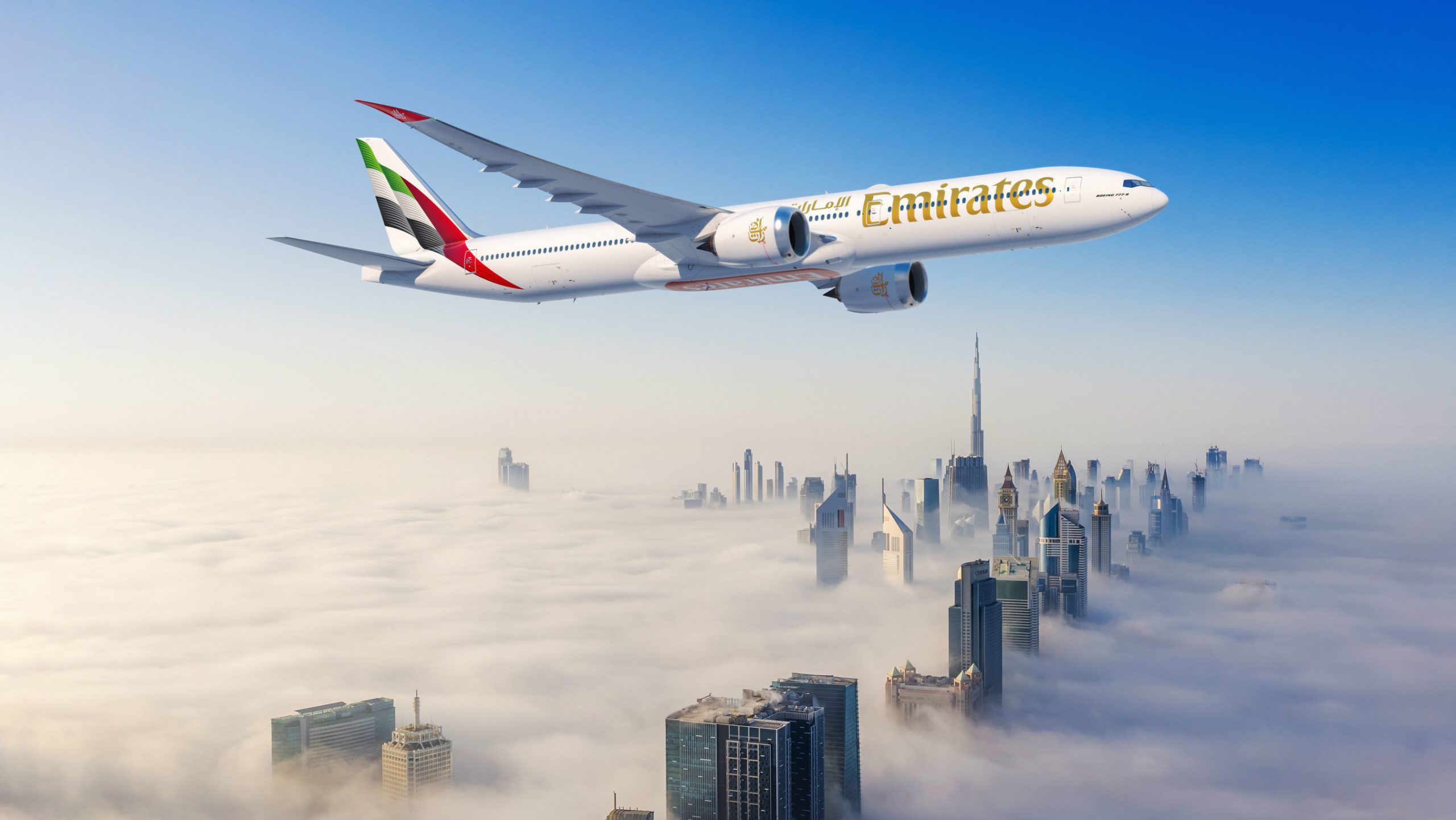
For Emirates, fleet planning has always been an exercise in scale. The airline built its global network around very large aircraft, high-density routes, and long-term certainty from manufacturers.
The Airbus A380 delivered that certainty for more than a decade.
The Boeing 777X was meant to do the same for the next era.
Instead, its prolonged delay has exposed a growing fault line between airline ambition and aerospace reality.
In a recent interview, Emirates president Sir Tim Clark spoke with rare frankness about aircraft procurement, delivery credibility, and the cost of missed timelines.
While the discussion ranged across leadership and negotiation, the subtext was unmistakable: the 777X delay is no longer an inconvenience—it is a strategic constraint.
A Programme That Drifted Beyond Tolerance for Emirates & Boeing…
When Boeing launched the Boeing 777X in 2013, entry into service was projected around 2020.
For Emirates, the aircraft was positioned as the natural successor to its enormous fleet of 777-300ERs and a partial structural replacement for the A380.
Today, first deliveries are expected closer to 2027—roughly seven years late.
Clark’s remarks reflect a broader frustration shared quietly across the industry.
Airlines can accommodate technical setbacks; what they struggle with is repeated schedule revision without firm anchors.
Fleet strategies are built years in advance, tied to financing, staffing, airport capacity, and network design.
When a cornerstone aircraft repeatedly slips, uncertainty compounds faster than costs.
Why Emirates Feels the Delay More Acutely
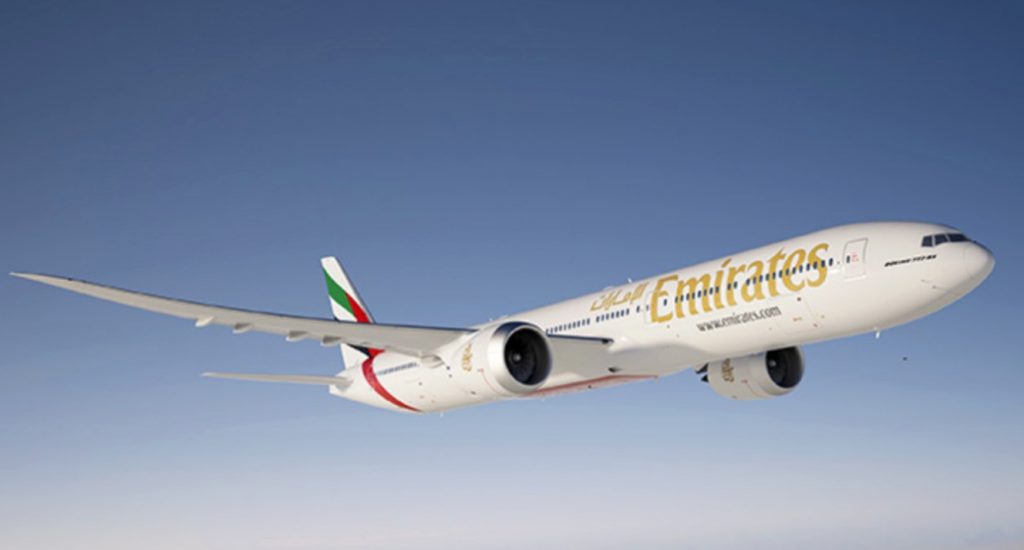
No airline is more exposed to the 777X programme than Emirates.
With well over 200 aircraft on order across the 777-9 and 777-8 variants, the airline is not merely a customer but the programme’s backbone.
Entire growth assumptions—capacity, frequency, and product renewal—were built around the aircraft’s arrival.
The immediate consequence is fleet ageing.
Emirates must keep older 777-300ERs in service longer than planned, increasing maintenance burden and delaying efficiency gains.
While these aircraft remain operationally robust, they are less fuel-efficient than the 777X and increasingly expensive to sustain at scale.
There is also a product penalty.
Emirates traditionally aligns new aircraft types with new cabin concepts.
When delivery timelines stretch by years, designs risk becoming obsolete before entry into service, forcing redesigns or incremental upgrades that dilute the impact of a flagship launch.
Communication, Credibility, and Leverage
One of the clearest signals from Clark’s interview is the importance Emirates places on transparency.
He emphasised that airlines expect to hear bad news directly, not through public disclosures.
That remark resonates strongly in the context of the 777X, where delivery changes have often reached customers after being announced to investors or the media.
For Emirates, this is not merely about etiquette.
As one of Boeing’s largest customers, the airline relies on credible timelines to manage capital exposure measured in tens of billions of dollars.
Erosion of trust complicates negotiations, triggers compensation discussions, and reshapes future purchasing behaviour.
Commitment Without Illusion
Despite its frustration, Emirates has not walked away.
On the contrary, it has expanded its 777X order book, signalling long-term confidence in the aircraft’s eventual role.
This apparent contradiction makes sense when viewed through Clark’s strategic lens.
There is still no direct substitute for the 777X in Emirates’ operating model.
Alternative widebodies, such as the Airbus A350, offer excellent efficiency but cannot replicate the same high-capacity economics on Emirates’ densest routes.
From a 2030s perspective, the 777X remains uniquely aligned with the airline’s hub-and-spoke strategy.
What has changed is tone. Emirates’ commitment is now paired with sharper scrutiny, firmer expectations, and a clear signal that patience has limits.
Boeing’s Parallel Pressure
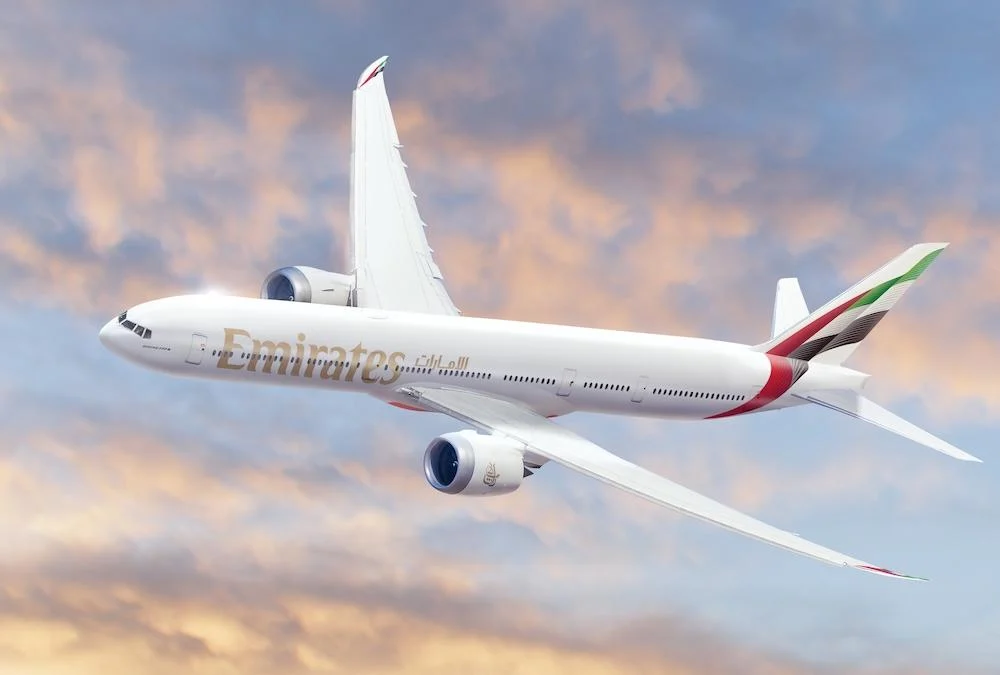
The delay has been costly for Boeing as well.
The 777X has generated multi-billion-dollar charges, reflecting extended development, certification hurdles, and deferred revenue.
For Boeing, the aircraft is central to maintaining relevance in the large widebody segment.
For Emirates, it is central to preserving scale advantage over competitors.
Clark’s comments implicitly acknowledge this interdependence.
Airlines are no longer insulated from the internal health of manufacturers.
Engineering resources, regulatory relationships, and corporate recovery efforts now directly shape fleet outcomes.
Operating in the Meantime
Until the 777X arrives, Emirates is managing through mitigation rather than optimisation.
Older aircraft stay longer, maintenance costs rise, and network growth is paced by available lift rather than ideal lift.
These are manageable challenges for a well-capitalised airline, but they represent lost opportunity rather than strategic progress.
Each year without the 777X is a year of foregone efficiency, delayed product renewal, and incremental complexity in fleet operations.
A Cautionary Signal for the Industry
The Emirates–777X experience reflects a broader industry shift.
Aircraft development timelines are lengthening as certification regimes tighten and systems grow more complex.
Airlines that hinge growth strategies on a single future platform face rising exposure.
Clark’s remarks suggest a recalibration is underway: fewer assumptions, more contingencies, and tougher demands on manufacturers to align ambition with deliverability.
What Can Emirates Do?
The Boeing 777X was meant to anchor Emirates’ next phase of growth.
Instead, its absence has become one of the airline’s defining strategic challenges of the decade.
Emirates remains committed to the aircraft—but no longer unconditionally.
As Sir Tim Clark’s comments make clear, this is no longer just about when the 777X arrives.
It is about whether aircraft manufacturers can still offer what airlines value most: not just innovation and performance, but credible timelines.
For an airline built on scale, certainty is not a luxury. It is infrastructure.
Continue to follow The Aviation Hub for more analysis and insight!