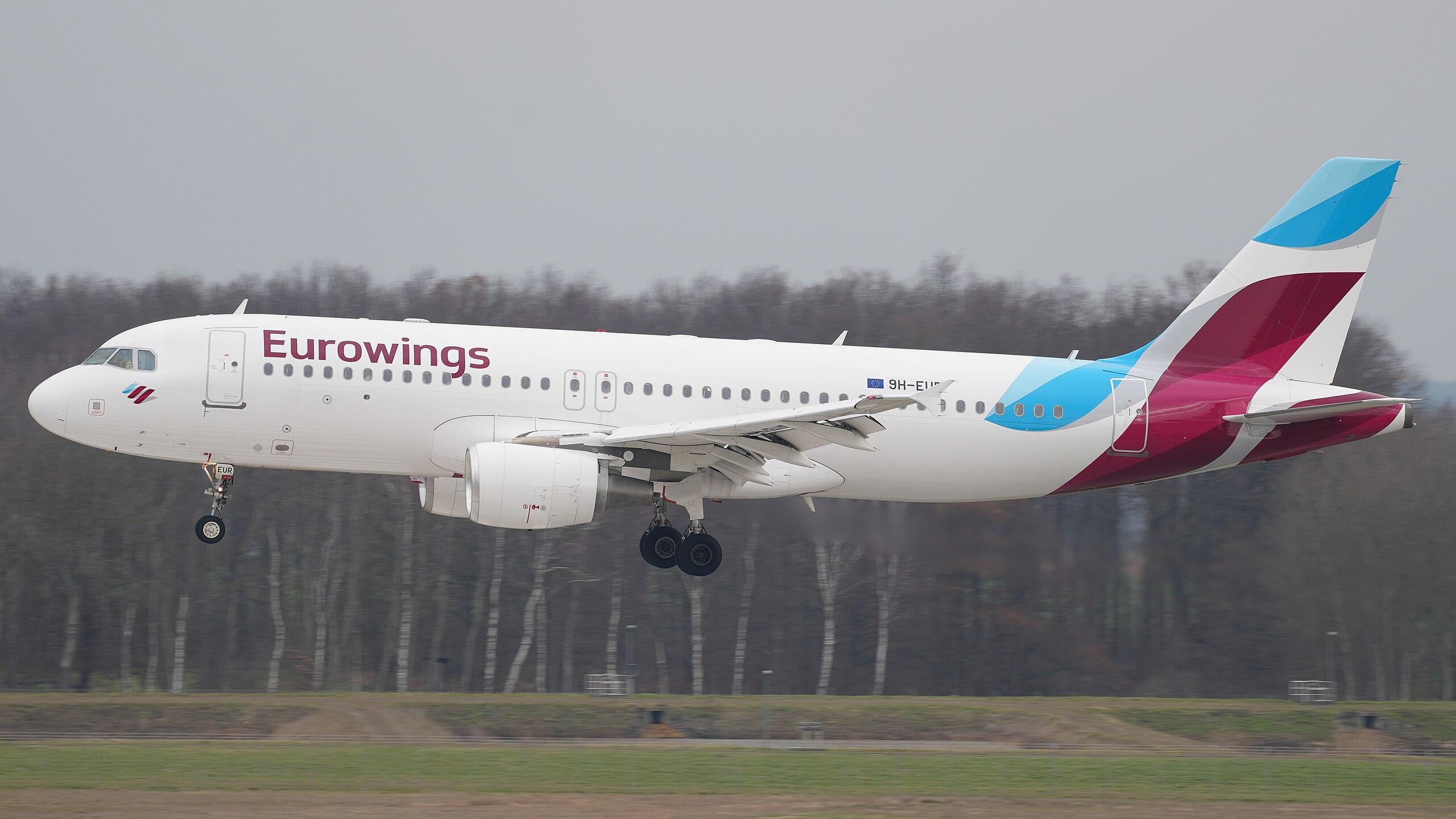
Eurowings flight EW9443, originally bound for Dusseldorf from Barcelona has declared an emergency and diverted to Paris.
Information is limited surrounding the incident at hand.
Below is what we know on this so far.
Eurowings EW9443 Barcelona-Dusseldorf…
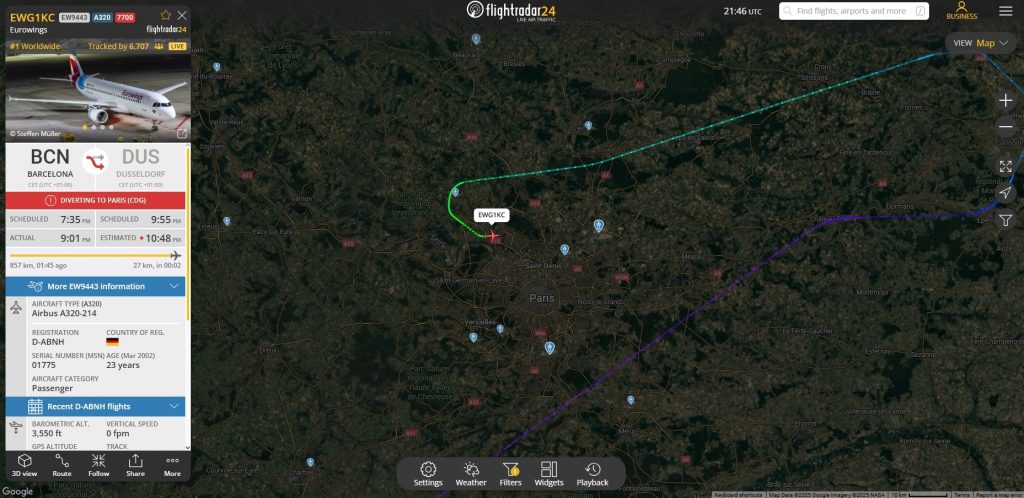
Eurowings flight EW9443, which declared the emergency in Paris, is a routine scheduled flight between Barcelona and Dusseldorf.
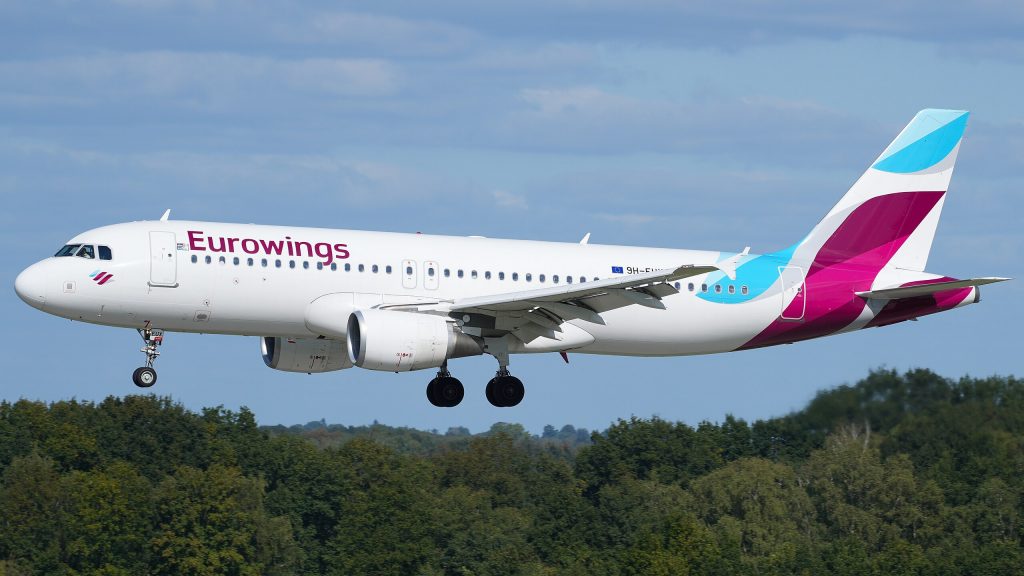
Furthermore, the aircraft involved in the incident is D-ABNH.
As per data from Planespotters.net, D-ABNH is a 23.8 year old Airbus A320 that started out life with LTE in May 2002.
From there, it went over to Volar Airlines, MyAir, LTE again, TAM Linhas Aereas and Air Berlin, before heading over to Eurowings in April 2017.
Of the A320ceo variant, Eurowings has 28 of them in their fleet.
Moreover, of the 28, 25 are in active service, with three currently parked, offering an average fleet age of 14.6 years.
As well as the A320ceo, the German carrier has the following other aircraft in it’s fleet:
- 23 Airbus A319s.
- 8 Airbus A320neos.
- 11 Airbus A321 Family aircraft.
Eurowings flight EW9443, which declared the emergency in Paris, departed Barcelona at 2101 local time, and proceeded towards Dusseldorf originally.
The aircraft declared an emergency to the east of Paris and subsequently decided to turn back around.
From there, the aircraft appeared to have landed safely without further incident at 2152 UTC.
Reason Currently Unclear for Emergency in Paris…
At this stage, it is unclear what the reason for the emergency and diversion to Paris was for onboard Eurowings flight EW9442 Barcelona-Dusseldorf.
What we do know is that it is an emergency due to the squawk code.
In aviation, transponder codes — known as squawk codes — are used to communicate specific situations to air traffic control (ATC). Among them, 7700 is the most critical: it signals a general emergency. When a pilot sets the aircraft’s transponder to 7700, it alerts all nearby ATC facilities that the aircraft is experiencing an urgent issue requiring immediate attention.
Unlike codes for specific scenarios — such as 7500 for hijacking or 7600 for radio failure — squawking 7700 covers a wide range of emergencies. These can include engine failure, medical emergencies, cabin depressurization, fuel shortage, or any situation that jeopardizes the safety of the flight. Once activated, ATC prioritizes the aircraft, clears nearby traffic, and coordinates emergency services if needed.
The 7700 code is part of the Mode A transponder system, which transmits a four-digit code to secondary surveillance radar. It’s internationally recognized and used across all ICAO member states.
Importantly, squawking 7700 doesn’t specify the nature of the emergency — it simply signals that one exists. Pilots will typically follow up with a radio call to clarify the situation, but the code itself ensures that help is already on the way.
As soon as we have more information pertinent to the incident at hand, then we will advise you accordingly.
Continue to follow The Aviation Hub for more analysis and insight.