

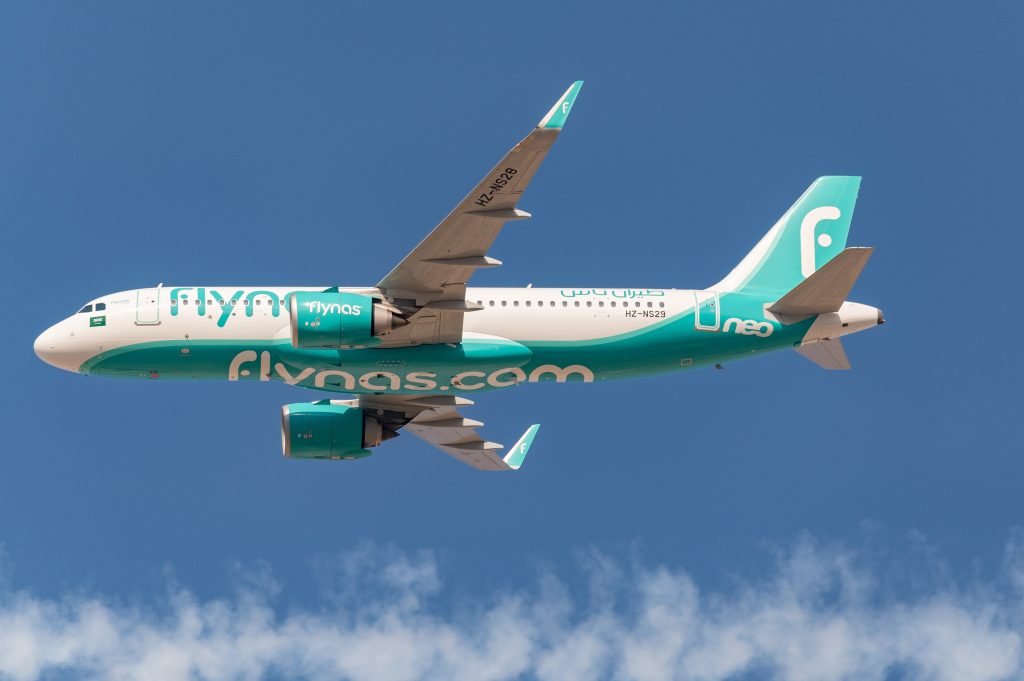
Saudi Arabia’s leading low‑cost carrier, flynas, has taken a decisive step into the Syrian market with the announcement of flynas Syria, a new joint‑venture airline created in partnership with the Syrian General Authority of Civil Aviation and Air Transport.
The agreement, signed in Damascus on 7 February 2026 in the presence of Syrian President Ahmed Al‑Sharaa, forms part of a broader package of strategic investment initiatives between the two countries.
The move signals a notable shift in regional aviation dynamics.
After more than a decade of disruption to Syria’s air transport sector, the establishment of a new carrier backed by a major Gulf LCC represents both a commercial opportunity and a symbolic step toward re‑engagement with the global aviation system.
Structure of the Joint Venture in Syria…
Under the agreement, the Syrian General Authority of Civil Aviation and Air Transport will hold a 51% stake, with flynas owning the remaining 49%—a structure consistent across all official statements.
The airline will operate under the brand flynas Syria, adhering to the regulatory, safety, and security standards approved by both Saudi and Syrian authorities.
Licensing and operational procedures are currently being finalized, with both sides emphasizing compliance with international norms as a foundational requirement for launch.
Operational Ambitions and Network Strategy For flynas Syria…
Commercial operations are scheduled to begin in the fourth quarter of 2026, pending regulatory approvals.
The carrier intends to operate scheduled services across the Middle East, Africa, and Europe, restoring connectivity that has been significantly reduced in recent years.
For flynas, the expansion aligns with its broader growth strategy, which includes increasing fleet size and expanding its international footprint.
For the country, the partnership is positioned as a catalyst for rebuilding the country’s civil aviation ecosystem, stimulating inbound and outbound travel, and supporting economic recovery.
Officials have framed the airline as a vehicle to “enhance air traffic and strengthen regional and international connectivity,” a theme echoed across multiple announcements.
Infrastructure Development in Parallel
The airline launch coincides with a memorandum of understanding to develop and operate Aleppo International Airport, underscoring a dual‑track approach: rebuilding both airline capacity and airport infrastructure.
The development of Aleppo’s airport is described as a “vital pillar” for creating a sustainable investment environment and enabling long‑term aviation growth.
This infrastructure component is particularly significant. While the new airline will help restore air links, the modernization of airport facilities is essential for ensuring operational reliability, safety, and the ability to handle increased traffic.
Together, the initiatives reflect a coordinated strategy to re‑establish the country as a functional node in regional air transport networks.
Strategic and Political Context
The agreement sits within a broader thaw in Saudi–Syrian relations, with aviation emerging as one of the most visible areas of renewed cooperation.
The presence of senior officials—including the Syrian president and a high‑level Saudi delegation—signals the political weight behind the initiative.
For Saudi Arabia, the move aligns with its ambitions to expand economic influence and strengthen regional connectivity under its wider investment agenda.
For Syria, the partnership offers access to capital, expertise, and operational know‑how from one of the Middle East’s most successful low‑cost carriers.
Outlook & Next Steps for flynas Syria…
If executed as planned, the subsidiary could become one of the most consequential developments in the region’s aviation landscape since the onset of the Syrian conflict.
The combination of a strong LCC brand, government‑backed investment, and parallel airport development provides a foundation for sustainable growth—though the operating environment will remain complex.
Still, the launch represents a rare moment of forward momentum for Syrian aviation.
With commercial flights expected to begin in late 2026, the industry will be watching closely to see whether the subsidiary can deliver on its promise to reconnect a long‑isolated market with the wider region and beyond.
Continue to follow The Aviation Hub for more analysis and insight!