
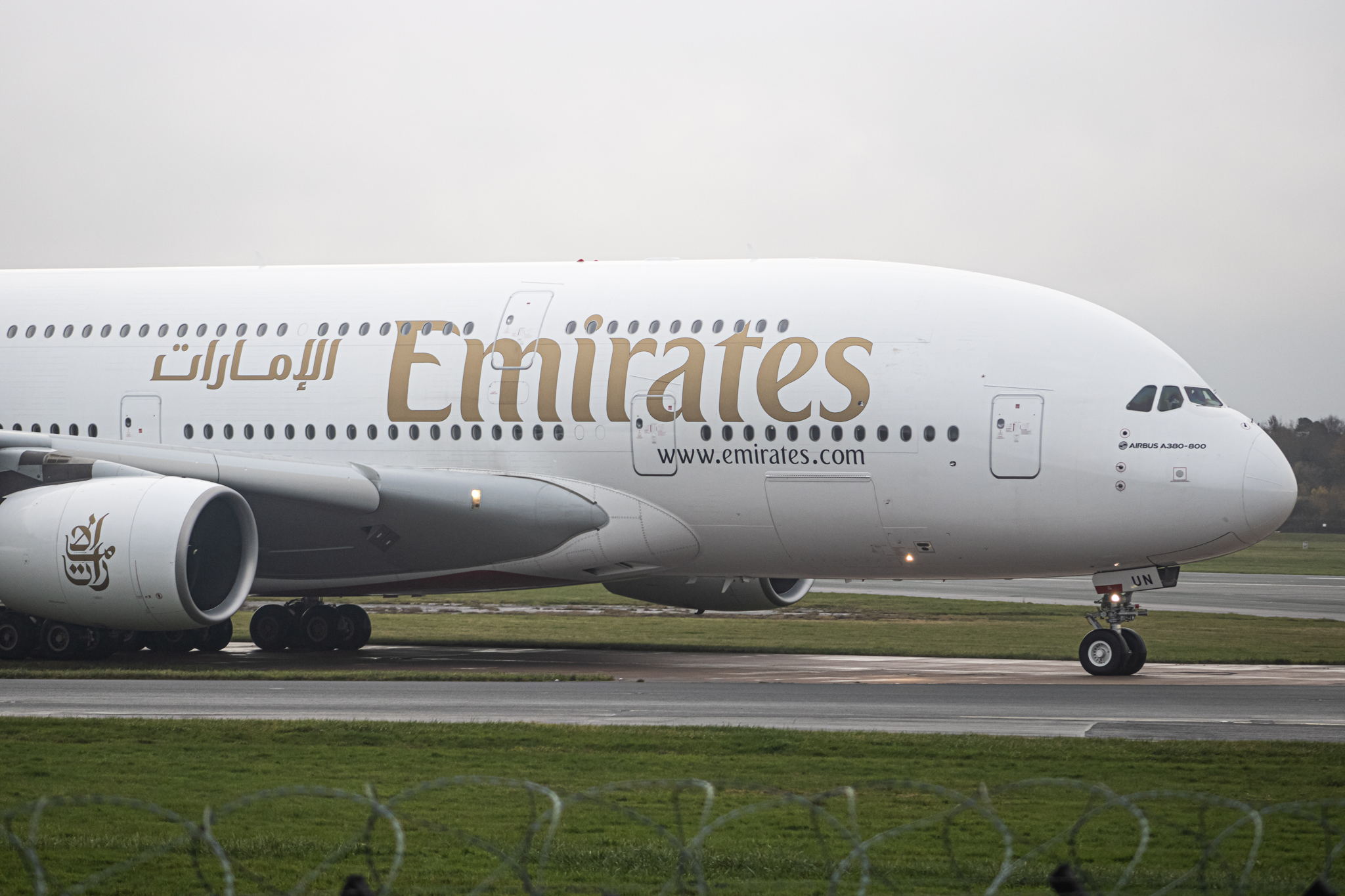
Emirates operates more A380 flights to the UK than anywhere outside Dubai, connecting five cities with unmatched scale, comfort, and long‑haul capacity.
Few aircraft symbolise modern long‑haul travel quite like the Airbus A380. For many airlines, the superjumbo has become a niche tool — a high‑capacity asset deployed sparingly on trunk routes.
For Emirates, however, the A380 remains the backbone of its global strategy, and nowhere is that more evident than in the United Kingdom.
With 91 weekly A380 departures across five UK airports, the airline operates more superjumbo flights to and from the UK than any other country outside the UAE.
It is a scale unmatched in Europe and a testament to the enduring strength of the UK–Dubai market.
This article explores how Emirates deploys its A380 fleet across the UK, why the aircraft remains central to its strategy, and what this means for capacity, connectivity, and the passenger experience.
Emirates A380 from Dubai to the UK: A Network Built on Scale
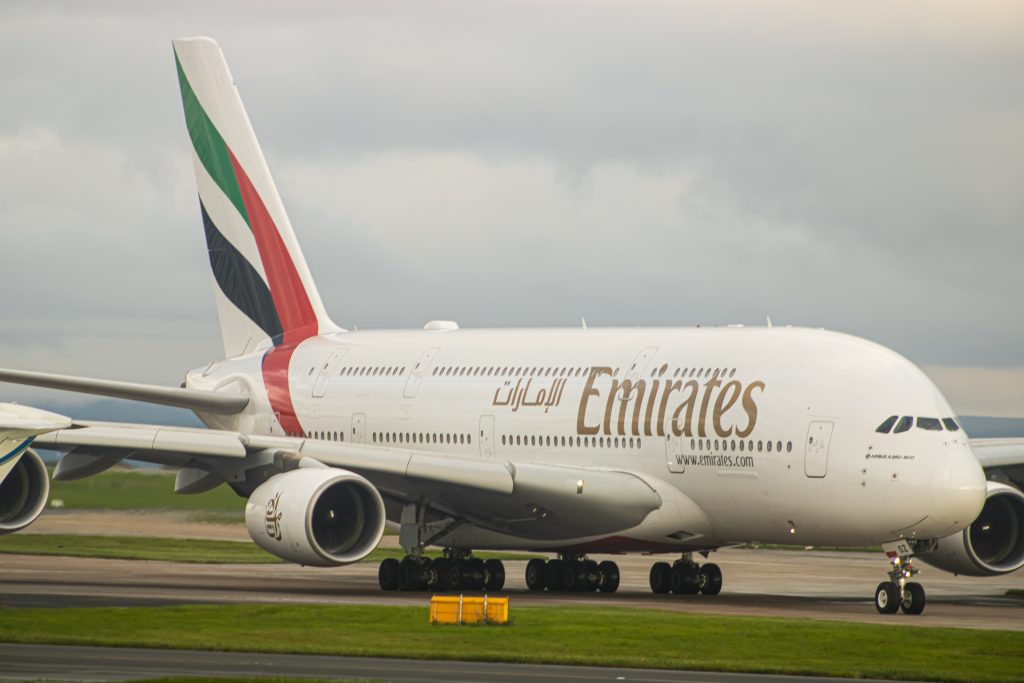
Emirates’ UK A380 operation spans five airports: London Heathrow, London Gatwick, Manchester, Birmingham, and Glasgow.
Together, they form a dense, high‑frequency network that connects the UK’s major population centres to Dubai and onward to more than 140 destinations.
Here is the current daily A380 deployment as of January 4, 2026:
- London Heathrow (LHR): 6× daily A380
- London Gatwick (LGW): 2× daily A380
- Manchester (MAN): 3× daily A380
- Birmingham (BHX): 1× daily A380
- Glasgow (GLA): 1× daily A380
This equates to 13 A380 departures every day, or 91 per week, making the UK Emirates’ largest A380 market globally.
The scale is remarkable.
While other carriers have retired or reduced their A380 fleets, Emirates has doubled down — refurbishing cabins, expanding premium economy, and using the aircraft as a strategic tool to maximise slot‑constrained airports and high‑demand markets. The UK ticks both boxes.
London Heathrow: The Superjumbo Stronghold
Heathrow is Emirates’ flagship A380 station.
With six daily A380 departures, it is one of the busiest A380 airports in the world. The airline’s presence here is not simply about demand — it is about necessity.
Heathrow’s slot scarcity makes the A380 the most efficient way to grow capacity without adding frequencies.
The six daily rotations — EK001, EK003, EK005, EK007, EK029, and EK031 — cover a spread of morning, afternoon, and evening departures, providing seamless connectivity into Dubai’s banked hub structure.
For premium travellers, the A380’s onboard bar and shower spa remain a differentiator, while the addition of premium economy on selected aircraft has broadened the appeal for mid‑market passengers.
Heathrow’s A380 dominance also reflects the strength of the London–Dubai corridor, which blends business travel, leisure demand, and significant VFR (visiting friends and relatives) flows.
London Gatwick: A Secondary Hub with Primary Demand
Gatwick may be London’s secondary airport, but for Emirates it is a core A380 station.
The airline operates two daily A380 flights from LGW, serving a catchment area that includes South London, the South East, and the UK’s coastal regions.
The Gatwick operation is strategically important.
It allows Emirates to capture demand from passengers who prefer to avoid Heathrow, while also offering resilience during slot disruptions or operational constraints.
The two daily A380s — EK009 and EK015 — provide strong connectivity into Dubai’s morning and evening waves, ensuring competitive transfer options to Asia, Australia, and Africa.
Manchester: The North’s Triple‑Daily A380 Gateway
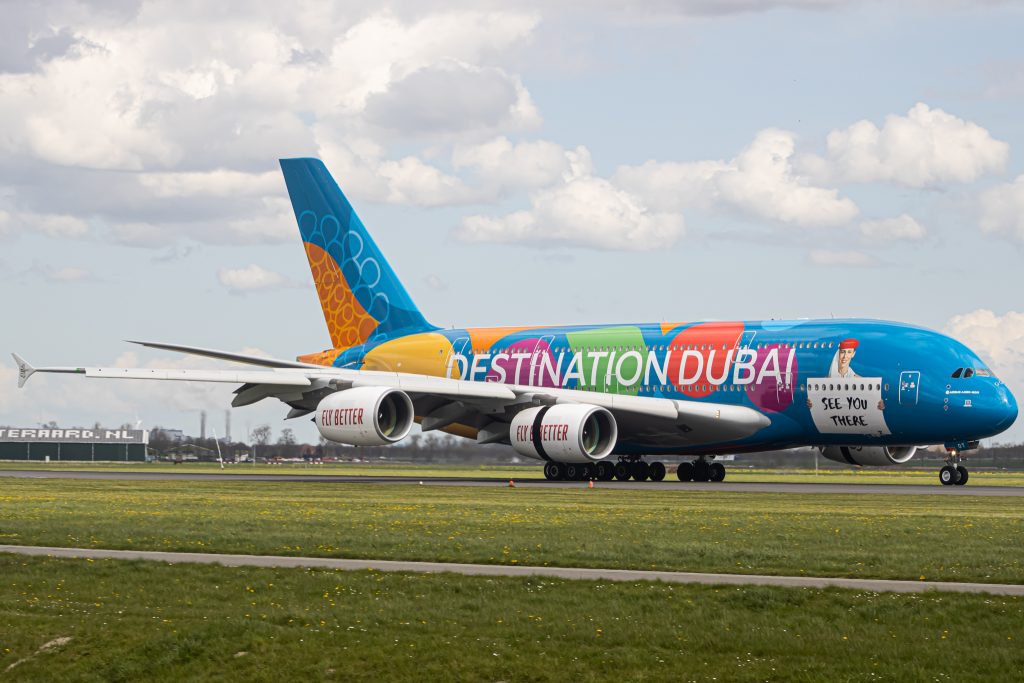
Manchester is the only UK airport outside London to host three daily A380 flights, making it the largest Emirates A380 operation in Europe outside the capital.
This reflects the strength of the North West’s long‑haul market, driven by a mix of leisure travellers, students, and a large South Asian diaspora.
The three daily A380 services — EK017, EK019, and EK021 — give Manchester passengers access to the same high‑capacity, premium‑heavy product available in London.
For Emirates, the triple‑daily A380 deployment consolidates its position as the leading long‑haul carrier in the region, outpacing competitors in both frequency and aircraft size.
Manchester’s A380 presence also supports freight demand, with the bellyhold capacity of three superjumbos providing significant uplift for exporters across the North.
Birmingham and Glasgow: Regional Strength with Daily A380s
Beyond the major hubs, Emirates also deploys the A380 daily at Birmingham and Glasgow, reinforcing its commitment to regional connectivity.
At Birmingham, the A380 operates alongside a daily Boeing 777, giving the Midlands two daily Emirates departures.
The A380’s presence here is a clear indicator of strong demand, particularly among VFR travellers and long‑haul leisure passengers.
Glasgow, meanwhile, has rejoined the A380 network with a daily rotation.
This marks a significant upgrade for Scotland, restoring the superjumbo to a market that has historically performed well for Emirates.
The A380’s return enhances capacity and elevates the passenger experience, particularly for premium travellers heading to Asia and Australia.
Why the A380 Still Works for Emirates Flights to Dubai in the UK
While many airlines have moved away from the A380, Emirates continues to operate the world’s largest fleet — and the UK is central to that strategy. Several factors explain why the aircraft remains so effective here:
1. Slot Constraints
Airports like Heathrow simply cannot accommodate more frequencies. The A380 allows Emirates to grow capacity without additional slots.
2. High‑Density Demand
The UK–Dubai market is consistently strong year‑round, supporting the A380’s 500–600+ seat capacity.
3. Premium Demand
The A380’s First Class suites, onboard lounge, and premium economy cabin align well with the UK’s premium‑heavy travel profile.
4. Hub Connectivity
Dubai’s wave‑based hub structure rewards high‑capacity aircraft feeding into tightly timed global connections.
5. Fleet Strategy
Emirates has invested heavily in refurbishing its A380s, ensuring the aircraft remains competitive well into the 2030s.
Emirates A380s From Dubai to the UK: A Market Unlike Any Other
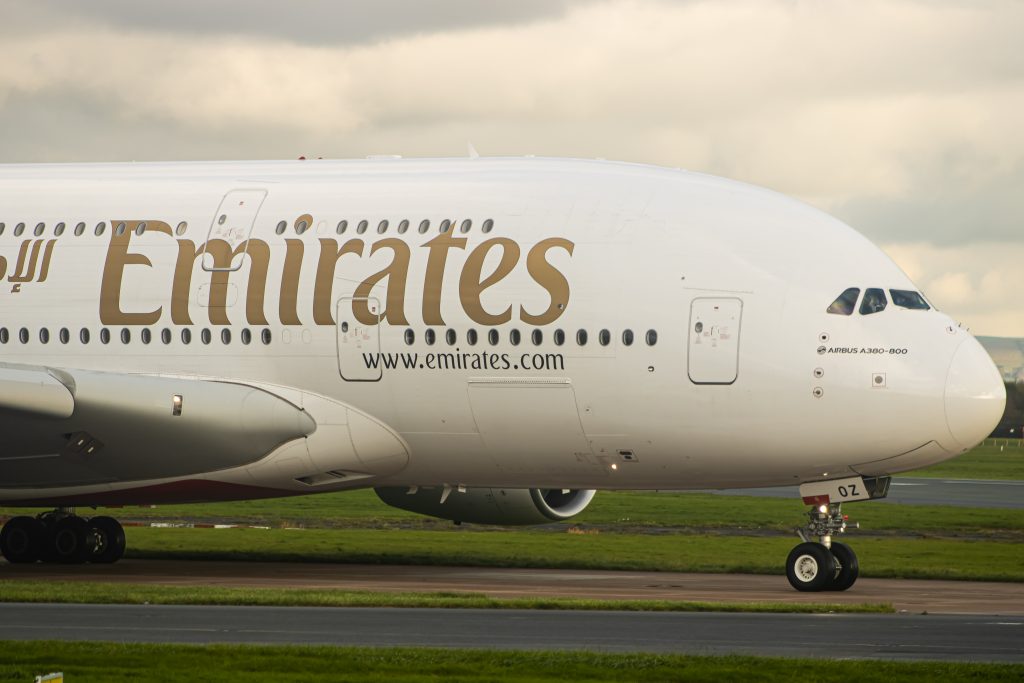
Emirates’ A380 operation in the UK is not just large — it is unique.
No other country outside the UAE receives as many A380 flights. No other airline operates as many A380s into a single market.
And no other long‑haul carrier has built such a dense, high‑frequency superjumbo network across multiple regional airports.
For passengers, this means choice, comfort, and consistency.
For Emirates, it means a strong, resilient foothold in one of its most important global markets.
And for the UK, it underscores the country’s enduring role as a major long‑haul aviation hub.
The A380 may be a rare sight elsewhere — but in the UK, thanks to Emirates, it remains very much alive.
Continue to follow The Aviation Hub for more analysis and insight!