
The latest escalation between the United States and Iran has triggered one of the most severe operational shocks the global aviation sector has faced since the pandemic.
With airstrikes extending into neighbouring Gulf states and airspace closures rippling across the region, airlines, airports, and passengers are confronting a rapidly evolving crisis.
What began as a regional flashpoint has now become a global aviation event, one that is reshaping flight paths, airline economics, and the stability of long‑haul connectivity.
Cost of Jet Fuel: What This Means for Passengers
Jet fuel is the lifeblood of the aviation industry, and any disruption in the Middle East, home to some of the world’s most critical oil transit routes—inevitably sends prices upward.
With Iranian retaliatory strikes targeting Gulf states that host US military bases, concerns over oil supply security have intensified.
This has already prompted volatility in global energy markets, with analysts warning that prolonged instability could push fuel prices sharply higher.
For airlines, fuel typically represents between 25% and 35% of operating costs. Even a modest increase in price can erode margins, especially for carriers operating long‑haul fleets.
In the current environment, where thousands of flights have been cancelled or rerouted due to airspace closures, the cost impact is compounded: longer flight times mean more fuel burn, and diversions add operational complexity.
Passengers will inevitably feel the effects.
Higher fares are likely as airlines attempt to offset rising costs, particularly on routes that traditionally rely on Middle Eastern hubs for efficient one‑stop connectivity.
With ticket prices already surging due to widespread cancellations and reduced capacity, the upward trend is expected to continue as long as the conflict persists.
In short, the cost of jet fuel is no longer a background variable, it is becoming a frontline pressure point that will shape passenger pricing for months to come.
Disruption to Airlines — Emirates, Etihad & Qatar Airways Under Strain
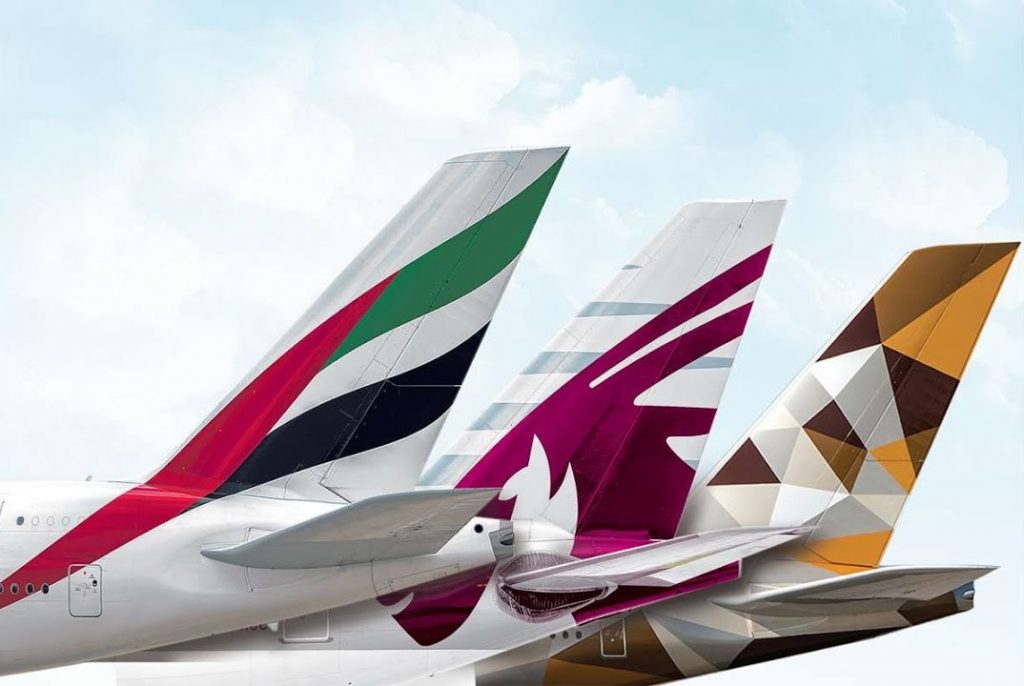
No carriers have felt the shockwaves more acutely than the Middle East’s “ME3”: Emirates, Etihad Airways, and Qatar Airways.
Their business models depend on uninterrupted access to Gulf airspace and the ability to operate high‑frequency long‑haul connections through Dubai, Abu Dhabi, and Doha. The US–Iran conflict has struck at the heart of this model.
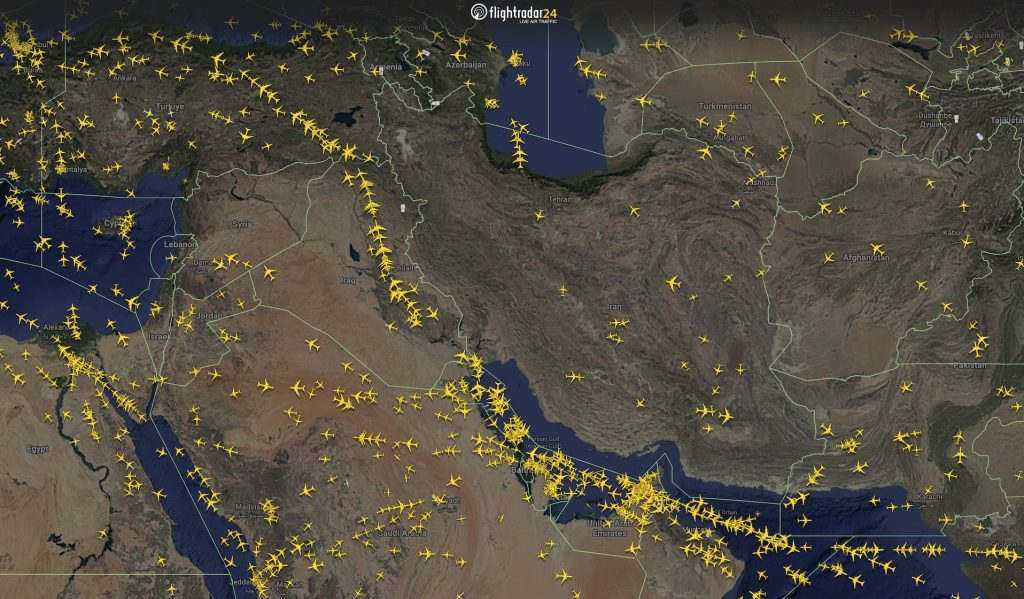
Within hours of the initial strikes, airspace across at least ten countries—including Iran, Iraq, Kuwait, Qatar, Saudi Arabia, Bahrain, and the UAE—was partially or fully closed.
This forced the ME3 to cancel, reroute, or significantly delay hundreds of flights.
Emirates, Etihad, and Qatar Airways have all implemented limited scheduling, with large‑scale cancellations and diversions becoming the norm.
Damage at several regional hubs, including drone strikes at Dubai International Airport, has further constrained operations.
The Aviation Hub’s own reporting highlights that what initially appeared to be a short‑term disruption has rapidly evolved into a complex financial burden.
The ME3 are now facing:
- Mass cancellations across Europe, Asia, and Oceania routes
- Diversions adding hours to flight times and increasing fuel burn
- Crew scheduling challenges due to unpredictable airspace restrictions
- Reduced passenger confidence, particularly among transit travellers
These carriers are global connectors.
When they are forced to scale back, the effects cascade across the entire aviation ecosystem, from European leisure travellers to Asian business passengers and African diaspora communities.
A Prolonged Conflict Between the US & Iran: The Deepening Impact on the Global Industry
The longer the US–Iran conflict continues, the more entrenched its impact on global aviation will become.
Already, the industry is facing losses that could exceed US$1 billion if the situation intensifies.
Several long‑term risks are emerging:
1. Structural Route Changes
Airlines worldwide are now avoiding Middle Eastern airspace, forcing detours that add significant time and cost.
Some carriers may permanently shift away from traditional Gulf stopovers, altering global traffic flows.
2. Pressure on Non‑Gulf Hubs
With Dubai, Doha, and Abu Dhabi constrained, alternative hubs, such as Istanbul, Singapore, and various European gateways, are absorbing displaced traffic.
This redistribution may reshape competitive dynamics for years.
3. Airport Revenue Losses
Airports across the Middle East and South Asia are reporting steep declines in passenger fees, landing charges, and retail revenue.
Dhaka, for example, has seen nearly half of its Middle East flights cancelled, with hotels and tourism operators also suffering.
4. Supply Chain Disruptions
Cargo operations, particularly those reliant on Gulf transshipment hubs, are experiencing delays and capacity shortages.
This affects industries far beyond aviation—from pharmaceuticals to electronics.
5. Insurance and Security Costs
War‑risk insurance premiums are rising, adding yet another layer of cost for airlines operating near the conflict zone.
The cumulative effect is a global aviation system under strain, one that is being forced to adapt in real time to a volatile geopolitical landscape.
Summary & Industry Outlook: How The US-Iran Conflict Will Reshape Global Aviation
The US–Iran conflict has become a defining moment for global aviation.
What began as a regional confrontation has now disrupted airspace across the Middle East, grounded thousands of flights, and placed immense pressure on airlines and airports worldwide.
The ME3, being Emirates, Etihad, and Qatar Airways, have been hit hardest, with their hub‑and‑spoke models challenged by closures, cancellations, and operational uncertainty.
Rising jet fuel prices, longer flight paths, and increased insurance costs are converging to create a perfect storm for airline economics.
Passengers will face higher fares, reduced connectivity, and ongoing uncertainty as airlines navigate an unpredictable operating environment.
If the conflict continues, the industry may be forced into structural changes that outlast the crisis itself.
New hubs may rise, traditional routes may shift, and the financial toll could reshape airline strategies for years to come.
For now, global aviation stands at a crossroads, caught between geopolitical instability and the unrelenting demand for international connectivity.
The coming months will determine whether the industry can adapt quickly enough to weather this storm, or whether the US–Iran conflict will mark the beginning of a new era defined by volatility, rerouting, and rising costs.
Continue to follow The Aviation Hub for more analysis and insight!