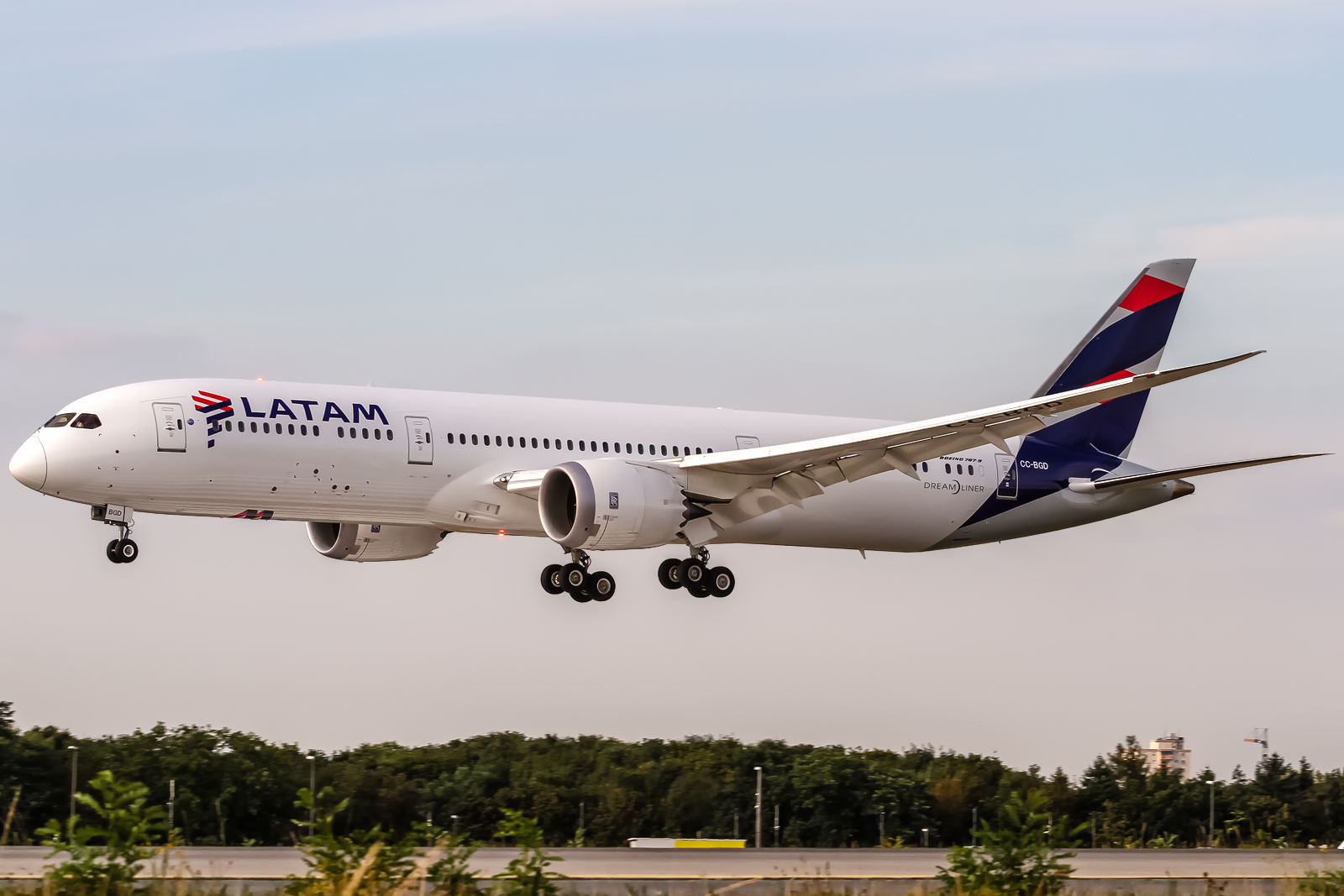
The final report into the LATAM Boeing 787 seat upset accident over the Tasman Sea is one of those investigations that exposes a quiet vulnerability in modern flight operations, a vulnerability hidden not in engines or avionics but in a place so mundane that it rarely earns a second thought, the Captain’s seat.
The DGAC Chile report is exhaustive and at times unsettling, revealing how a fractured plastic switch cap, a raised switch cover and a moment of human movement converged at 41,000 feet to send a Boeing 787 9 into a sudden and violent descent.
The report states plainly that the aircraft experienced “a sudden and involuntary descent” while en route between Sydney and Auckland, a descent triggered when “the Captain’s seat was inadvertently shifted forward” due to an uncommanded activation of the seat’s rocker switch.
That single sentence captures the essence of the event, but the full story is far more complex.
Chaos over the Tasman Sea!: What Happened Onboard The LATAM Boeing 787…
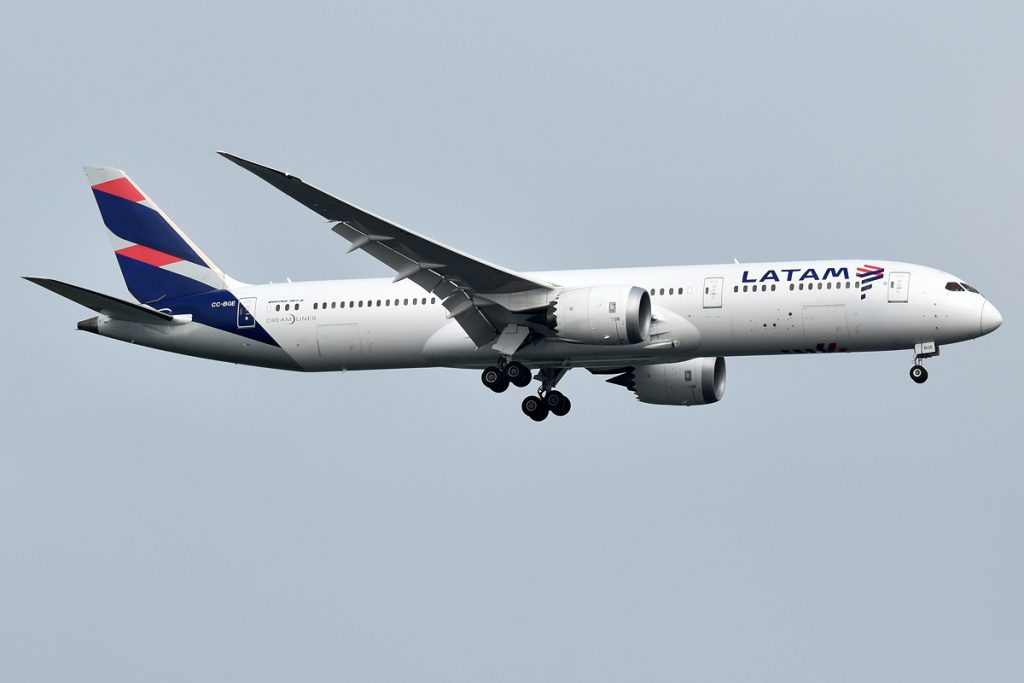
The LATAM Boeing 787 9 had departed Sydney on time, climbing to FL410 with the First Officer acting as pilot flying.
The flight was uneventful for nearly three hours. The seat belt sign was off. The cabin crew were clearing meal trays.
The Captain was turned slightly to the right, speaking with the Cabin Manager, his legs crossed, relaxed, unaware that the most dangerous component on the flight deck that day was behind him, not in front.
When a flight attendant entered the cockpit to collect trays, she brushed against the upper rear of the Captain’s seat.
The report notes that the switch cover “did not remain in the closed and adjusted position” and was instead “raised and supported on the switch cap, which in turn was displaced.”
In this abnormal state, the cover itself acted as a trigger. When pressed, even lightly, it activated the forward motion of the seat.
The seat surged forward. The Captain’s legs were driven into the control column. The column force sensor registered a growing pressure. The autopilot disconnected.
The aircraft pitched down.
The FDR data shows a rate of descent reaching approximately minus 3,165 feet per minute, with vertical acceleration fluctuating between minus 0.31 G and plus 1.76 G.
The cockpit voice recorder captured the Captain shouting that he was trapped.
The First Officer reacted instantly, taking manual control, disconnecting electrical power to the Captain’s seat and recovering the aircraft to level flight within roughly twelve seconds.
The report describes the Captain’s reaction as a classic startle effect, noting that “the unexpected movement of the Captain’s seat” and the sudden trapping of his legs created a moment of confusion and impaired situational awareness.
The First Officer’s response, by contrast, is highlighted as an example of effective crew resource management, with decisive action, clear communication and rapid problem solving preventing a far more serious outcome.
Three people were hospitalized, including one cabin crew member and two passengers. The aircraft sustained interior damage in the cabin and on the flight deck.
The Mechanical Failure Onboard The Aircraft…
The investigation’s technical findings are striking. The Captain’s seat rocker switch assembly, manufactured by Ipeco, had suffered a failure of the switch cap, the white plastic piece that forms the physical button.
The cap had fractured at multiple points and detached from its mounting structure.
This detachment prevented the switch cover from closing properly.
The cover, designed to prevent accidental activation, instead became the mechanism that triggered the event.
The report into the Tasman Sea accident includes a critical line, stating that the switch cover “was raised, in an abnormal position” and that pressing it “immediately caused the seat to move forward.” This is the heart of the mechanical failure.
The seat had a history.
Twelve discrepancies had been recorded since 2018, three of them related to the electrical system of the seat back fore aft switch.
The manufacturer had issued a Service Bulletin in 2017 recommending the application of adhesive to reinforce the switch cap and prevent detachment.
The operator had not applied this bulletin to the seat involved in the accident.
During post event inspections, investigators found additional irregularities, including a non standard screw installed in the switch cap structure and a cut in the switch cover moulding that did not match the original design.
These issues were not deemed causal but they paint a picture of inconsistent maintenance quality.
The Human Factors That Caused The Tasman Sea Accident…
Human factors played a significant role. The Captain had experienced a slight forward movement of his seat earlier that day in Sydney.
He tested the side switches, found them functioning and chose not to record the anomaly in the logbook.
The report notes that “the absence of previous experiences” with such failures may have influenced his decision not to report it.
The cabin environment also contributed. The seat belt sign was off. Crew were moving freely.
The cockpit door was opened twice in quick succession.
The Captain was turned in his seat, legs crossed, a posture that made him more vulnerable to entrapment.
The report is clear that none of these actions were improper.
They were normal. And that is precisely why the event is so concerning.
A normal cockpit routine intersected with a latent mechanical defect, and the result was a loss of control event at cruise altitude.
Key Findings From The LATAM Boeing 787 Issue…
The DGAC concludes that the primary cause was the Captain’s body pressing against the control column after the seat moved forward uncontrollably.
Contributing factors of the Tasman Sea accident included the detached rocker switch cap, the inadvertent activation by cabin crew and the Captain’s seating posture.
But the most significant finding is broader.
Even after the operator applied the mandatory Service Bulletin and the FAA issued AD 2024 16 14, the same type of switch failures continued to appear across the fleet.
The report states bluntly that “corrective actions have not delivered the expected results.”
This is not a one off defect. It is a design vulnerability.
The Bigger Picture: A Call for a Redesign?
The DGAC’s final recommendation is unusually direct.
It calls on the NTSB to negotiate with Boeing and Ipeco for “a new design of the mechanisms of the rocker switch and a change of the materials used in its manufacture.”
That is a rare level of specificity in an accident report and reflects the seriousness of the issue.
A seat switch should never be capable of causing a loss of control event. Yet on this flight, it did.
The report on the Tasman Sea accident is a reminder that aviation safety is often shaped not by dramatic failures but by small components, overlooked details and the quiet assumption that something as simple as a seat switch will always work as intended.
On March 11, 2024, that assumption failed.
And the industry must now decide how to ensure it does not fail again.
Continue to follow The Aviation Hub for more analysis and insight!