Boeing closed 2025 with a fourth quarter that finally resembles the shape of a recovering aerospace giant.
Revenue surged to $23.9 billion, up 57 percent year‑on‑year, powered by 160 commercial aircraft deliveries—nearly triple the previous year’s quarter.
The headline profit figure, $8.8 billion in operating earnings, is heavily influenced by a one‑off $9.6 billion gain from the sale of parts of the Digital Aviation Solutions business, but the underlying story is still one of operational improvement and stabilising production lines.
For an industry that has spent years watching Boeing struggle with quality issues, certification delays, and supply chain instability, these results mark a meaningful shift. Yet they also highlight the scale of the work still ahead.
Boeing Commercial Airplanes: Deliveries Surge, Margins Still in the Red
The Commercial Airplanes division remains the centre of Boeing’s recovery narrative.
Fourth‑quarter revenue climbed to $11.4 billion, reflecting the delivery of 160 aircraft—up from just 57 a year earlier.
This is Boeing’s strongest quarterly delivery performance since before the pandemic and a clear sign that production lines are regaining rhythm.
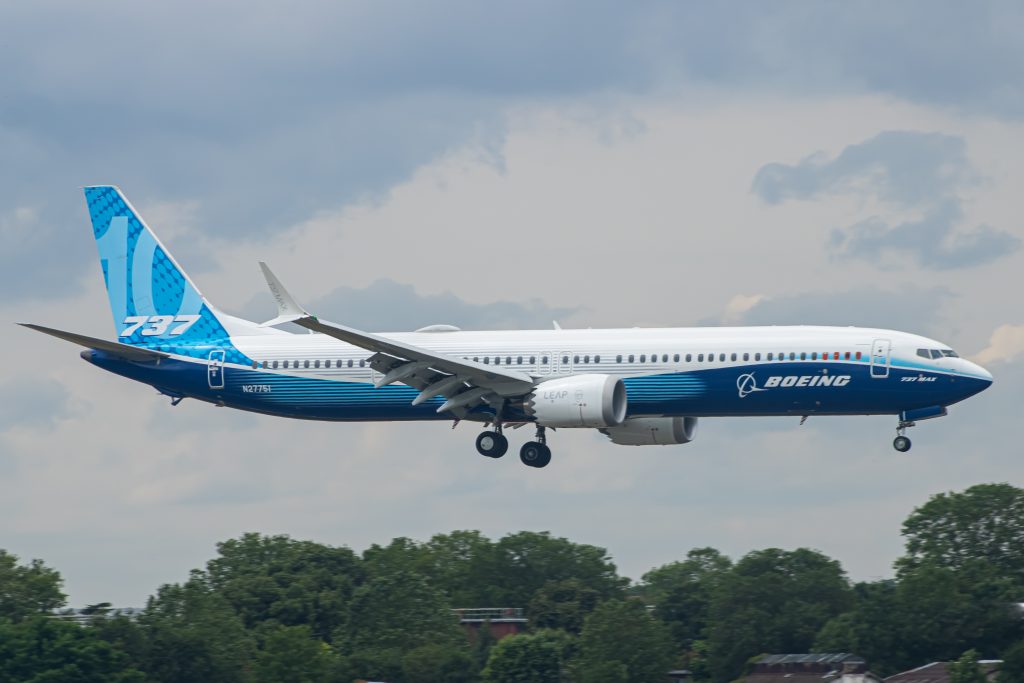
The 737 programme increased output to 42 aircraft per month, a symbolic milestone after years of volatility.
The 737‑10 also entered the final phase of certification flight testing, a crucial step toward expanding Boeing’s MAX family and competing more effectively with Airbus’s A321neo.
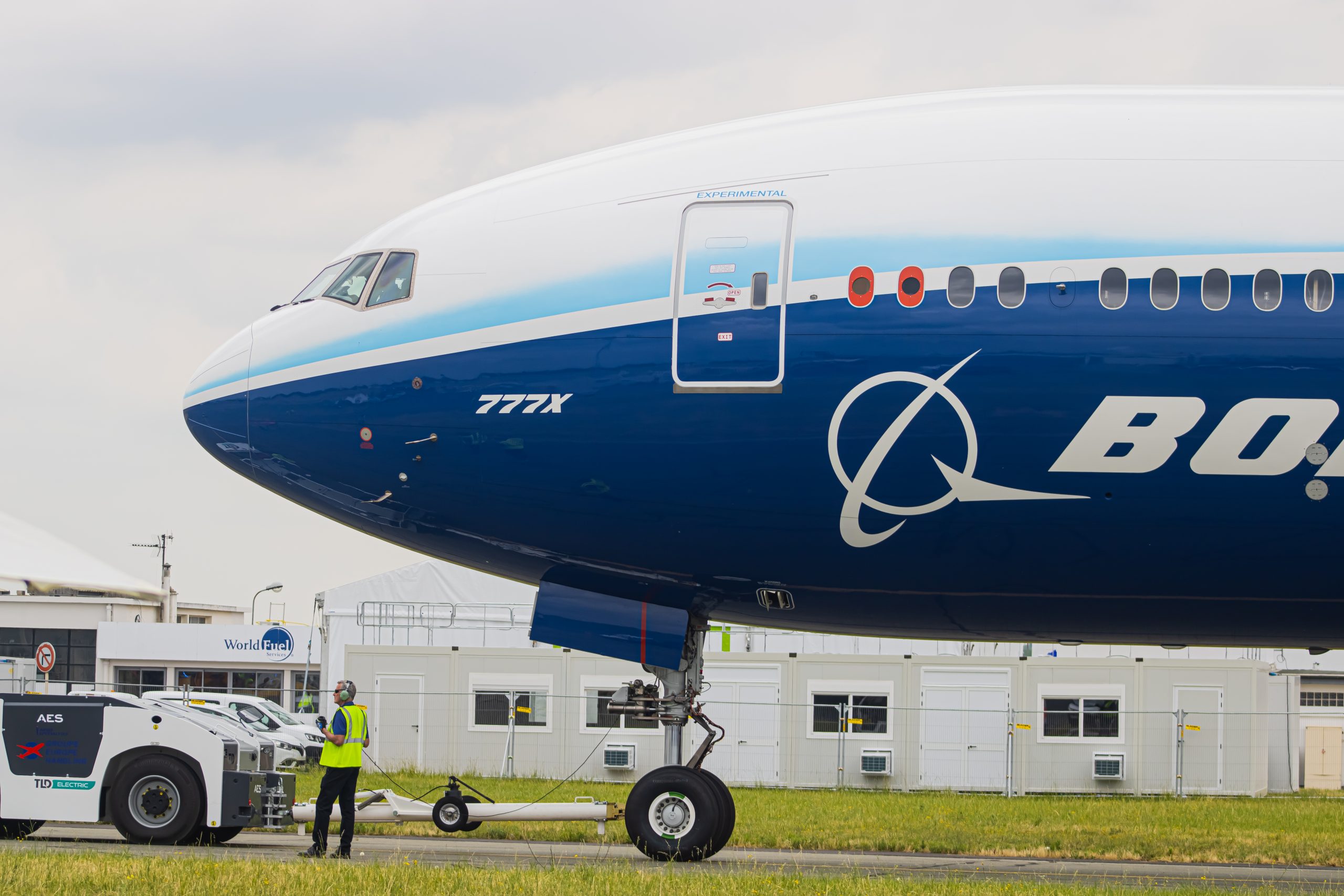
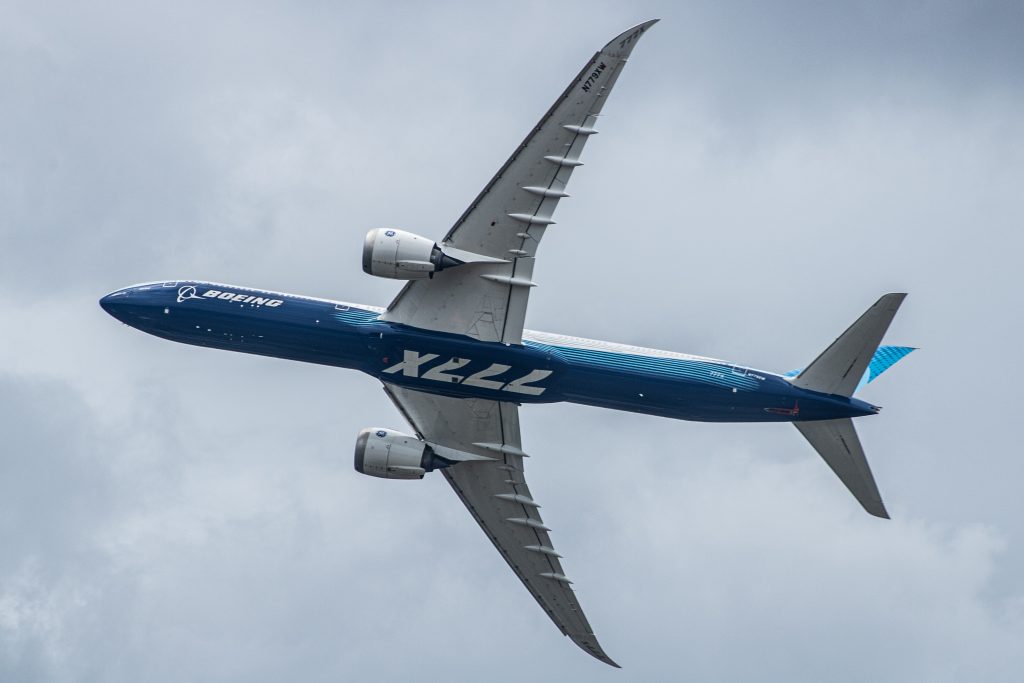
Meanwhile, the 787 programme continued its transition toward eight aircraft per month, and the 777X moved into the Type Inspection Authorization phase, keeping first delivery on track for 2027.
Despite this progress, the division still posted an operating loss of $632 million for the quarter.
Margins remain negative at –5.6 percent, underscoring the lingering financial drag of rework, supply chain pressures, and the integration of Spirit AeroSystems, which Boeing acquired in December.
Yet the commercial backlog tells a different story—one of long‑term strength. Boeing now holds a record 6,100‑plus aircraft in its commercial backlog, valued at $567 billion.
This includes major fourth‑quarter wins such as 105 737‑10s and 65 777‑9s. Demand is not Boeing’s problem; execution is.
Defense, Space & Security: Stabilisation After Years of Losses
Boeing’s Defense, Space & Security (BDS) division delivered a quieter but still meaningful improvement.
Quarterly revenue rose to $7.4 billion, up 37 percent year‑on‑year, and operating losses narrowed significantly to $507 million, compared with a staggering $2.3 billion loss in the same quarter of 2024.
The KC‑46A tanker programme continues to weigh on results, with another $0.6 billion in charges driven by production support and supply chain costs.
However, the division’s operational performance is clearly stabilising. Key wins included:
- A U.S. Air Force order for 15 additional KC‑46A tankers
- A U.S. Army contract for 96 AH‑64E Apache helicopters
- Delivery of the first operational T‑7A Red Hawk trainer
BDS ended the year with a record $85 billion backlog, 26 percent of which comes from international customers—a sign of Boeing’s strengthening global defence footprint.
Boeing Global Services: A Standout Quarter Driven by Portfolio Reshaping
Global Services delivered one of the most eye‑catching results of the quarter. Revenue held steady at $5.2 billion, but operating earnings surged to $10.5 billion, driven almost entirely by the $9.6 billion gain from the Digital Aviation Solutions divestiture.
Without that one‑off, margins would have been far more modest, but the underlying business remains healthy.
The division secured $28 billion in annual orders—its highest ever—including a major U.S. Air Force contract for C‑17 flight deck replacement.
Backlog rose to $30 billion, reinforcing Boeing’s strategic emphasis on services as a stable, high‑margin complement to its manufacturing operations.
Cash Flow and Liquidity: A Stronger Balance Sheet, But Debt Still Heavy
Boeing generated $1.3 billion in operating cash flow during the quarter, a dramatic improvement from the $3.5 billion outflow in the same period of 2024.
Free cash flow came in at $375 million, reflecting both higher deliveries and working‑capital timing.
The company’s cash and marketable securities position jumped to $29.4 billion, largely due to proceeds from the Digital Aviation Solutions sale.
However, consolidated debt remains high at $54.1 billion, slightly up from the previous quarter due to the Spirit AeroSystems acquisition.
Boeing still has access to $10 billion in undrawn credit facilities, providing additional liquidity cushion.
The balance sheet is healthier than it has been in years, but the debt load remains a defining constraint on Boeing’s long‑term financial flexibility.
Strategic Moves: Spirit AeroSystems and the Digital Aviation Sale
Two major portfolio actions shaped Boeing’s quarter and will influence its trajectory for years to come.
The acquisition of Spirit AeroSystems brings a critical supplier back under Boeing’s control.
Spirit’s quality issues have been a recurring source of disruption, particularly on the 737 and 787 programmes.
Reintegrating Spirit gives Boeing more direct oversight of fuselage production and should, in theory, improve stability. But it also brings new liabilities, integration costs, and operational complexity.
The sale of parts of the Digital Aviation Solutions business, meanwhile, generated the quarter’s massive one‑off gain.
This divestiture reflects Boeing’s decision to refocus on core manufacturing and services rather than digital platforms.
It also provides much‑needed liquidity to support production ramp‑ups and debt reduction.
Boeing Backlog at Record Levels: Demand Is Not the Issue
Across all divisions, Boeing’s total backlog now stands at a record $682 billion, up from $521 billion a year earlier.
Commercial Airplanes accounts for the lion’s share, but both BDS and Global Services also posted record backlogs.
This is the clearest signal that Boeing’s long‑term demand environment remains exceptionally strong.
Airlines are desperate for capacity, defence customers are expanding fleets, and services contracts continue to grow.
Boeing’s challenge is not selling aircraft—it is building them consistently, safely, and profitably.
A Company Rebuilding Its Foundations
Boeing’s fourth‑quarter results show a company that is finally regaining altitude after years of turbulence.
The surge in deliveries, stabilising defence performance, and record backlog all point to a business with enormous latent strength.
The financial boost from the Digital Aviation Solutions sale provides breathing room, while the Spirit AeroSystems acquisition signals a commitment to fixing the production system at its source.
But the path ahead is still steep.
Commercial margins remain negative, major programmes like the 737‑10 and 777X still face certification hurdles, and the KC‑46A continues to generate losses.
Boeing’s debt burden remains heavy, and the company must prove that its operational improvements are sustainable rather than episodic.
Still, for the first time in several years, Boeing enters a new year with momentum, clarity of direction, and a backlog that would make any aerospace manufacturer envious.
If 2025 was the year the American planemaker stabilised, 2026 must be the year it delivers—literally and figuratively.
For the aviation industry, the manufacturer’s fourth quarter is more than a financial update.
It is a signal that one of aerospace’s most important players is finally beginning to rebuild the foundations of trust, performance, and long‑term competitiveness.
Continue to follow The Aviation Hub for more analysis and insight!