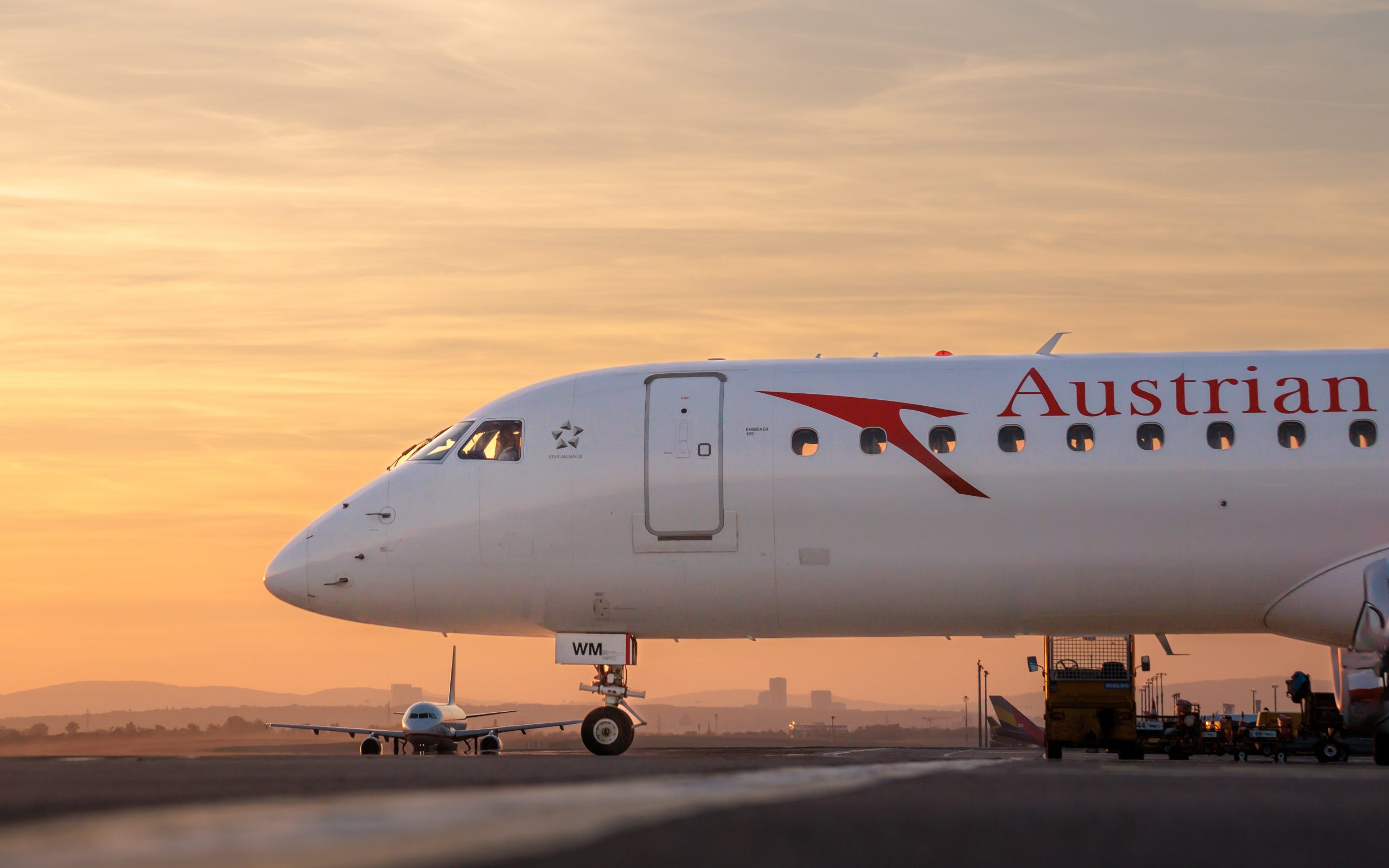
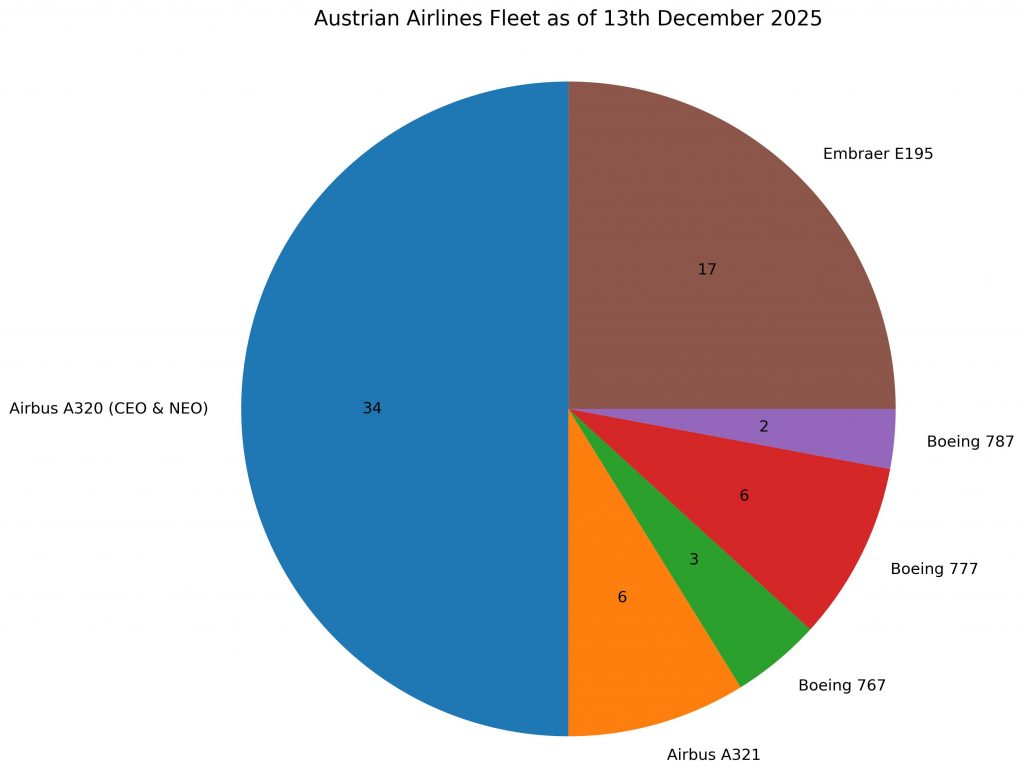
Major and important changes are underway at Austrian Airlines as they begin to phase out their Embraer E195 aircraft.
The first aircraft, formally known as OE-LWM, has been transferred over to Air Dolomiti, a Lufthansa Group subsidiary, as I-ENJA, with this flight taking place on December 12.
Furthermore, this move marks the beginning in a new era for the carrier, as they look to further modernise their overall operating fleet.
It is understood that I-ENJA will be the first of 13 aircraft that will be transferred to Air Dolomiti.
This airframe completed a total of 30,393 operating hours, of which 21,417 of them were with Austrian.
However, four of the E195s in the Austrian Airlines fleet will be sold externally, with this process beginning as early as next month.
Austrian Airlines Says Farewell to Embraer Aircraft…
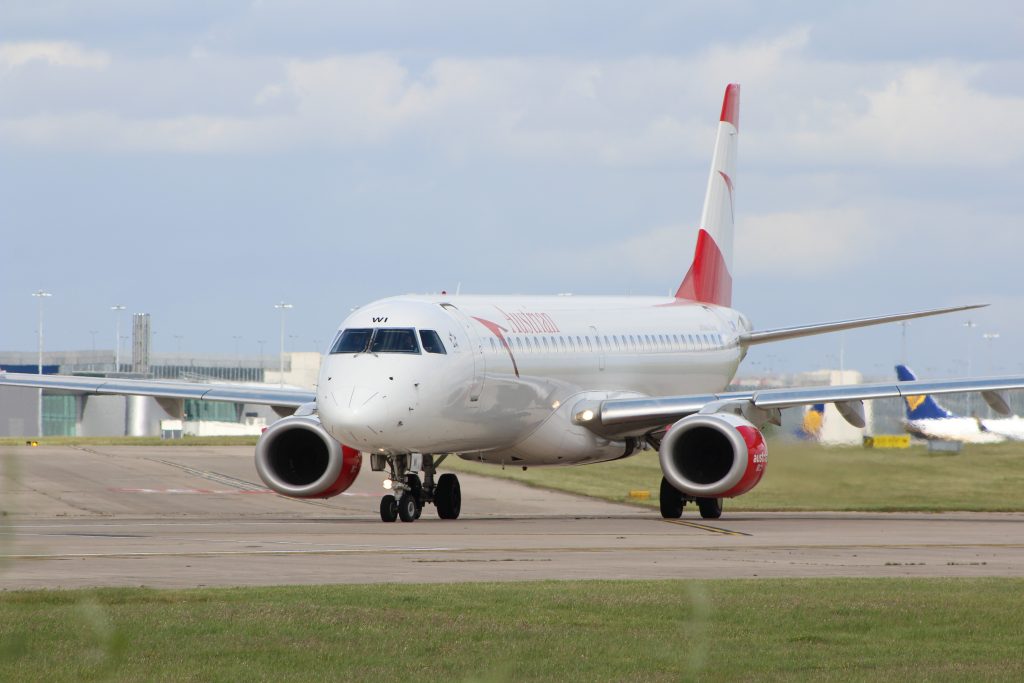
Commenting on the start of this fleet transfer program was Austrian Airlines CEO Stefan-Kenan Scheib, who said the following on this:
“We are saying goodbye to the first of 17 Embraer aircraft, which has served us well and provided important services for many years.”
“We are delighted that a large part of the Embraer fleet will now continue to fly with Austrian’s sister company Air Dolomiti.”
“I would like to thank everyone in the Austrian team who has made the start of the fleet rollover for Austrian Airlines’ short- and medium-haul fleet so quick, safe, and straightforward”.
The next Embraer E195 is expected to leave the carrier in February 2026, with the full withdrawal expected to be completed by the end of 2028.
So, this does mean that you will have the opportunity to fly the aircraft in the Austrian livery, but failing that, you can fly the airframe with Air Dolomiti instead.
Austrian Airlines’ relationship with the Embraer E195 began back in January 2016, which were used to replace their older Fokker 100 aircraft.
What Will Be Replacing the E195s?
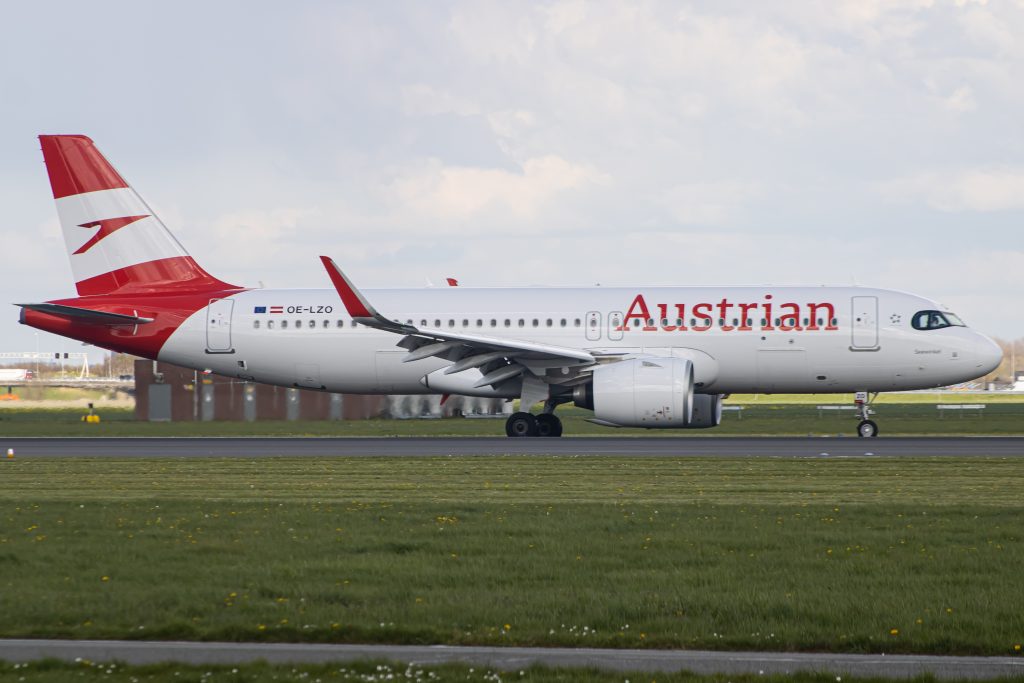
Austrian Airlines has confirmed that the 17 Embraer E195 aircraft will be replaced with six brand new Airbus A320neo aircraft.
This would increase the total seating offering from 120 seats to 180 seats, offering the same level of capacity that these smaller regional jets would have provided.
The choice for replacement is part of a strategy from the airline, where they are wanting to make things simpler in terms of operations.
In their press release, they mentioned the following on this:
“All these measures are part of an extensive fleet rollover of Austrian Airlines’ short- and medium-haul fleet.”
“As previously announced, the long-haul fleet is also being renewed. In mid-2024, the first two Boeing 787-9 Dreamliners were added to the Austrian Airlines fleet.”
“As things stand at present, ten more of these aircraft will be added by the end of 2028.”
“This will modernize the current long-haul fleet – which also consists of seven Boeing 777s and three Boeing 767s – and expand it to 12 aircraft.
The bottom line is that Austrian Airlines is harmonizing its entire fleet.”
“Five fleets – Embraer, Airbus, Boeing 767, Boeing 777, Boeing 787-9 – will become two in the future: the Airbus A320 family and the Boeing 787-9 Dreamliners.”
“As things currently stand, the Embraer 195 will be phased out by the end of 2028. The next Embraer aircraft is expected to leave Austrian in February 2026.”
And that is interesting, because ultimately, this will result in enhanced cost savings for the carrier moving forward.
It is clear that for the short-to-medium haul flights, this will all just be Airbus-operated, with longer-haul the Boeing 787.
Operating two fleets of aircraft is a lot cheaper than five different variations.
The Airline’s Relationship with the A320neo So Far…
Austrian Airlines’ relationship with the Airbus A320neo started in September 2022, with the delivery of OE-LZN.
With the five they have received already, every single one has a sticker that says “Less noise. Less CO2. #makechangefly”, and that is arguably pretty reflective of how things have gone so far.
The older Embraer E195 aircraft are more polluting and cost more money for the airline.
Furthermore, the fact that these regional jets will be replaced by the A320neo signifies how much the carrier is liking the experience of these aircraft at present.
It is clear that for the carrier, it is going to play a fundamental part of the pan-European strategy, which is why this relationship with the aircraft is very significant at these stages.
What is surprising is that Austrian Airlines hadn’t opted for an all-Airbus or all-Boeing operation during this changeover.
For example, having short-haul and long-haul Airbus frames or short-haul and long-haul Boeing frames.
The airline clearly sees something different in each of the two variants of aircraft that they clearly like.
Farewell to the Old, Hello to the New for Austrian Airlines?
In conclusion, Austrian Airlines’ gradual farewell to the Embraer E195 represents far more than a simple fleet reshuffle.
It signals a decisive step toward a leaner, more modern, and more sustainable operation, aligned with both cost efficiencies and environmental priorities.
While the E195 has served the carrier reliably for nearly a decade, the transition to the Airbus A320neo and Boeing 787-9 Dreamliner fleets underlines a clear strategic vision: fewer aircraft types, lower emissions, reduced operating complexity, and improved passenger experience.
As the final Embraer jets leave the fleet by 2028, Austrian Airlines will emerge with a harmonized, future-focused fleet that is better positioned to support its pan-European and long-haul ambitions for years to come.
Continue to follow The Aviation Hub for more aviation analysis and insight!