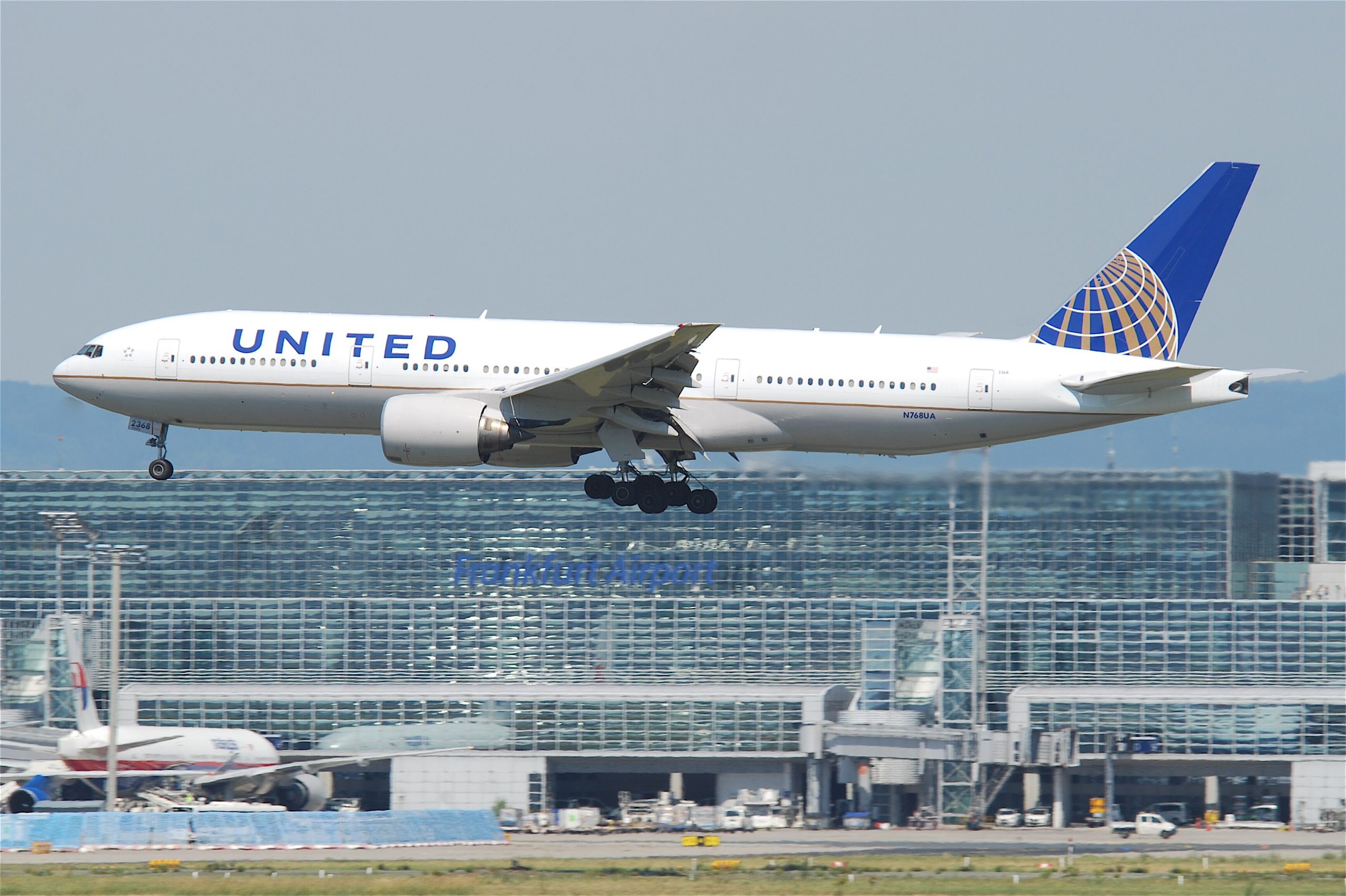
The National Transportation Safety Board has released its final report into the February 10, 2024 turbulence event involving United Airlines flight 1890, a Boeing 777‑222ER operating from Los Angeles to Newark.
What began as an ordinary descent into the Northeast quickly escalated into a severe cabin‑injury event, leaving three flight attendants seriously hurt despite the aircraft itself sustaining no damage.
UAL1890 was descending through flight level 215 near Kelsey, New York, when it encountered what the NTSB describes as “a localized region of moderate‑to‑severe turbulence” while in IMC.
Quick Access Recorder data captured violent vertical accelerations ranging from -0.55g to +1.82g within seconds—enough to throw multiple crewmembers into the ceiling.
The turbulence struck at a critical moment: the captain had just re‑illuminated the seatbelt sign and instructed the cabin crew to prepare the cabin for landing. Several flight attendants were still completing final safety tasks when the aircraft abruptly jolted.
One was “lifted into the ceiling and forcefully thrown to the cabin floor,” while another “lost consciousness, struck a beverage cart, and landed heavily on the left leg,” sustaining multiple fractures.
Weather Tools Showed Little Risk at Newark—But the Atmosphere Told a Different Story
The flight crew had conducted a thorough preflight turbulence review using WSI and SkyPath, both of which indicated only light to moderate turbulence along the route.
Dispatch similarly reported only a single moderate turbulence PIREP from a regional jet earlier in the day.
Throughout cruise and initial descent, neither onboard radar nor EFB‑based tools showed any significant threat.
But the meteorological environment was far more dynamic than the tools suggested.
A cold front, a strong 150‑knot jet stream, and embedded convective cells created a narrow but potent zone of turbulence over central New York.
GOES‑16 satellite imagery showed transverse banding—an indicator of upper‑level turbulence—directly above the accident site.
HRRR model soundings revealed a sharp wind‑speed increase from 45 knots at 17,000 ft to 110 knots at 21,000 ft, a classic setup for clear‑air turbulence.
The aircraft’s peak EDR value of 0.431 placed the encounter firmly in the “moderate to severe” category for a heavy aircraft.
The Missed Warning For The Newark-Bound Flight: A PIREP That Never Reached the Cockpit
The most consequential finding in the NTSB’s report concerns air traffic control.
Just three minutes before UAL1890 entered the turbulent air, another aircraft—ACA548—reported moderate turbulence to Boston Center’s R24C controller while flying the same route.
The controller “did not acknowledge or disseminate this PIREP to other aircraft, including UAL1890,” later stating they did not hear the report.
FAA procedures require controllers to solicit, acknowledge, and disseminate PIREPs when weather conditions warrant.
The NTSB’s review of ATC audio revealed systemic shortcomings: of 46 aircraft traversing the sector during the relevant period, 36 required a PIREP to be issued, yet only 26 received one.
Only 8 of 17 received PIREPs were entered and distributed correctly.
An ACARS message containing the turbulence PIREP was sent to UAL1890 at 1541 EST, but investigators could not determine whether the crew saw it in time.
The NTSB concluded that ATC’s failure to disseminate the earlier PIREP “reduced the flight crew’s situational awareness and opportunity to prepare the cabin.”
Inside the Cabin: Seconds of Chaos Near Newark…
Cabin crew statements paint a vivid picture of the suddenness of the encounter. Several attendants reported feeling “light or no turbulence” immediately before the aircraft dropped.
Within seconds, multiple crewmembers were airborne.
One flight attendant described being thrown upward, then “sustaining a shattered femur and spinal compression fractures.”
Another suffered facial trauma and an intracranial bleed. Passengers were also affected: at least one was lifted into the ceiling, and a lap infant reportedly struck the overhead panel.
All injured individuals were either standing or not wearing a seatbelt at the time—an unsurprising but stark reminder of the risks turbulence poses even in the absence of storms or radar returns.
Flight Crew Response and Aircraft Performance on the United Airlines 777
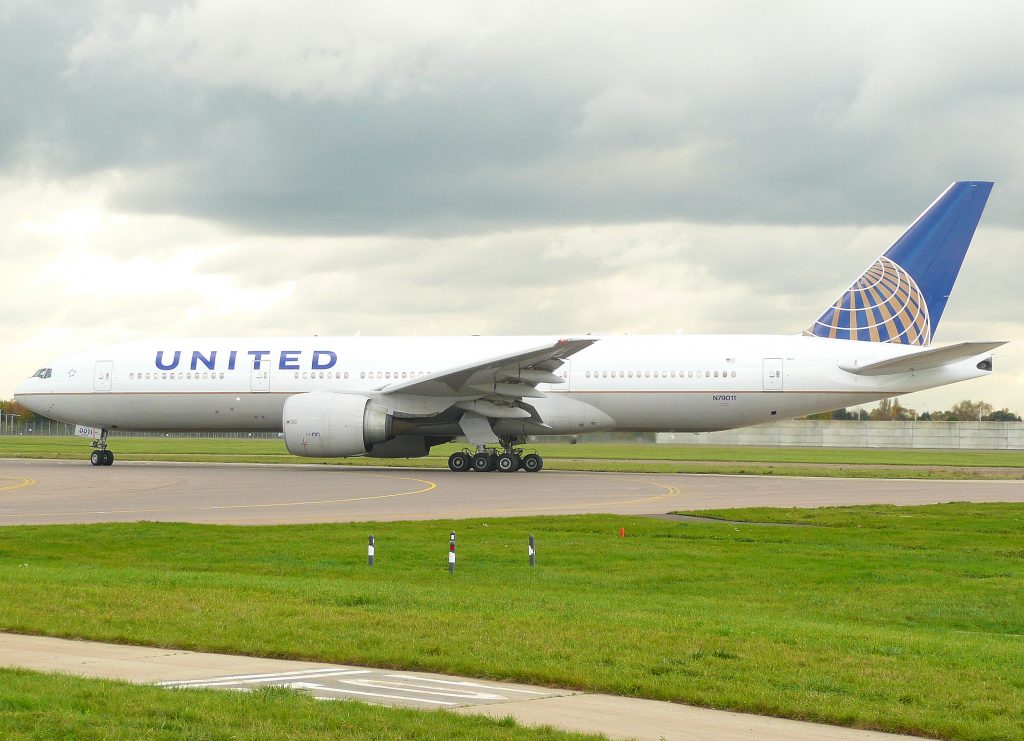
Despite the violent accelerations, the Boeing 777 remained within structural limits. The autopilot and autothrottle stayed engaged throughout the event.
The first officer initiated a right turn to exit the turbulent layer after spotting a break in the clouds.
The captain immediately contacted the cabin crew, declared a medical emergency, and requested paramedics to meet the aircraft upon arrival.
The remainder of the approach and landing into Newark were uneventful.
Probable Cause: A Localized Atmospheric Hazard and a Critical ATC Lapse
The NTSB’s probable cause statement is direct:
“The airplane’s encounter with an unanticipated localized region of moderate‑to‑severe turbulence… associated with strong upper‑level wind shear and convective cells.”
The Board cites one contributing factor:
“The failure of air traffic control to disseminate a recently reported moderate turbulence pilot weather report.”
In other words, the atmosphere created the hazard—but ATC’s missed PIREP amplified its consequences.
A Wider Systemic Issue Following Newark Accident…
The report’s findings extend beyond a single controller. The SSR team’s review of ATC performance revealed inconsistent compliance with PIREP procedures across the sector.
This echoes long‑standing industry concerns: PIREP handling remains one of the most persistent weak points in the U.S. aviation weather system.
The presence of a valid convective SIGMET, AIRMET Tango for moderate turbulence, and multiple earlier PIREPs underscores the complexity of the weather picture.
Yet none of these products pinpointed the narrow altitude band where UAL1890 was struck.
The event highlights the limitations of turbulence forecasting tools, the challenges of interpreting convective environments, and the critical importance of real‑time pilot reports.
A Reminder of Turbulence’s Growing Relevance
While turbulence encounters rarely damage aircraft, they remain a leading cause of in‑flight injuries.
As climate‑driven jet‑stream variability increases, researchers expect clear‑air turbulence events to become more frequent and more intense.
UAL1890’s experience reinforces a familiar but urgent message:
Even with modern forecasting tools, turbulence can still surprise crews—and when ATC communication breaks down, the consequences can be severe.
Continue to follow The Aviation Hub for more analysis and insight!