
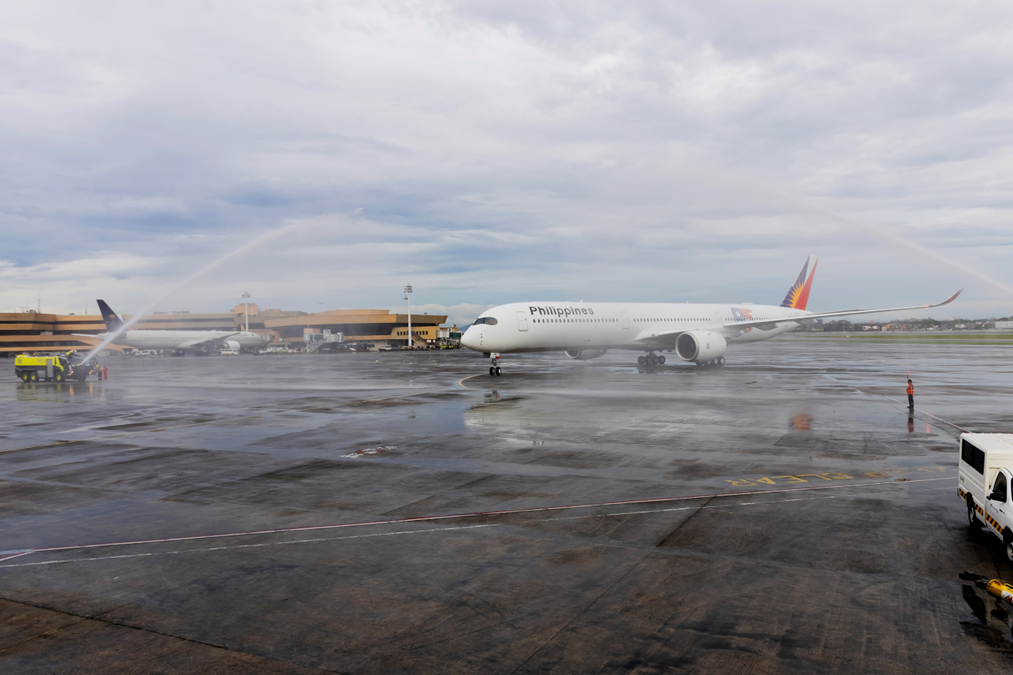
On 26 February 2026, Manila-based Philippine Airlines (PAL) reaches a milestone few carriers ever achieve: 85 years of continuous identity, making it Asia’s oldest airline still flying under its original name.
In an industry where geopolitical shocks, economic cycles, and technological revolutions routinely reshape the landscape, PAL’s endurance is remarkable.
Furthermore, it is a carrier that has survived war, dictatorship, deregulation, financial collapse, and a global pandemic — yet continues to fly with a sense of national purpose.
To mark its 85th year, PAL has unveiled a new Airbus A350-1000, complete with a commemorative 85th-anniversary emblem on the fuselage — a symbolic bridge between the airline’s storied past and its ambitions for the next decade.
This is the story of how PAL got here, what shaped its identity, and why its 85th year matters not just to the Philippines, but to the wider aviation world.
Foundations of a Flag Carrier (1941)
The story begins on 26 February 1941, when industrialist Andrés Soriano Sr. and a group of Filipino and American investors founded Philippine Airlines.
The timing was audacious: the world was at war, and the Philippines was months away from invasion.
Yet PAL’s mission was clear from day one — to connect a geographically fragmented archipelago and to represent the Philippines on the global stage.
The airline’s first commercial flight took off on 15 March 1941, linking Manila and Baguio with a Beech Model 18.
Furthermore, it was a modest start, but symbolically powerful: aviation would become a tool of national cohesion.
Also, World War II halted operations almost immediately. PAL’s aircraft were requisitioned for military use, and the airline effectively disappeared from the skies.
Overall, the idea of PAL — a national carrier for a soon-to-be independent nation — survived.
Rebirth and Global Ambition in Manila (1946–1960s)
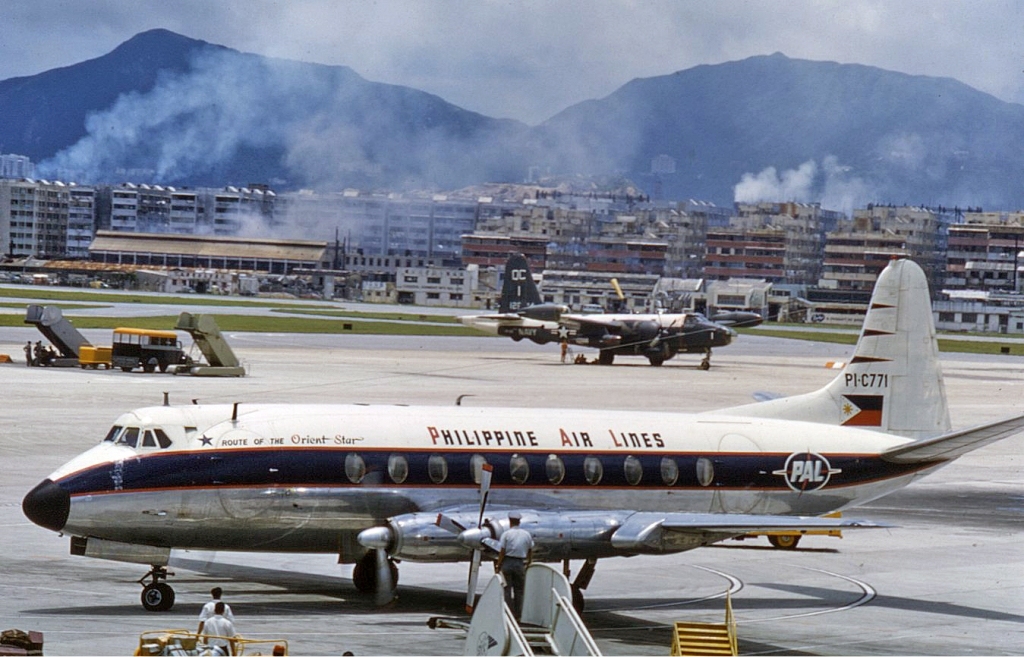
PAL re-emerged after the war with a bold statement: in 1946, it launched a Manila–Oakland service, becoming the first Asian airline to cross the Pacific.
Furthermore, this was more than a route launch — it was a geopolitical declaration. The Philippines, newly independent, was stepping into the post-war world with confidence.
Throughout the 1950s and 1960s, PAL expanded rapidly:
- New domestic routes connected remote islands to Manila
- International services grew across Asia
- The fleet transitioned from propeller aircraft to jets, including the BAC One-Eleven and Boeing 707
Overall, PAL was no longer just a national carrier. It was becoming a regional force.
The Widebody Era and the Golden Years (1970s–1990s)
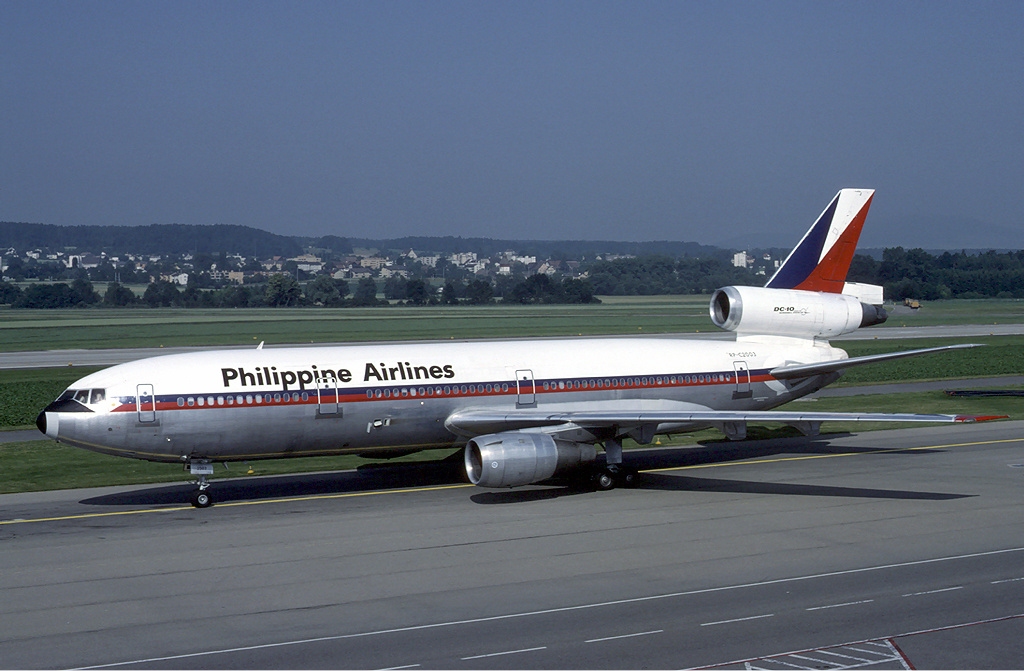
The 1970s ushered in PAL’s widebody era.
The airline introduced the McDonnell Douglas DC-10, followed by the Boeing 747, which became the backbone of its long-haul network.
Furthermore, by the 1980s and early 1990s, PAL had:
- A growing transpacific presence
- A modernizing fleet
- A reputation for warm Filipino hospitality
- A network that stretched from North America to the Middle East
Also, for many Filipinos, PAL was more than an airline — it was a cultural touchstone, the carrier that brought overseas workers home and carried the nation’s identity abroad.
Crisis and Reinvention (1997–2010s)
The Asian Financial Crisis of 1997 hit PAL with devastating force.
Furthermore, demand collapsed, costs soared, and the airline entered receivership.
In 1998, PAL shut down for two weeks — a symbolic low point for a carrier that had once been a regional powerhouse.
Yet PAL survived. Through restructuring, workforce sacrifices, and government support, the airline slowly rebuilt itself.
Also, the 2000s brought:
- A renewed domestic network
- Airbus A320 family aircraft for regional operations
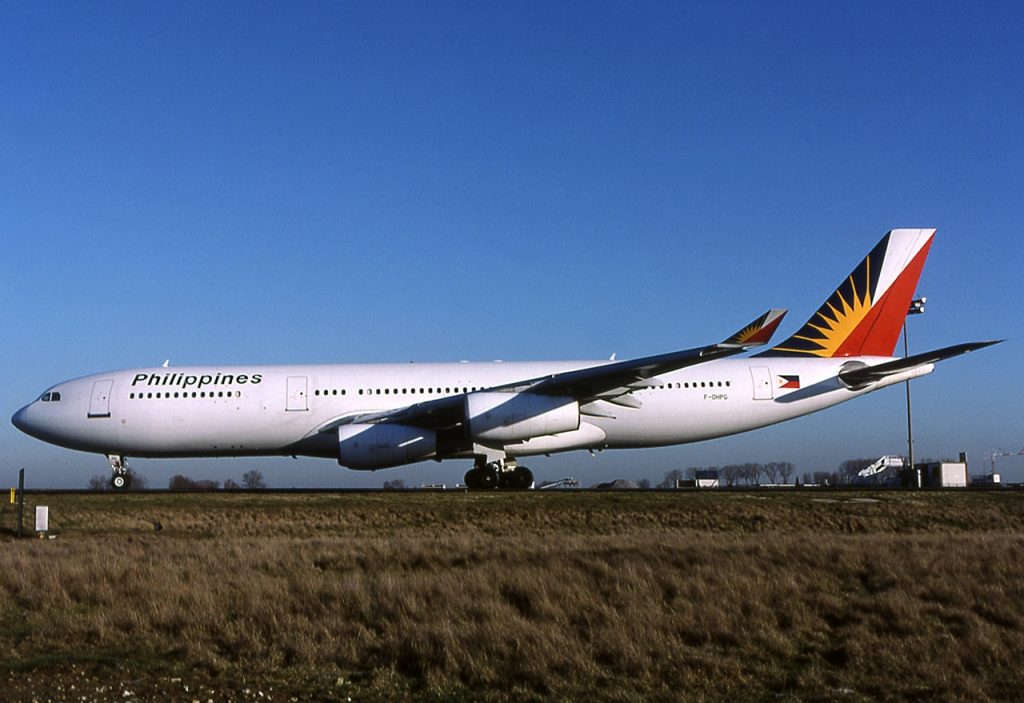
- A330s and 777-300ERs for long-haul routes
Also, the early 2010s saw a burst of ambition under San Miguel Corporation, which invested heavily in fleet modernization and new routes.
Moreover, ownership later returned to the Lucio Tan Group, but the modernization momentum continued.
Also, by the late 2010s, PAL had regained international credibility, earning a 4-Star Skytrax rating and reasserting itself as a full-service carrier with global aspirations.
Pandemic Shock and the Hard Reset (2020–2022)
No airline escaped the impact of COVID-19, but for PAL — already operating in a competitive, low-yield market — the pandemic was existential.
Furthermore, the airline filed for Chapter 11 bankruptcy in 2021, restructuring its fleet, renegotiating leases, and streamlining operations.
Also, it emerged later that year leaner, more efficient, and focused on long-haul markets where it held competitive advantages.
By 2022, PAL had returned to profitability — a turnaround few analysts predicted.
Turning 85: A Milestone in Motion in Manila
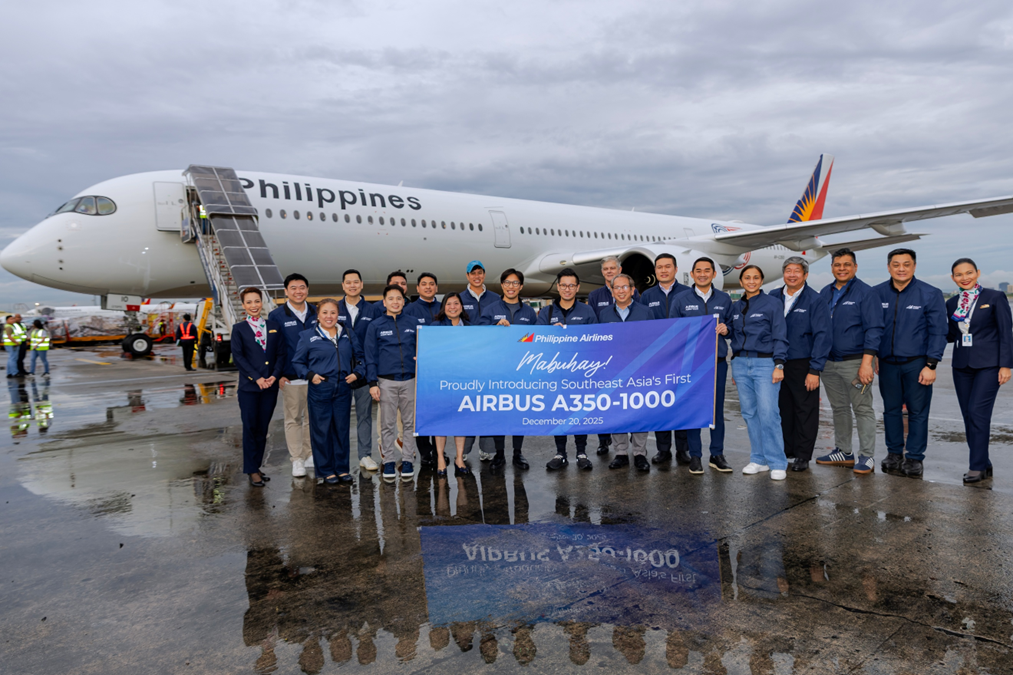
As PAL enters its 85th year, the airline is not simply looking back — it is positioning itself for the next era of long-haul competition.
Furthermore, the centrepiece of its anniversary celebration is the arrival of its Airbus A350-1000, unveiled with a special 85th-anniversary sticker on the fuselage.
The aircraft, delivered in late 2025, marks a strategic leap for PAL:
- It becomes the first Southeast Asian airline to operate the A350-1000
- The aircraft joins PAL’s existing A350-900s, creating a unified long-haul fleet
- It enables nonstop flights to the U.S. East Coast and potentially Europe
Also, configured with 382 seats across three cabins, the A350-1000 is designed for efficiency, comfort, and range — all critical for PAL’s transpacific strategy.
Why the A350-1000 Matters
For PAL, the A350-1000 is not just a fleet upgrade — it is a strategic pivot.
1. Long-Haul Competitiveness
The aircraft’s range and fuel efficiency allow PAL to compete more effectively on Manila–North America routes, its most profitable market.
2. Cabin Experience
The A350 platform offers:
- Lower cabin altitude
- Improved humidity
- Quieter interiors
- Wider seats in economy
3. Sustainability
Moreover, the A350-1000 burns significantly less fuel than the 777-300ERs it will gradually replace, supporting PAL’s environmental commitments.
4. Brand Renewal
Overall, the aircraft signals a modern, forward-looking PAL — a carrier ready to compete with the best in Asia.
A Legacy That Continues to Fly in Manila…
Overall, Philippine Airlines’ 85th anniversary is not just a celebration of age — it is a testament to endurance.
From its wartime origins to its modern A350 fleet, PAL has navigated every kind of turbulence imaginable.
Also, it remains the flag carrier of the Philippines, a symbol of national pride, and a resilient player in global aviation.
Moreover, the arrival of the A350-1000 with its 85th-anniversary emblem captures this moment perfectly: a nod to history, a commitment to the future, and a reminder that PAL’s story is still being written.
Overall, eighty-five years on, Philippine Airlines continues to fly — and continues to matter.
Continue to follow The Aviation Hub for more analysis and insight!