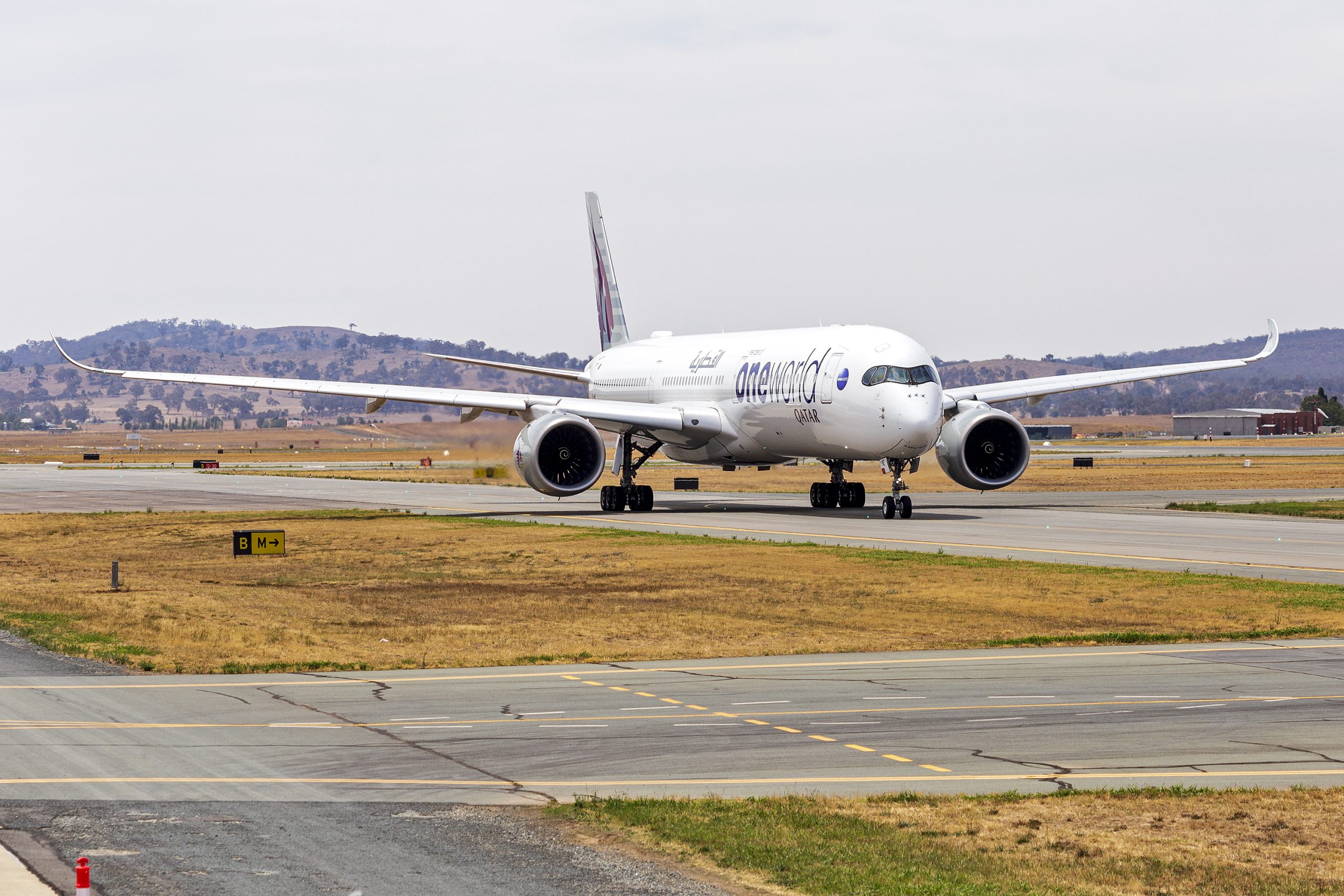
Information has emerged regarding a Qatar Airways flight from Doha that got stuck on the runway at London Heathrow for 30 minutes following a problem onboard.
Flight data and reporting shows how this incident transpired.
Below is what we know on this so far.
Qatar Airways Flight QR109 Doha-London…
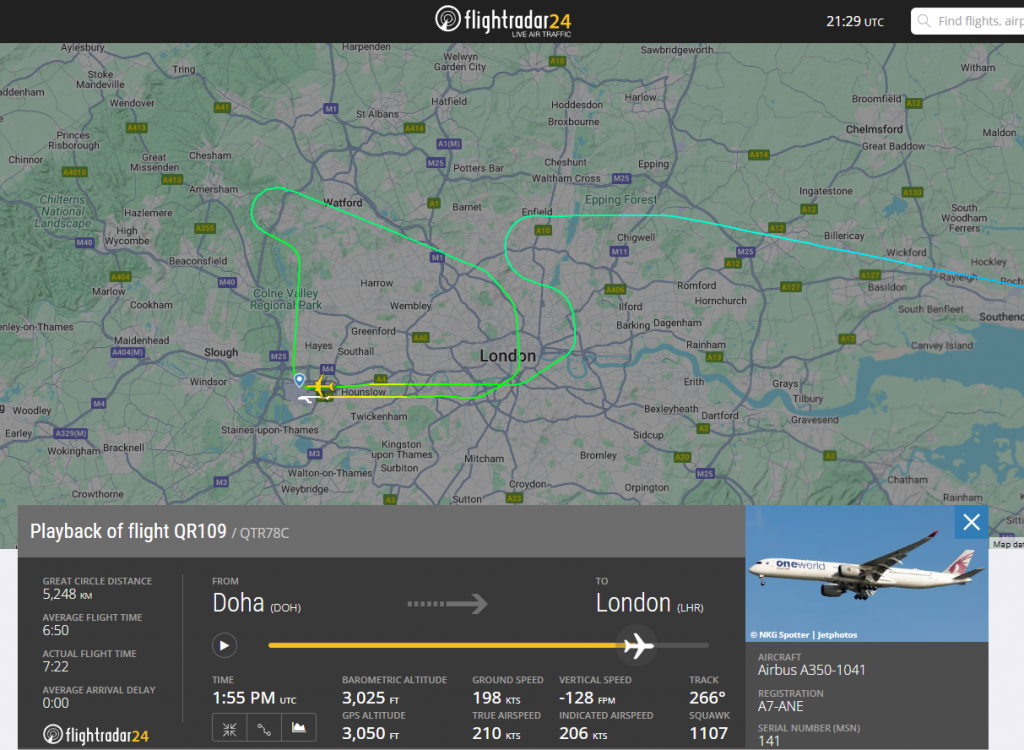
Qatar Airways flight QR109, which got stuck on the runway for 30 minutes, is a routine scheduled flight between Doha and London Heathrow.
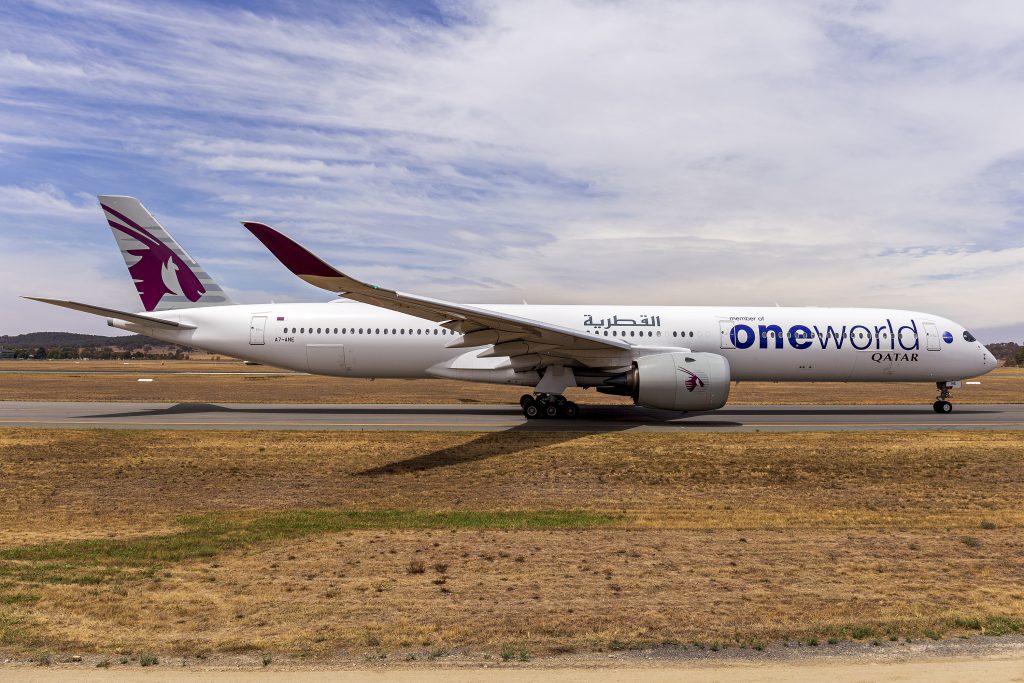
Furthermore, the aircraft involved in the incident was A7-ANE.
As per data from Planespotters.net, A7-ANE is a 7.3 year old Airbus A350-1000 that was delivered to the airline back in November 2018.
Of the A350-1000 variant, Qatar Airways has 28 of them in their fleet.
Moreover, of the 28, all of them are in active service, with an average fleet age of 5.2 years.
As well as the A350-1000, the airline has the following other aircraft in their mainline fleet:
- 27 Airbus A320 Family aircraft.
- 6 Airbus A321 Family aircraft.
- 15 Airbus A330s.
- 34 Airbus A350-900s.
- 8 Airbus A380s.
- 64 Boeing 777s.
- 58 Boeing 787s.
In total, they have 240 aircraft in their fleet, of which 235 in active service and five are parked.
Average fleet age for the airline is at 10.2 years.
Qatar Airways flight QR109, which got stuck on the runway for 30 minutes, departed Doha at 0948 local time on January 4, bound for London Heathrow.
Everything was normal throughout the flight until the arrival into the UK.
The aircraft was on approach to Runway 27R, when at around 1,500 feet, they aborted and went around, as per The Aviation Herald.
From there, another approach attempt was made, this time on 27L, which it did so without further incident at 1359 local time.
What Was The Reason for Being Stuck on the Runway?
According to reports, Qatar Airways flight QR109 from Doha got stuck on the runway at London Heathrow due to a nose gear steering issue.
Furthermore, it is understood the issue was that severe that the aircraft had to get towed off the runway.
It is understood the aircraft stayed on the ground for four hours, before having the issue fixed and did the return back to the Qatari capital.
A nose‑gear steering issue on an Airbus A350‑1000 can stem from several technical or operational factors.
The most common causes involve faults within the Nose Wheel Steering (NWS) system, which relies on hydraulic actuators controlled by dual Flight Control and Steering Control Units.
A hydraulic pressure imbalance, contamination, or a leaking actuator can limit or disable steering authority.
Electrical or sensor failures—such as faulty steering angle sensors, proximity sensors, or wiring harness issues—can also trigger steering disconnects or ECAM warnings.
Software anomalies within the steering control computers, while rare, may lead to degraded or alternate steering modes.
On the mechanical side, worn torque links, binding in the nose‑gear assembly, or improper rigging after maintenance can restrict movement.
In some cases, overheating during tight turns or high‑load taxi operations can cause temporary steering degradation, prompting crews to stop and allow components to cool.
As soon as we have more information, we will update you accordingly.
Continue to follow The Aviation Hub for more analysis and insight!