
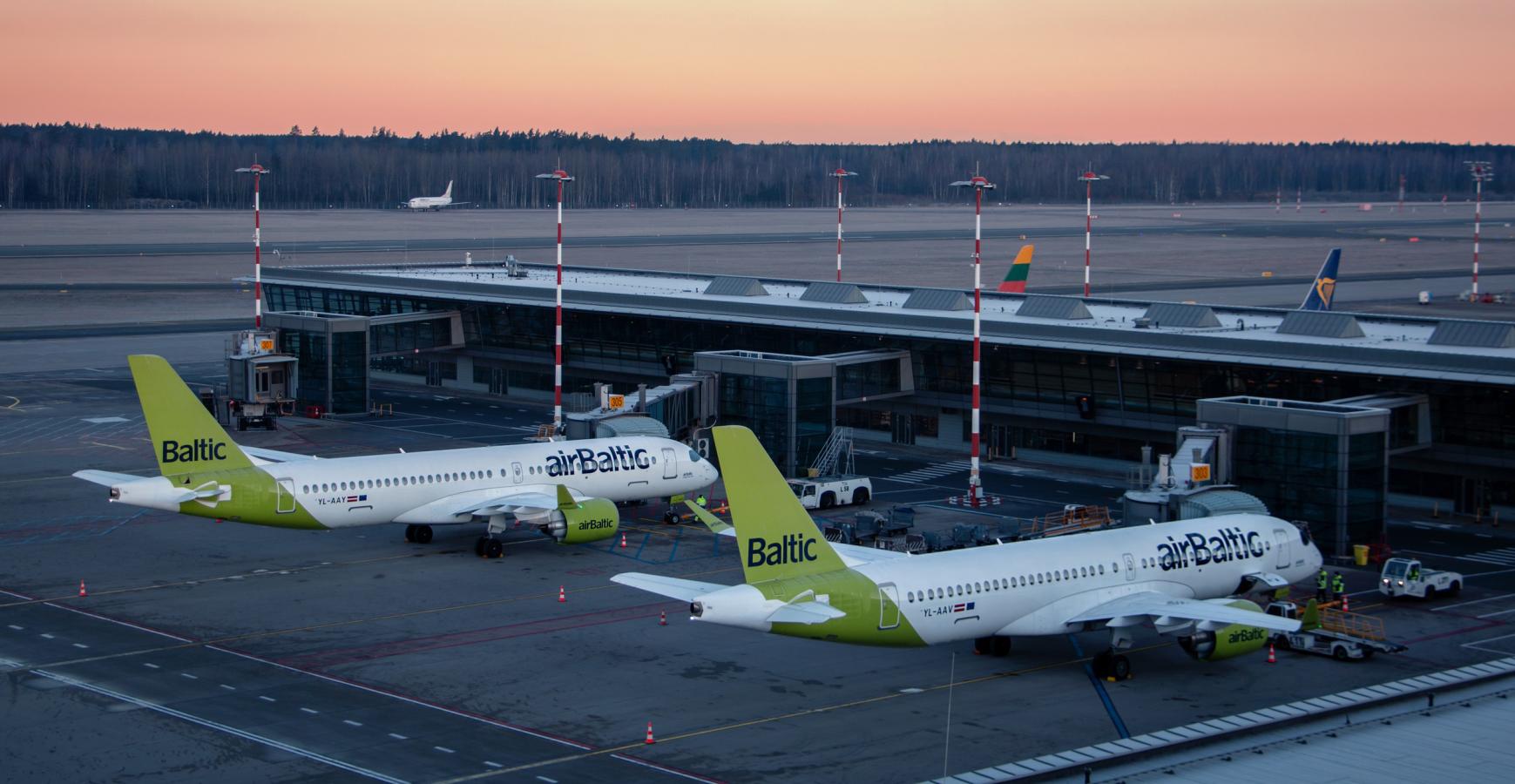
Riga Airport closed 2025 with a stable operational performance, maintaining passenger volumes and delivering solid cargo growth despite a year shaped by geopolitical uncertainty and economic pressures.
Preliminary data confirms the airport handled just over 7.1 million passengers, broadly matching 2024 levels, while cargo throughput increased by 7%, underscoring the airport’s resilience in a challenging environment.
Passenger Traffic Holds Steady at Riga Airport
The airport’s passenger structure remained consistent throughout the year.
Of the total 7.1 million travellers, 5.7 million began their journeys at Riga Airport, while 1.4 million passengers – around 20% – used the airport as a transfer point.
This balance highlights Riga’s continued importance as a regional hub, with transfer traffic helping to stabilise overall performance amid fluctuating demand across Europe.
Route Performance and Market Dynamics
London once again emerged as the most popular destination from Riga, followed by the Nordic capitals Helsinki, Oslo, and Stockholm.
The top ten destinations also included Vilnius, Tallinn, Frankfurt, Amsterdam, Copenhagen, and Istanbul, reflecting Riga’s strategic position between Northern Europe, the Baltics, and major European hubs.
In terms of airline market share, airBaltic strengthened its position as the airport’s largest carrier, accounting for 57.2% of all passengers.
Ryanair remained the second‑largest operator with a 22.8% share.
According to Airport Board Chairperson Laila Odiņa, Riga Airport continued to prioritise safety, sustainability, and customer experience, becoming the first climate‑neutral airport in the Baltics by offsetting all direct CO₂e emissions and improving its international customer experience accreditation.
Infrastructure Investment and Cargo Expansion
Riga Airport invested EUR 20 million in 2025, focusing on airfield upgrades, sustainability initiatives, and equipment renewal.
One of the most significant projects launched was the reconstruction of Apron 4, an 80,000 m² development that will add new aircraft stands, including positions for wide‑body aircraft.
The project is designed to expand cargo and military aircraft handling capabilities, strengthen military mobility in the current geopolitical context, and support long‑term growth in cargo operations.
Cargo volumes reached 20,100 tonnes, driven by the arrival of new operators Fly Khiva and Lufthansa Cargo.
The cargo split remained balanced, with 51% carried in passenger aircraft bellyhold and 49% on dedicated freighters.
Despite ongoing sanctions and airspace restrictions limiting access to Asian markets, Riga Airport’s cargo segment demonstrated strong momentum.
Competitive Pressures and Industry Shifts
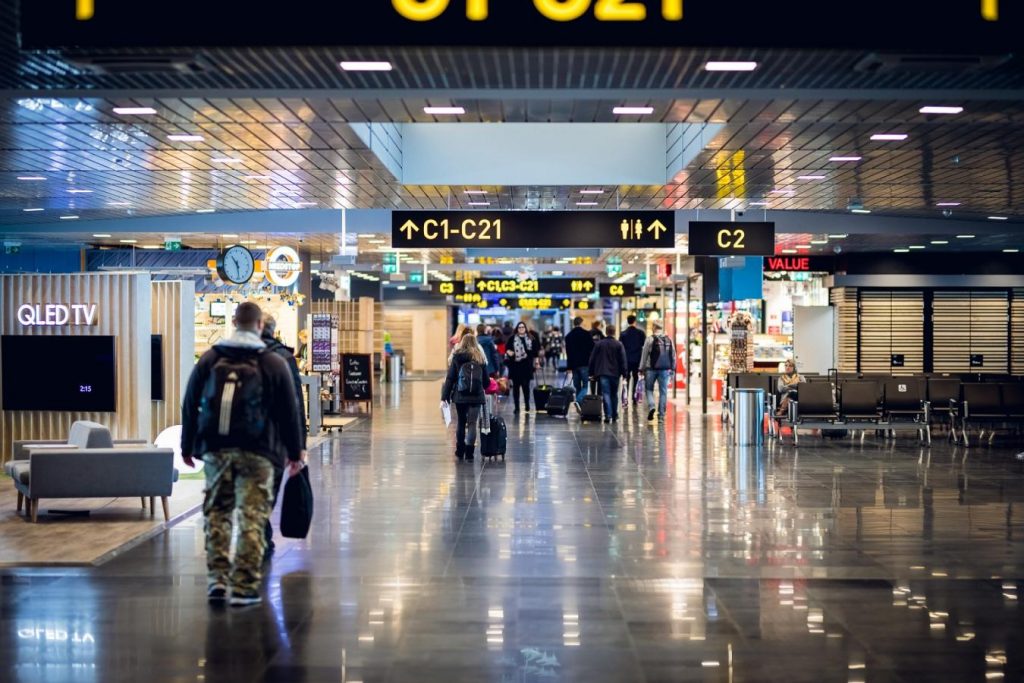
Odiņa noted that 2025 was marked by intensified competition for airline partnerships.
Delayed aircraft deliveries, engine maintenance challenges, and airlines’ focus on financial performance increased pressure on airport charges and incentive schemes.
Many carriers adjusted seasonal schedules and shifted capacity toward more profitable markets.
She emphasised the importance of the cooperation launched last year between the tourism sector, the Ministries of Transport and Economics, and other industry stakeholders, calling it a crucial step toward strengthening Latvia’s connectivity in 2026.
Outlook for 2026 at Riga Airport: Moderate Growth with Conditional Upside
Looking ahead, Riga Airport forecasts moderate, GDP‑aligned growth in 2026.
Odiņa stressed that significant geopolitical developments—such as an end to the war in Ukraine—could unlock faster expansion by reopening airspace and enabling new route opportunities, including access to the Ukrainian market.
However, the airport will continue to face challenges familiar across the industry: balancing infrastructure capacity with rising demand, maintaining high passenger experience standards, meeting sustainability requirements, managing state dividend expectations, and responding to airline pressure to keep per‑passenger charges stable.
Network Developments for the Year Ahead
Several notable route developments will shape Riga’s 2026 schedule. Scandinavian Airlines (SAS) will return with a robust Copenhagen service, reinforcing connectivity with Northern Europe.
flydubai will continue operating its recently launched Dubai route. Meanwhile, airBaltic plans to expand its network with new direct flights to Warsaw and Gothenburg, alongside previously announced routes to Antalya, Kaunas, and Oulu.
The airline also intends to increase frequencies on several popular existing routes.
Strategic Priorities: Development, Diversification, Sustainability
Infrastructure development will remain a central focus in 2026.
Work will continue on the Apron 4 reconstruction, terminal expansion, and the RIX Airport City project, which aims to diversify revenue streams and strengthen non‑aviation income.
Sustainability initiatives will also advance, including the replacement of airfield equipment with more environmentally friendly alternatives, reinforcing Riga Airport’s commitment to long‑term environmental performance.
Overall
Riga Airport’s performance in 2025 reflects a hub that has learned to operate with discipline, resilience, and strategic clarity in an unpredictable environment.
Passenger numbers held firm, cargo activity accelerated, and the airport advanced several long‑term infrastructure and sustainability priorities that will shape its competitiveness for years to come.
The return of key carriers, expansion of airBaltic’s network, and continued investment in airfield and terminal capacity position Riga to capture future growth once wider geopolitical conditions stabilise.
As the airport moves into 2026, its focus on collaboration, connectivity, and sustainable development will be central to strengthening Latvia’s role in the regional aviation landscape.
Continue to follow The Aviation Hub for more analysis and insight!