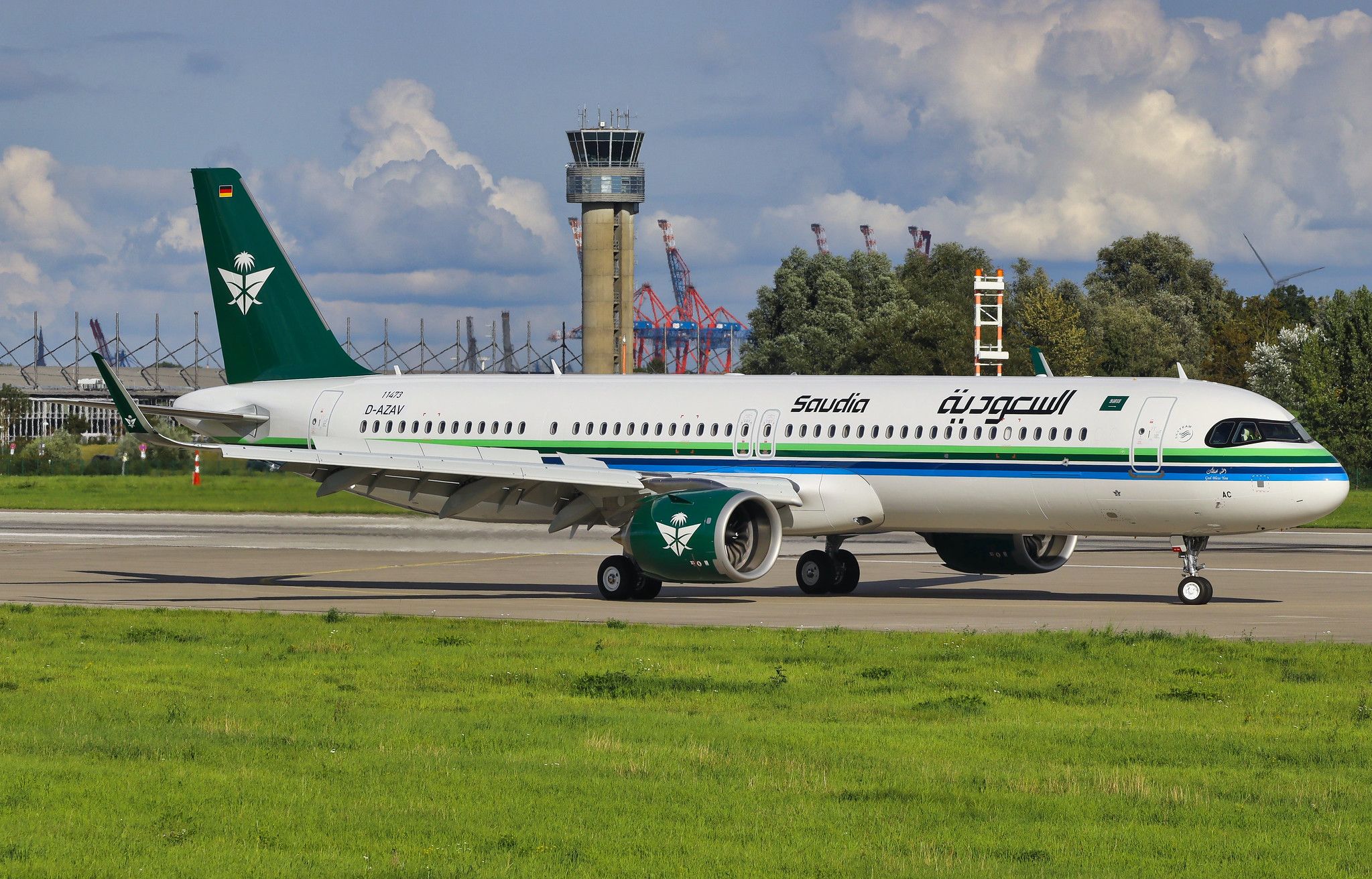
When SAUDIA begins operating its new Airbus A321XLR fleet in 2026 from Riyadh & Jeddah, the airline will enter a new phase of long‑haul narrowbody flying—one defined by premium density, strategic network deployment, and a clear shift toward efficiency without compromising luxury.
With 15 aircraft on order and the first deliveries expected soon, the flag carrier of Saudi Arabia is preparing to use the XLR to reshape parts of its medium‑ and long‑haul network.
Early details from both cabin announcements and schedule filings paint a clear picture of how SAUDIA intends to use the aircraft and why its configuration stands out in the global market.
A Premium-Dense Narrowbody Unlike Any Other in Riyadh & Jeddah
SAUDIA’s A321XLRs will feature just 144 seats, an unusually low-density layout for the type.
According to reporting from Simple Flying, this makes SAUDIA’s configuration one of the most premium in the world, even compared to other early XLR operators.
American Airlines, for example, will have 155 seats—already considered low for a narrowbody—but SAUDIA goes even further in prioritizing space and comfort.
The airline’s decision is driven by two factors:
- Route profile: Many of the planned XLR routes are long, thin markets where premium demand is strong but widebody capacity is excessive.
- Environmental and operational constraints: Extreme summer temperatures in Saudi Arabia can limit aircraft performance and payload, making a lower-density configuration more practical for long-range missions.
The cabin will include a 1‑1 business class layout with fully flat beds, offering direct aisle access for every passenger.
This is a significant upgrade from the airline’s existing narrowbody products and positions the XLR as a true long‑haul aircraft rather than a regional jet with extended range.
A Strategic Network Shift Begins in 2026 in Riyadh & Jeddah
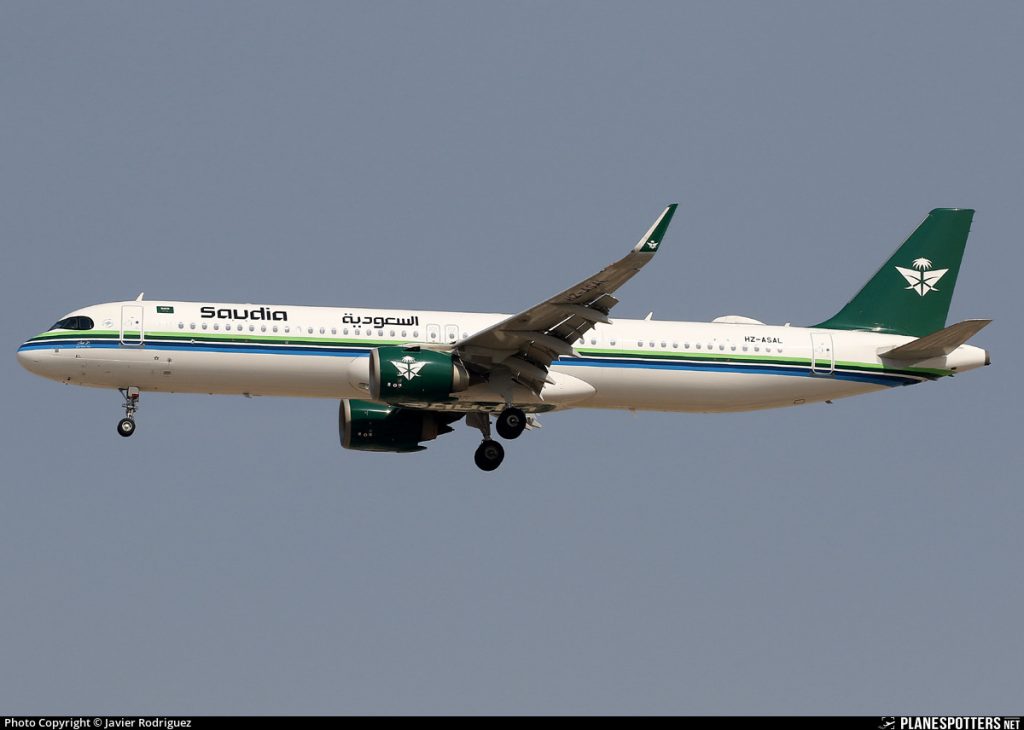
SAUDIA’s initial A321XLR network has now been outlined in detail through schedule filings published by AeroRoutes.
The aircraft will begin entering service in the second quarter of 2026, with a gradual ramp‑up across both Jeddah and Riyadh hubs.
The latest update, filed on 29 December 2025, shows a clear pattern: the XLR will replace widebodies on several medium‑haul routes, allowing SAUDIA to redeploy its Boeing 787s and Airbus A330s to higher‑demand markets.
Key Routes Identified So Far
According to AeroRoutes, the following routes will see A321XLR service as the fleet enters operation:
| Route | Effective Date | Frequency | Replacing |
| Jeddah-Barcelona | 27 Oct 2026 | 3 weekly | 787-9/787-10 |
| Jeddah-Geneva | 1 Sep 2026 | 4 weekly, increasing to 7 weekly | A330 Regional |
| Jeddah-Madrid | 1 Aug 2026 | 4 weekly, increasing to 6 weekly | 787-9/787-10 |
| Jeddah-Male | 1 Jul 2026 | Increase from 2 to 3 weekly | 787-9/787-10 (A321neo interim) |
| Jeddah-Mauritius | 15 Jun 2026 | 3 weekly | 787-9 |
| Jeddah-Vienna | 23 May 2026 | 3 weekly, increasing to 4 weekly | A320 |
| Riyadh-Athens | 05-26 August 2026 | 1 weekly on the A321XLR, 2 weekly on the A320 | A320 |
| Riyadh-Geneva | 2 Sept 2026 | 3 weekly, increasing to 5 weekly | A330 Regional |
| Riyadh-Moscow | 3 Jul 2026 | 3 weekly, increasing to 5 weekly | A320 |
These routes reflect a mix of:
- European business markets (Geneva, Madrid, Barcelona, Vienna)
- Leisure destinations (Male, Mauritius)
- Regional capitals (Athens, Moscow)
The XLR’s range—up to 4,700 nm—allows SAUDIA to serve these destinations nonstop with a narrowbody while maintaining a premium onboard experience.
Why These Routes Make Sense Out of Riyadh & Jeddah
1. Right-sizing capacity without sacrificing quality
Many of the selected markets are high-yield but not high-volume.
Widebodies like the 787‑9 or A330 may offer too much capacity, especially outside peak seasons. The A321XLR allows SAUDIA to:
- Maintain daily or near-daily frequencies
- Offer a competitive premium product
- Reduce operating costs
- Improve load factors
This is particularly important for destinations such as Geneva and Vienna, where premium demand is strong but total passenger numbers fluctuate seasonally.
2. Strengthening Jeddah and Riyadh as connecting hubs
Saudi Arabia’s aviation strategy aims to transform the Kingdom into a major global transit point.
The XLR supports this by enabling:
- More point-to-point connectivity
- Increased frequency on thinner routes
- Better alignment with connecting banks at Jeddah and Riyadh
By replacing widebodies on medium-haul routes, SAUDIA can redeploy those aircraft to long-haul markets where capacity growth is a priority.
3. Enhancing the passenger experience
The ultra-premium configuration is not just a marketing tool—it’s a strategic differentiator.
With lie-flat seats, direct aisle access, and a spacious cabin, SAUDIA’s A321XLR will offer a widebody-like experience on routes traditionally served by less comfortable narrowbodies.
This positions the airline strongly against European and Gulf competitors, many of whom still operate older A320-family aircraft with recliner seats on similar routes.
Operational Considerations: Heat, Range, and Payload
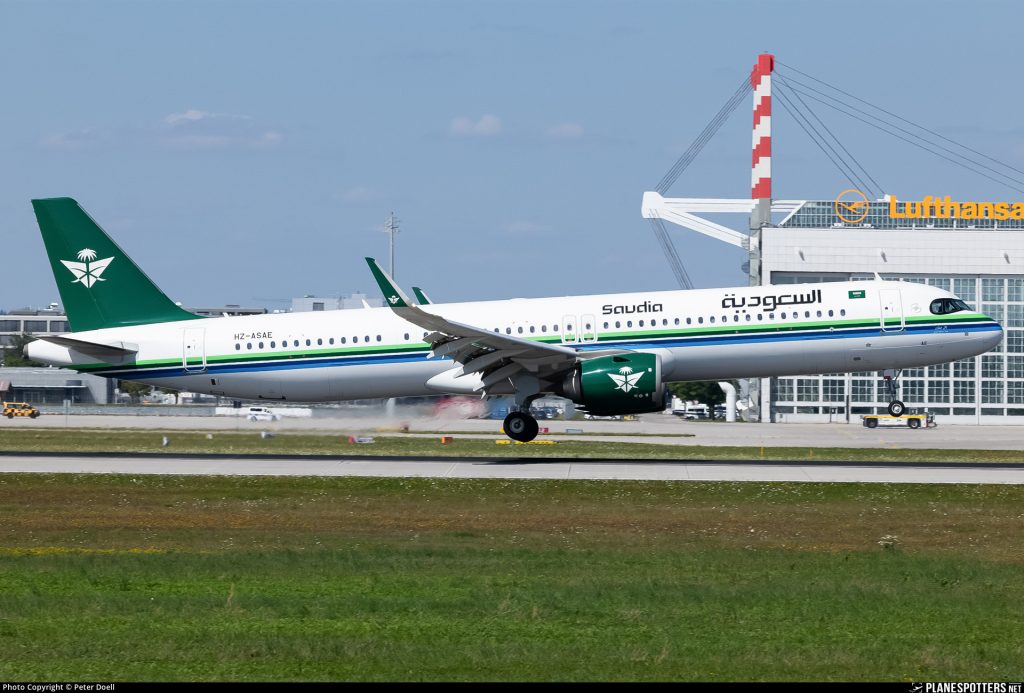
One of the more interesting factors influencing SAUDIA’s XLR deployment is the extreme summer heat in Saudi Arabia.
High temperatures reduce aircraft performance, particularly on long-range missions requiring heavy fuel loads.
As Simple Flying notes, this is one reason SAUDIA opted for a lower-density layout—fewer passengers mean lower weight, which improves takeoff performance and extends operational flexibility during hot-weather months.
This also explains why the airline is focusing on medium-haul rather than ultra-long-haul routes.
While the XLR is capable of flights beyond 8 hours, SAUDIA’s initial network avoids pushing the aircraft to its limits.
A Glimpse Into the Future
As more A321XLRs join the fleet, SAUDIA is expected to expand the aircraft’s network further across:
- Europe (potentially Milan, Brussels, Rome)
- Africa (Dakar, Nairobi)
- The Indian subcontinent (Delhi, Mumbai, Colombo)
These destinations have been mentioned in earlier statements from the airline and align with the XLR’s capabilities and SAUDIA’s broader network strategy.
A New Era of Premium Narrowbody Flying
SAUDIA’s Airbus A321XLR operations will mark a significant evolution in the airline’s approach to long‑thin routes.
With a uniquely premium 144‑seat layout, fully flat business class, and a carefully curated network, the airline is positioning the XLR as a flagship narrowbody product rather than a simple fleet filler.
The aircraft will allow SAUDIA to right-size capacity, improve efficiency, and enhance the passenger experience—all while supporting the Kingdom’s broader aviation ambitions.
As deliveries begin in 2026, the A321XLR will become a central pillar of SAUDIA’s medium‑haul strategy and a standout example of how airlines can use next‑generation narrowbodies to transform their networks.
Continue to follow The Aviation Hub for more analysis and insight!