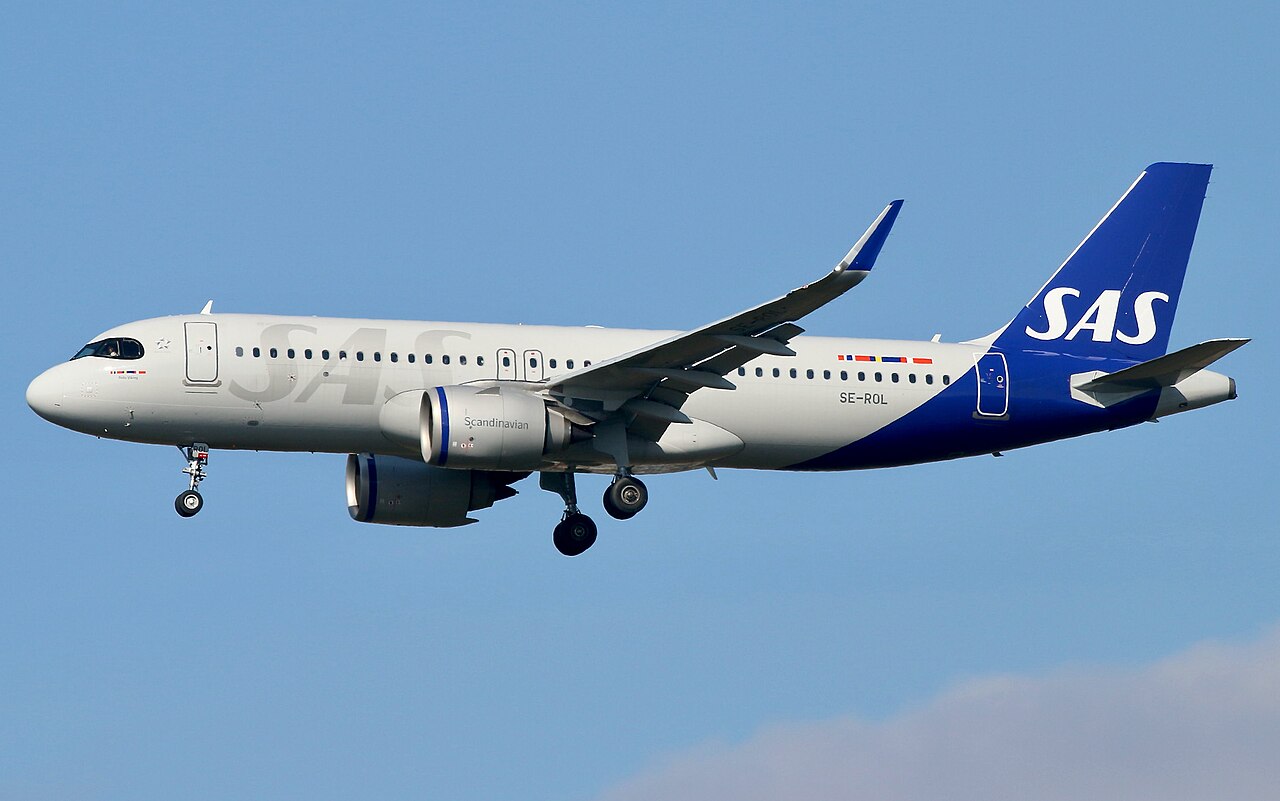

SAS Scandinavian Airlines flight SK2590, operated by an Airbus A320neo registered SE‑ROM, came within seconds of disaster on 5 February 2026 after the crew inadvertently commenced a takeoff roll on a taxiway at Brussels Airport.
The aircraft, carrying 165 passengers and crew, rejected the takeoff at high speed and came to a stop just short of a major taxiway intersection, prompting an emergency evacuation and a full-scale airport response.
A Misaligned Line‑Up at Brussels Airport…
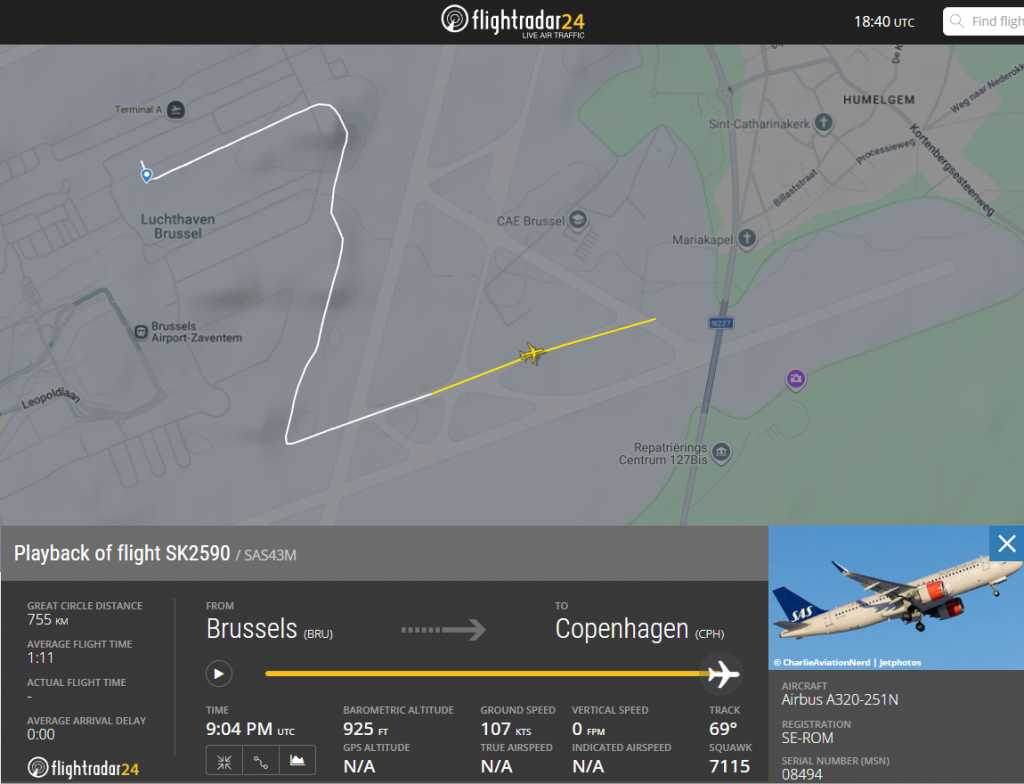
According to preliminary information from The Aviation Herald, the aircraft had been cleared for departure from Runway 07R at 22:03 local time.
Instead, the crew lined up on Taxiway E1, a parallel taxiway north of the runway, after turning off the outer taxiway (OUT‑10).
The aircraft then accelerated along the E1–F2–V1 taxiway sequence, reaching approximately 100 knots groundspeed before the crew recognised the error and initiated a high‑speed rejected takeoff.
The A320neo came to a halt near the intersection of taxiways V1 and C1—just before the pavement narrows and only a short distance from the airport’s fuel storage area.
While the aircraft did not strike any infrastructure, the proximity underscored the severity of the incident.
Evacuation and Airport Response
Emergency services were immediately dispatched.
With the aircraft stationary on the taxiway system rather than a runway, the crew ordered an evacuation.
Passengers disembarked directly onto the taxiway and were transported by bus to the terminal.
No injuries were reported, and the flight was subsequently cancelled.
A spokesperson later confirmed the seriousness of the event, stating:
“The aircraft mistakenly lined up on a taxiway instead of the runway and initiated takeoff. The crew rejected the takeoff at high speed, and all passengers were safely evacuated.”
This aligns with the operational details released by the airport and the airline’s early cooperation with investigators.
A Routine Flight That Wasn’t
Flight SK2590 is a regular Brussels–Copenhagen service, typically departing around 19:30–20:30 local time.
Flightradar24 data shows that on 5 February, SE‑ROM pushed back late and departed the stand at 20:44, already behind schedule.
The aircraft never became airborne, and the flight’s status was later marked as “unknown” due to the aborted takeoff and cancellation.
The delay and time pressure may become relevant factors for investigators, particularly given passenger accounts reported in Swedish media that the crew had urged passengers to take their seats quickly to avoid missing their departure slot.
The Airframe Involved in the Brussels Airport Incident: SE‑ROM “Gerald Viking”
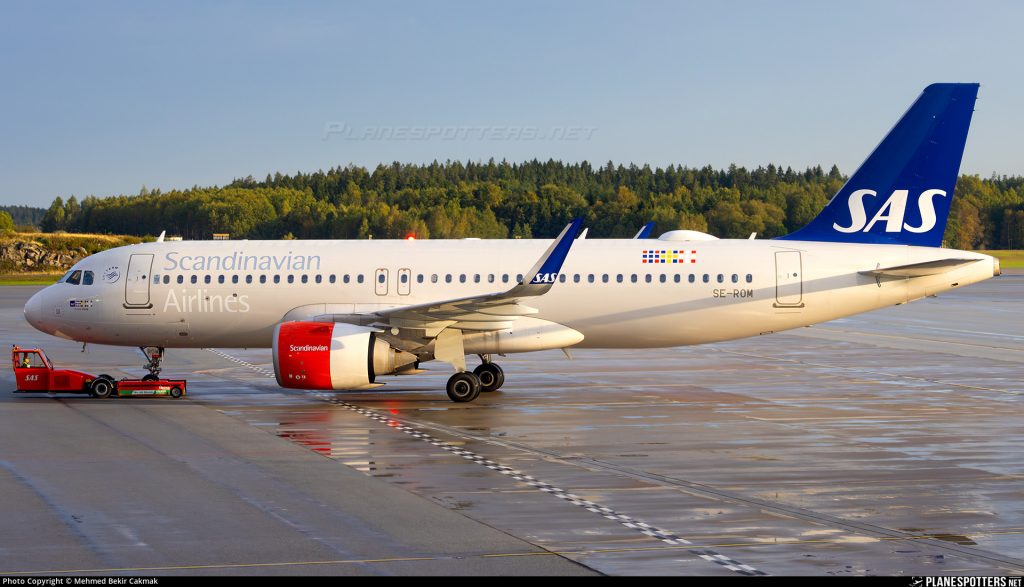
The aircraft involved, Airbus A320neo SE‑ROM, MSN 8494, was delivered to SAS in November 2018 and is configured in an all‑economy 180‑seat layout.
Built in Hamburg and powered by CFM International engines, the aircraft had been in service for just over seven years at the time of the incident.
It was named “Gerald Viking” and had no prior major incidents recorded.
The airframe is currently listed as parked following the event.
How Did the Crew End Up on a Taxiway?
While the investigation is ongoing, early commentary from pilots and air traffic professionals highlights several contributing factors:
Brussels Airport’s taxiway layout
Brussels is known for its complex, multi‑branch taxiway intersections, including the “star‑type” junctions around the 07R/25L complex. Several pilots noted that the OUT‑10 to E1 turn is unusually sharp and non‑standard, and that taxiway naming conventions at BRU differ from those at many European airports.
Hold‑short markings and runway crossings
The crew crossed the holding point for Runway 01/19 while turning onto E1—an action that should have signalled they were not yet on 07R. Some pilots suggested that confirmation bias may have played a role: once the crew believed they were entering the runway, subsequent cues may have been subconsciously filtered out.
Lighting environment
The incident occurred at night under good visibility (9999 metres). Several commenters expressed surprise that the crew did not recognise the difference between runway and taxiway lighting—runways use white centreline and edge lighting, while taxiways use green centreline and blue edge lights.
Lack of RAAS/TOS systems
Some SAS aircraft are not equipped with Runway Awareness and Advisory System (RAAS) or Takeoff Surveillance (TOS) functions, which can alert crews when attempting takeoff from an incorrect surface. Pilots suggested that the airline may now accelerate retrofits.
A Near‑Miss With Serious Implications
Although no injuries occurred, the event is being treated as a serious incident.
High‑speed rejected takeoffs carry inherent risks, including tyre failures, runway excursions, and structural stress.
In this case, stopping on a taxiway with limited pavement length added to the danger.
The Belgian accident investigation authority has opened a formal inquiry, with SAS confirming full cooperation.
The investigation will likely examine human factors, airport signage and lighting, ATC oversight, aircraft systems, and operational pressures.
For SAS, Brussels Airport, and regulators, the incident is a stark reminder that runway misidentification remains a persistent global risk—even in modern cockpits and at major European airports.
The safe outcome owes much to the crew’s decisive rejected‑takeoff action, but the chain of events leading up to that moment will be scrutinised closely.
As one passenger recounted via local media, the captain later told those onboard:
“It got very dramatic in the cockpit once they realised they were on the taxiway… he had flown for 28 years and never experienced anything like it.”
The industry will now wait for investigators to determine how a routine departure turned into one of the most serious ground‑navigation incidents in recent European aviation history.
Continue to follow The Aviation Hub for more analysis and insight!