
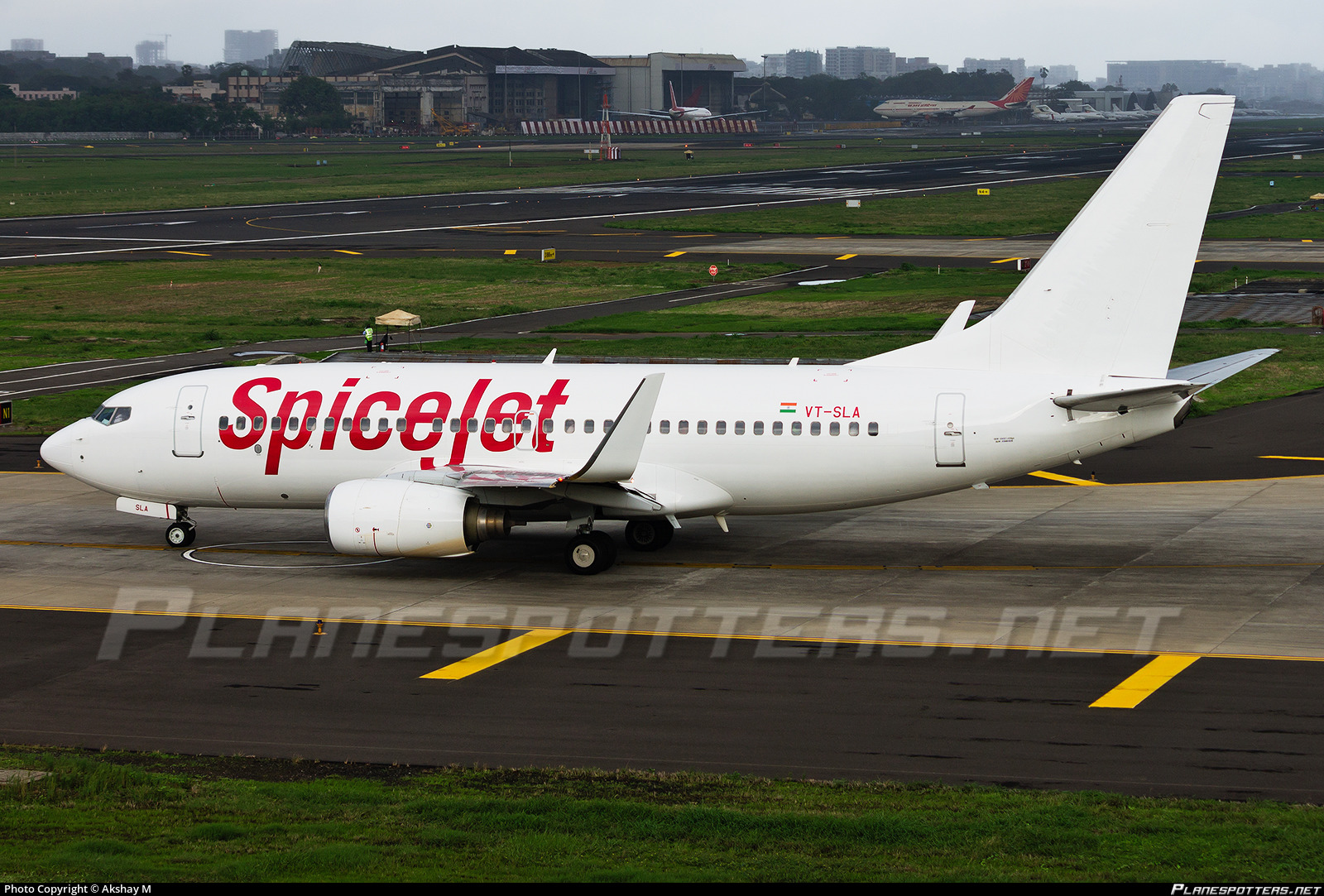
SpiceJet flight SG121, operating a scheduled service from Delhi to Leh on 24 February 2026, was forced to return to Delhi Indira Gandhi International Airport shortly after departure following a failure of its number two engine.
The aircraft, a Boeing 737‑700 registered VT‑SLA, declared a full emergency and landed safely with no injuries reported among the 150 passengers and crew.
The event occurred during the initial climb from runway 28, prompting an immediate response from airport emergency services.
Sequence of Events in Delhi…
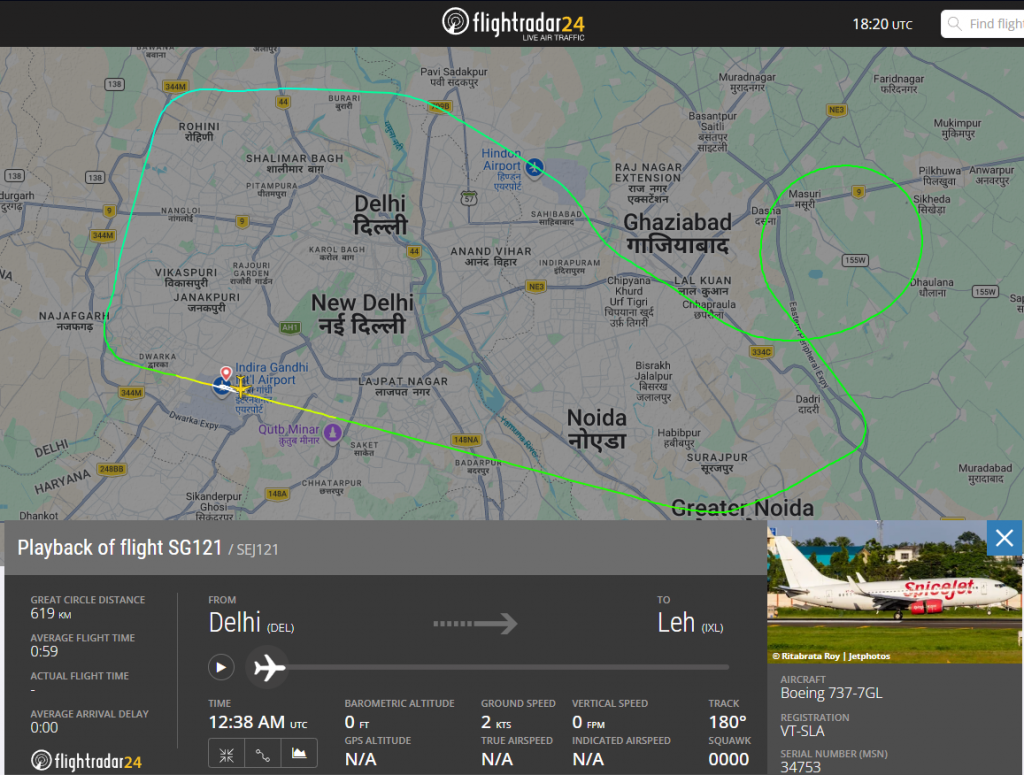
Flight SG121 was scheduled to depart at 00:25 UTC, eventually getting airborne at 01:03.
According to flight tracking data, the aircraft climbed out normally before the crew reported an abnormal vibration and loss of thrust from the right‑hand CFM56‑7B engine.
The failure triggered cockpit warnings consistent with a powerplant malfunction, leading the crew to level off and initiate a return to Delhi.
The aircraft landed approximately 28 minutes after takeoff, consistent with the timeline published by the Aviation Safety Network.
Passengers later described a loud bang followed by noticeable shuddering, though the cabin crew maintained calm and followed standard emergency procedures.
The Times of India reported that Delhi Airport declared a full emergency, mobilising firefighting and medical teams as a precaution.
The landing was uneventful, and the aircraft taxied to a remote stand for inspection.
Weather and Operating Conditions in Delhi…
Meteorological reports at the time indicated calm winds, mist reducing visibility to around 2000–2500 metres, and temperatures of 15°C.
While the conditions were not severe, the reduced visibility added complexity to the emergency return.
The crew’s handling of the situation ensured a stabilised approach and safe landing despite the engine failure.
Aircraft Background
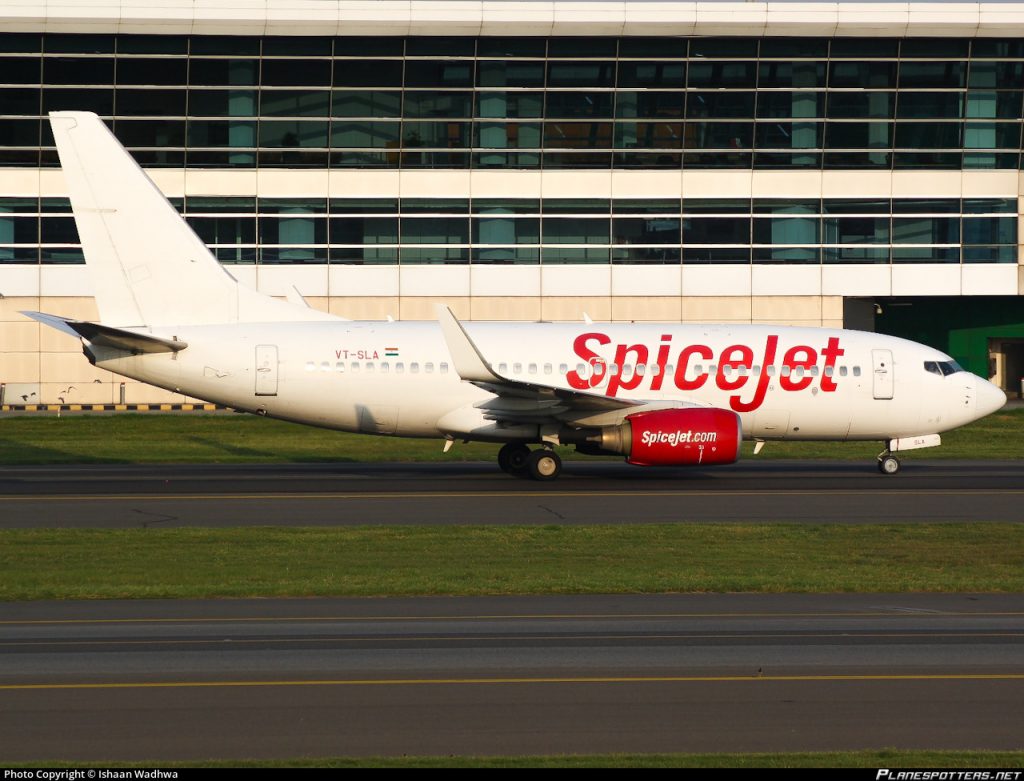
VT‑SLA is an 18‑year‑old Boeing 737‑700 built at Renton and delivered new in 2007.
The aircraft has a varied operational history, having previously served with SkyEurope Airlines, Bank of Scotland, AnadoluJet and SunExpress before joining SpiceJet in 2015.
The airframe has undergone multiple leasing arrangements and experienced a bird strike in 2024, though no major structural damage was recorded at that time.
At the time of the incident, the aircraft was configured in a 149‑seat all‑economy layout and powered by two CFM56‑7B engines.
The right‑hand engine involved in the failure will undergo detailed inspection to determine whether the event was caused by mechanical fatigue, compressor damage, ingestion, or another technical factor.
The aircraft was placed in a parked status following the incident pending engineering assessment.
Operational Context
Flight data from the preceding days shows VT‑SLA had been operating a demanding schedule, including multiple rotations between Delhi, Leh, Mumbai, Pune and other domestic destinations.
The aircraft had completed several short‑haul sectors in the 24 hours leading up to the event, including a late‑evening arrival from Pune.
While such utilisation is typical for Indian domestic operations, it underscores the importance of rigorous engine health monitoring, especially on routes involving high‑altitude airports such as Leh.
Response and Investigation into Incident at Delhi…
SpiceJet issued a statement confirming the engine failure and emphasising that the crew followed all standard operating procedures.
The Directorate General of Civil Aviation (DGCA) has opened an inquiry, focusing on the engine’s maintenance history, recent performance data and any anomalies recorded during previous flights.
Investigators will also review cockpit voice and flight data recordings to reconstruct the sequence of events.
Given the absence of injuries and the successful recovery of the aircraft, the incident is categorised as a serious operational event rather than an accident.
The safe return of SpiceJet flight SG121 highlights the effectiveness of established emergency procedures and the professionalism of the operating crew.
While the cause of the engine failure remains under investigation, the incident underscores the operational challenges of India’s high‑frequency domestic network and the critical importance of ongoing engine reliability oversight.
VT‑SLA will remain grounded until the technical assessment is complete, ensuring that any corrective actions are implemented before the aircraft returns to service.
Continue to follow The Aviation Hub for more analysis and insight!