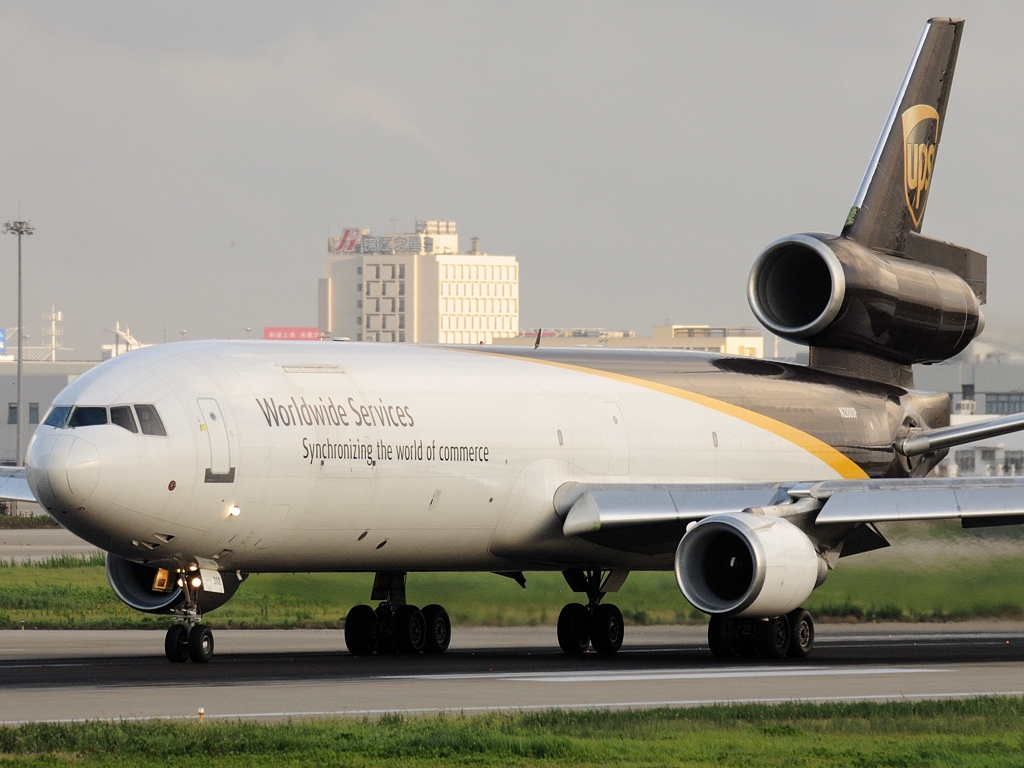
UPS showcased it’s fourth‑quarter 2025 earnings, making an announcement that reverberated across the aviation industry: the MD‑11 fleet has been fully retired.
The company disclosed a non‑cash, after‑tax charge of $137 million tied directly to the write‑off of the aircraft, confirming that the final MD‑11s had exited service before the end of the year.
The retirement was framed as an acceleration of UPS’s long‑term fleet‑modernisation plans, a strategy aimed at improving efficiency, reducing maintenance complexity, and aligning the network with evolving demand patterns.
For years, the MD‑11 had been a workhorse of UPS’s intercontinental operations. Its payload capability and range made it ideal for transpacific and transatlantic routes, and its tri‑jet configuration—once a symbol of widebody cargo strength—had become a familiar silhouette at major hubs such as Louisville, Anchorage, and Cologne.
Yet the aircraft had also developed a reputation for handling quirks, higher fuel burn compared with modern twins, and maintenance demands that grew more challenging as the fleet aged.
By 2025, UPS operated 26 MD‑11s, a small but historically significant portion of its more than 500‑aircraft fleet.
The company had already been shifting toward more efficient types, including the Boeing 747‑8F and 767‑300F, both of which offered superior economics and reliability.
The MD‑11’s retirement was expected eventually. What changed was the timeline.
A Catastrophic Turning Point: UPS Flight 2976

On 4 November 2025, UPS Airlines Flight 2976 departed Louisville Muhammad Ali International Airport on what should have been a routine cargo flight to Honolulu.
Seconds after liftoff, the aircraft’s left engine separated from the wing, igniting a fire and triggering a chain of failures that left the crew with no chance of recovery.
The MD‑11F crashed into an industrial area south of the airport, killing all three crew members and twelve people on the ground.
It was the deadliest accident in UPS Airlines history and the second‑deadliest MD‑11 crash ever recorded.
The aircraft involved, N259UP, was 34 years old and had accumulated more than 21,000 cycles.
Investigators quickly focused on the left engine pylon, where fatigue cracks were later confirmed in multiple fracture surfaces.
The failure bore troubling similarities to the 1979 crash of American Airlines Flight 191, a DC‑10 accident caused by a catastrophic pylon separation.
The MD‑11, a derivative of the DC‑10, shared key structural characteristics, and the parallels were impossible to ignore.
The National Transportation Safety Board’s preliminary findings highlighted metal fatigue in the aft mount lugs of the left engine pylon.
Although the aircraft had undergone regular inspections, the more detailed checks required at higher cycle thresholds had not yet come due.
The discovery raised urgent questions about the long‑term structural integrity of ageing MD‑11s across the global fleet.
Groundings, Disruption, and Regulatory Pressure
In the days following the crash, UPS, FedEx, and Western Global Airlines voluntarily grounded their MD‑11 fleets “out of an abundance of caution,” following guidance from Boeing and the FAA.
The regulator soon issued an emergency airworthiness directive requiring immediate inspections of all MD‑11 engine pylons.
With no approved corrective actions available, the directive effectively grounded the type indefinitely.
The grounding caused significant disruption across the U.S. cargo network.
Overnight operations at major hubs—including Memphis, Dallas–Fort Worth, and Ontario—experienced delays, and the timing could not have been worse.
The crash occurred during the 2025 federal government shutdown, which had already strained staffing at aviation agencies and slowed regulatory processes.
The MD‑11 grounding added another layer of complexity to an already fragile logistics environment.
For UPS, the operational impact was immediate but manageable.
The company’s diversified fleet allowed it to reassign capacity, albeit with short‑term inefficiencies.
But the broader implications were clear: the MD‑11, once a cornerstone of global cargo operations, had reached the end of its viable service life.
A Fleet Modernisation Strategy Accelerated at UPS
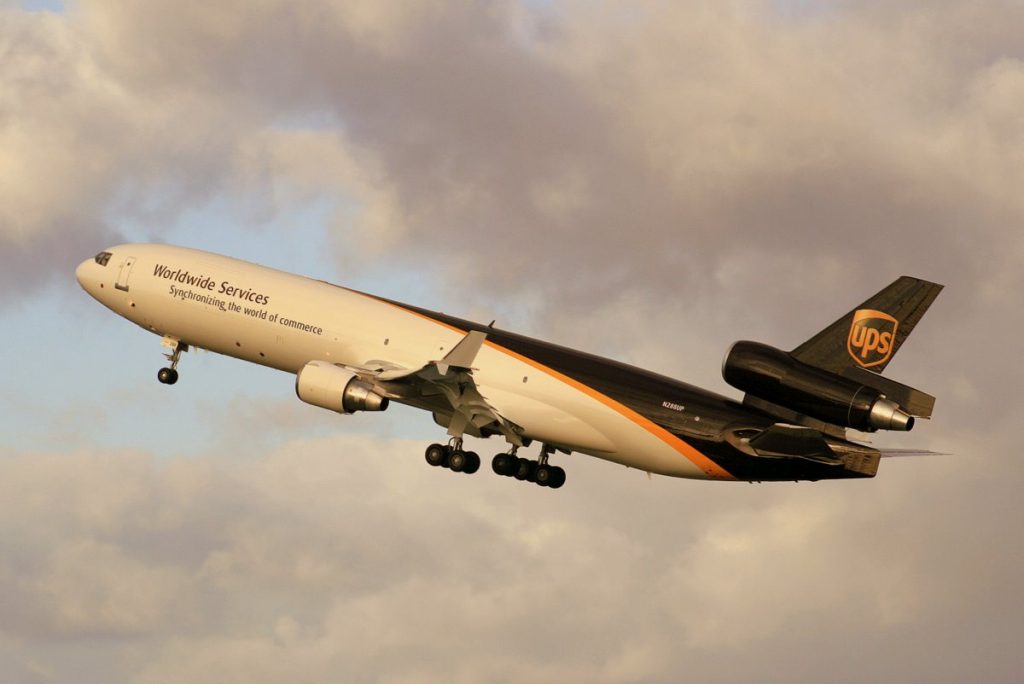
UPS’s 4Q 2025 earnings release framed the MD‑11 retirement within the context of its long‑term transformation strategy.
The company emphasised its focus on building a more agile, efficient network, supported by modern aircraft with lower operating costs and improved reliability.
The retirement aligned with UPS’s broader efforts to streamline operations, reduce indirect costs, and invest in next‑generation technologies.
The MD‑11’s departure also coincided with the “Amazon glide‑down,” a planned reduction in Amazon‑related volume that UPS had anticipated for several years.
With fewer peak‑demand pressures and a more predictable network profile, the company had greater flexibility to retire older aircraft without compromising service levels.
While the MD‑11 had served UPS well, its economics no longer matched the demands of a modern cargo network.
The tri‑jet’s higher fuel consumption, maintenance complexity, and ageing structural components made it increasingly difficult to justify continued operation—especially in the wake of Flight 2976.
The Human and Operational Legacy
The retirement of the MD‑11 fleet cannot be separated from the human cost of the Flight 2976 tragedy.
The loss of three experienced crew members—Captain Richard Wartenberg, First Officer Lee Truitt, and Relief Officer Dana Diamond—left a profound impact on the UPS community.
The twelve ground fatalities, including a three‑year‑old child, underscored the scale of the disaster and the urgency of addressing the underlying technical issues.
UPS CEO Carol Tomé publicly expressed her sadness and gratitude for the professionalism of the Louisville team in the aftermath of the crash.
The Big Four Bridge was illuminated in UPS yellow in solidarity, and vigils were held across the city.
The tragedy became a defining moment not only for UPS but for the wider cargo aviation sector.
A Symbolic and Strategic Shift
The MD‑11’s retirement marks more than the end of a fleet type.
It represents a symbolic shift in the evolution of cargo aviation.
The tri‑jet era—once synonymous with long‑haul freight capability—is giving way to a new generation of twin‑engine aircraft that offer greater efficiency, reliability, and regulatory confidence.
For UPS, the decision reflects a commitment to safety, operational resilience, and long‑term strategic clarity.
The company’s 2026 guidance projects stable revenue and continued margin expansion, supported by a more modern and efficient fleet.
The MD‑11’s departure, though accelerated by tragedy, aligns with a future‑focused vision of global logistics.
Closing the Chapter for UPS & The MD-11
As the last UPS MD‑11s leave service, the aircraft’s legacy remains complex.
It was a capable, high‑performing freighter that helped build the backbone of UPS’s international network.
Yet it was also an ageing design whose structural vulnerabilities ultimately proved fatal.
The retirement decision, shaped by both strategic necessity and the sobering lessons of Flight 2976, marks a turning point for UPS.
It closes a chapter defined by tri‑jet power and opens one built on modernisation, safety, and the next generation of cargo aviation.
The MD‑11 will not return to UPS’s fleet. But its impact—operational, cultural, and historical—will endure long after its final flight.
Continue to follow The Aviation Hub for more analysis and insight!