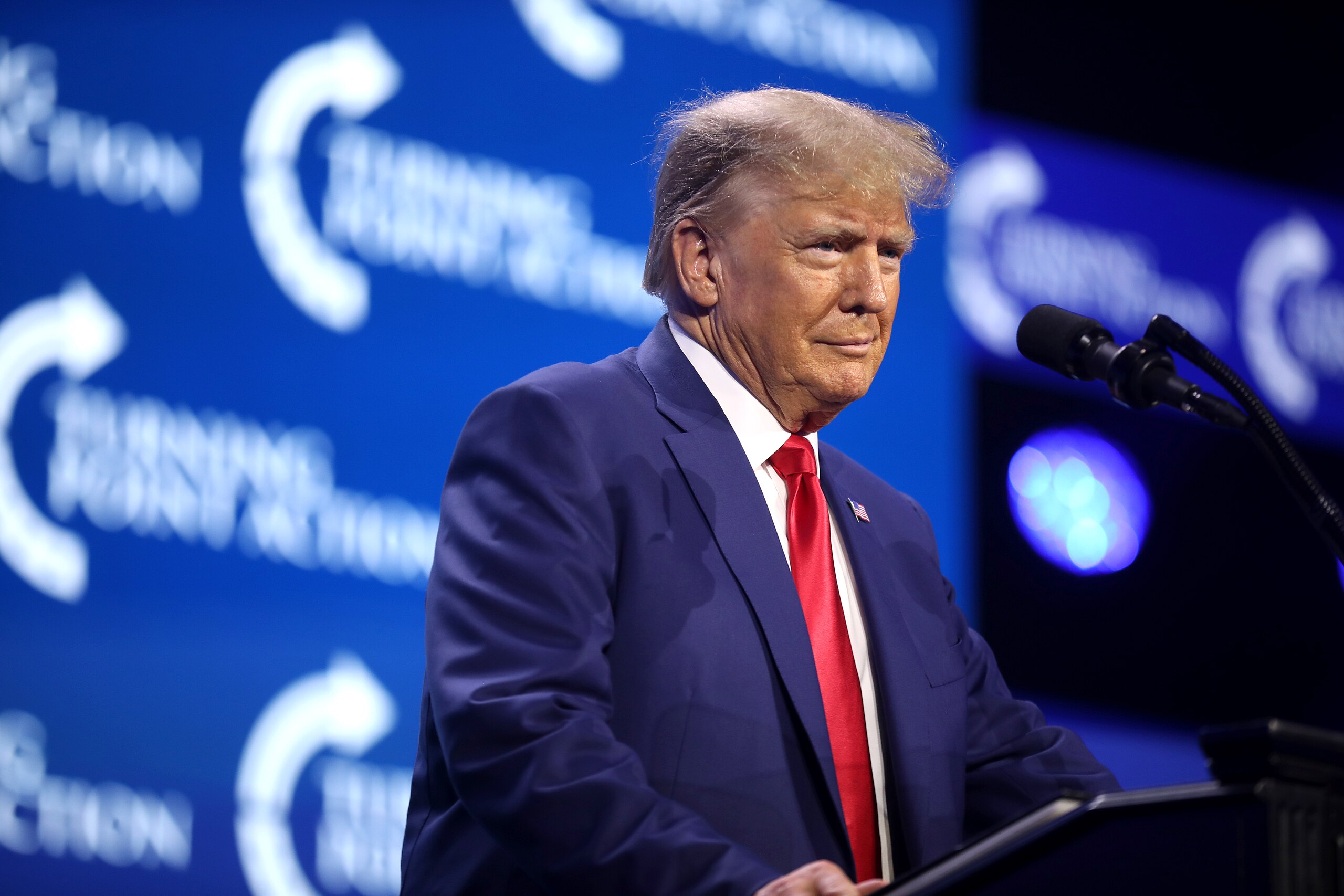
President Donald Trump’s declaration that the United States would “run Venezuela” following the collapse of Nicolás Maduro’s government has sent shockwaves through diplomatic, economic, and aviation circles.
For an industry that has spent years navigating Venezuela’s instability, blocked funds, and deteriorating infrastructure, the idea of a U.S.-led transition raises a critical question: could this moment unlock long‑frozen potential for airlines?
The answer is layered, but the stakes for global aviation are enormous.
A Market With Enormous Untapped Demand
Before Venezuela’s economic collapse, the country was one of Latin America’s most strategically important aviation markets.
Caracas served as a natural connecting point between North America, South America, and Europe, with strong demand from both business and leisure travellers.
Airlines from the U.S., Spain, Portugal, Colombia, and Panama operated extensive schedules, and Venezuela’s large diaspora ensured consistent traffic flows.
Years of political turmoil, hyperinflation, and safety concerns, however, hollowed out the market. Many international carriers withdrew or sharply reduced service.
The International Air Transport Association (IATA) recently urged Venezuelan authorities to reconsider the revocation of several international airline permits after carriers suspended flights due to U.S. and Spanish air‑safety alerts.
Airlines, IATA emphasised, remain committed to the Venezuelan market — but only when conditions allow for safe, stable operations.
Trump’s statement therefore lands at a moment when the aviation sector is watching Venezuela closely, wondering whether a dramatic political shift could finally reopen a once‑vibrant market.
Safety First: The Immediate Barrier to Re‑Entry
The IATA release underscores the most immediate obstacle to restoring flights: air safety.
Airlines suspended operations not because of commercial weakness, but because U.S. and Spanish authorities issued warnings about operating in Venezuelan airspace.
Any U.S.-led transition would need to address airspace security, airport infrastructure integrity, regulatory oversight, and coordination with international aviation bodies.
If Washington were to take responsibility for stabilising Venezuela’s institutions, one of the earliest visible signs of progress would likely be the restoration of safe air corridors.
That alone could trigger a phased return of international carriers.
The Economic Equation: A Market Airlines Want Back
Venezuela’s aviation market is not only strategically located — it is commercially attractive.
With a population of 28 million and years of suppressed travel demand, the potential for rapid growth is significant.
Historically, Venezuelans have been frequent travellers to Miami, Madrid, Panama City, Bogotá, and Lisbon.
A stabilised economy could unleash pent‑up demand for family visits, business travel, and tourism.
If U.S. involvement leads to the reopening of Venezuela’s oil sector, business travel could surge as energy companies, contractors, and logistics firms re‑enter the country.
Additionally, millions of Venezuelans living abroad would generate strong VFR (visiting friends and relatives) traffic once safe, reliable flights return.
For airlines, this represents a rare opportunity: a major market with high demand and minimal current competition.
The Political Unknowns: What Does “Run Venezuela” Actually Mean?
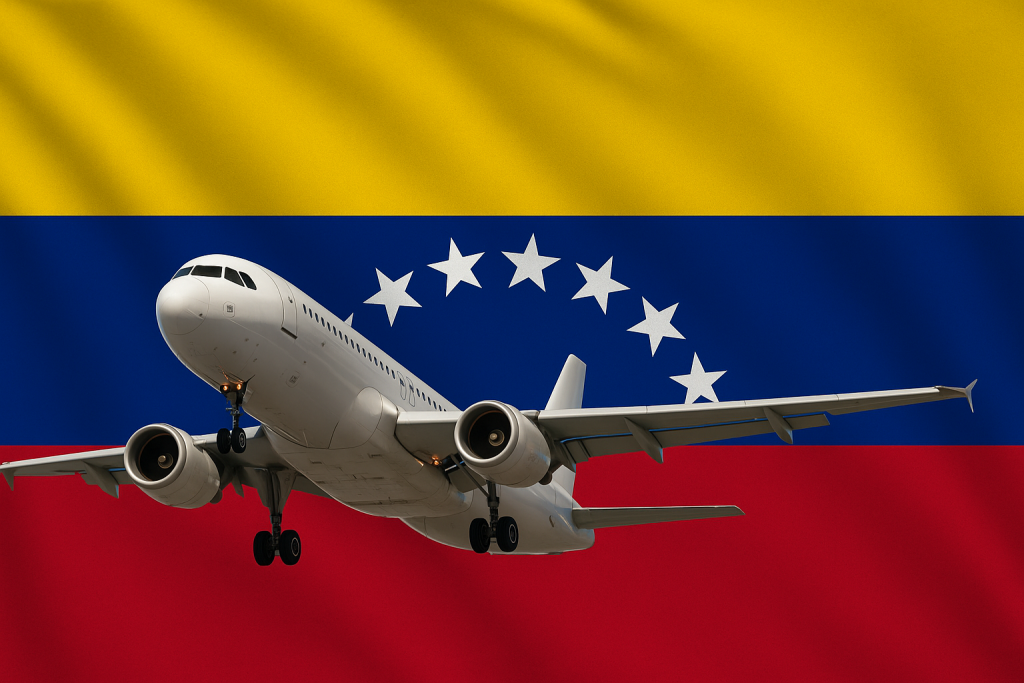
Trump’s statement that the U.S. will “run Venezuela” is politically explosive and diplomatically ambiguous.
It could imply temporary U.S. administration, a trusteeship‑style arrangement, a military‑backed transitional authority, or simply rhetorical flourish.
Each scenario carries different implications for airlines. If the U.S. assumes administrative control, the restoration of airspace safety protocols, airport security, and regulatory alignment with FAA and ICAO standards could happen quickly, allowing airlines to return within months.
If the U.S. merely influences a transitional government, progress would be slower but still meaningful, with carriers watching for currency stability, guarantees on repatriation of funds, and transparent aviation regulation.
If the statement is political rhetoric without structural change, airlines will remain cautious.
As IATA’s statement makes clear, carriers will not operate in high‑risk environments, regardless of political declarations.
The Repatriation Question: Billions Still Frozen
One of the biggest historical barriers to airline operations in Venezuela has been the inability to repatriate revenue.
At one point, more than $3.8 billion in airline funds were trapped in the country due to currency controls.
Any U.S.-led or U.S.-influenced transition would need to resolve outstanding blocked funds, future currency convertibility, and financial guarantees for carriers. Without this, airlines may return cautiously — or not at all.
For many carriers, financial predictability is as important as physical safety.
Infrastructure: A System in Need of Rebuilding
Caracas’ Simón Bolívar International Airport was once a major regional hub, but today it suffers from outdated equipment, security concerns, limited commercial services, and maintenance challenges.
A U.S.-backed reconstruction programme could transform the airport into a modern gateway, attracting carriers eager for new Latin American opportunities.
Infrastructure renewal would also extend to secondary airports, cargo facilities, and air‑traffic control systems — all essential for restoring confidence among international operators.
Could Venezuela Become a New Aviation Growth Story?
If the U.S. were to stabilise Venezuela, the aviation sector could see a phased revival.
In the short term, limited international service could resume as airspace warnings are lifted and humanitarian or logistical flights increase.
In the medium term, major U.S. and European carriers could return, regional routes could reopen, and VFR and business travel would likely surge.
Over the long term, Caracas could re‑emerge as a northern South America hub, integrating into broader regional aviation networks and attracting competition among U.S., European, and Latin American airlines.
The potential is real — but so are the risks.
Even with U.S. involvement, airlines will remain cautious.
Political backlash to perceived U.S. control, resistance from regional governments, security threats from armed groups, economic instability during transition, and legal challenges over sovereignty all pose significant risks.
Airlines operate on predictability, and Venezuela has not offered that for years. A transition could change that — but only if it is credible, coordinated, and sustained.
Venezuela: A Market Worth Watching, but Not Yet Ready
Trump’s assertion that the U.S. will “run Venezuela” has thrust the country back into global headlines.
For airlines, the prospect of a stabilised Venezuela is undeniably attractive.
The IATA’s recent call for clarity and safety highlights how fragile the situation remains.
If Washington plays a decisive role in rebuilding Venezuela’s institutions, airspace, and economy, the aviation sector could be among the earliest beneficiaries.
But until concrete steps replace political rhetoric, airlines will continue to watch from a distance — hopeful, but wary.
Continue to follow The Aviation Hub for more analysis and insight!