

The past twelve months have marked one of the most pivotal periods for U.S. commercial aviation since the industry emerged from the pandemic recovery cycle.
What began as a year expected to deliver stability instead evolved into a complex landscape defined by manufacturing scrutiny, shifting demand patterns, and a regulatory environment more assertive than at any point in the last decade.
Airlines entered the year with strong bookings and confident growth plans, yet quickly found themselves navigating a series of structural challenges that reshaped strategies across fleets, networks, and operations.
At the same time, the industry demonstrated a level of resilience that underscored its capacity for adaptation.
Passenger demand remained robust, international markets surged, and carriers continued to refine their product offerings to meet the expectations of a more discerning traveller.
The year became a study in contrasts: strong revenue performance paired with operational strain, ambitious fleet plans tempered by supply‑chain realities, and a renewed focus on reliability in an environment where disruption became increasingly common.
As 2025 draws to a close, U.S. airlines stand at a crossroads.
The lessons of the past year have been sharp, and the pressures facing the industry are unlikely to ease in the months ahead.
Yet the sector enters 2026 with clearer priorities, stronger strategic alignment, and a deeper understanding of the structural shifts shaping the next phase of commercial aviation.
What follows is The Aviation Hub’s definitive review of the year—and a forward‑looking assessment of what 2026 will demand.
Manufacturing Scrutiny and Fleet Disruption in U.S Aviation
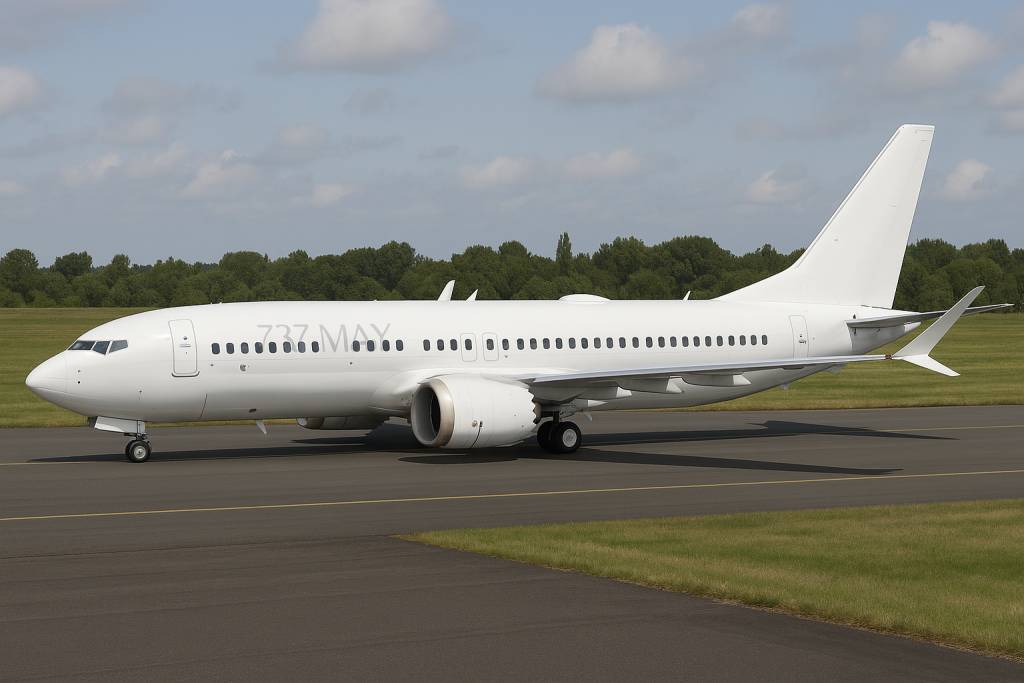
No storyline shaped the past year more than the continued turbulence surrounding Boeing.
The manufacturer spent much of the year under intense regulatory and public scrutiny, with airlines forced to navigate delivery delays, revised production schedules, and heightened oversight.
For carriers heavily invested in the 737 MAX family, the impact was immediate and operationally painful.
Schedules were trimmed, growth plans were re‑timed, and fleet strategies once considered settled were reopened for debate.
The uncertainty pushed several airlines to diversify their order books more aggressively, accelerating commitments for the A321neo and A321XLR while exploring mid‑life aircraft acquisitions to plug near‑term capacity gaps.
Fleet flexibility shifted from a competitive advantage to a fundamental requirement for resilience.
Demand Strength and Shifting Revenue Patterns
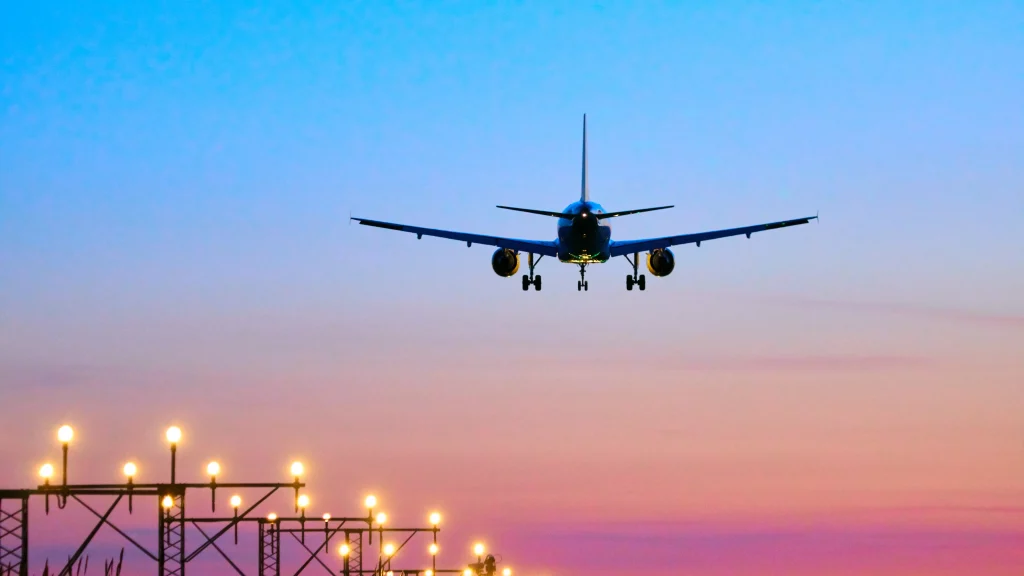
Despite operational headwinds, passenger demand remained remarkably strong.
Domestic leisure travel continued to outperform expectations, and international long‑haul markets—particularly transatlantic—delivered some of the strongest yields of the decade.
Yet the revenue mix shifted in ways that forced airlines to adapt.
Business travel stabilised but remained well below pre‑pandemic levels, plateauing at roughly three‑quarters of 2019 benchmarks.
This created a structural gap in premium‑cabin revenue that airlines increasingly filled with high‑yield leisure travellers.
Premium leisure became the industry’s revenue engine, driving a wave of cabin reconfigurations, expanded premium‑economy offerings, and a renewed focus on long‑haul product differentiation.
Toward the end of the year, price sensitivity returned as inflation and rising household costs began to influence discretionary spending, particularly on domestic short‑haul routes.
Labour Agreements and a New Cost Reality
Labour dynamics added another layer of complexity.
The year saw some of the most significant labour agreements in U.S. aviation history, with pilots, flight attendants, and ground workers securing substantial pay increases.
While these agreements brought much‑needed stability after years of tension, they also reshaped cost structures across the industry.
For many carriers, labour became the single largest driver of unit‑cost inflation.
The strategic consequence was clear: airlines accepted that the cost base had permanently shifted upward.
This new reality began to influence everything from network planning to fleet utilisation, forcing leadership teams to rethink how to balance growth ambitions with financial discipline.
Operational Reliability: Progress and Persistent Challenges
Operational reliability remained a central focus, though the results were mixed.
Legacy carriers generally improved performance through better staffing, more conservative scheduling, and targeted investments in technology.
Low‑cost carriers, however, struggled with persistent delays, cancellations, and aircraft‑availability challenges.
Weather‑related disruption increased as severe‑weather events became more frequent across major hubs, further testing the system’s resilience.
The FAA’s staffing constraints—particularly in New York airspace—continued to limit operational flexibility, leaving the system with little margin for error.
The year underscored that operational reliability is no longer a background metric but a core component of brand perception.
Network Strategy: International Growth and Domestic Rationalisation in U.S Aviation

Network strategy evolved significantly as airlines responded to shifting demand and rising costs.
International flying became the growth engine, with U.S. carriers leaning heavily into transatlantic leisure markets, secondary European cities, and select Asia‑Pacific routes as demand recovered.
Latin American leisure destinations also saw strong expansion, supported by robust premium‑leisure demand.
Domestically, airlines rationalised capacity, trimming underperforming routes and consolidating frequencies.
Small‑city connectivity continued to erode, with several regional markets losing service entirely.
Although the regional‑pilot pipeline improved slightly, it was not enough to reverse the structural decline in 50‑seat flying.
The domestic network map became more concentrated, more strategic, and more reliant on fortress hubs.
Sustainability: Incremental Progress and Ongoing Gaps
Sustainability remained a prominent theme, though progress was incremental. Airlines signed new sustainable aviation fuel offtake agreements, but production volumes remained far below what is needed to meet industry targets.
Airports advanced electrification and ground‑operations decarbonisation, and several carriers increased transparency in emissions reporting.
Yet the gap between ambition and reality persisted.
The industry’s long‑term climate goals remain heavily dependent on policy support, technological breakthroughs, and a more mature SAF supply chain.
The past year demonstrated that while momentum is building, the pace of progress remains slower than the rhetoric suggests.
Looking Ahead: What 2026 Will Demand for U.S Aviation
Fleet Strategy as the Competitive Battleground
As the industry turns toward 2026, fleet strategy will become the defining competitive battleground.
With delivery timelines still uncertain, airlines will continue to pursue mid‑life aircraft, extend the life of older narrowbodies, and reassess long‑term reliance on single‑manufacturer fleets.
Widebody reconfigurations will accelerate as carriers seek to capture premium‑leisure demand and optimise long‑haul economics.
The airlines that succeed will be those that balance short‑term flexibility with long‑term strategic clarity.
Reliability as a Core Brand Differentiator
Operational reliability will emerge as a central brand differentiator in 2026.
Passengers have become less tolerant of disruption, and airlines that deliver consistent, predictable operations will win loyalty and revenue.
This will drive investment in predictive‑maintenance technology, more resilient scheduling, and enhanced customer‑recovery tools.
Reliability will no longer be treated as a cost centre but as a strategic asset that directly influences market share.
Domestic Networks Contracting Before They Expand
Domestically, networks are likely to shrink before they grow.
The economics of small‑city flying remain challenging, and more regional markets may lose service as airlines consolidate around core hubs.
Ultra‑low‑cost carriers, facing rising costs and shifting consumer behaviour, may retrench further.
Growth will come primarily from international expansion and high‑yield domestic corridors rather than broad domestic network growth.
The U.S. domestic map will continue to evolve toward concentration rather than dispersion.
A More Assertive Regulatory Environment
The regulatory environment will tighten further in 2026.
Manufacturing oversight, airline customer‑service practices, safety‑management systems, and competition policy will all remain under scrutiny.
Airlines will need to navigate this environment with greater transparency, stronger compliance frameworks, and more proactive engagement with regulators.
The era of light‑touch oversight is firmly over.
Sustainability Moving From Rhetoric to Measurable Action
Sustainability efforts will shift from messaging to measurable action.
The industry will face increasing pressure to demonstrate tangible progress, particularly in SAF adoption, ground‑operations decarbonisation, and emissions reporting.
Partnerships between airports, airlines, and energy providers will become more important as the sector seeks credible pathways toward its long‑term climate goals.
The credibility of the industry’s sustainability narrative will depend on visible, verifiable progress.
Entering 2026 With Eyes Wide Open

The past year forced U.S. airlines to confront structural realities: higher costs, tighter regulation, supply‑chain fragility, and a more discerning customer.
Yet the industry also demonstrated resilience, adaptability, and a renewed focus on long‑term strategy.
As 2026 begins, U.S. commercial aviation stands on firmer footing but with little room for complacency.
The winners will be those that execute with discipline, invest with intention, and rebuild trust through reliability and transparency.
For an industry that thrives on momentum, the next 12 months will be decisive.
Continue to follow The Aviation Hub for more analysis and insight!