
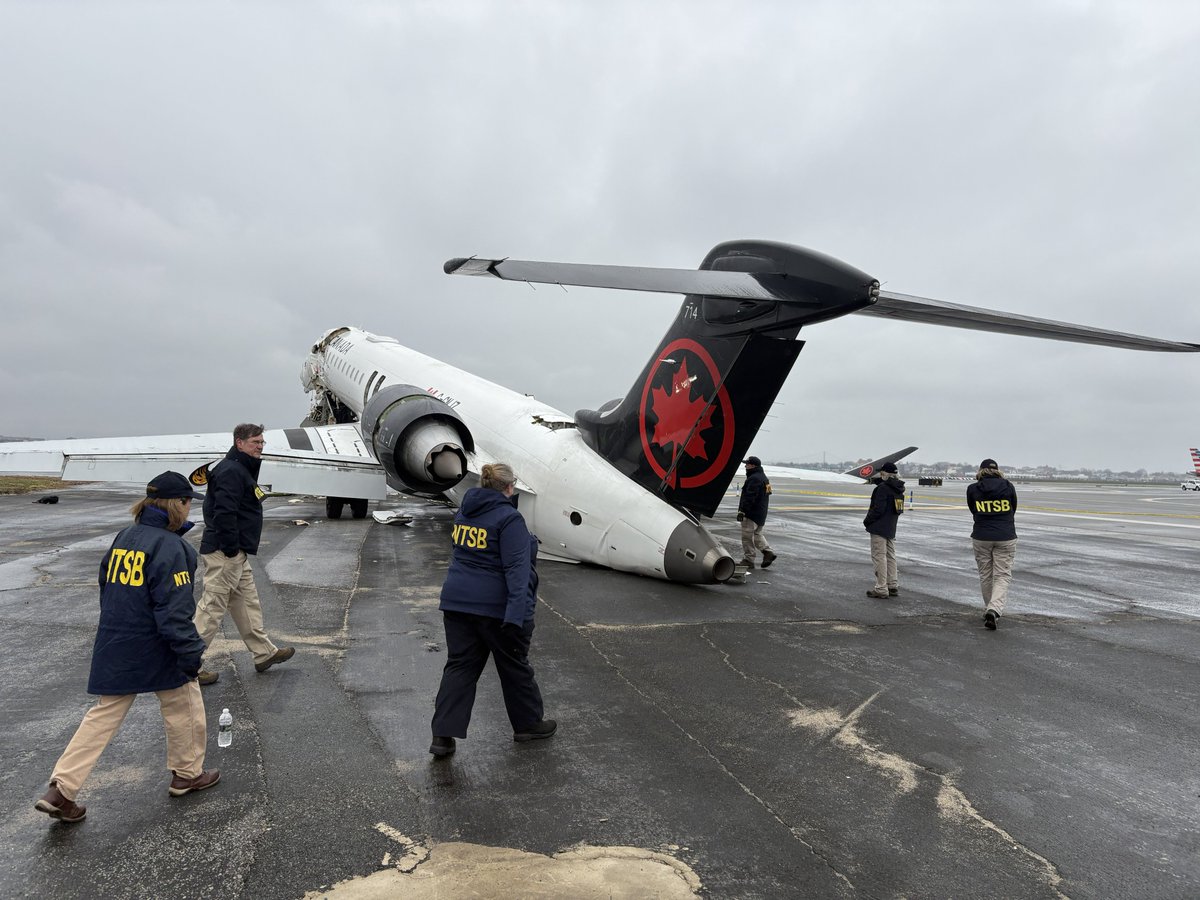
One week has passed since the collision at New York LaGuardia that claimed the lives of both pilots of a Jazz Canadair CRJ900 and left dozens injured.
The accident unfolded in the final seconds of flight AC8646’s landing roll on runway 04, after the aircraft had been cleared to land and was already committed to the approach.
As noted by The Aviation Herald, the aircraft “was cleared to land on runway 04” and was on a stable descent with the landing checklist complete.
The chain of events that followed was shaped by a second, unrelated emergency.
A United Airlines aircraft at the gate had twice rejected takeoff and reported fumes or smoke on board.
Emergency services were responding, and fire truck number one requested to cross runway 04 at taxiway D.
The tower cleared the vehicle to cross, unaware that the CRJ900 was seconds from touchdown.
The tower’s urgent calls to stop came too late. The aircraft struck the fire truck at 23:36 local time, skidding off the runway and coming to rest on a high speed turnoff.
The captain and first officer died in the impact.
Two firefighters were seriously injured. Nine passengers sustained serious injuries and thirty two suffered minor injuries.
LaGuardia closed immediately and remained shut for an extended period as investigators secured the scene.
What the Recorders Reveal About The LaGuardia Crash…
The NTSB moved quickly. Investigators were on site within hours and both the flight data recorder and cockpit voice recorder were recovered intact.
The agency confirmed that the CVR held more than twenty five hours of usable audio and the FDR contained around eighty hours of data across more than four hundred parameters.
The timeline extracted from the final three minutes of the CVR is now central to the investigation. It shows a normal approach profile until the final moments.
The crew checked in with tower, received landing clearance, configured the aircraft, and confirmed the landing checklist.
At one minute and three seconds before the end of the recording, an airport vehicle transmitted on frequency but the call was stepped on by another transmission.
The source of that second transmission remains unidentified.
From there, the timeline tightens. At twenty eight seconds before the end, truck number one transmitted.
At twenty six seconds tower acknowledged. At twenty five seconds the truck requested to cross runway 04.
At twenty seconds tower cleared the vehicle to cross. At nineteen seconds the ground proximity warning system called one hundred feet. At seventeen seconds the truck read back the clearance.
At fourteen seconds the GPWS called fifty feet. At twelve seconds the GPWS called thirty feet while tower instructed a Frontier aircraft to hold position.
At nine seconds tower called stop. At eight seconds the sound of touchdown was recorded.
Six seconds before the end of the recording, control was transferred from the first officer to the captain.
Four seconds before the end, tower again instructed the fire truck to stop.
The CVR timeline makes clear that the aircraft was already at extremely low altitude when the crossing clearance was issued.
It also confirms that the crew had no awareness of the conflict.
The Ground Environment at LaGuardia…
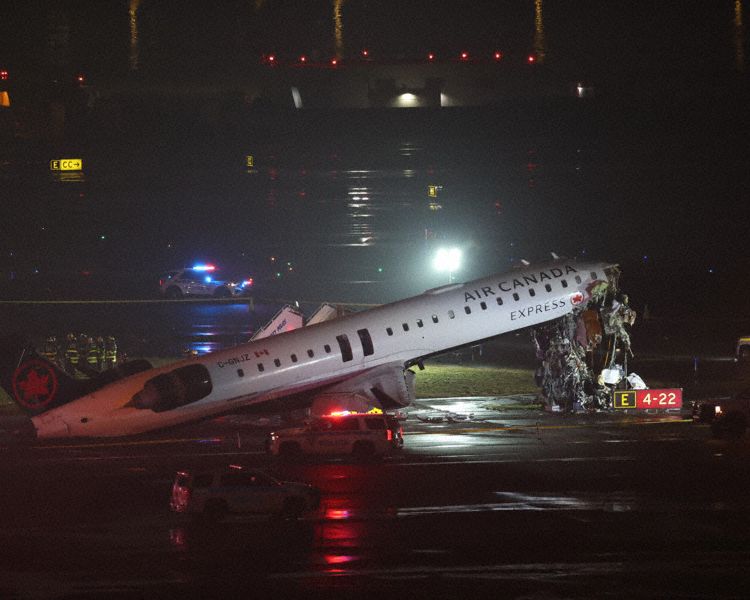
The ground environment at LaGuardia is now a major focus. The ASDE X surface surveillance system did not issue an alert.
The system did not show any target crossing ahead of the aircraft, though two targets were visible on taxiway D.
Runway status lights were operating.
Truck number one did not have a transponder, and the NTSB has not yet confirmed whether any of the responding fire vehicles were equipped with them.
The tower was staffed by two controllers, the local controller and the controller in charge. The controller in charge was also handling clearance delivery.
There is conflicting information about who was performing ground control duties.
This staffing level was standard for the midnight shift at LaGuardia, but investigators are examining whether workload or task saturation played a role.
It is also not yet known whether another controller was available to relieve the tower controller after the accident, a detail that may shed light on fatigue, workload management, and procedural resilience.
The Parallel Emergency
The United Airlines incident that triggered the emergency response remains a secondary but relevant factor.
The aircraft had rejected takeoff twice and reported fumes or smoke. Multiple emergency vehicles responded, and truck number one was followed by an unknown number of additional vehicles.
The scale of the response may have contributed to frequency congestion and increased the complexity of the ground picture.
What Comes Next
The NTSB’s work is still in its early stages.
Investigators have the recorders, radar data, ASDE X logs, NOTAMs, weather reports, and staffing information.
They will now reconstruct the full operational context, including radio frequency management, controller workload, vehicle movement procedures, and the performance of ground surveillance systems.
A week on, the broad outline is clear.
A stable approach, a late crossing request, a clearance issued at the worst possible moment, and a breakdown in situational awareness across multiple layers of the safety system.
The details that explain why those layers failed are still emerging.
The coming months will determine whether this was a tragic convergence of timing or a systemic failure that demands structural change.
Continue to follow The Aviation Hub for more analysis and insight!